The AI Shift: Mastering Custom App Building, Next-Gen Models, and Agent Protocols
As the artificial intelligence landscape accelerates past simple prompt-and-response interactions, professionals face a new mandate: move beyond passive consumption and start building, designing, and integrating AI into the core of their daily workflows. Whether you are scaling a creative agency, managing software development without a traditional engineering background, or adapting to massive platform shifts from Google, Meta, and OpenAI, the rules of digital execution are being rewritten.
This comprehensive briefing explores the latest breakthroughs in AI-driven design, the rise of non-technical custom software creation, and the major industry updates reshaping the tech and marketing ecosystems.
Main Facts: The New Frontier of Applied AI
The current wave of artificial intelligence is defined by autonomy, specialization, and user-led development. The foundational updates shaking up the industry reveal a distinct trend: generic software is giving way to tailored, task-specific agents and user-built systems.
- The Death of Off-the-Shelf Software Monopolies: Non-technical professionals are increasingly bypassing expensive, rigid subscriptions by utilizing modern AI tools to construct bespoke applications tailored entirely to individual business workflows.
- Advanced Reasoning Models Emerge: Google’s introduction of Gemini 4 Argon marks a major leap toward long-horizon reasoning, specifically targeting complex cybersecurity, defensive cyber patching, and enterprise-level codebase migrations.
- Standardization of Autonomous Agents: Meta, alongside industry partners, has introduced the Personal Agent Protocol, aimed at establishing open-market standards for how user-side AI agents communicate directly with business APIs and commerce platforms.
- Monetization and Visual Search Integration: OpenAI is expanding its advertising ecosystem within ChatGPT, introducing native visual ad formats during image generation alongside advanced attribution and brand-suitability controls.
Chronology of Recent Breakthroughs
To understand how these developments fit into the broader tech ecosystem, a look at the timeline of recent rollouts highlights the rapid pace of change:

- Mid-Week Architecture Shift: Google rolls out global support for Skills in Gemini chat, allowing users to save, combine, and automate multi-step workflows while laying the groundwork to phase out legacy "Gems."
- Cybersecurity Deployment: Google deploys Gemini 4 Argon to select security partners via its Fairwind Program, demonstrating autonomous vulnerability discovery and remediation capabilities.
- Protocol Announcement: Meta previews the open-source Personal Agent Protocol, setting the stage for collaborative commerce where personal agents like "Muse" can transact directly with enterprise systems.
- Advertising Evolution: OpenAI scales its commercial strategy by integrating visual ad placements into ChatGPT’s image generation pipelines, backed by independent evaluation frameworks.
Supporting Data & Practical Workflows: Mastering AI Design and Non-Technical App Development
Why You Shouldn’t Accept the First AI Layout
In the realm of AI-assisted design, a common pitfall is accepting the very first output generated by a prompt. Creators often find themselves trapped in an endless loop of tweaking a single layout that never quite achieves the desired aesthetic.
The most efficient path to a polished visual result is to demand multiple iterations right from your initial prompt.
Pro Tip for Designers: Before implementing radical structural changes, duplicate your design workspace and label it with the current date. This provides an easy rollback point if the AI loses context or forgets prior formatting instructions.
The No-Code Revolution: Building Custom AI Apps
For professionals tired of paying for subscription software that only solves half of their operational problems, AI now offers a bridge to native tool creation—regardless of your coding background. Erika Stanley, AI strategist and host of the AI Queens podcast, highlights how modern creators are replacing legacy paid tools with custom-built micro-applications.
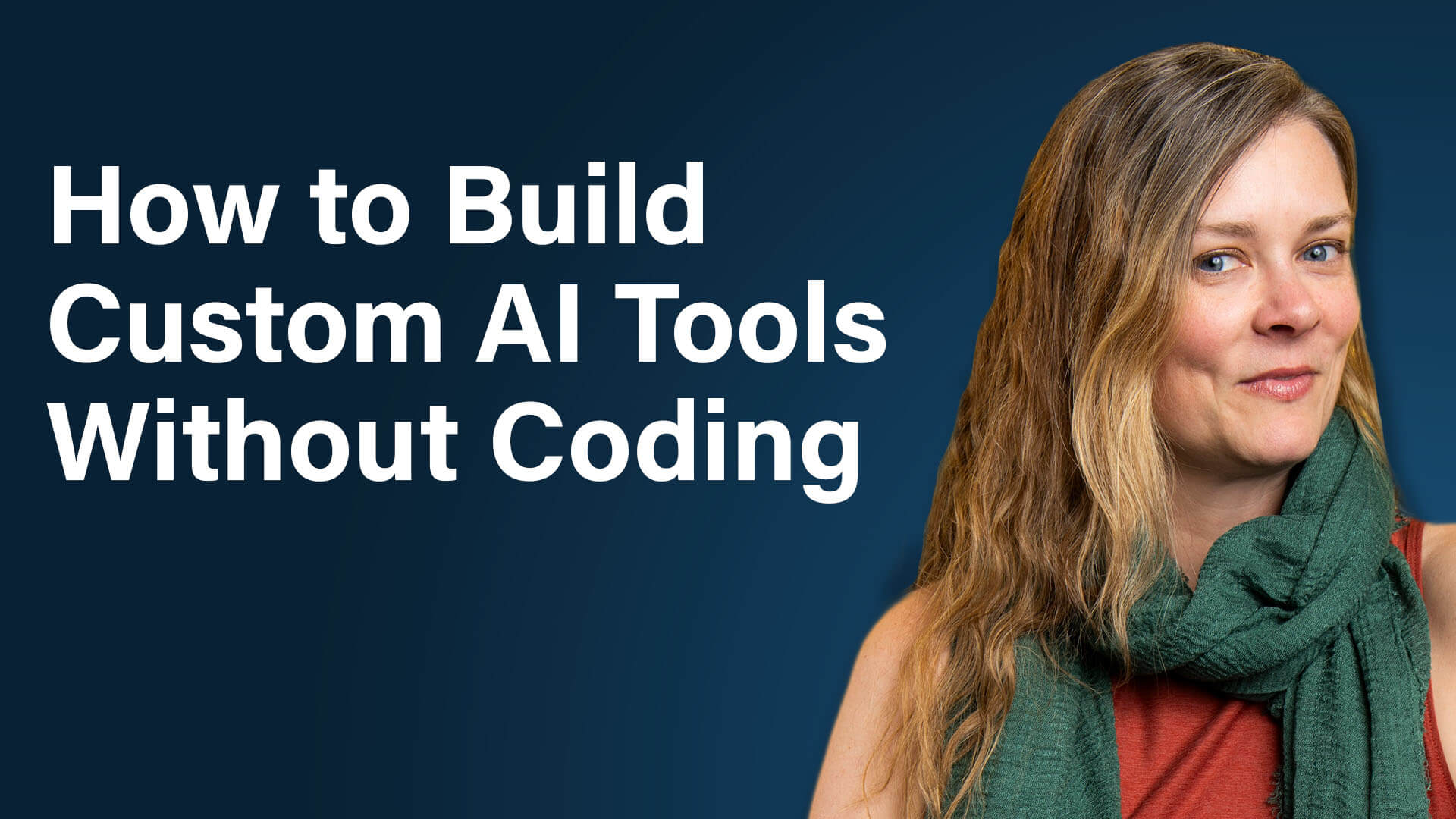
- The Mindset Shift: Transitioning from a software consumer to a software builder allows you to solve niche, highly specific business challenges that commercial platforms ignore.
- Start Small (The Skateboard Approach): Avoid over-engineering your first build. Implement a simple framework that prevents your project from stalling, focusing on a single core utility before adding advanced features.
- The Pre-Build Document: Leverage AI to interview you and generate the precise technical specifications document that developers typically require. Completing this before opening a building platform saves both time and capital.
- Vibe Coding vs. Code-Based Platforms: Understand the functional divergence between all-in-one no-code platforms (like Lovable) and code-centric environments (like Claude Code), noting the specific security and user-access requirements needed before public deployment.
- Security and Maintenance: Establish baseline security audits and rigorous backup protocols from day one to ensure a single flawed update does not compromise your entire application infrastructure.
Industry Updates: Major Tech Moves and Official Responses
1. Google Brings Reusable Skills to Gemini
Google is modernizing user workflows by introducing Skills globally within Gemini chat. This feature enables users to save frequently used instructions, incorporate reference files, and execute multi-step logic automatically upon receiving relevant prompts.
- Official Integration: Skills can be chained together to manage complex tasks—such as generating copy that concurrently adheres to a user’s unique writing style and strict corporate brand guidelines.
- Migration Path: As Google rolls out sharing capabilities and deeper Workspace integrations, legacy Gems will be automatically migrated and phased out in favor of the more flexible Skills framework.
2. Gemini 4 Argon: Engineered for Enterprise Security
Positioned as one of Google’s most powerful models to date, Gemini 4 Argon is explicitly engineered for long-horizon reasoning across software engineering, research, and visual analysis.

- Defensive Cyber Capabilities: Trained extensively for security operations, Argon can autonomously identify, validate, and patch critical system vulnerabilities.
- Fairwind Program Access: Currently restricted to select security partners via Google’s Fairwind Program, internal teams are already utilizing the model for codebase migrations and advanced debugging.
3. Meta’s Personal Agent Protocol
To bridge the gap between consumer-facing assistants and corporate infrastructure, Meta—in collaboration with Sierra and various commerce partners—has previewed the Personal Agent Protocol.
- Standardized Interaction: The protocol establishes uniform rules for authentication, identity management, and API communications, allowing personal agents (such as Meta’s Muse) to interact directly with enterprise customer service and sales agents without relying solely on brittle browser automation.
- Open Infrastructure: Meta has confirmed the protocol will remain fully open source, inviting developers and businesses to build upon a shared foundation for agent-driven commerce.
4. OpenAI Expands ChatGPT Ads and Measurement Tools
OpenAI is scaling its advertising ecosystem by introducing native visual ad formats during the image generation phase. This gives brands a direct touchpoint as users explore visual concepts and purchasing decisions.

- Full-Funnel Accountability: To ease brand safety concerns, OpenAI is expanding its partner ecosystem to include advanced conversion attribution, incrementality tracking, and independent evaluation pilots.
- Privacy Controls: The organization reiterates that ad placements remain strictly segregated from conversational output, maintaining strict boundaries to safeguard user data privacy.
Implications for Marketers, Developers, and Businesses
The convergence of advanced AI models, open agent protocols, and democratization of software development carries profound implications for the digital economy:
- Operational Agility: Businesses that embrace internal app-building workflows will dramatically lower their software overhead, creating bespoke solutions that outpace rigid, off-the-shelf SaaS alternatives.
- The Rise of Agentic Commerce: With Meta and other tech giants laying the groundwork for standardized agent communication, brands must prepare their digital infrastructure for machine-to-machine transactions. Marketing strategies will soon need to account for AI agents as primary buyers and decision-makers.
- The Necessity of Hands-On Mastery: As theoretical knowledge becomes commoditized, the professional divide will widen between those who passively consume AI tutorials and those who actively deploy code, build custom tools, and master iterative multi-step workflows.
Summary
The message from the current technological landscape is clear: adaptation requires action. Whether through refining AI design prompts, building custom micro-apps without a technical background, or preparing for a future dominated by autonomous agents, the tools are now available to reshape how we work. The challenge for professionals is no longer learning what AI can do, but executing how to apply it to everyday business reality.