The Final Curtain: India Mourns the Loss of Cinema Maverick Nana Patekar
Introduction: A Titan Departs
The Indian film industry and the nation at large are in mourning following the passing of Nana Patekar, one of the most formidable and transformative actors in the history of Indian cinema. Patekar, 75, passed away in the early hours of Thursday, October 8, 2026, at his residence in Goa. Preliminary medical reports suggest the actor suffered a massive heart attack.
Known for his intensity, unorthodox acting style, and a gravelly voice that could command attention in any room, Patekar was more than just a performer; he was a cultural institution. From the gritty streets of Mumbai portrayed in his early works to the humanitarian battlegrounds of drought-prone Maharashtra through the NAAM Foundation, his life was defined by a commitment to the "earthy" and the authentic.
Chronology of the Final Hours
The news of Patekar’s passing sent shockwaves through the country. According to associates close to the family, the actor had been in Goa for a brief period of rest. The tragedy unfolded in the early morning hours of October 8, leaving the nation reeling as news outlets confirmed his demise.
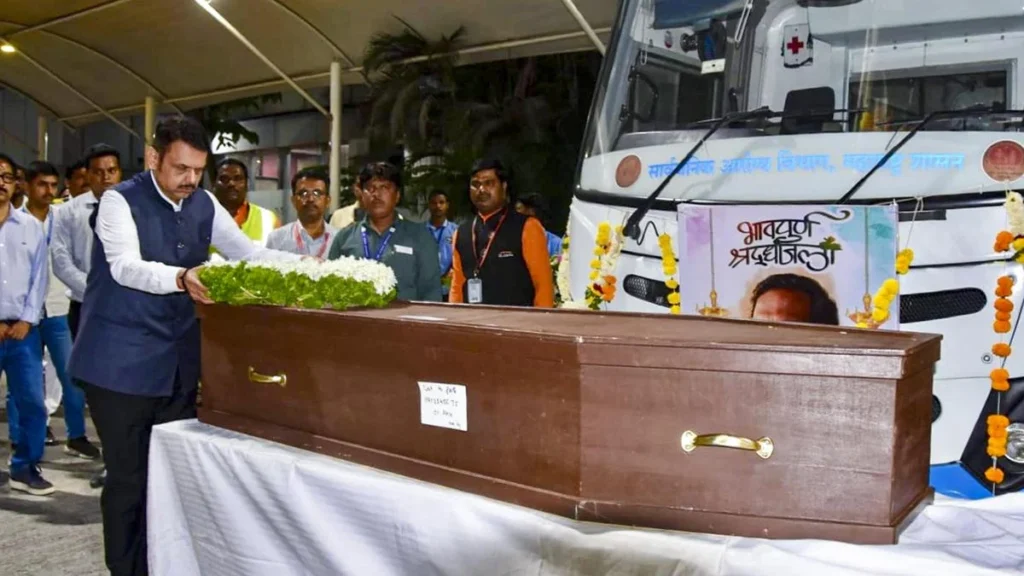
By late afternoon, arrangements were made to transport his mortal remains to Pune. The Pune International Airport became a site of solemnity as a VVIP delegation, led by Maharashtra Chief Minister Devendra Fadnavis, arrived to receive the body. Mr. Fadnavis, visibly moved, placed a wreath on the casket, signifying the State’s recognition of a man who had not only entertained the masses but had served the underprivileged with equal fervor.
Following the arrival, the mortal remains were taken to his beloved farmhouse in Donje village, a place he had explicitly requested as his final resting place. Under the shroud of darkness, amidst a sea of thousands of mourners chanting "Nana Amar Rahe," his son, Malhar Patekar, performed the final rites. The cremation was conducted with full State honors, a testament to his monumental contributions to both art and social welfare.
A Legacy of Intense Performances
To understand the void left by Nana Patekar, one must revisit his filmography. He was not a traditional "hero" in the conventional Bollywood sense; he was a character actor who redefined the leading man.
His breakthrough performances in films like Krantiveer (1994) earned him a National Film Award, cementing his reputation as an actor who could project righteous fury like no other. In Sanjay Leela Bhansali’s Khamoshi: The Musical, he displayed a vulnerable, nuanced side, proving that his range extended far beyond the "angry young man" archetype.
Whether playing a corrupt politician, a tortured soldier, or a devoted father, Patekar’s method was always internal. He brought a sense of realism that bridged the gap between commercial cinema and parallel art-house films. His dialogue delivery—often characterized by a rhythmic, staccato cadence—became a hallmark that was frequently mimicked but never replicated.
The Humanitarian: Beyond the Silver Screen
Perhaps the most enduring part of Patekar’s legacy is his work with the NAAM Foundation. Co-founded with actor Makarand Anaspure, the foundation became a lifeline for farmers in the drought-stricken regions of Maharashtra.
Unlike many celebrities who treat social work as a secondary concern, Patekar lived it. He spent years on the ground, witnessing the plight of agrarian families, fighting for water conservation, and providing direct financial aid. His son, Malhar, touched upon this during the funeral proceedings, noting that his father’s most important teaching was the call for humanity to unite.
"His work through the NAAM Foundation was unparalleled," Malhar stated. "We will take it forward." This commitment to social justice earned him the respect of those who had never even seen his films, effectively making him a hero in the literal sense of the word.

Official Responses and Public Outpouring
The funeral at Donje village was attended by a cross-section of Indian society, underscoring the universal appeal of the late actor. The presence of Maharashtra Deputy Chief Minister Sunetra Pawar, Union Ministers Ramdas Athawale and Murlidhar Mohol, and several state ministers highlighted the political weight Patekar commanded.
The film industry was represented by stalwarts including Jackie Shroff, Sajid Nadiadwala, and Anil Sharma. Their presence was a nod to a man who was known as a "maverick" behind the scenes—someone who was often difficult to work with but impossible to ignore due to the sheer genius he brought to the set.
FDA commissioner Tukaram Mundhe and other public officials were also present, a rare convergence of bureaucrats, politicians, and artists, all gathered to pay respects to a man who refused to be boxed into any single category.
Implications: The End of an Era
The death of Nana Patekar marks the closing of a chapter in Indian cinema that prioritized substance over style. In an era where digital presence and PR-driven stardom dominate, Patekar was an anomaly. He kept his private life intensely guarded and his public life focused on the marginalized.
The industry now faces a significant challenge: who will carry the torch of such raw, unfiltered performance art? Furthermore, the future of the NAAM Foundation rests on the shoulders of his successors. Given the immense scale of the foundation’s operations, the transition will be closely watched by the public and the millions of farmers who depend on its interventions.
Analysis: The "Nana" Phenomenon
Analysts often categorize Patekar as an actor who "lived" his characters. Unlike many of his contemporaries who relied on vanity, Patekar relied on truth. His preparation for roles was legendary, often spending days among the people he was portraying to understand their gait, their speech, and their pain.
His death also highlights the fragility of the "old guard" of Indian cinema. As the generation of actors who defined the 80s and 90s begins to fade, there is a palpable sense of loss regarding the specific brand of storytelling they championed—stories that were rooted in the socio-political reality of India rather than the aspirational, globalized narratives common today.
Conclusion: A Farewell to the Maverick
As the sun rose on October 9, 2026, the quiet village of Donje remained the site of a profound national loss. Nana Patekar, the man who brought the conscience of the common man to the silver screen, has left behind a legacy that will be studied for generations.
He taught us that one could be a star and yet remain grounded, that one could be angry yet compassionate, and that the greatest performance of all is the one that touches the lives of the needy. As his son vowed to continue the mission of the NAAM Foundation, it is clear that while the actor has departed, the work for which he fought so tirelessly must endure.
The nation says goodbye to an artist, an activist, and a man of the people. Nana Patekar, you were the voice for the voiceless and the face of the resilient. You will be missed, but your contribution to the soul of India remains indelible.
Key Figures in Attendance:
- Political: Devendra Fadnavis (CM, Maharashtra), Sunetra Pawar (Deputy CM), Ramdas Athawale (Union Minister), Murlidhar Mohol (Union Minister), Chandrakant Patil, Uday Samant, Madhuri Misal, Sunil Tatkare (MP).
- Artistic/Social: Malhar Patekar (Son), Makarand Anaspure (Actor/Co-founder), Jackie Shroff (Actor), Anil Sharma (Filmmaker), Sajid Nadiadwala (Filmmaker).
- Administrative: Tukaram Mundhe (FDA Commissioner).