New Delhi Under Siege: Capital Turned Into a Fortress as CJP Calls for ‘Jantar Mantar 2.0’
NEW DELHI — The national capital has effectively been brought to a standstill on October 10, 2026, as authorities implemented draconian security measures in response to a mass protest call by the Cockroach Janta Party (CJP). The political organization, which has been gaining significant traction in recent months, issued a "Final Call to Save Democracy," demanding the immediate resignation of Chief Election Commissioner (CEC) Gyanesh Kumar and the wholesale rollback of the Special Intensive Revision (SIR) of electoral rolls.
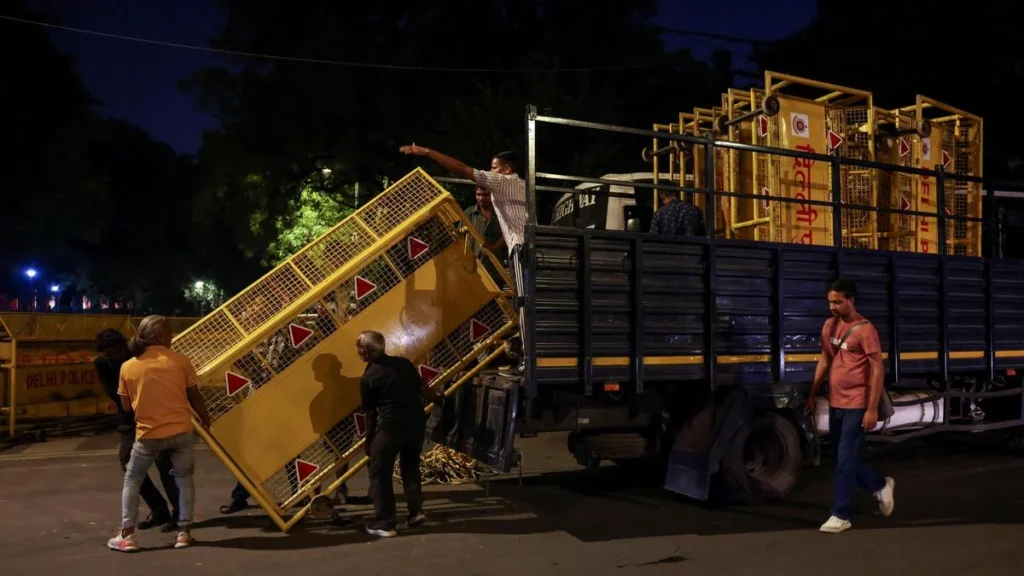
By the early hours of Saturday, central Delhi had been transformed into a virtual fortress. The streets surrounding the historic Jantar Mantar protest site, usually a hub of democratic dissent, were lined with miles of iron barricades, concrete blocks, and thousands of security personnel drawn from the Delhi Police and central paramilitary forces.
The Genesis of the Confrontation: Main Facts
The standoff stems from a deepening crisis of confidence between the CJP and the Election Commission of India (ECI). The CJP, led by a coalition of grassroots activists and political dissidents, has alleged that the recent Special Intensive Revision of electoral rolls is a strategic attempt to disenfranchise specific demographics.
The party’s demand for the resignation of CEC Gyanesh Kumar is rooted in these allegations, with the CJP claiming that the current electoral oversight process lacks the transparency required for free and fair elections. Despite the Delhi Police officially denying permission for the October 10 gathering—citing public order concerns and alleged violations during previous demonstrations—the CJP leadership has remained defiant. Their social media channels and underground networks have continued to urge supporters to converge on the city, framing the protest as an existential struggle for India’s democratic future.
A City Under Lockdown: Chronology of Restrictions
The administrative response to the planned demonstration has been unprecedented, drawing comparisons to the most restrictive security protocols witnessed in the capital in decades.
- October 8, 2026: As rumors of a large-scale mobilization solidified, the Delhi Police issued formal notices to student unions and known CJP supporters across the country, warning them against participating in the "unauthorized" protest.
- October 9, 2026: In a coordinated effort, the Ministry of Home Affairs (MHA) directed states and Union Territories to intercept any transit movement of protesters heading toward Delhi. Simultaneously, local police began a house-to-house identification drive, compiling a database of potential demonstrators.
- October 10, 2026 (04:00 AM): The city woke to a total communication and transit blackout. Internet services were suspended in key transit corridors and protest zones to prevent the organization of flash mobs.
- October 10, 2026 (07:00 AM): Metro stations in central and New Delhi districts were shuttered indefinitely. Major arterial roads were closed, and dozens of inter-state trains bound for the capital were cancelled or terminated at outer-city stations to prevent the influx of demonstrators.
The Legal Landscape: SC Intervention and the Right to Protest
The intensity of the state’s response has invited scrutiny from the judiciary. In a significant development just days before the protest, the Supreme Court of India intervened, asserting the fundamental right to peaceful association and assembly.
The Court observed that a "blanket transit ban" across the city was "over-reaching" and disproportionate to the stated security concerns. While the Supreme Court did not explicitly grant the CJP permission to protest at a location already restricted by law, its commentary signaled a rebuke to the administration’s heavy-handedness. Legal experts argue that the state’s decision to cancel trains and shut down essential services to stop a protest sets a dangerous precedent for civil liberties in the country.
Official Responses and Administrative Rationale
The Ministry of Home Affairs (MHA) has defended the security measures, describing them as "preventive steps" essential to maintaining public order. A senior official stated, "The intelligence inputs suggested a high risk of infiltration by elements aiming to disrupt public peace. The administration has a duty to ensure that the city’s life is not paralyzed by unlawful assemblies."

Meanwhile, the Election Commission of India (ECI) has maintained a stoic silence regarding the specific demands of the CJP. An official spokesperson for the ECI reiterated that the Special Intensive Revision process is a routine administrative procedure conducted in accordance with the Representation of the People Act, and that the Commission remains committed to maintaining the sanctity of the voter list.
Implications for the Indian Political Climate
The "Jantar Mantar 2.0" movement is being viewed by political analysts as a litmus test for the resilience of grassroot political movements in the digital age. By organizing through decentralized platforms, the CJP has managed to bypass traditional media channels, forcing the state into a reactive, defensive posture.
1. Erosion of Democratic Spaces
The most immediate implication of the current standoff is the shrinking space for public dissent in the capital. The systematic closure of Metro stations and the implementation of internet blackouts suggest a growing trend where the state prioritizes urban functionality and security over the democratic right to gather.
2. The Future of the Election Commission
The focus on CEC Gyanesh Kumar reflects a wider trend of declining trust in independent constitutional bodies. If the CJP succeeds in sustaining this pressure, it could lead to a permanent shift in how the public engages with the ECI, potentially demanding more radical transparency measures, such as real-time auditing of electoral rolls by non-partisan third parties.
3. The "Gen-Z" Political Factor
The imagery emerging from the protest—showcasing a young, digitally-savvy cadre of supporters—highlights the rise of a new brand of politics. This demographic is less tethered to traditional political parties and more driven by specific ideological grievances. Their ability to mobilize, even in the face of widespread detentions and administrative roadblocks, suggests that the state may find it increasingly difficult to suppress such movements using legacy containment tactics.
Conclusion: A Fragile Equilibrium
As the sun sets on October 10, the atmosphere in New Delhi remains tense. While the government claims success in preventing large-scale violence by effectively sealing the city, critics argue that the cost has been the temporary suspension of basic democratic rights.
The standoff between the CJP and the state is far from over. As the government continues to build its case against the organizers, the supporters of the "Jantar Mantar 2.0" movement are already looking toward the next phase of their campaign. Whether this movement will lead to a change in the Election Commission’s policies or if it will be absorbed by the machinery of the state remains to be seen. For now, the events of today serve as a stark reminder of the fragile equilibrium that exists between national security and the fundamental freedoms that define the Indian republic.