The Future of Digital Engagement: Defining the Marketing Landscape for the Coming Year
Marketing, much like the e-commerce ecosystem it supports, exists in a state of perpetual metamorphosis. Every calendar year brings a fresh wave of innovation, often catalyzed by the bold strategies of industry titans or the disruptive conceptual frameworks introduced by boutique creative agencies. As we move further into the current decade, the marketing paradigm is being fundamentally rewritten, shifting away from broadcast-style messaging toward deeply integrated, social-first, and algorithmically driven interactions.
The stakes have never been higher. With marketing budgets—both organic and paid—ballooning in response to increasingly fragmented consumer attention, brands are under immense pressure to prove ROI. Success today is no longer defined by reach alone, but by the ability to intersect with the consumer at the precise moment of intent, on the channel they trust most. To navigate this complexity, we must analyze the emerging pillars of modern marketing strategy.
The Evolution of Marketing: A Chronology of Change
The trajectory of modern marketing can be viewed as a shift from mass communication to hyper-individualized dialogue.
- The Era of Mass Broadcast (Pre-2010): Marketing relied on broad-spectrum media, where TV, radio, and print defined the reach. Data was limited, and feedback loops were slow.
- The Rise of Digital Infrastructure (2010–2018): The explosion of search engines and social media platforms allowed for the first wave of targeted digital advertising. Data collection became the new currency.
- The Interactional Shift (2018–2022): Marketing moved toward engagement. Video became the primary medium, and social proof (influencers and reviews) became as important as the product itself.
- The Current Frontier (2023–Present): We are now in the age of "Intelligence and Intent." Marketing is defined by AI-driven personalization, the integration of sustainability as a core brand pillar, and the move toward conversational, friction-free discovery.
1. Responsible Artificial Intelligence: The New Ethical Standard
As AI moves from a novelty to an operational necessity, a critical shift is occurring: the move toward "Responsible AI." This is no longer just about efficiency; it is about building trust.
The Pillars of Ethical AI
Responsible AI mandates that brands move beyond the "black box" model. Key principles include:
- Algorithmic Transparency: Brands must be clear about how they use customer data to generate recommendations.
- Bias Mitigation: AI models must be trained on diverse datasets to ensure that marketing automation does not unintentionally exclude or stereotype demographics.
- Data Sovereignty: With increasing privacy regulations (such as GDPR and CCPA), companies must prioritize the ethical collection and storage of user data, ensuring it is used only for the benefit of the user experience.
The implication for the industry is clear: the brands that win the next decade will be those that use AI to humanize their service, not those that use it to replace human interaction with cold, automated efficiency.
2. Sustainability: From Niche to Necessity
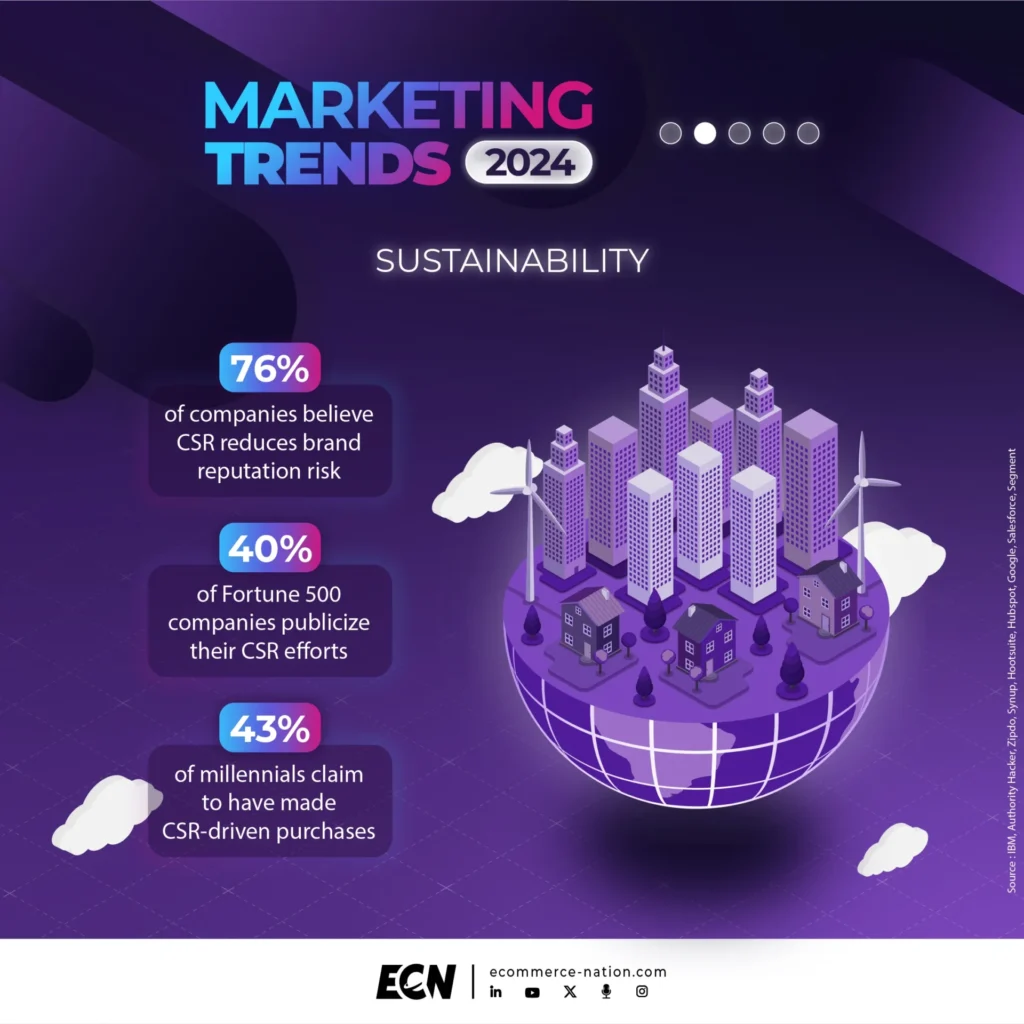
Sustainability is no longer a "nice-to-have" or a footnote in a corporate social responsibility report. For the modern consumer, it is a primary driver of brand loyalty.
Communicating Value in a Green Economy
Marketing departments are now responsible for bridging the gap between intention and action. This involves:

- Radical Transparency: Utilizing blockchain technology to allow consumers to track the supply chain of a product—from raw material sourcing to final delivery—creates an unassailable level of trust.
- The Influencer Role: Influencer marketing has shifted toward "advocacy marketing." Brands are increasingly partnering with niche creators who specialize in sustainable living, providing authentic testimonials that resonate more deeply than traditional celebrity endorsements.
- Incentivized Stewardship: Through loyalty programs, brands are now rewarding sustainable behaviors, such as returning packaging for recycling or opting for carbon-neutral shipping options. This gamification of sustainability turns ethical consumption into a communal, engaging activity.
3. Conversational Search: Redefining Discoverability
The way consumers interact with the internet is changing. We are moving away from the "keyword-based search" model toward "conversational discovery."
The Rise of Voice and Intent
Voice search is no longer a futuristic concept; it is a daily habit for millions. Smart assistants like Alexa, Siri, and Google Assistant have become the intermediaries between the consumer and the brand.
Strategic Implications:
- Semantic Optimization: To rank in a voice-search world, content must be written in natural language. It must answer the "Who, What, Where, and Why" of a user’s query.
- Contextual Awareness: Modern AI assistants understand context. If a user asks, "Where can I buy organic coffee near me?" the search engine must synthesize geolocation, store hours, and user reviews instantly. Marketers must optimize their business profiles to provide this data in a structured, machine-readable format.
4. The Short-Form Video Revolution
Attention spans are at an all-time low, making short-form video the most effective tool in the modern marketing arsenal.

The Two-Pronged Strategy
- High-Velocity Social Content: Platforms like TikTok, Instagram Reels, and YouTube Shorts have conditioned users to digest information in 15 to 30-second bursts. Success here requires a "hook-first" mentality, where the value proposition is delivered in the first three seconds.
- Immersive Interactivity: The next phase of video is spatial. Using Augmented Reality (AR) and Virtual Reality (VR), brands are allowing customers to "try before they buy" in a digital space. A furniture brand using AR to let a user place a sofa in their living room is not just selling a product; they are reducing the friction of the purchasing decision.
5. Hyper-Personalization: The End of the "Average" Customer
The final, and perhaps most important, trend is the death of mass marketing. In the age of big data, "one-size-fits-all" is synonymous with "irrelevant."
Data-Driven Individualization
Hyper-personalization uses machine learning to create a "segment of one." Instead of grouping users into broad categories like "Millennials" or "Tech Enthusiasts," brands are now using predictive analytics to understand individual user journeys.
Key Tactics:
- Predictive Recommendations: Analyzing past purchase behavior to predict future needs before the customer even realizes them.
- Dynamic Website Content: A landing page that changes its imagery, copy, and offers based on the visitor’s past interactions, location, and device type.
- Omnichannel Continuity: If a customer abandons a shopping cart on mobile, the email follow-up should be personalized to that specific item, perhaps offering a limited-time discount to close the deal.
Implications for the Future
The shift toward these five trends—Responsible AI, Sustainability, Conversational Search, Short-Form Video, and Hyper-Personalization—signals a broader transition toward a more mature, human-centric digital economy.

Supporting Data and Industry Outlook:
Recent market analyses suggest that companies adopting AI-driven personalization see an average revenue increase of 15% to 20%. Simultaneously, data indicates that 70% of Gen Z consumers prioritize brands that demonstrate environmental accountability.
Official Responses:
Leading industry bodies and marketing associations have emphasized that while the technological landscape is shifting, the fundamentals remain: empathy, clarity, and value. The "official" stance among top-tier CMOs is that technology should be used as a force multiplier for human creativity, not a replacement for it.
Conclusion: Staying Relevant
To remain relevant in the coming year, businesses must be willing to experiment. The digital landscape will continue to evolve, but the goal remains the same: to deliver the right message, to the right person, at the right time. By embracing these trends, organizations can transform their marketing from a cost center into a powerful engine for sustainable growth.
For those looking to deepen their understanding, we have provided an accompanying infographic (see documentation) detailing the specific KPIs you should track for each of these five emerging trends to ensure your acquisition channels remain robust and high-performing.