The State of Modern CSS: Tooltips, Native Geolocation Elements, and the Future of Selectors
As the digital landscape transitions into a new seasonal cycle, the web development community continues to push the boundaries of what is possible with native HTML and CSS. Edition #18 of What’s !important highlights a massive wave of innovation, bringing forward new layout paradigms, native API expansions, and highly anticipated syntactic sugar designed to make developer workflows cleaner and user experiences smoother.
From advanced tooltip mechanics and native geolocation UI elements to groundbreaking proposals like the class prefix selector, the past few weeks have proved that CSS is evolving faster than ever.
Main Facts: The Cutting Edge of Web Development
The latest developments in frontend engineering focus heavily on progressive enhancement, performance, and reducing reliance on heavy JavaScript libraries. Key developments include:
- Intelligent Tooltip Design: Moving beyond simple hover states, developers are utilizing delayed-then-instant tooltip patterns to eliminate accidental triggers while maintaining immediate dismissal.
- The
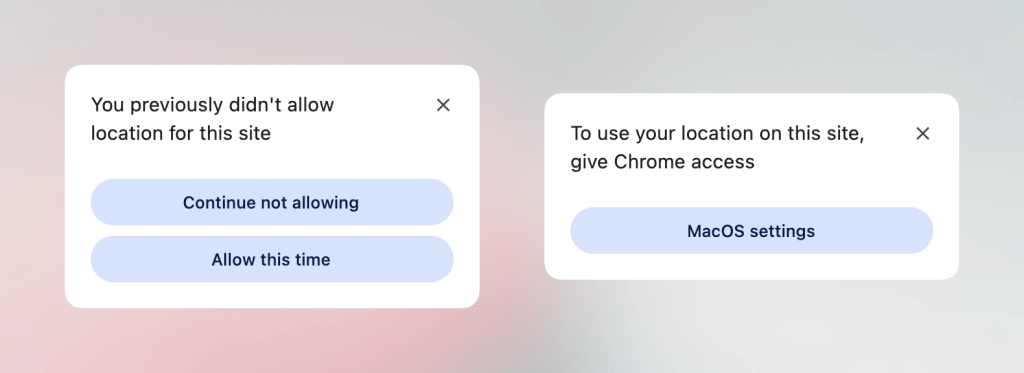
<geolocation>Element: Bridging the gap between cumbersome JavaScript Geolocation APIs and native browser capabilities, a new HTML element is simplifying location requests—though styling limitations remain. - MicroLighter Syntax Highlighting: Leveraging the modern
::highlight()API via the Custom Highlight API, lightweight syntax highlighters are dropping heavyweight JS parsers. - CSS Grid Metaprogramming: Temani Afif has unlocked methods to pipe CSS grid structural information—such as row/column counts and cell coordinates—directly into CSS custom properties.
- Next-Generation Selectors: Bramus introduced the proposed class prefix selector (
.something-*), which promises vastly superior performance compared to traditional attribute-based substring matching. - Feature Detection Advancements: The introduction of
@supports (named-feature())allows developers to test granular, otherwise undetectable browser capabilities. - Balanced Flexbox Layouts: Following in the footsteps of
text-wrap: balance, Chrome has introduced experimental support forflex-wrap: balance, letting layout artists evenly distribute wrapped flex items automatically.
Chronology: A Rapid Fortnight of Frontend Innovation
The past two weeks have seen an unusually high volume of specification proposals, technical deep dives, and community discourse.
The cycle kicked off with UX ergonomics, specifically addressing the eternal annoyance of poorly timed tooltips. Abhishek Jakhar published a comprehensive guide on implementing tooltips that require a deliberate delay before appearing, but vanish instantly once the user moves away. Shortly after, Chris Coyier expanded on this by showcasing modern implementations using native HTML interest invokers powered by interest-delay-start and interest-delay-end CSS properties.
Mid-month, attention shifted heavily toward native browser features. Developers began experimenting with the <geolocation> element, prompting architectural write-ups on how to blend it with legacy fallback APIs using progressive enhancement. Concurrently, Dave Rupert dropped MicroLighter, a demonstration of how the Custom Highlight API can revolutionize lightweight code presentation.
As the month closed out, CSS spec discussions dominated the community. Bramus published a rapid-fire series of proposals and updates, introducing the class prefix selector on August 20, followed closely by the @supports named-feature() function on August 27. Simultaneously, layout experts like Temani Afif and Ahmad Shadeed published breakthrough articles on grid variable extraction and flex-item balancing, respectively.
Supporting Data and Technical Implementation
To understand the weight of these updates, one must examine the underlying code mechanics that make these features both compelling and performant.
1. Tooltips and Interest Invokers
Traditional tooltips often suffer from either feeling sluggish or firing accidentally when a mouse cursor sweeps across a page. By leveraging Chrome’s emerging support for interest invokers, developers can control timing natively via CSS:
.my-element
  interest-delay-start: 400ms;
  interest-delay-end: 0ms;
Note: While current browser support is limited primarily to Chrome, the pattern gracefully degrades in unsupported environments.
2. The Performance Case for Class Prefix Selectors
One of the most exciting theoretical additions to the language is the class prefix selector. Historically, targeting classes with shared naming conventions required clunky attribute selectors:
/* Legacy approach (performance heavy) */
[class^="something-"]
  /* Matches class="something-xxx" */
The proposed class prefix syntax offers a cleaner, significantly more optimized parsing path for the browser engine:
/* Proposed syntax */
.something-*
  /* Clean, optimized, and developer-friendly */
3. Grid Information in CSS Variables
Temani Afif’s recent discovery allows CSS grid layouts to introspect themselves. By calculating row and column indexes and feeding them directly into custom properties, developers can compute complex spatial relationships—such as cursor hover proximity—entirely in style sheets without relying on JavaScript event listeners to track mouse coordinates against DOM rectangles.
Official Responses and Community Debate
As is standard in the vibrant CSS community, major architectural shifts have sparked healthy debates among developers and specification authors.
The Dark Mode Toggle Schism
A lively debate has emerged regarding the ideal implementation of dark mode toggles.
- Lea Verou advocates for a streamlined two-state approach.
- Bramus makes a strong case for a tri-state configuration (Light, Dark, and System Default).
- Meanwhile, developers like Vale.Rocks have popularized a nuanced hybrid: an "auto-until-overridden" two-state approach that respects system preferences by default while allowing manual persistence if a user explicitly makes a choice.
Progressive Enhancement and the <geolocation> Element
The introduction of the <geolocation> HTML element has received a mixed, albeit optimistic, reception. While it dramatically simplifies the acquisition of location data compared to the old JavaScript-driven navigator.geolocation paradigms, it introduces restrictive styling boundaries that limit how deeply developers can customize the native browser permission dialogs and UI surfaces. Experts emphasize that until multi-browser consensus is reached, pairing it with defensive fallback patterns is mandatory.
Implications for the Future of Web Development
The cumulative effect of these updates points toward a clear trajectory for the web platform: shifting logic from JavaScript to native HTML and CSS.
- Reduced JavaScript Footprint: Tools like MicroLighter prove that syntax highlighting no longer requires heavy DOM manipulation or complex parser scripts. By leaning on the
::highlight()API, text styling happens instantly and safely within the browser’s rendering pipeline. - Enhanced Layout Intelligence: Features like
flex-wrap: balanceand grid variable mapping signify that CSS is evolving from a static styling language into a reactive layout engine capable of making dynamic typographic and spatial decisions on the fly. - Developer Experience (DX) Upgrades: Syntactic additions like class prefix selectors and native interest invokers drastically reduce boilerplate code, lowering the barrier to entry for clean, performant web design.
As autumn arrives, the frontend ecosystem finds itself in a remarkably robust place. With browsers steadily adopting these forward-looking APIs, developers have a powerful toolkit to build faster, smarter, and more resilient web applications than ever before.