AWS Expands Generative AI Capabilities with OpenAI-Powered Bedrock Managed Agents and Streamlines Product Lifecycles
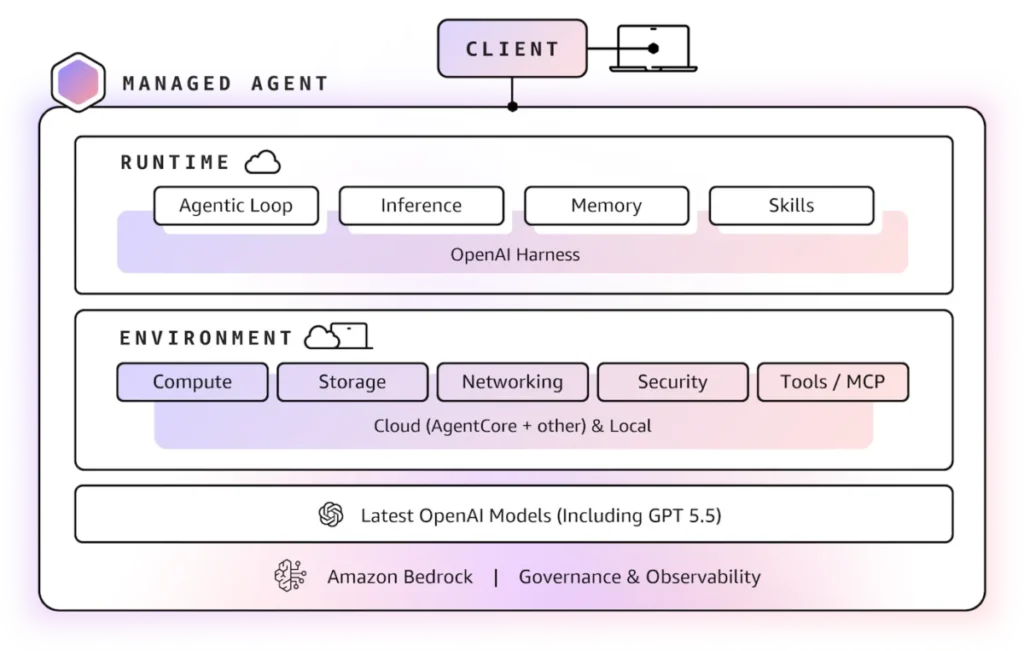
SEATTLE — Amazon Web Services (AWS) has announced a significant expansion of its artificial intelligence ecosystem, headlined by the public preview of Amazon Bedrock Managed Agents powered by OpenAI. Revealed last week by principal developer advocate Channy Yun, this integration brings a customized version of OpenAI’s Agents API directly into the AWS environment.
The launch marks a notable bridge between major AI architecture providers, allowing enterprises to leverage OpenAI’s cutting-edge models while maintaining native integration with AWS security, identity management, and governance frameworks. Alongside this flagship announcement, AWS detailed updates to its model catalog, execution environments, and routine product lifecycle modifications intended to streamline enterprise cloud architectures.
Main Facts: Bridging OpenAI and AWS Infrastructure
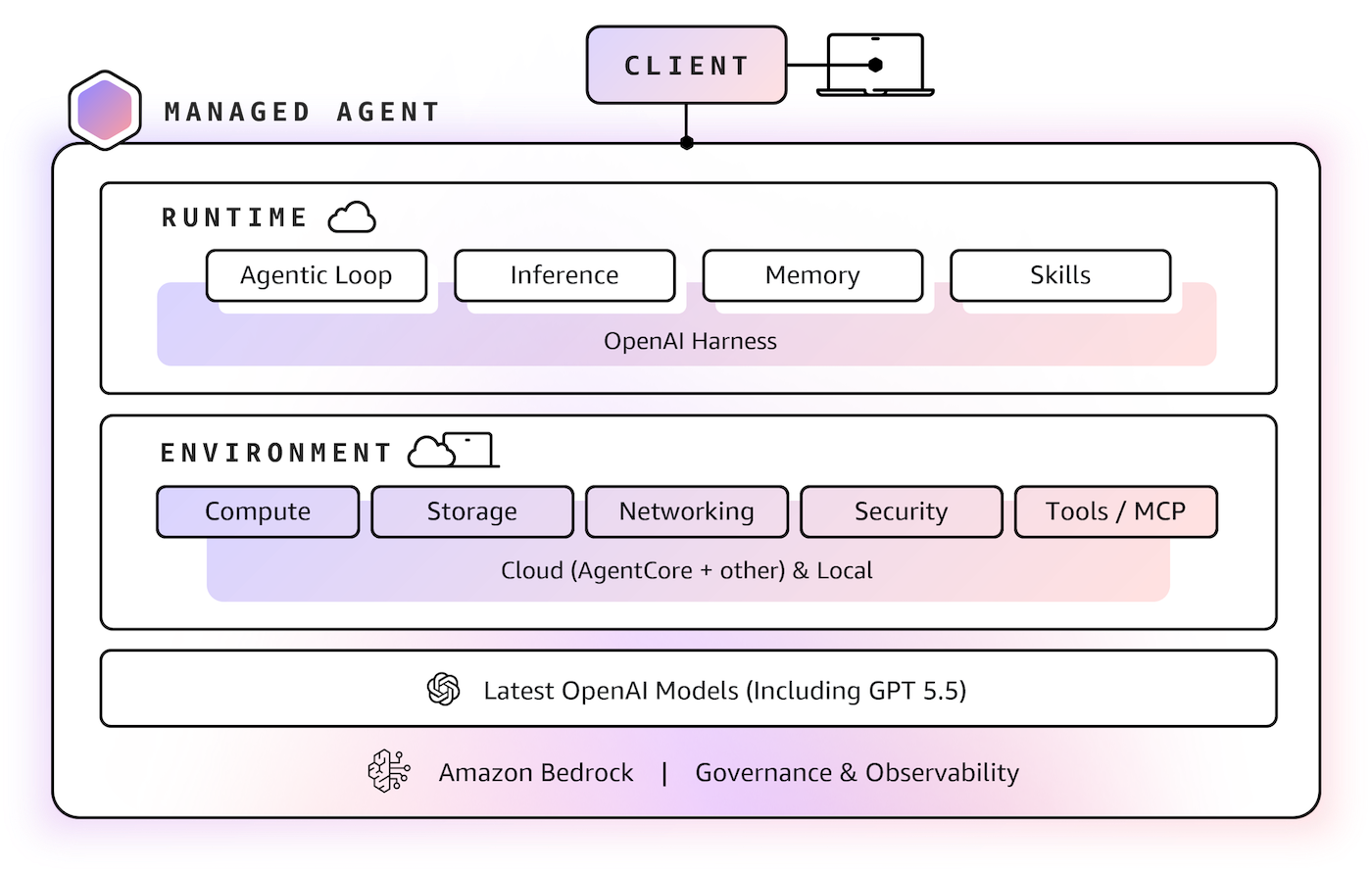
The core announcement centers on Amazon Bedrock Managed Agents powered by OpenAI. Built on a specially tailored derivative of OpenAI’s Agents API, the service is engineered to run seamlessly within AWS ecosystems.
- Native AWS Integration: Developers can now build, test, and deploy AI agents optimized for OpenAI models that operate entirely inside AWS. This ensures that organizations do not need to compromise their existing security postures, as the agents utilize established AWS identities, granular permissions, and robust governance controls.
- Flexible Execution Environments: AWS is providing two distinct execution pathways for these agents:
- Self-Hosted Compute: Ideal for developers who want to utilize their existing development machines, custom containers, or preferred compute environments.
- Amazon Bedrock AgentCore Runtime: A fully managed runtime environment that handles session management and offers configurable, secure storage directly within the user’s AWS account.
- Frontier Model Additions: To complement the new agent capabilities, AWS is continuing to expand its model registry on Amazon Bedrock, incorporating additional frontier models to give builders a wider array of choices for specialized workloads.
Chronology: A Week of Cloud Infrastructure and Lifecycle Updates
The recent announcements follow a structured rollout schedule managed by AWS communications and engineering teams:
- Mid-September 2026: AWS prepares the groundwork for upcoming compliance and product life-cycle adjustments, notifying enterprise customers of impending shifts in service availability.
- September 29, 2026: AWS officially updates its Product Lifecycle Changes documentation. Several services and legacy features enter new phases of availability, including transitions into Maintenance, Sunset, and End of Support statuses.
- Early October 2026: The public preview for Amazon Bedrock Managed Agents powered by OpenAI officially goes live, accompanied by architectural documentation and user guides. Channy Yun publishes the weekly roundup detailing the integration alongside upcoming developer and startup events.
- October 29, 2026 (Upcoming): The cutoff date for new customer access to services transitioning into Maintenance mode.
Supporting Data: Service Availability and Lifecycle Modifications
As AWS continues to innovate rapidly in the generative AI and serverless spaces, the cloud giant regularly prunes legacy features and older service tiers to focus engineering resources on modern architecture.
In the September 29, 2026 lifecycle update, AWS outlined key transitions designed to minimize operational disruption while guiding users toward modern alternatives:
1. Services Moving to Maintenance
Services entering this phase will no longer be accessible to new customers starting October 29, 2026. Existing customers are encouraged to begin planning migrations to recommended modern equivalents to ensure uninterrupted operations.
2. Services Entering Sunset
AWS has designated specific legacy tools and configurations to enter the sunset phase. During this period, support is gradually phased out, and telemetry or control-plane updates are frozen.
3. End of Support Milestones
As of September 29, 2026, certain older service versions and niche feature sets have officially reached End of Support, meaning no further security patches, bug fixes, or technical assistance will be provided by AWS Support.
Enterprise Impact: AWS urges organizations affected by these lifecycle changes to consult the official AWS Product Lifecycle Changes documentation immediately. Enterprise account teams and AWS Support are available to assist with migration paths, ensuring that technical debt is systematically addressed before hard cutoff dates arrive.

Official Responses and Documentation
The introduction of OpenAI-powered managed agents within Bedrock has generated significant discussion within the cloud architecture community. By allowing developers to run OpenAI’s agent framework natively inside AWS, the company is directly addressing enterprise demands for cross-platform interoperability without sacrificing data security.
In his weekly briefing, Channy Yun emphasized the practical nature of the new deployment options: "You can now build agents optimized for OpenAI models that run entirely inside AWS with the identities, permissions, and governance controls you already use."
To help engineering teams adopt these new tools, AWS has published extensive guides:
- Amazon Bedrock Documentation: Detailed architecture patterns and setup guides for the new OpenAI-integrated managed agents are available via the official AWS Bedrock User Guide.
- Lifecycle Guidance: Customers seeking alternative solutions for deprecated features can review the AWS Product Lifecycle Changes portal.
Implications: What This Means for Enterprise Builders
The convergence of OpenAI’s agentic workflows with Amazon Bedrock’s secure runtime environments signals a mature phase in enterprise generative AI adoption. Historically, organizations utilizing multi-vendor strategies—such as combining OpenAI’s model capabilities with AWS’s enterprise-grade infrastructure—faced complex integration challenges regarding data egress, IAM role mapping, and compliance auditing.
By abstracting these complexities into the Amazon Bedrock AgentCore Runtime and native IAM policy frameworks, AWS is lowering the friction for enterprise AI deployment. Companies can now orchestrate complex, multi-step autonomous workflows using state-of-the-art models while keeping their core data assets strictly bounded within their private cloud perimeters.
Looking Ahead
As the industry prepares for upcoming flagship events—including AWS re:Invent and regional AWS Community Days—developers and IT leaders are encouraged to engage with the global builder community. Joining the AWS Builder Center provides practitioners with shared solutions, peer-to-peer networking, and technical deep dives designed to accelerate cloud modernization.
For continuous updates on platform changes, feature releases, and community events, professionals should monitor the What’s New with AWS page and check back weekly for comprehensive roundups.