From Expertise to Automation: The New Paradigm of Productized AI
In the rapidly evolving digital landscape, the traditional model of selling knowledge is undergoing a seismic shift. For years, experts, coaches, and consultants have relied on digital courses and static PDFs to scale their impact. However, a new frontier has emerged: the creation of "expert-backed AI tools." By embedding years of hard-won methodology into artificial intelligence, professionals are moving beyond teaching people how to think and are instead empowering them to do the work with unprecedented efficiency.
This article explores how you can transition from selling information to selling implementation, transforming your unique frameworks into recurring revenue streams through AI-powered "bot squads."
The Core Shift: Why Generic AI Isn’t Enough
For many, the initial allure of AI was its ability to provide instant, generic answers. However, as brand and marketing strategist Kelly Sinclair notes, generic AI output suffers from a fundamental flaw: it lacks the "expert lens." While a chatbot can draft a generic content strategy, it cannot validate whether that strategy is built on proven, market-tested decision-making patterns.
The Implementation Revolution
The true value of expert-backed AI lies in its ability to bridge the "implementation gap." Recent data from Thinkific’s 2025 study highlights a persistent problem in the e-learning industry: only 10% to 20% of students typically complete a traditional digital course. When AI tools are integrated into the learning journey, that completion rate skyrockets to 70% to 80%.

The reason is psychological as much as it is technical. Clients often stall due to "blank page syndrome" or the perceived heaviness of a task. By providing a guided, AI-driven path—what Sinclair calls "bot squads"—experts allow clients to move through complex processes with automated momentum, while the expert retains their premium role as a high-level strategist and coach.
Identifying Opportunities: The Four Pillars of Friction
Before building an AI tool, one must identify where it will deliver the highest ROI for the client. Sinclair identifies four primary diagnostic categories that signal a perfect opportunity for automation:
- Repetition: Identify the questions you find yourself answering in every client call. If you are repeating the same advice, you have a candidate for an automated tool that delivers that guidance on demand.
- The Implementation Gap: Look at where clients stop moving forward. If you provide a strategy but clients fail to execute it, an AI tool can act as the "bridge" that turns a static plan into active, guided steps.
- The "Skip Zone": Every professional has a part of their process that clients avoid because it feels too difficult or tedious. By creating a tool that automates the "heavy lift" of these essential steps, you remove the barrier to entry.
- The Confidence Gap: When clients have the knowledge but lack the courage to execute, an AI tool can provide the validation and structured feedback needed to keep them moving toward their goals.
Structuring for Success: The IPO Framework
To build a tool that isn’t just a gimmick, you must follow a rigorous structure. Sinclair advocates for the IPO Framework:
- Input (The Variable): This is the user-specific data—business descriptions, audience insights, or raw notes. The tool must be designed to accept and process this unique information.
- Process (The Expert’s Value): This is the "secret sauce." You must feed the AI your specific transcripts, templates, and successful case studies. The more granular the training material, the more the AI will reflect your unique methodology rather than generic web-scraped data.
- Output (The Deliverable): Clearly define what the tool creates—a pitch deck, a media list, or a marketing audit. By defining the output first, you can reverse-engineer the input and process required to achieve it.
Real-World Implementations: Case Studies in Automation
The efficacy of the IPO framework is best seen in practice. Consider these three distinct approaches to building bot squads:

1. The Research Accelerator
Michelle, a messaging strategist, developed a bot called "Moxie." Instead of doing the heavy lifting of customer research analysis manually, she instructed her clients to input their own voice-of-customer data into Moxie. The bot, trained on Michelle’s specific methodology, identifies key messaging patterns, allowing the client to bypass months of manual research and analysis.
2. The Strategic Redirector
Kelly Sinclair’s "Valerie the Visibility Auditor" serves as a guardian of ROI. It requires clients to input their weekly activities and evaluates them against a strict visibility framework. It then redirects the client from "busy work" (like generic social media posting) toward high-ROI tasks like podcast appearances or collaborations.
3. The Multi-Step Workflow
Journalist and PR coach Nicole utilizes a three-bot sequence. The first bot handles the intake; the second performs targeted, niche-specific research; and the third drafts pitches in the client’s voice. This connected, automated pipeline allows the expert to maintain a high-touch advisory role while the bots handle the mechanical, time-consuming labor.
Technical Delivery: How to Build and Sell
Once the framework is defined, the delivery method determines the scalability and security of your product.
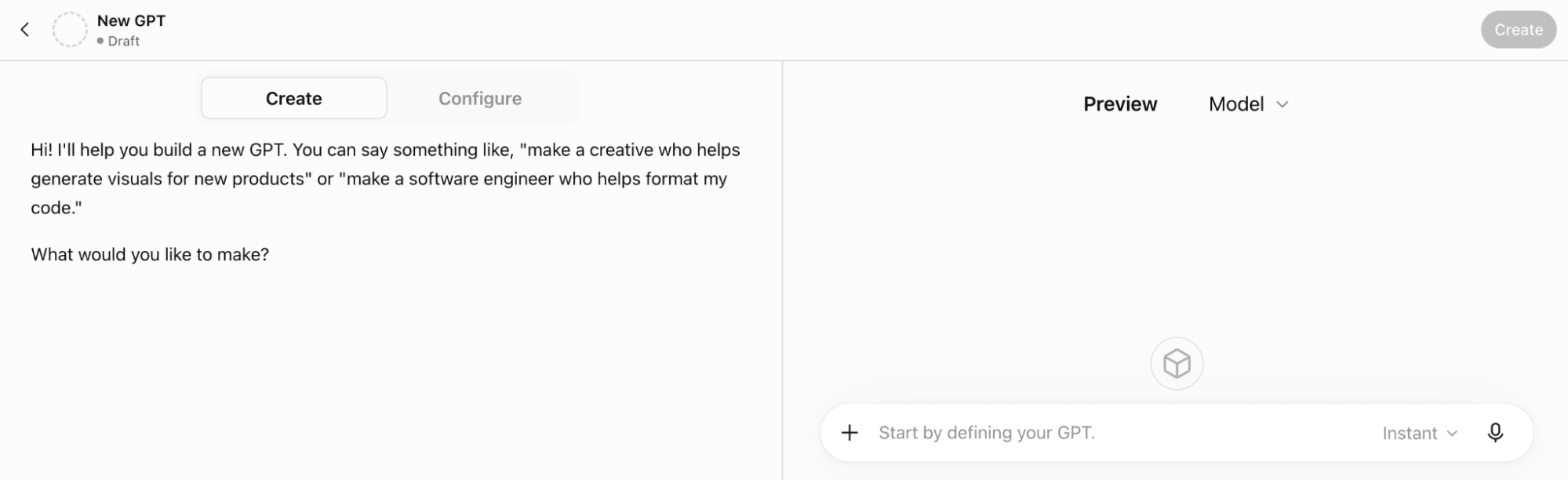
Custom GPTs: The Proof of Concept
Custom GPTs are the easiest entry point for creators. They are conversational and require no coding. However, they have limitations: they are difficult to manage for multi-step workflows, and access control (revoking access for former clients) remains a significant hurdle. They are best suited for single-step tools or internal testing.
Claude Skills: The Portable Solution
Claude Skills represent a significant upgrade, allowing for multi-agent orchestration where several AI "agents" work together within a single, connected flow. Because these skills are portable, they can be utilized across different platforms. This model supports a recurring subscription revenue stream, as the expert can periodically update the underlying methodology, providing ongoing value to the user.
Standalone Software: The Professional Path
For those aiming to build a robust software business, tools like Lovable or Claude Code allow non-developers to "vibe code" functional, secure applications. This approach allows for multi-tenancy—ensuring one client’s data never bleeds into another’s. Platforms like wAIv have emerged specifically to help creators manage these complex bot squads, enabling them to choose the right AI model for the right task, thereby optimizing costs and performance.
Implications: The Future of the Knowledge Economy
The transition toward expert-backed AI has profound implications for the consulting and coaching industries.

- From Time-for-Money to Value-for-Subscription: Experts can stop selling hourly blocks of time to solve the same foundational problems and start selling access to a "bot squad" that solves those problems 24/7.
- Scalability Without Dilution: Traditionally, scaling a consultancy meant hiring more people, which often diluted the brand’s quality. With AI, an expert can scale their methodology infinitely without losing the precision that made their services valuable in the first place.
- The Necessity of Testing: Because AI is non-deterministic, experts must prioritize rigorous testing. As Sinclair emphasizes, you must run the tool through a variety of edge-case scenarios and "realistic inputs" to ensure that the output consistently meets your standards.
Conclusion
The era of the "generic AI tool" is ending, and the era of the "expert-backed tool" is just beginning. By combining the precision of human expertise with the scalability of AI, professionals can finally deliver on the promise of their own frameworks. The question for every expert is no longer whether they should build an AI tool, but rather which part of their process is currently holding their clients back—and how quickly they can automate it to drive better results.
This report was derived from insights shared on the "AI Explored" podcast, featuring Kelly Sinclair and Michael Stelzner.