Seamless Cloud Native Integration: Amazon S3 Comes Natively to Vercel and v0
Main Facts
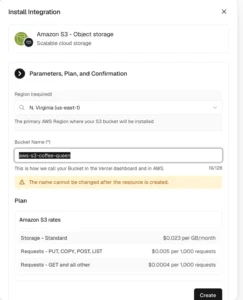
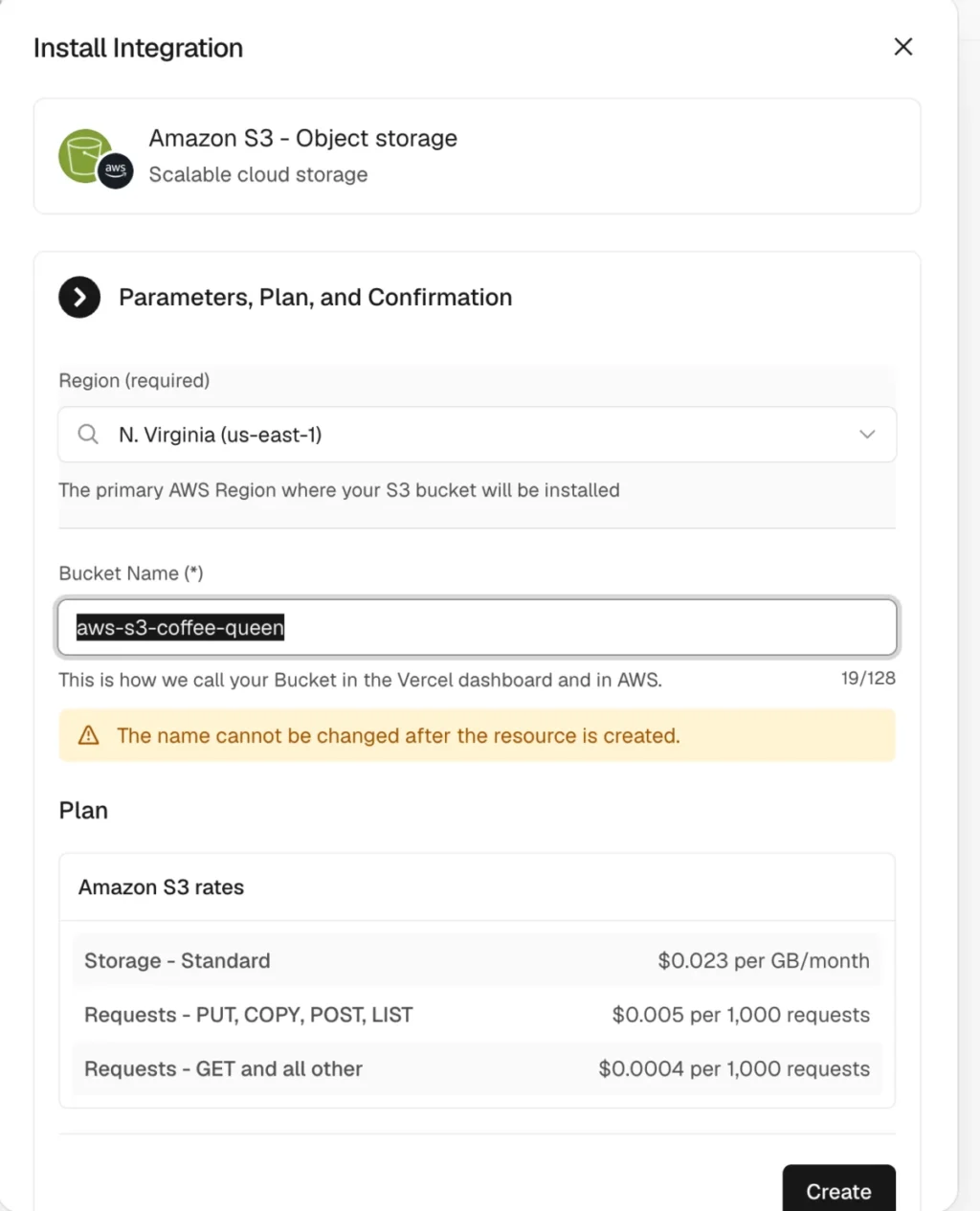
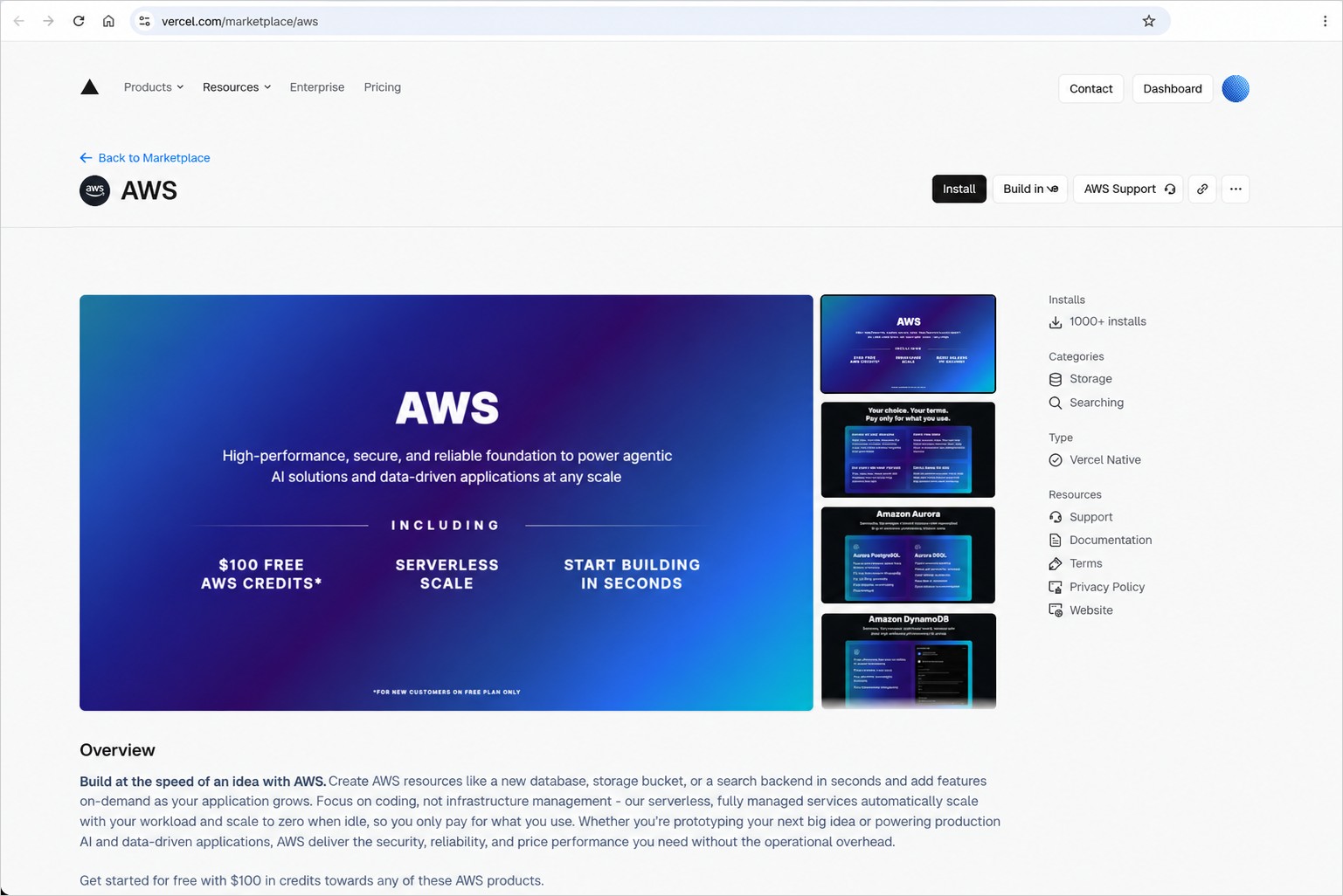
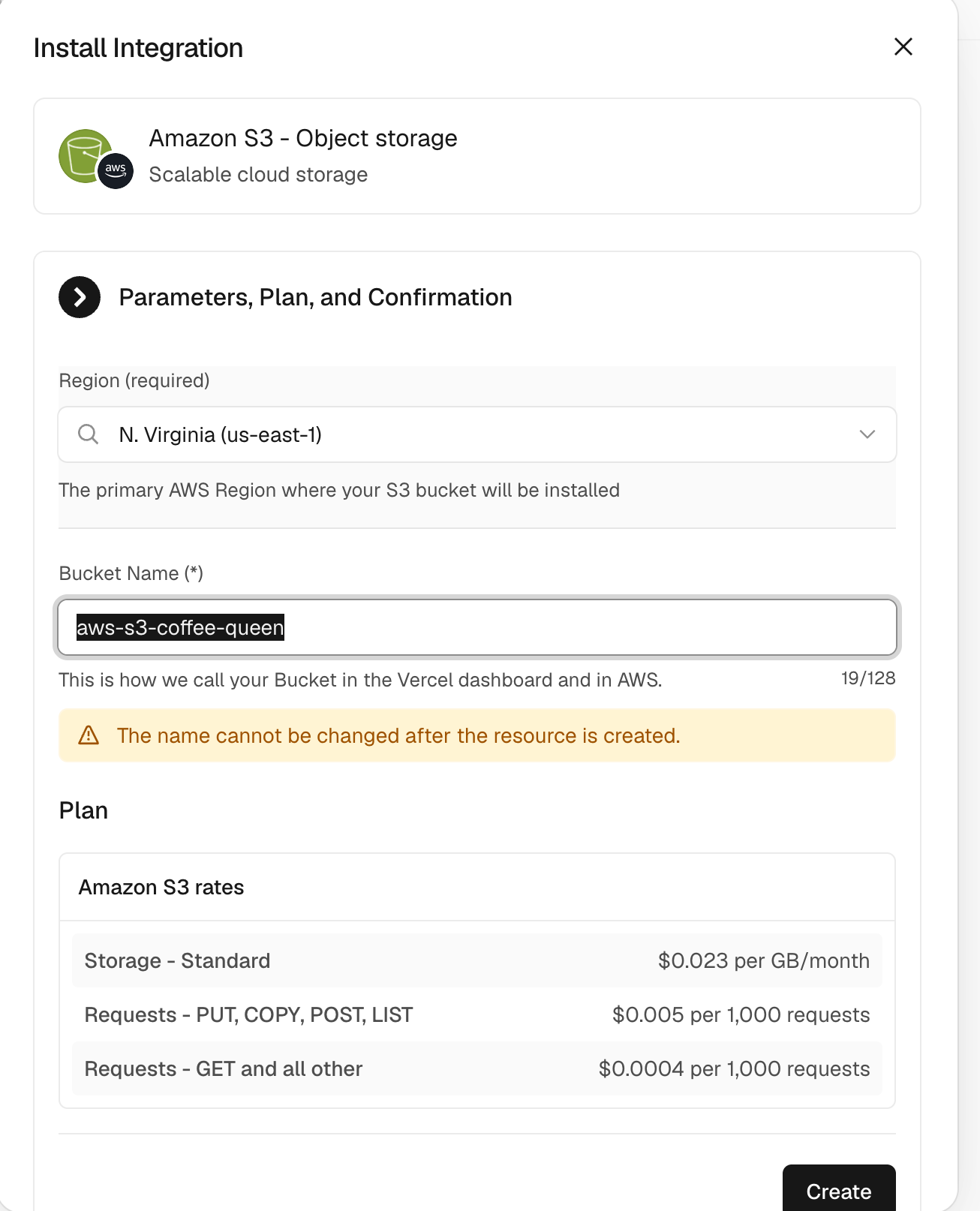
In a significant development for the modern web development and artificial intelligence (AI) ecosystems, developers building applications on Vercel can now provision and integrate Amazon Simple Storage Service (Amazon S3) resources directly from the Vercel Marketplace and v0. This native integration brings the high performance, scalability, and enterprise-grade durability of Amazon S3 straight into Vercel’s streamlined provisioning workflow.
Starting immediately, the full suite of Amazon S3 capabilities—including general-purpose buckets, Amazon S3 Tables, and Amazon S3 Vectors—is natively accessible. This integration covers three distinct, highly demanding workloads: everyday object storage, high-volume data analytics, and semantic AI search.
Rather than forcing developers to context-switch between platforms, navigate the AWS Management Console, and manually configure complex access policies and static credentials, the integration automates resource provisioning and connection management. Operating under the hood via Vercel’s OpenID Connect (OIDC) authentication model, applications trade short-lived tokens with the AWS Security Token Service (AWS STS), ensuring that no static keys are ever stored within the codebase.
Combined with existing Vercel integrations for Amazon Aurora, Amazon DynamoDB, and Amazon OpenSearch Serverless, developers can now deploy a complete, end-to-end application stack entirely within the Vercel ecosystem, backed by a single AWS account and consolidated billing.
Chronology
The path toward a unified developer experience bridging Vercel’s front-end velocity and AWS’s robust backend infrastructure has evolved incrementally over several years, culminating in this major release.
- Early Cloud Architecture Separation: Historically, front-end deployment platforms like Vercel and hyperscale cloud providers like Amazon Web Services (AWS) operated in largely siloed domains. Developers had to manage infrastructure separately, manually writing environment variables, generating IAM keys, and orchestrating cross-origin resource sharing (CORS) configurations.
- The Rise of Managed Databases on Vercel: Recognizing friction in the developer workflow, Vercel introduced native integrations for relational and NoSQL databases, starting with services like Amazon Aurora and Amazon DynamoDB. These integrations proved that developers favored unified billing and automated provisioning inside their deployment dashboard.
- The AI Boom and the Need for Specialized Storage: As generative AI, Retrieval-Augmented Generation (RAG), and large-scale data analytics became standard requirements for modern web applications, the demand for vector databases and optimized open-table formats skyrocketed. AWS responded with innovations like Amazon S3 Tables (built for analytics via Apache Iceberg) and Amazon S3 Vectors.
- The Convergence (Present Day): Vercel and AWS have officially bridged the gap. By introducing Amazon S3, S3 Tables, and S3 Vectors directly into the Vercel Marketplace and the generative UI tool v0, the provisioning of complex storage architectures has been reduced to a matter of seconds and a few natural language prompts.
Supporting Data
The technical implementation of the Amazon S3 and Vercel integration relies on modern, secure protocols and developer-friendly abstractions that span three distinct architectural pillars:
1. General-Purpose Object Storage
For everyday assets such as user uploads, images, and documents, developers utilize standard S3 buckets via the @aws-sdk/client-s3 package. Authentication is completely abstracted through @vercel/functions/oidc, allowing Next.js server routes to securely execute commands like PutObjectCommand, GetObjectCommand, and ListObjectsV2Command without exposing static credentials.
2. S3 Tables and Analytics
Amazon S3 Tables introduce purpose-built storage for analytics that automatically optimizes query performance as data volumes scale. Featuring fully managed Apache Iceberg tables with automated compaction and maintenance, developers can query this data directly from within a Vercel Function using lightweight engines like DuckDB. By attaching the S3 Table bucket ARN and utilizing temporary AWS security tokens, complex analytical queries—such as aggregations over millions of rows of clickstream or financial data—can be processed efficiently at the edge or serverless layer.

3. S3 Vectors and AI Workloads
For semantic search, AI agents, and RAG pipelines, Amazon S3 Vectors provides cost-optimized vector storage natively inside S3, eliminating the mandatory requirement of provisioning a separate vector database. Developers generate embeddings using their preferred machine learning models and query the index directly via the @aws-sdk/client-s3vectors client to retrieve top-k semantic matches with built-in metadata.
4. Financial and Account Parameters
- Integration Cost: Free to enable; users only pay standard, usage-based Amazon S3 pricing.
- Welcome Incentives: New AWS accounts created directly through the Vercel integration receive $100 in AWS credits, valid for the first six months.
- Account Flexibility: Developers can either spin up a brand-new AWS account via Vercel for rapid prototyping or link an existing enterprise AWS account to retain current billing structures and organizational policies.
Official Responses
While this integration represents a technical milestone, industry analysts and architectural stakeholders emphasize the broader philosophical shift toward frictionless, serverless-native infrastructure.
Cloud architects note that the greatest impediment to rapid software delivery has traditionally been "cognitive overhead"—the mental friction required to manage multiple disparate control planes. By embedding foundational cloud primitives like Amazon S3 directly into the deployment dashboard and conversational AI tools like v0, AWS and Vercel are effectively lowering the barrier to entry for enterprise-grade infrastructure.
Furthermore, security experts have lauded the architectural decision to bypass static IAM keys entirely. By relying on OIDC-based short-lived tokens via AWS STS, the partnership establishes a secure-by-default posture that mitigates common credential leakage vulnerabilities—a frequent pain point in modern web development teams.
Implications
The introduction of native Amazon S3, S3 Tables, and S3 Vectors into Vercel and v0 carries profound implications for software engineering teams, enterprise IT budgets, and the broader competitive landscape of cloud computing.
1. Accelerated Development Cycles via Generative UI (v0)
The integration with v0 by Vercel fundamentally changes how applications are bootstrapped. Developers can now use natural language prompts—such as "Build a support bot that answers questions from my PDFs" or "Create a photo gallery where users upload images using AWS"—and have v0 automatically provision the correct S3 vector or object storage bucket, configure the backend connections, and output fully functional, production-ready code. This bridges the gap between conceptual design and infrastructural reality in seconds.
2. Consolidated Tooling and Simplified FinOps
By housing the database layer (Aurora, DynamoDB, OpenSearch) and the storage layer (S3 object, table, and vector storage) under a single Vercel dashboard backed by a unified AWS billing model, organizations gain unprecedented clarity over their cloud expenditures. FinOps teams no longer have to reconcile disparate billing tags across multiple organizational units, simplifying cost allocation and auditing.
3. Democratization of Advanced Analytics and AI
Previously, setting up an Apache Iceberg data lakehouse or a specialized vector search index required deep expertise in distributed systems and cloud networking. By exposing S3 Tables and S3 Vectors through simplified JavaScript/TypeScript SDKs alongside tools like DuckDB, full-stack web developers can now build sophisticated, AI-driven data products—such as semantic search engines, real-time analytics dashboards, and autonomous RAG agents—without needing a dedicated data engineering team.
As cloud providers and deployment platforms continue to converge, this partnership sets a new benchmark for how modern applications will be architected, secured, and scaled in the years ahead.