Stellantis Accelerates India Strategy: A Multi-Billion Dollar Roadmap for 2030
By Lakshya Rana
Updated: October 15, 2026
In a move that signals a profound commitment to the burgeoning Indian automotive landscape, global mobility giant Stellantis has announced a strategic investment of approximately Rs 4,000 crore (equivalent to roughly 400 million euros) to be deployed over the next three years. This capital infusion is not merely a short-term expansion but a cornerstone of a long-term vision that will see the company’s cumulative investment in India reach a staggering Rs 15,000 crore by 2030.
As the Indian market pivots toward cleaner, more sophisticated, and technologically integrated mobility solutions, Stellantis—the parent company of iconic brands including Jeep and Citroën—is positioning itself to capture a significant share of the world’s third-largest automotive market.
The Strategic Investment: Breaking Down the Numbers
The announcement of the Rs 4,000 crore investment serves as a clear indicator of confidence in India’s manufacturing prowess. While the global automotive industry has faced macroeconomic headwinds, Stellantis has identified India as a critical hub for both domestic consumption and potential export operations.
By 2030, the total investment of Rs 15,000 crore will be channeled into several key areas:
- Research and Development (R&D): Enhancing local engineering capabilities to design vehicles specifically tailored to Indian road conditions and consumer preferences.
- Manufacturing Expansion: Upgrading existing production lines to support modular platforms that can accommodate both Internal Combustion Engine (ICE) and Electric Vehicle (EV) architectures.
- Supply Chain Localization: Deepening the supply chain to reduce reliance on imports, thereby improving cost-efficiency and shielding the company from global logistical disruptions.
- Digital Infrastructure: Integrating advanced software-defined vehicle features, which are becoming the primary differentiator for new-age Indian buyers.
Chronology of Commitment: A Decade of Growth
To understand the magnitude of this 2030 roadmap, one must look at the evolution of Stellantis’s footprint in India.
- 2017-2020 (The Foundation): Jeep establishes a strong premium presence with the Compass, effectively creating the "premium SUV" segment in India.
- 2021 (The Merger): The formal formation of Stellantis (merger of FCA and PSA Group) brings Citroën into the Indian market, focusing on comfort and unique French design language.
- 2022-2024 (Scale and Localization): The introduction of the C-Cubed program, focused on developing locally manufactured, affordable, and high-quality vehicles for the Indian mass market.
- 2025 (Technological Pivot): Integration of advanced EV platforms and the launch of hybrid powertrain variants across the Jeep lineup.
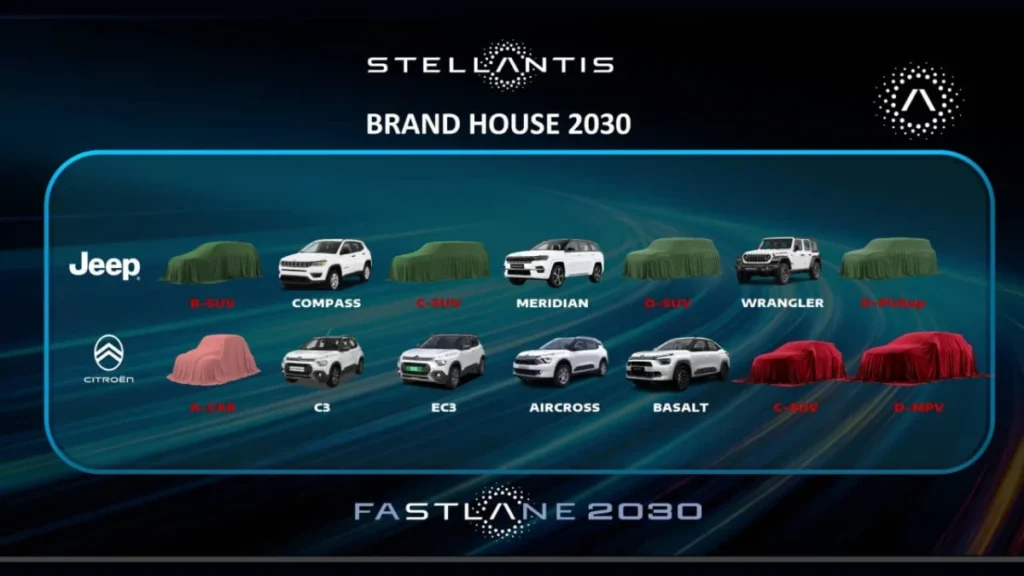
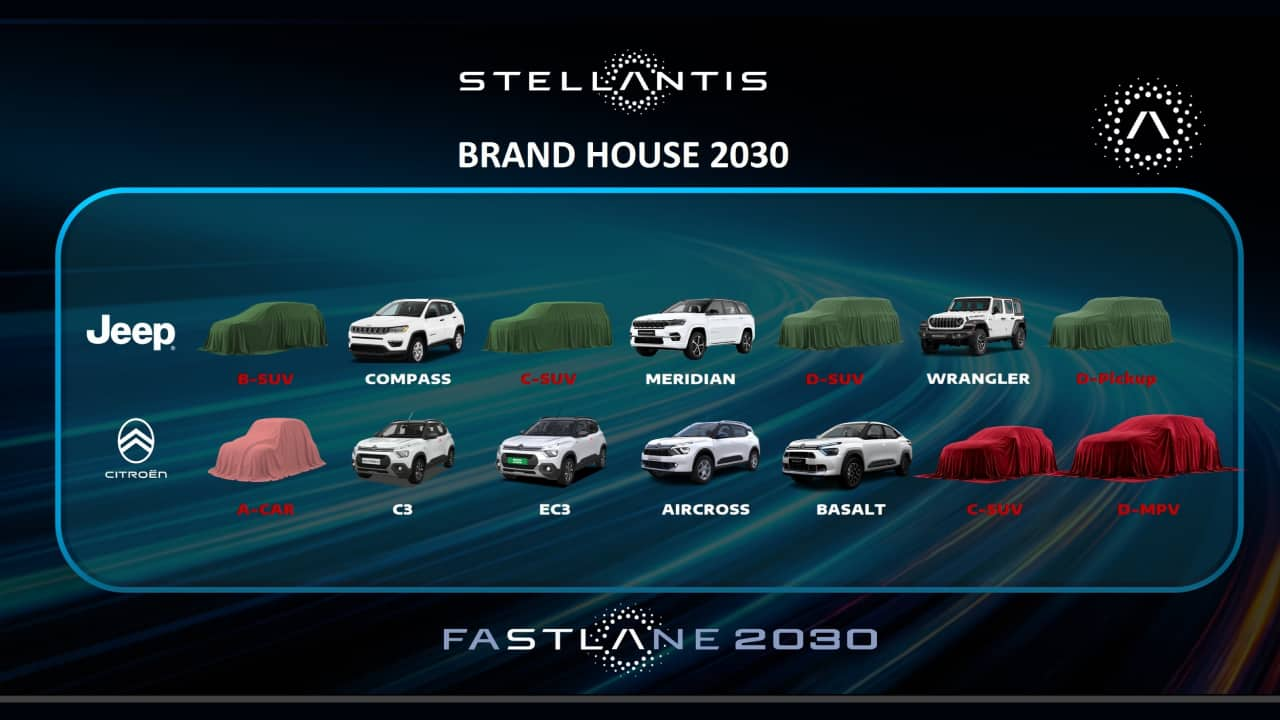
- 2026 (The Current Milestone): Announcement of the Rs 4,000 crore injection to accelerate the development of 12 new models, spanning across the Jeep and Citroën brands, to be launched by 2030.
Supporting Data: Why India?
The decision to double down on India is backed by robust market data. India’s passenger vehicle market is projected to grow significantly as urbanization increases and the middle-class demographic expands.
| Metric | Projection (2025-2030) |
|---|---|
| Market Growth Rate (CAGR) | 7% – 9% |
| EV Penetration | Expected to reach 15-20% by 2030 |
| SUV Segment Share | Expected to exceed 55% of total sales |
| Export Potential | India as a global manufacturing hub for right-hand drive (RHD) vehicles |
Stellantis is betting heavily on the "SUV-first" trend in India. With the Jeep brand’s heritage in off-roading and Citroën’s focus on cabin comfort, the company is uniquely positioned to address both the aspirational and functional needs of the Indian consumer.
Official Perspective and Strategic Direction
While specific internal memos remain confidential, the leadership at Stellantis has consistently emphasized that India is not just a destination for sales, but a center of excellence. The engineering centers in Chennai and Pune have already begun playing a pivotal role in the global development of software for the wider Stellantis group.
Industry analysts suggest that this investment is aimed at "future-proofing" the company. By investing now, Stellantis is ensuring that when the Indian EV market reaches an inflection point—likely around 2028-2029—they will have the manufacturing scale and the supply chain to dominate the market rather than play catch-up.
Implications for the Indian Automotive Ecosystem
The ripple effects of a Rs 15,000 crore investment are far-reaching:
1. The Rise of "Make in India"
The shift toward deep localization means that Stellantis will likely source a higher percentage of components, including battery packs and electric motors, from domestic suppliers. This will stimulate the local manufacturing sector and create thousands of high-skilled jobs in the engineering and automotive software sectors.
2. Competition and Consumer Benefit
The promise of 12 new models by 2030 will significantly intensify competition in the sub-4 meter and mid-size SUV segments. For the Indian consumer, this translates to better features, competitive pricing, and higher safety standards as manufacturers race to differentiate their offerings.
3. The EV Transition
The investment is expected to fast-track the transition to electrification. With a dedicated focus on localized EV architecture, Stellantis is likely to bring down the cost of ownership for electric vehicles, which has remained the single biggest barrier to mass adoption in the country.
Challenges Ahead
Despite the ambitious roadmap, the road to 2030 is not without its hurdles. The Indian market remains price-sensitive, and global brands often struggle to balance premium brand identity with the aggressive pricing required for mass-market success.
Furthermore, the rapid evolution of charging infrastructure and the volatility in global raw material prices for batteries present ongoing challenges. Stellantis will need to maintain a nimble operational strategy to pivot whenever market dynamics shift.
Conclusion: A Vision for 2030 and Beyond
The commitment of Rs 15,000 crore by 2030 is a testament to the belief that the Indian automotive sector is entering a "Golden Era." By blending the rugged durability associated with the Jeep brand and the innovative, comfort-oriented design of Citroën, Stellantis is building a diversified portfolio that covers the spectrum from entry-level urban mobility to high-end adventure vehicles.
As the automotive industry undergoes its most significant transformation since the invention of the assembly line—moving toward electrification, connectivity, and autonomous features—Stellantis has signaled that India will be at the heart of this global transition. For stakeholders, employees, and consumers alike, the next four years will be a period of intense activity and, likely, significant growth for the Stellantis brand in the Indian subcontinent.
About the Author:
Lakshya Rana has 10 years of experience in journalism, specializing in the mobility and technology sectors. He leads the automobile, aviation, and railway infrastructure desks at Zee News Digital. His work focuses on providing actionable insights to help consumers make informed purchasing decisions in an evolving market. For inquiries, contact: [email protected].