The End of Free Transactions? Decoding India’s New UPI Merchant Discount Rate and the Battle for the Future of Digital Payments
By [Your Name/Editorial Desk]
Edited by Shishir Parsher
A customer scans a QR code at a bustling neighborhood grocery store, enters a secure passcode, and the transaction is instantly finalized. Miles away, a wholesaler settles accounts with a supplier, friends seamlessly split a restaurant bill, and commuters pay for daily essentials—all without touching physical currency.
Over the past decade, the humble QR code has evolved into the most ubiquitous symbol of "Digital India," fundamentally transforming how a nation of over 1.4 billion people transacts. Yet, this celebrated digital payments revolution is now entering a critical and complex new phase.
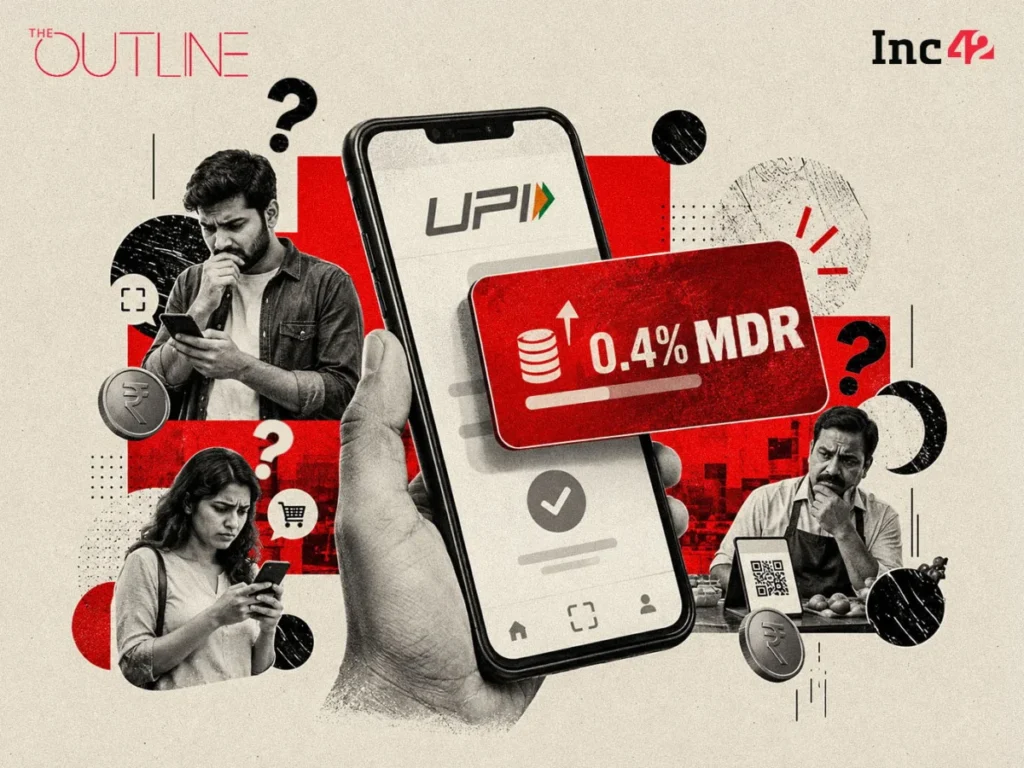
Beginning October 15, select high-value Unified Payments Interface (UPI) transactions will no longer be entirely free for merchants. Under a newly implemented framework, a 0.4% Merchant Discount Rate (MDR) will apply to specified person-to-merchant (P2M) UPI transactions exceeding ₹2,000. To cushion the blow for larger ticket sizes, the charge has been capped at ₹300 for transactions amounting to ₹75,000 and above.
This policy shift arrives at a time when UPI has achieved staggering scale. To put its sheer dominance into perspective, the network processed a jaw-dropping 24.51 billion transactions worth ₹29.82 Lakh Crore ($350+ billion USD) in August alone.
While the government maintains that roughly 96% of P2M UPI transactions will remain untouched by the new mandate, the policy has triggered palpable uneasiness across India’s retail, wholesale, and fintech ecosystems. As merchants grapple with shrinking margins and industry stakeholders debate the long-term ramifications, the foundational question facing India’s financial sector is simple: Can the monetisation of UPI disrupt the deeply ingrained habits of a cash-loving nation?
1. Main Facts: The Anatomy of the New UPI MDR Framework
The introduction of the merchant discount rate on high-value UPI transactions marks a watershed moment for the National Payments Corporation of India (NPCI) and financial regulators. For years, UPI operated under a strict zero-MDR policy, designed aggressively to drive adoption, financial inclusion, and displacement of cash.
The core parameters of the new framework include:
- The Threshold: A 0.4% MDR is levied exclusively on P2M UPI transactions exceeding ₹2,000.
- The Cap: For high-value transactions of ₹75,000 and above, the MDR fee is capped at a maximum of ₹300.
- The Safety Net: Government and regulatory assurances note that approximately 96% of all merchant-facing UPI transactions fall below the ₹2,000 threshold, remaining entirely free from the charge.
- The Financial Stakes: Major brokerage houses, including Citi and Goldman Sachs, estimate that the new framework will create an annual revenue pool ranging between ₹15,000 Crore and ₹20,600 Crore.
While 0.4% may sound negligible at a glance, merchants processing hundreds or thousands of high-value transactions daily warn that the cumulative cost will take a substantial bite out of their already thin profit margins.
2. Chronology: From Zero-Cost Inclusion to the Monetisation Imperative
To understand the weight of the current transition, it is essential to trace how India’s digital payments ecosystem evolved from a heavily subsidized initiative into a massive financial utility.
- 2016 (The Inception): Launched by the NPCI under the guidance of the Reserve Bank of India (RBI), UPI was introduced to revolutionize mobile-based, instant interbank fund transfers.
- 2017–2020 (The Scale-Up Era): To encourage both consumers and merchants to abandon cash, the ecosystem operated on a zero-MDR model. The government heavily incentivized banks and third-party application providers (TPAPs) to absorb infrastructure costs, fueling exponential growth.
- 2021–2023 (Explosive Ubiquity): Driven by zero fees and smartphone proliferation, UPI expanded from peer-to-peer (P2P) transfers to dominate retail, transit, bill payments, and street-side vending. Transactions crossed the multi-billion mark monthly, cementing India as the global leader in real-time digital payments.
- Late 2023–2024 (The Sustainability Debate): As infrastructure, cybersecurity, fraud prevention, and scalability costs surged, banks and fintechs increasingly lobbied policymakers for a viable revenue model. The zero-MDR regime proved unsustainable for institutions maintaining the heavy back-end machinery.
- October 15 (The Paradigm Shift): The implementation of the 0.4% MDR on P2M transactions above ₹2,000 officially inaugurates the monetisation phase of UPI, sparking immediate industry pushback and strategic re-evaluations.
3. Supporting Data: The MDR Tug-of-War and Revenue Distribution
The return of MDR establishes a lucrative, transaction-linked revenue pool. However, the distribution of these newly unlocked funds has ignited a fierce tug-of-war among ecosystem stakeholders.
Who Gets Paid?
The primary beneficiaries of the MDR pool will not necessarily be the consumer-facing apps on our phones, but rather the foundational banks and infrastructure providers.
- Citi’s Projections: Citi estimates that the framework will generate an annual revenue pool of ₹16,000 to ₹17,000 Crore. Of this, roughly 60% will accrue to issuing and acquiring banks, 25% to UPI app providers, and 15% to non-bank payment aggregators.
- Goldman Sachs’ Estimates: Goldman Sachs projects that 50% of the pool will flow to issuing banks and Payment System Providers (PSPs), 20% to Third-Party Application Providers (TPAPs), and 30% to acquiring banks.
Banking Sector Winners
Certain institutional lenders stand to gain disproportionately based on their market share in merchant acquisition and high-value processing. Citi’s analysis suggests that Yes Bank could witness a 6% to 12% increase in gross profits due to the new MDR. Meanwhile, public and private sector heavyweights such as Bank of Baroda, Punjab National Bank, and IndusInd Bank could see a ~2% boost in Profit Before Tax (PBT), with Axis Bank, State Bank of India (SBI), and Federal Bank realizing a 1% to 2% benefit.
The Fintech Counter-Perspective
Despite these windfall projections for banks, fintech founders remain cautious. A Mumbai-based fintech founder noted, “This is not going to end at just 40 basis points.” As fraud prevention, regulatory compliance, and processing costs scale alongside high-value commerce, pressure will likely mount for an expanded revenue share.

4. Official Responses and Industry Pushback
The merchant ecosystem’s reaction to the 0.4% MDR has been swift, varying from quiet discontent to outright boycotts and threats of non-compliance.
Retailers and FMCG Distributors Speak Out
FMCG distributors and traditional retailers have voiced deep concern over margin erosion. In several states, petrol pump dealers have threatened to discontinue accepting UPI payments for fuel purchases exceeding ₹2,000 unless they are granted explicit exemptions.
- Mumbai and Maharashtra: Fuel station operators in Mumbai have actively petitioned for waivers, while broader dealer networks across Maharashtra deliberate whether to continue accepting UPI at automated pumps.
- Ghaziabad: Traders in parts of northern India have already taken matters into their own hands, posting conspicuous notices reading, "UPI Payment Will Not Be Accepted" for transactions impacted by the new threshold.
The Compliance Nightmare
Regulatory bodies have strictly prohibited merchants from passing the MDR charge onto consumers. However, enforcing this rule at a granular, everyday level poses an immense regulatory hurdle.
Sharat Chandra, founder of EmpowerEdge Venture, highlighted the enforcement dilemma:
"It’s very difficult to keep saying, ‘Make sure that they do not pass on the charge.’ But how do you enforce that? How can you stop an ecommerce platform from passing on the charge? To check that at a granular level may be a nightmare and could end up being more expensive for the industry just to comply."
Chandra compared this regulatory blind spot to the ongoing battle against deceptive "dark patterns" on digital commerce platforms, suggesting that monitoring hidden MDR pass-throughs will prove equally elusive.
5. Implications: Back to Cards and Cash?
As the digital payments ecosystem adjusts to this monetisation phase, the unintended consequences could ripple across the broader consumer economy.
The Threat of Circumvention
If merchants feel the pinch of the 0.4% MDR, particularly on high-value monthly purchases like groceries, utilities, and fuel (which frequently clear the ₹4,000 to ₹5,000 threshold), behavioral shifts are inevitable.
According to a comprehensive survey by consumer platform LocalCircles, 53% of surveyed UPI users stated they would actively move away from UPI for purchases above ₹3,000 if merchants pass the MDR cost on to them. Among these respondents:
- 27% indicated they would shift to credit cards.
- 14% stated they would switch to debit cards.
- 12% said they would revert entirely to physical cash or direct bank transfers.
Furthermore, creative workarounds are already being discussed. A ₹5,000 purchase, for instance, could theoretically be broken down into multiple smaller transactions under ₹2,000 to entirely bypass the MDR framework—unless banks, payment aggregators, and the NPCI deploy aggressive monitoring algorithms to flag such activity.
The Resurgence of Cash
While cash carries hidden handling, logistics, reconciliation, and security costs for businesses, it remains completely free of merchant discount rates at the point of acceptance. For price-sensitive consumers and margin-strapped small business owners, the introduction of friction on UPI opens the door for cash to creep back into everyday commerce.
Conclusion: A Delicate Balancing Act
For a decade, the narrative of UPI was defined by unbridled scale, financial inclusion, and the intoxicating promise of friction-free, zero-cost transactions. The introduction of the 0.4% MDR framework signals the maturation of India’s digital economy—a realization that maintaining world-class, secure financial infrastructure requires sustainable capital.
However, as merchants push back, fuel stations threaten boycotts, and consumers eye alternative payment rails, UPI faces its most delicate balancing act yet. Regulators must carefully navigate the fine line between rewarding the banking infrastructure that powers the network and preserving the simplicity that made digital payments a national habit. The last thing India’s digital economy needs is to make its citizens reach back into their physical wallets.