The Tightrope Walk: Naveen Patnaik’s Struggle for Identity in a Polarized Odisha
By Political Correspondent
October 22, 2026
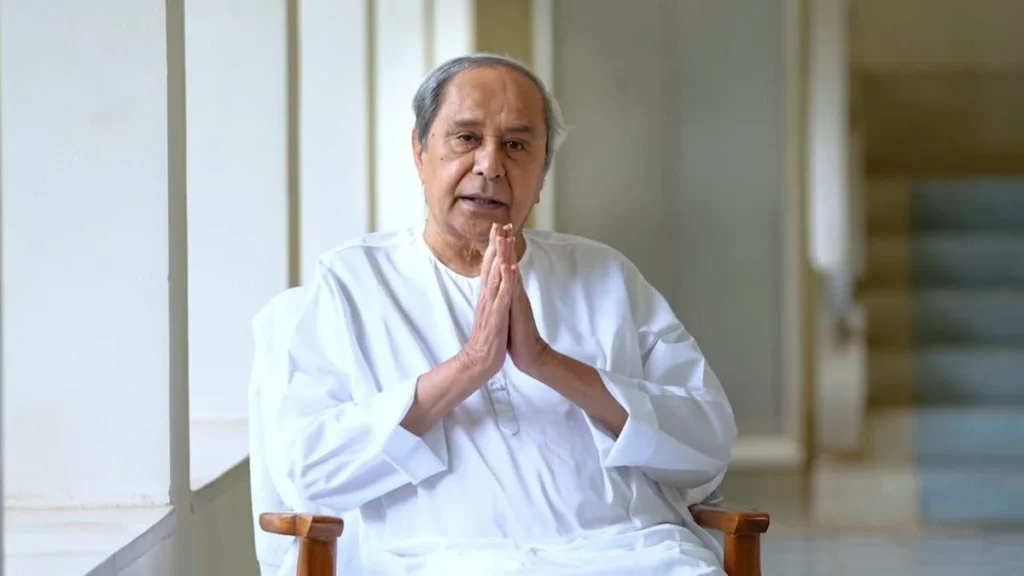
The political landscape of Odisha, once defined by the unchallenged hegemony of the Biju Janata Dal (BJD), is undergoing a tectonic shift. For over two decades, the state’s political discourse was synonymous with the calm, calculated leadership of Naveen Patnaik. However, following his transition from the Chief Minister’s office to the role of Leader of the Opposition, the BJD is finding that the mechanics of power are vastly different from the mechanics of protest.
Today, Mr. Patnaik faces an existential political dilemma: how to effectively challenge the ruling Bharatiya Janata Party (BJP) in Odisha without inadvertently paving the way for a Congress revival, or worse, being branded a clandestine ally of the very forces he seeks to oppose.
The Core Dilemma: Navigating the Binary
The fundamental challenge for the BJD is to maintain its "equidistance" policy—a hallmark of its governance years—in a political climate that has become increasingly binary. At the national level, the Congress-led INDIA bloc has solidified itself as the primary antagonist to the BJP. In Odisha, however, the BJD occupies a unique, precarious middle ground.
If the BJD remains silent, it risks appearing toothless to its voter base, which is currently witnessing a surge in anti-BJP sentiment. If it aligns too closely with national anti-BJP protests, it risks alienating its core constituency—voters whose political consciousness was built on a foundation of fierce "anti-Congressism," a legacy inherited from the party’s founder, the late Biju Patnaik.
Chronology of a Delicate Balancing Act
The recent months have seen a series of tactical maneuvers and public relations corrections that underscore this internal friction:
- August 2026: Two BJD Rajya Sabha MPs participated in a protest march in New Delhi against the Chief Election Commissioner. The move triggered an immediate backlash from the state BJP, which accused the BJD of formalizing a "secret pact" with the INDIA bloc. The BJD was forced into an immediate defensive posture, issuing multiple clarifications that its support was issue-based rather than an ideological alliance.
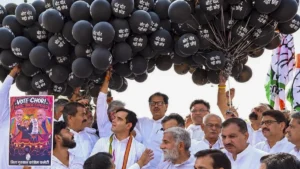
- October 7, 2026: When the INDIA bloc called for an Odisha state-wide bandh, the BJD faced intense pressure to declare its stance. The party opted for a neutral, "independent" position, refusing to either endorse or condemn the protests—a move that satisfied neither the ruling party nor the opposition.
- Mid-October 2026: The BJD extended support to the release of activists from the Cockroach Janata Party (CJP), Saurav Das and Asutosh Ranka. The BJP swiftly weaponized this, labeling the BJD an "ally of anarchists" who are allegedly engineering instability. The BJD was forced to deploy senior leadership to counter the narrative, illustrating how quickly a local humanitarian stance can be reframed as a national security issue by the ruling party.
The "Protection Ring" Theory
Political observers and biographers of the former Chief Minister suggest that the BJD’s restraint is not merely a matter of political philosophy, but one of survival. Ruben Banerjee, author of the definitive biography Naveen Patnaik, argues that the BJD operates within a set of invisible constraints.
"Mr. Patnaik is, in many ways, part of an extended understanding with the BJP," Banerjee observes. He points to the absence of central agency scrutiny—specifically the lack of CBI or Enforcement Directorate raids against BJD leaders—as evidence of a "protection ring." This theory gained further traction during the BJD’s voting record on the Waqf Board Bill, where the party’s support aligned with the BJP’s legislative agenda, revealing the limits of the BJD’s opposition status.
The prevailing view among analysts is that the BJP currently finds utility in the BJD’s existence. As long as the BJD occupies the primary opposition space in Odisha, it serves as a firewall, preventing the Congress from reclaiming its traditional base. For the BJP, a weakened BJD is preferable to a resurgent Congress, creating a symbiotic, albeit hostile, coexistence.

Strategic Targeting of the Majhi Government
Despite these limitations, the BJD has been remarkably agile in picking its battles. It has effectively dented the reputation of the Mohan Charan Majhi government by focusing on governance failures rather than ideological clashes. By highlighting specific issues—such as the erroneous content in school textbooks, the state’s financial grievances stemming from the Mines and Minerals (Development and Regulation) Amendment Act of 2026, and deteriorating law-and-order indicators—the BJD has maintained its relevance.
Crucially, the party has shown discipline in its floor management. During the recent monsoon session of the Odisha Legislative Assembly, the BJD carefully coordinated its agenda to ensure it did not share the spotlight with the Congress. When the BJD focused on the complexities of the MMDR Act, it pointedly left the textbook controversy to the Congress. This division of labor allows both opposition parties to target the government without appearing to be a unified front.
Implications for the Future
The long-term viability of the BJD’s current strategy remains in doubt. Prasanna Mohanty, a senior journalist and political analyst, notes that the "anti-Congress" premise upon which the BJD was founded is losing its potency with the younger generation of Odisha voters.
"The BJD’s dilemma is bound to persist," Mohanty says. "If they do not criticize the BJP, they forfeit their role as the primary opposition. If they join the Congress-led protests, they risk eroding the very foundation that kept them in power for twenty-four years."
The "GenZ" factor is another variable. Recognizing that anti-BJP sentiment is bubbling among the youth, Mr. Patnaik appears to be attempting to pivot toward these demographics. By focusing on civil society issues and occasionally lending weight to movements that challenge central authority, he is trying to carve out a new identity for the BJD—one that is distinct from the national political binary.
However, this maneuvering happens within a shrinking sphere. As the BJP continues to consolidate its influence, the "protection ring" surrounding the BJD may become a cage. The party is now forced to walk a tightrope where one misstep toward the Congress could trigger a hostile response from central agencies, and one misstep toward the BJP could alienate its remaining loyalist base.
Conclusion: A Party at the Crossroads
Naveen Patnaik has spent his career as a master of the status quo. Now, in the twilight of his political dominance, he is forced to adapt to a landscape where the rules of engagement are dictated by his rivals. The BJD’s attempt to maintain "equidistance" is increasingly being viewed not as a principled stance, but as a survival tactic.
As the political dust settles in Odisha, the BJD must decide if it wishes to remain a regional power defined by its past, or if it can evolve into a robust, independent opposition. The challenge is no longer just about defeating the BJP; it is about proving that the BJD still has a reason to exist in an era where the middle ground is rapidly disappearing. Whether Mr. Patnaik can successfully navigate this treacherous terrain or if he will be squeezed into irrelevance remains the most pressing question in Odisha’s political future.