Supreme Court Warns of CBI Probe as Rajasthan Faces Scrutiny Over Ecological Collapse of Jojari-Luni-Bandi River System
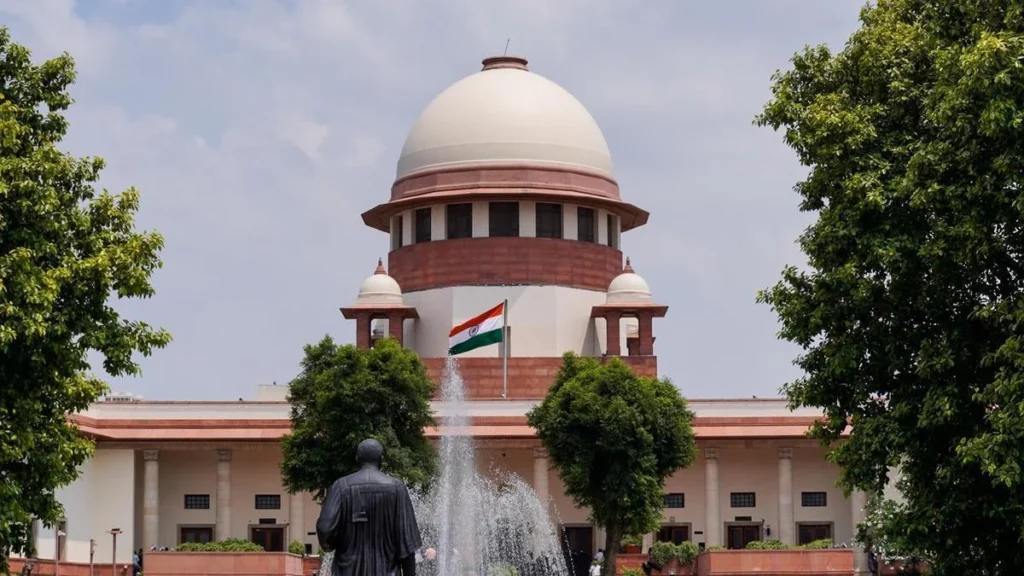
NEW DELHI – The Supreme Court of India has issued a stern ultimatum to the Rajasthan government, threatening a full-scale Central Bureau of Investigation (CBI) probe into the systemic failure of state officials to protect the Jojari-Luni-Bandi river system from illegal mining and industrial pollution.
In a scathing series of observations made during a hearing on October 26, 2026, a Bench comprising Justices Vikram Nath and Sandeep Mehta questioned the "bona fides" of state authorities, alleging that officials have been complicit in the environmental degradation by regularizing mining leases that were explicitly found to be in violation of environmental laws.
The Crisis at Hand: A Lifeline Turned Toxic
The Jojari river, a critical water source for nearly two million people in Rajasthan, has become a focal point of judicial intervention. What was once a vital lifeline has been reduced to a hazardous conduit for untreated industrial waste and the site of rampant illegal excavation.
The Supreme Court’s involvement began suo motu last year, prompted by alarming reports detailing the catastrophic levels of pollution in the river system. The court has since maintained a proactive stance, consistently challenging the state’s lethargic approach toward enforcement. During the recent proceedings, the Bench emphasized that the survival and health of two million citizens cannot be sacrificed for the "economic viability" of a few industrial stakeholders.

"Making 20 lakh people live in hell cannot be compared with your economic sustenance of a few thousand people," Justice Sandeep Mehta remarked, underscoring the court’s prioritization of public health over industrial profit margins.
Chronology of Judicial Intervention
The legal battle to save these rivers has been characterized by a series of escalating directives from the apex court:
- Late 2025: The Supreme Court initiates suo motu proceedings following media reports highlighting the toxic state of the Jojari river.
- Early 2026: The Court directs the Rajasthan government to "seal and dismantle" all unauthorized discharge points, including bypass pipelines and manholes, that were dumping untreated waste directly into the water.
- August 2026: In a significant move to protect the river banks, the Court prohibits all construction and development activities within 100 meters of the Jojari-Luni-Bandi banks. Furthermore, it imposes a 500-meter buffer zone on either side of the flood lines, within which hazardous industrial activities are strictly barred.
- November 2026: The Court constitutes a high-level committee, chaired by Justice R.M. Lodha, tasked with drafting a comprehensive restoration and rejuvenation blueprint for the river system.
- Ongoing (Late 2026): The Court establishes an Integrated Coordination Group and a River Rejuvenation Commission, both headed by the Rajasthan Chief Secretary, to scientifically demarcate flood lines and identify encroachments.
The "Polluter Pays" Principle: Holding the State Accountable
A critical development in the latest hearing was the Court’s firm stance on the "polluter pays" principle. Traditionally applied to industries, the Supreme Court has signaled that this doctrine will now be applied to the state government as well.
The Bench observed that when regulatory authorities "close their eyes" to illegal activities, they become direct participants in the pollution. Justice Mehta clarified that since the state has failed in its primary duty to protect the environment, the financial burden of restoration—including the construction of Common Effluent Treatment Plants (CETPs) with Zero-Liquid-Discharge (ZLD) technology—will fall squarely on the government.

"Mr. Raju, you have to convey to the State that ultimately, the polluter pays principle will apply equally to the State as well as to the industries. So, as the State and its officials have apparently failed to discharge their obligations, we will cast the first burden on the State now," Justice Mehta told Additional Solicitor General S.V. Raju.
Official Responses and State Defenses
Representing the Rajasthan government, Additional Solicitor General S.V. Raju attempted to assure the Court that the state is taking corrective action. He informed the Bench that multiple First Information Reports (FIRs) had been registered regarding illegal mining and that the state is actively working to halt industrial discharge into the river system.
However, the Bench remained unconvinced by these claims. The Court highlighted a recurring pattern: even when illegal mining is flagged by authorities, the state government often proceeds to "regularize" those very leases, effectively shielding offenders from the consequences of their actions.
"How do you maintain the river flow if you are giving contiguous leases?" the Court asked, demanding to see concrete statistics regarding the extent of illegal mining. The Bench warned that if the state does not "pull up its socks" and present a transparent, actionable plan by the next hearing on November 27, 2026, the case will be handed over to the CBI. Such an outcome would likely lead to severe legal consequences for the officers involved in approving the controversial leases.

Implications for Industrial Policy
The Court’s insistence on ZLD-equipped CETPs marks a paradigm shift in how industrial clusters in Rajasthan must operate. Under the proposed plan, the state will be required to lay infrastructure for treated water recirculation, ensuring that industrial processes do not rely on or damage the natural river flow.
This directive creates a significant economic pressure point. Industries that have long operated with impunity are now facing a reality where environmental compliance is not merely a suggestion, but a prerequisite for operation. The Court has made it clear that the economic burden of this transition will be shared between the state and the industrial units, but the state, having failed its regulatory duty, will bear the initial, primary responsibility.
The Road Ahead: Scientific Restoration
The formation of the committee led by Justice R.M. Lodha represents the Court’s commitment to a science-based restoration process. By tasking the Rajasthan Chief Secretary with heading the River Rejuvenation Commission, the Court has ensured that the highest level of state administration is directly accountable for the progress—or lack thereof—in restoring the river basin.
The mandate for this commission is twofold:

- Scientific Demarcation: Accurately identifying the high flood lines of the Jojari, Luni, and Bandi rivers to prevent future construction and encroachment.
- Enforcement: Identifying and removing existing illegal structures and encroachments that have historically choked the river flow and facilitated pollution.
Conclusion: A Test of Governance
The October 26 proceedings represent a turning point in the environmental jurisprudence of Rajasthan. The Supreme Court is no longer accepting mere assurances; it is demanding financial accountability and systemic reform.
The upcoming November 27 hearing is expected to be a watershed moment. The state government must present a "concrete financial proposal" that satisfies the Bench’s stringent requirements. If the government fails to demonstrate a genuine departure from its past practices of collusion and negligence, the threat of a CBI investigation looms large, potentially ending the careers of many high-ranking officials who have facilitated the degradation of the state’s most vital water resources.
For the two million people living in the shadow of the polluted Jojari, the Court’s intervention offers a rare glimmer of hope. It marks a shift where, for the first time in recent years, the state is being held to the same standard of accountability as the private entities that have profited from the destruction of their natural heritage. The message from the highest court is unequivocal: the era of "looking the other way" is over.