Escalating Standoff: Congress Demands Resignation of CEC Amid Allegations of Electoral Manipulation
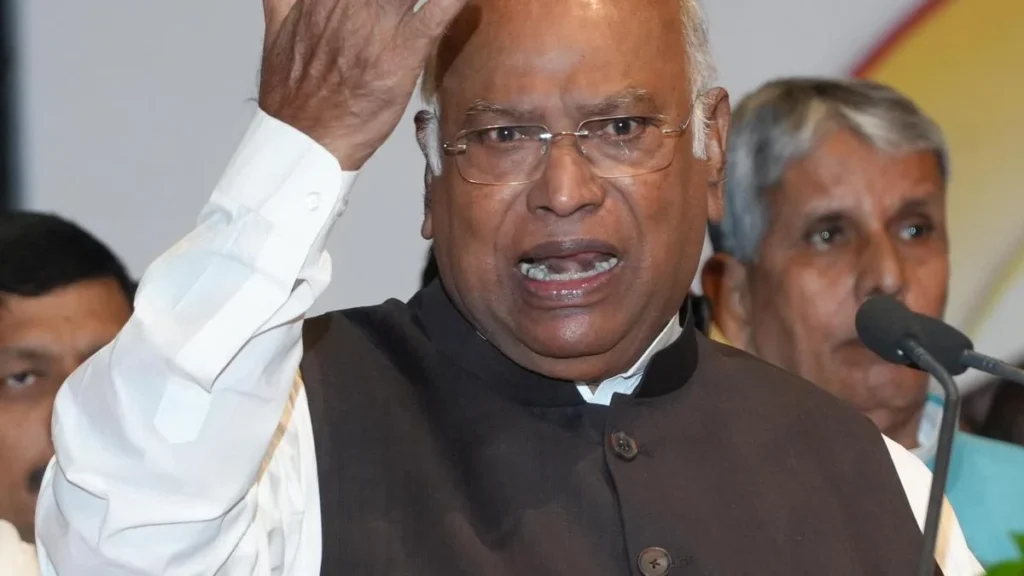
New Delhi, October 26, 2026: The political temperature in the national capital has reached a boiling point as Congress President Mallikarjun Kharge launched a scathing attack on the Union government and the Election Commission of India (ECI). In a series of sharp rebukes issued on Monday, Mr. Kharge accused the Narendra Modi-led administration of shielding Chief Election Commissioner (CEC) Gyanesh Kumar from accountability despite mounting allegations of systemic "vote theft."
The confrontation marks a significant escalation in the ongoing friction between the INDIA bloc and the electoral authorities, centered on the implementation of the controversial ‘SIR’ software and alleged irregularities in voter roll management.
The Core Accusation: Transparency Deficit
At the heart of the current crisis is the Congress party’s assertion that the ECI is operating with a lack of transparency that threatens the very foundations of Indian democracy. Mr. Kharge specifically highlighted the ECI’s refusal to disclose technical details regarding the software used in the Systematic Integrated Repository (SIR), a system the opposition claims has become a tool for centralized manipulation.
“When information about the software used in SIR was sought through the Right to Information (RTI) Act, the Election Commission flatly refused to respond, citing ‘Trade Secrets’,” Mr. Kharge stated in a post on X.
The Congress argues that the invocation of "trade secrets" by a constitutional body tasked with ensuring free and fair elections is constitutionally untenable. The party claims that the ECI is shielding this information because public disclosure would expose a "massive, centralized manipulation" of the electoral process.
Chronology of the Conflict: From RTI to Open Protest
The current standoff is not an isolated event but the culmination of months of friction regarding the ECI’s internal software protocols.
- Mid-2026: Initial reports emerge from various state units regarding discrepancies in voter lists.
- October 25, 2026: The Congress party formally accuses the ECI of hiding information regarding the ‘ECINET’ software, alleging that the poll body is deliberately obscuring data to prevent a forensic audit of the software’s architecture.
- October 26, 2026: Mallikarjun Kharge escalates the rhetoric, directly targeting CEC Gyanesh Kumar and calling for his immediate resignation.
- November 1, 2026 (Scheduled): The opposition plans a ‘Dilli Chalo’ march to Ramlila Maidan, aimed at mobilizing the public against alleged electoral irregularities.
Supporting Data: Discrepancies on the Ground
The Congress has bolstered its political arguments with specific data points, primarily focusing on voter enrollment and removal processes in the crucial state of Uttar Pradesh.
Mr. Kharge cited significant irregularities in the handling of Form-6 applications—the standard document for new voter registration. According to the Congress president, the details of 16.18 lakh Form-6 applications in Uttar Pradesh have been kept from the public domain.
Furthermore, in Pilibhit, the party identified specific irregularities involving 10,470 voters. These local discrepancies, the Congress claims, forced the administration into a defensive position, eventually necessitating a state-wide investigation into Forms 6, 7, and 8. The opposition contends that these are not mere administrative errors but symptoms of a wider, orchestrated effort to prune the voter rolls of populations perceived to be unfavorable to the ruling dispensation.
The INDIA Alliance Manifesto for Electoral Reform
In response to what they term the "collusion" between the Bharatiya Janata Party (BJP) and the Election Commission, the INDIA bloc has presented a three-point demand that serves as the cornerstone of their current protest movement:

- Resignation and Repeal: The immediate resignation of CEC Gyanesh Kumar and the repeal of the 2023 law that provided him with the protection currently cited by the government.
- Technological Halt: The immediate suspension of the SIR system, which the opposition labels as "disastrous."
- Restoration and Return to Paper: A full restoration of the names of voters who were allegedly illegally removed from rolls and a return to the use of paper ballots for all future elections to eliminate the risk of digital tampering.
Implications for Indian Democracy
The rhetoric used by Mr. Kharge reflects a profound loss of institutional trust. By framing the struggle as a "people’s fight to save the Constitution," the Congress is attempting to move the debate beyond parliamentary procedure and into the public consciousness.
Institutional Trust
The ECI, traditionally viewed as the ultimate arbiter of Indian elections, is facing an unprecedented crisis of credibility. When a national political party demands the resignation of a constitutional head, the functional relationship between the executive, the regulator, and the opposition is fundamentally altered. If these allegations of software-based manipulation gain further traction, the electoral legitimacy of the upcoming cycles could be challenged by significant segments of the electorate.
The Role of Technology
The debate over SIR and ECINET underscores a global concern regarding the digitalization of democratic processes. As electoral authorities move toward integrated software systems, the tension between "proprietary technology" and "public accountability" is intensifying. The ECI’s reliance on the "Trade Secrets" defense highlights a conflict between private software vendors and the public’s right to verify the integrity of their vote.
Official Responses and Political Reactions
As of this writing, the Election Commission has maintained a stance of administrative stoicism, emphasizing its adherence to established legal frameworks. The Union government, through various spokespersons, has dismissed the allegations as "baseless fear-mongering" and "an attempt to delegitimize the electoral process when the opposition faces defeat."
BJP leaders have countered by accusing the Congress of "weakening constitutional institutions" to serve its own political agenda. They maintain that the 2023 law regarding the appointment and protection of election commissioners was passed through due parliamentary process and that the software systems in question have undergone rigorous technical audits.
Looking Ahead: The November 1st Rally
The upcoming ‘Dilli Chalo’ march on November 1st is poised to be a barometer of the public’s sentiment. The Congress is banking on the narrative that this is not a partisan issue but a foundational one.
For the government, the protest represents a challenge to its narrative of a robust and unimpeachable electoral system. For the opposition, the rally is a gamble: if they can successfully frame the "vote chori" (vote theft) narrative to resonate with the common voter, it could create a significant political hurdle for the ruling party in the coming year.
As India approaches this confrontation, the silence—or the eventual response—from the Election Commission regarding the technical architecture of its software will remain the most critical factor. In a democracy where the sanctity of the vote is the bedrock of legitimacy, the demand for transparency is not merely a political tactic; it is, as Mr. Kharge suggests, a vital necessity for the survival of the democratic spirit.
Whether these allegations lead to a change in policy or a deeper entrenchment of positions remains to be seen. However, one thing is clear: the relationship between India’s digital electoral infrastructure and the public trust is at a critical, and potentially irreversible, crossroads.