A Lone Vote in Parbatsar: The Curious Case of BJP’s Kailashchand in Rajasthan’s Civic Elections
By Staff Reporter
September 15, 2026
The electoral landscape of Rajasthan, a state known for its high-stakes political maneuvers and fiercely contested urban body elections, witnessed a bizarre and viral anomaly this week. As results trickled in for the 2026 Rajasthan Urban Local Body elections on Monday, September 14, one specific candidate’s performance became the talk of the state—not for its triumph, but for its profound isolation.
Kailashchand, a candidate fielded by the Bharatiya Janata Party (BJP) from Ward 13 of the Parbatsar municipality in the newly formed Didwana-Kuchaman district, secured exactly one vote. In a democratic exercise involving thousands of candidates, his singular vote has sparked a statewide conversation about candidate selection, constituency awareness, and the peculiar nature of local governance in India.
The Anatomy of an Electoral Anomaly: Main Facts
The results for the Parbatsar municipality, one of the 309 urban local bodies currently undergoing the counting process, were finalized on Monday afternoon. The ward-level data released by the State Election Commission painted a stark picture for the BJP’s representative in Ward 13.
While the Congress candidate, Hina Khanam, emerged victorious with a commanding 376 votes, and Independent candidate Rashid Khan trailed behind with a respectable 195, Kailashchand stood at the bottom of the tally with a solitary vote. The math behind the result is simple yet damning: in a ward where hundreds of citizens cast their ballots, only one person—likely a relative, a close friend, or perhaps a sympathetic neighbor—saw fit to mark their ballot for the BJP nominee.
The discrepancy was immediately picked up by local media, leading to widespread speculation. Was it a protest vote? Was it a lack of campaigning? Or, as the candidate himself suggested, was it a casualty of administrative mismatch?
A Chronology of the 2026 Civic Polls
The road to the current electoral impasse began months ago when the Rajasthan State Election Commission announced the schedule for the urban local body polls. With over 10,000 councillor posts at stake across the state, political parties—specifically the ruling BJP and the primary opposition, the Indian National Congress—deployed massive resources to secure control over the municipal boards.
- August 2026: Notification for the elections is issued. Political parties begin the arduous process of finalizing candidates for various wards.
- Early September 2026: Campaigns reach a fever pitch. In Parbatsar, the political climate remains tense as local issues, ranging from water supply to sanitation, dominate the discourse.
- September 12, 2026: Voting day for the urban local bodies. Polling stations across the district report a high turnout, with citizens queueing up to exercise their franchise.
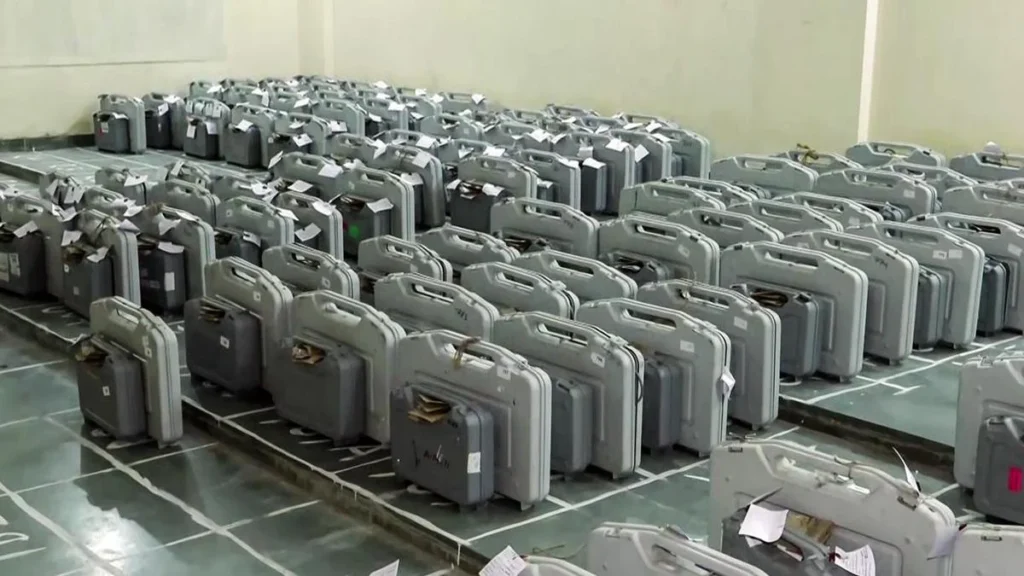
- September 14, 2026: Counting day. As Electronic Voting Machines (EVMs) are opened in secure rooms, the results begin to trickle out. By the late afternoon, the numbers from Parbatsar Ward 13 confirm the unprecedented one-vote tally for Kailashchand.
The Candidate’s Perspective: A Geographical Mismatch
When questioned by PTI regarding his abysmal performance, Kailashchand offered a candid, if somewhat embarrassing, explanation that highlights a systemic issue within the party’s internal nomination process.
"I am a voter of Ward 12, but the BJP fielded me from the neighboring Ward 13," Kailashchand explained. "I got one vote. My vote is in Ward 12. I was fielded from Ward 13. Someone from that ward has voted for me."
This revelation shifts the focus from a personal failure to a potential organizational oversight by the BJP. In local body elections, where the candidate’s personal connection to the ward—known as "ground-level connect"—is the single most important factor for success, fielding an "outsider" who cannot even vote for themselves is a strategic blunder.
Political analysts suggest that such instances occur when party leadership relies on top-down directives rather than local grassroots feedback. For a voter in Ward 13, seeing a candidate who resides in a different ward creates an immediate psychological distance, often leading them to support a local resident instead.
Supporting Data: The Broader Parbatsar Picture
While the focus remains on the "one-vote" anomaly, the broader results for Parbatsar municipality show a highly competitive environment. The municipality consists of 25 wards, and the final tally confirms a razor-thin margin between the two major national parties.

- Congress: 13 wards (Simple Majority)
- BJP: 12 wards
The Congress party’s ability to secure a simple majority, even if by a narrow margin, suggests that the party’s local outreach programs were more effective than those of the BJP. In a 25-ward body, winning 13 seats is enough to control the chairperson’s seat, effectively giving the Congress the reins of the municipality for the next term.
The data also reveals that across the 309 urban local bodies in Rajasthan, this cycle has seen a mix of incumbent successes and anti-incumbency sentiments. With over 10,000 councillor seats, the aggregate data will be crucial for both parties as they look toward the next round of assembly elections, providing a barometer of public sentiment in semi-urban and rural-adjacent areas.
Official Responses and Political Implications
The BJP leadership in Rajasthan has remained largely tight-lipped regarding the Ward 13 incident. Privately, sources within the party indicate that there will be a "post-mortem" of the candidate selection process. Local party units are often blamed for submitting lists of candidates without verifying their residential status or their popularity within the specific ward, leading to such "preventable" losses.
For the Congress, the win in Parbatsar is a symbolic victory. While the margin in many wards was small, the ability to win the municipality serves as a morale booster. Hina Khanam, the victor of Ward 13, has not yet issued a formal statement on her opponent’s performance, choosing instead to focus on her victory speech, where she pledged to address local infrastructural concerns.
The Problem of "Parachute Candidates"
The incident has ignited a debate regarding the practice of "parachuting" candidates—a term used for politicians placed in constituencies where they have no history. In municipal elections, where residents expect their representatives to be available for daily grievances like garbage collection, road repairs, and water supply, the lack of a local connection is fatal.
"When a candidate doesn’t even have a vote in the ward they are contesting, it tells the voter that the party does not care about the local sentiment," says a senior political analyst based in Jaipur. "It turns the election into a proxy battle for the party rather than a service-oriented selection for the people."
Looking Forward: Lessons for 2026 and Beyond
As the counting continues for the remainder of the 309 urban local bodies, the "Kailashchand case" stands as a cautionary tale for political strategists. The reliance on party brand names over local credibility is a gamble that rarely pays off in the localized environment of Indian municipal politics.
The State Election Commission has managed the process with high security, ensuring that the EVMs remained under tight surveillance until the counting concluded. However, the integrity of the process is only half the battle; the other half is the quality of the democratic choice provided to the citizens.
For the BJP, the focus will now shift to analyzing why their internal vetting mechanisms failed to flag the mismatch in Parbatsar. For the voters of Ward 13, the result is a reminder of the power of their vote—even if it was a vote cast in favor of someone else.
As Rajasthan moves forward from these elections, the memory of the "one-vote candidate" will likely linger as a quirk of history—a reminder that in the theater of Indian democracy, even the most serious elections can sometimes produce stories that are stranger than fiction. Whether this leads to reform in candidate selection or simply remains a viral anecdote, the message to political parties is clear: know your ward, know your voters, and most importantly, ensure your candidate is on the electoral roll of the place they intend to represent.
Key Statistics of the Rajasthan Urban Local Body Elections 2026:
- Total Urban Local Bodies: 309
- Total Councillor Posts: >10,000
- Parbatsar Municipality Composition: 25 Wards
- Parbatsar Results: Congress (13), BJP (12)
- Ward 13 Result: Hina Khanam (376), Rashid Khan (195), Kailashchand (1)