A Political Paradigm Shift: Suvendu Adhikari Claims Broad-Based Support in West Bengal Bypolls
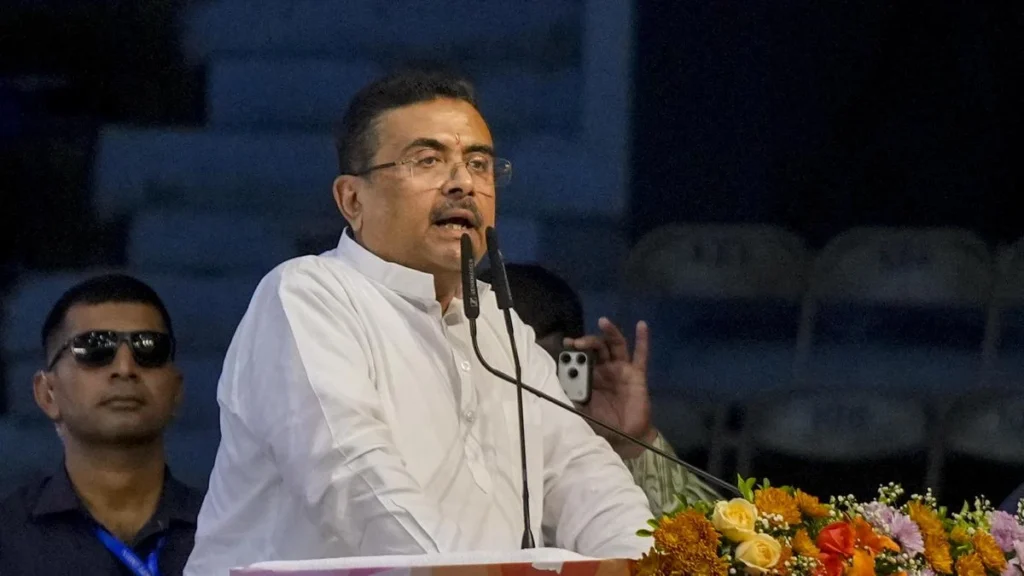
KOLKATA — In a development that has sent ripples through the political landscape of West Bengal, Chief Minister Suvendu Adhikari has declared that the recent by-elections in the Nandigram and Rejinagar Assembly constituencies have fundamentally altered the state’s electoral narrative. According to the Chief Minister, the resounding victories in these seats serve as definitive evidence that the Bharatiya Janata Party (BJP) has successfully transcended its traditional voter base, securing substantial support from minority communities.
The assertion marks a significant pivot in the rhetoric surrounding West Bengal’s polarized political climate, suggesting that the "politics of division" may be losing its potency as the electorate shifts its focus toward developmental priorities.
The Core Facts: A Decisive Mandate
The by-elections, held on October 6, 2026, yielded results that exceeded the expectations of many political observers. The BJP secured the Nandigram seat with a commanding margin of over 1.22 lakh votes, while simultaneously capturing the minority-dominated Rejinagar constituency with a margin exceeding 75,000 votes.
Addressing a jubilant crowd during a victory procession in Kolkata on Monday, Chief Minister Adhikari highlighted the demographic breakdown of the support. He noted that internal party estimates suggest that 80% of Muslim voters in Nandigram and 60% of the minority population in Rejinagar cast their ballots in favor of the BJP.
"A perception was created that the BJP draws support from only one community, and this was particularly true in the context of the 2021 Assembly polls," Mr. Adhikari remarked. "The results from Nandigram and Rejinagar have shattered that myth once and for all. We are now a party that represents the aspirations of all segments of society."
Chronology of Events: From Campaigning to Consolidation
The trajectory of these by-elections began with an aggressive campaign centered on governance, infrastructure, and the failure of the previous administration to provide basic amenities.
- September 2026: The Election Commission of India announces the by-election schedule for Nandigram and Rejinagar, setting the stage for a high-stakes electoral battle.
- Late September 2026: Both the BJP and the Trinamool Congress (TMC) intensify their outreach programs. While the TMC attempted to leverage its legacy, the BJP focused on the "double-engine" narrative, promising better alignment between state and central developmental schemes.
- October 6, 2026: Voting day. Turnout was high across both constituencies, with reports of largely peaceful polling despite the high tension surrounding the potential for a shift in minority voting patterns.
- October 10, 2026: Vote counting concludes, revealing landslide victories for the BJP in both regions.
- October 13, 2026: Chief Minister Suvendu Adhikari leads a victory rally in Kolkata, formally consolidating the narrative that the BJP has successfully expanded its coalition.
Supporting Data and Socio-Political Context
To understand the significance of these results, one must look at the historical context of West Bengal’s electoral history. For decades, the political discourse in the state has been characterized by "vote bank politics," where minority communities were largely aligned with the Left Front or, subsequently, the Trinamool Congress.
The shift in Rejinagar is particularly telling. As a minority-dominated constituency, the fact that the BJP secured a 75,000-vote lead suggests a strategic reassessment by voters. State BJP president Samik Bhattacharya, who joined Mr. Adhikari at the rally, emphasized this shift.
"The politics of division is effectively over," Mr. Bhattacharya stated. "Our interactions on the ground revealed that minority voters are no longer interested in inflammatory rhetoric. They want what every other citizen wants: quality education for their children, robust healthcare systems, and economic opportunity. The voters have realized that the current developmental roadmap of the BJP is the only one capable of delivering these necessities."
Analysts point out that the BJP’s focus on "aspirational politics"—prioritizing the delivery of central schemes like the PM Awas Yojana and Ayushman Bharat—has resonated with lower-income groups regardless of their religious identity.
Official Responses and Political Repercussions
The Chief Minister’s victory speech did not stop at celebrating the current wins; it served as a launchpad for the next major electoral challenge: the Kolkata and Howrah Municipal Corporation elections scheduled for November 2026.

Mr. Adhikari was pointed in his critique of the previous administration, which he accused of fostering a "divisive culture" that pitted Bengalis against non-Bengalis and created artificial barriers between communities to maintain political control.
"The TMC government has spent 15 years fragmenting our society to ensure their survival," Adhikari alleged. "They have ignored the environment, as seen in the illegal filling of over 5,000 ponds for real estate development, and they have ignored the people. We are here to rebuild what they have dismantled."
Furthermore, Mr. Adhikari launched a direct appeal to the voters of Kolkata and Howrah, framing the upcoming municipal elections as an opportunity to establish a "triple-engine government."
"At the Prime Minister’s call, you gave us a double-engine government. At the Chief Minister’s call, we now have to give a triple-engine government. Will you give us Howrah and Kolkata? Standing on the streets of Kolkata, I am appealing to you with both hands outstretched—will you give us Howrah and Kolkata?"
Implications: The Road Ahead
The implications of the BJP’s success in these by-elections are profound. Firstly, it challenges the long-held assumption that the BJP cannot win in minority-heavy regions of West Bengal. If this trend holds during the upcoming civic polls, the BJP could realistically threaten the TMC’s dominance in urban centers like Kolkata and Howrah, which have historically been bastions of the ruling party.
Secondly, the "triple-engine" slogan suggests that the BJP is attempting to move the discourse away from ideology and toward administrative efficiency. By tying municipal performance to state and central government support, the party is effectively telling voters that electing a BJP council will result in a more seamless flow of funds and development projects.
However, challenges remain. The TMC, though currently reeling from the by-election results, maintains a deep-rooted organizational network. Political observers warn that the ruling party is unlikely to concede ground in the municipal elections without a fight. The coming weeks will likely see an intensification of the rhetoric, with the BJP looking to capitalize on its momentum and the TMC looking to re-establish its traditional hold on the urban electorate.
The Environmental Angle: A New Point of Contention
Beyond the political victory, Mr. Adhikari’s mention of the illegal filling of 5,000 ponds adds a new dimension to the political debate. By highlighting the environmental degradation caused by real estate development under the previous government, the Chief Minister is attempting to tap into the urban middle-class concern for the environment and urban planning. This indicates a shift toward "governance-based" criticism rather than just identity-based arguments, a strategy that could further erode the TMC’s base among educated, urban voters.
Conclusion
The by-elections in Nandigram and Rejinagar represent more than just a victory for the BJP; they symbolize a potential reconfiguration of West Bengal’s electoral sociology. As the state moves toward the crucial civic polls in November, the narrative of "development over division" will be tested in the high-density urban corridors of Kolkata and Howrah.
Whether this is a fleeting trend or the beginning of a long-term shift remains to be seen. However, one thing is certain: the electoral landscape of West Bengal is evolving, and the traditional strategies of the past may no longer be sufficient to hold the line in the future. As Suvendu Adhikari reaches out to the voters of Kolkata with an "outstretched hand," the electorate faces a choice that will define the state’s developmental trajectory for years to come.