Accelerating Enterprise AI: Amazon Launches Bedrock Managed Knowledge Base to Simplify RAG Pipelines
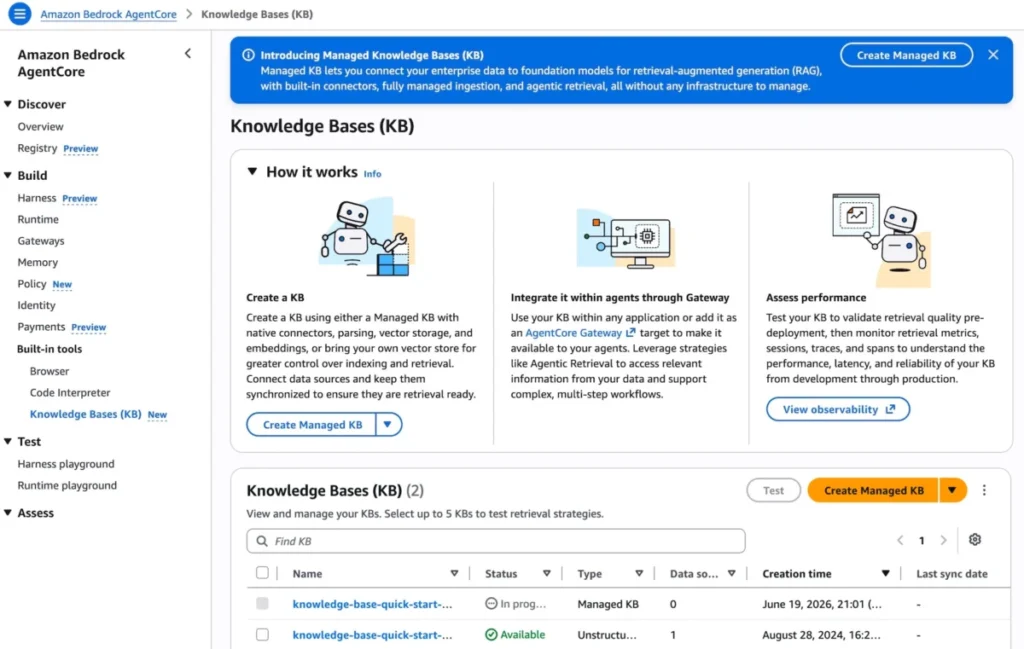
In a major development for the generative AI ecosystem, Amazon Web Services (AWS) has announced the launch of Amazon Bedrock Managed Knowledge Base. This new suite of capabilities is designed to bridge the gap between raw enterprise data and high-performance, agentic AI applications. By abstracting the complex infrastructure required for Retrieval-Augmented Generation (RAG), AWS is enabling organizations to deploy production-ready AI agents in minutes rather than months.
Main Facts: A New Paradigm for RAG
The core challenge for enterprises adopting generative AI has never been the models themselves, but rather the "plumbing"—the intricate process of connecting proprietary, siloed data to foundation models in a way that is secure, accurate, and scalable.
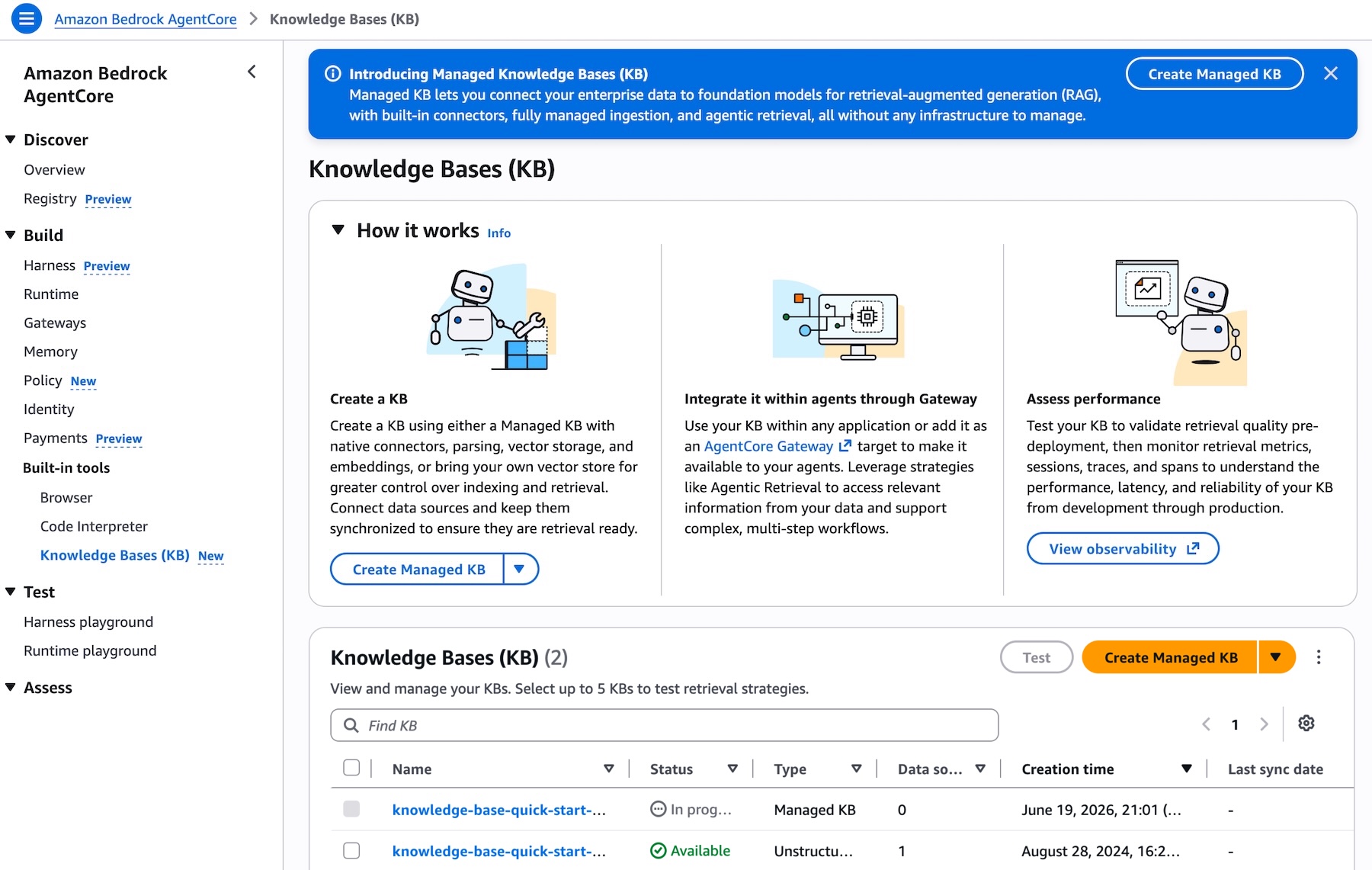
Amazon Bedrock Managed Knowledge Base serves as a unified, managed primitive that replaces the fragmented, "do-it-yourself" approach to RAG. Traditionally, developers have had to manually engineer and maintain storage layers, vector databases, embedding models, re-ranking logic, and retrieval orchestration. Bedrock Managed Knowledge Base consolidates these disparate tasks into a single service.
By default, the service handles the heavy lifting: it selects optimized embedding and re-ranking models and manages the end-to-end pipeline. However, it maintains the hallmark of the AWS ecosystem—flexibility. Developers can still swap out specific foundation models or embedding configurations as their specific use cases evolve, ensuring that teams are never locked into a single provider.
Chronology: The Evolution of Bedrock
The introduction of Managed Knowledge Base represents the latest milestone in a rapid, two-year sprint to make generative AI accessible to mainstream enterprises.
- Initial Foundation (2023-2024): AWS launched Amazon Bedrock to provide a scalable API-based service for accessing top-tier foundation models. During this period, the focus was on model selection and inference.
- The RAG Bottleneck (2025): As adoption increased, developers reported significant friction in "grounding" models. The industry spent much of this year grappling with the complexities of data parsing, vector indexing, and maintaining the freshness of knowledge stores.
- The Agentic Shift (Early 2026): The focus shifted from simple chatbots to "agentic" systems—AI capable of performing multi-step reasoning and taking action. This necessitated more advanced retrieval mechanisms, leading to the development of the "Agentic Retriever."
- The June 2026 Breakthrough: Amazon officially unveiled the Managed Knowledge Base, integrating it directly with the Bedrock AgentCore Gateway to provide a seamless, end-to-end pipeline that includes native observability and Model Context Protocol (MCP) support.
Supporting Data and Technical Innovations
The efficiency gains promised by this release are driven by three primary technical innovations: Smart Parsing, Agentic Retrieval, and native MCP support.

Smart Parsing for Data Ingestion
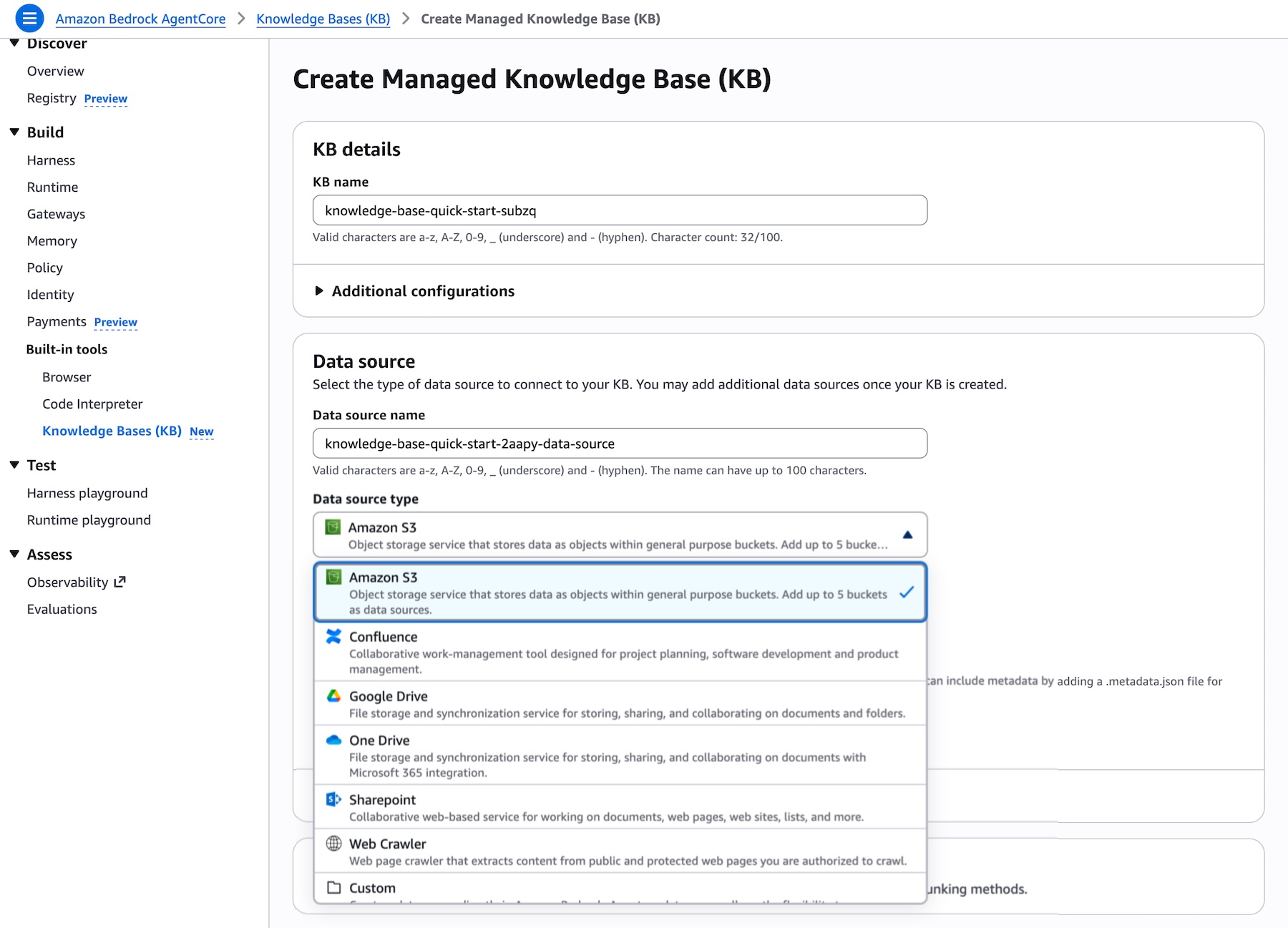
Data quality is the precursor to AI accuracy. Managed Knowledge Base utilizes "Smart Parsing," an automated system that analyzes the structure of diverse data sources—whether they are PDFs, Confluence pages, or SharePoint documents—and determines the optimal chunking and indexing strategy. By automating this, AWS claims to eliminate weeks of trial-and-error experimentation that usually accompanies data ingestion.
Agentic Retriever: Solving the Multi-Hop Dilemma
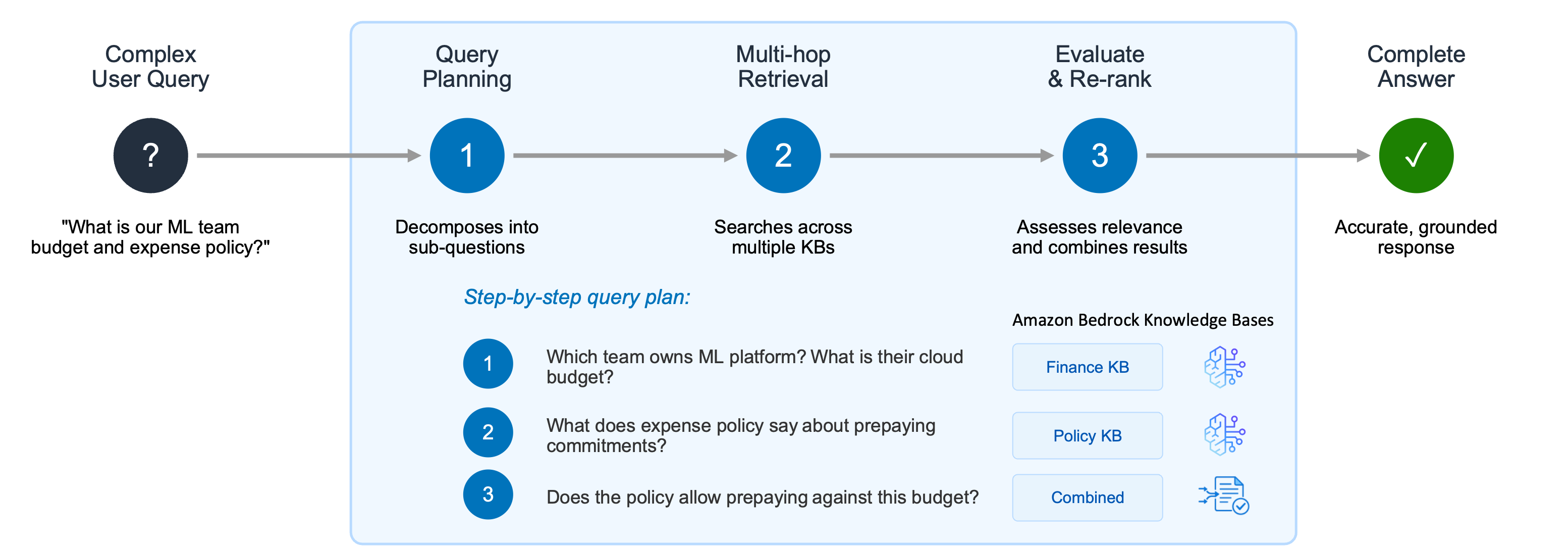
One of the most significant technical hurdles in enterprise AI is the "multi-hop" query. When a user asks a question that requires cross-referencing different departments or policies, standard retrieval often fails. The new Agentic Retriever decomposes these complex queries into a logical, step-by-step plan. It performs iterative retrieval, evaluates the relevance of findings in real-time, and stops only when it has sufficient evidence to construct a grounded, accurate answer.
Integration via Model Context Protocol (MCP)
By integrating with the Bedrock AgentCore Gateway, the service becomes instantly compatible with any MCP-enabled environment. Whether a team is building in LangChain, LlamaIndex, CrewAI, or LangGraph, they can now plug their enterprise data into these frameworks with zero custom integration code. This interoperability is a strategic move to ensure that Bedrock remains the backbone of the AI development stack, regardless of the client-side framework chosen by the developer.
Implications for the Industry
The release of Amazon Bedrock Managed Knowledge Base has profound implications for how businesses will prioritize AI investments moving forward.
Lowering the Barrier to Entry
Previously, building an enterprise-grade AI agent required a specialized team of machine learning engineers and data architects. By turning RAG into a "managed primitive," AWS is effectively democratizing this technology. Mid-market companies and smaller internal departments can now build highly capable AI assistants that were previously the exclusive domain of tech giants with massive R&D budgets.
Security and Compliance at Scale
Enterprise data is sensitive. The Managed Knowledge Base leverages AWS Identity and Access Management (IAM) to ensure that data access remains governed. Because the service is integrated into the existing AWS security perimeter, companies can enforce role-based access control (RBAC) at the knowledge base level, ensuring that an AI agent only surfaces information the user is authorized to see.
The Shift from "Building" to "Outcomes"
The most significant shift is the change in developer focus. For the past eighteen months, the "undifferentiated heavy lifting" of maintaining infrastructure has consumed the majority of AI project timelines. By offloading this to AWS, development teams can redirect their focus toward high-value business outcomes: improving customer service workflows, accelerating legal document review, and automating complex internal reporting.
Official Perspective and Implementation
Daniel Abib, who led the technical rollout, emphasizes that while the system is highly automated, it is not a "black box." The platform provides comprehensive observability through the AgentCore dashboard, allowing developers to monitor retrieval metrics and evaluate the performance of their agents in real-time.
"The goal," notes the documentation, "is to allow developers to focus on their agentic search applications instead of orchestration logic." By providing a pre-built target type in the AgentCore Gateway, AWS has made it possible to deploy a functional, data-backed agent in just a few lines of code.
Future Outlook
As of June 2026, the service is available in major AWS regions, including US East (N. Virginia), US West (Oregon), Asia Pacific (Sydney, Tokyo), Europe (Dublin, Frankfurt, London), and AWS GovCloud. The pricing model follows the standard AWS pay-as-you-go pattern, based on indexed data size and the number of retrievals, further reducing the financial risk for organizations exploring new use cases.
The integration of MCP support is perhaps the most forward-looking aspect of this release. By adopting an open standard for AI communication, AWS is signaling that the future of enterprise AI will be modular and interconnected. As new models and frameworks emerge, the Managed Knowledge Base is positioned to act as a stable, reliable foundation upon which the next generation of autonomous agents will be built.
For enterprises currently struggling to move their AI pilots into production, the message from AWS is clear: the era of infrastructure-heavy AI development is coming to a close, and the era of managed, agentic intelligence has arrived. Organizations that act now to integrate their data into these managed pipelines are likely to gain a significant competitive advantage in the speed and accuracy of their AI-driven decision-making.