Amazon Launches CloudWatch Omni: A Unified Observability Platform to Tackle the Non-Deterministic Chaos of Agentic AI
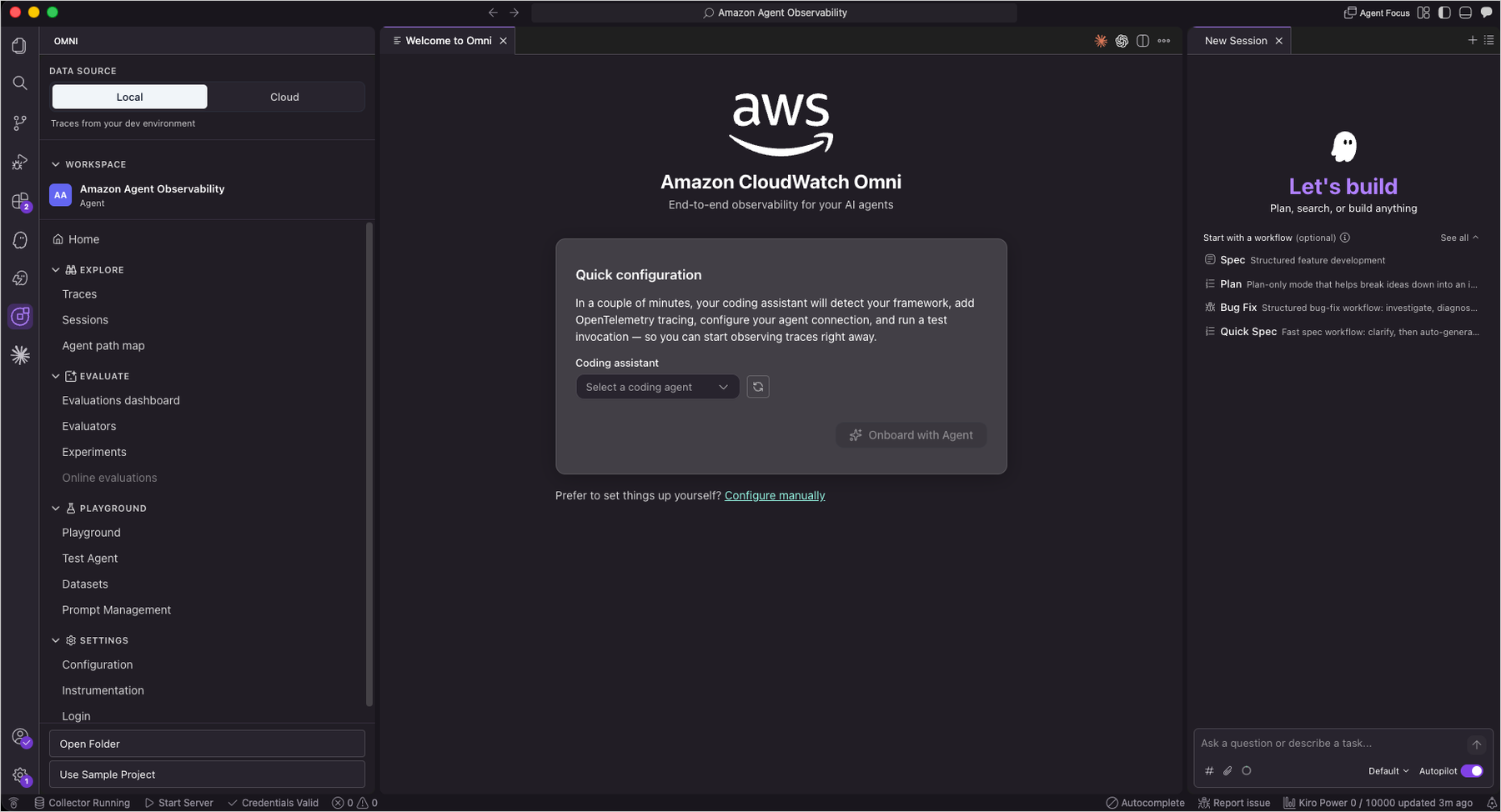
SEATTLE — In a major expansion of its cloud management portfolio, Amazon Web Services (AWS) has officially announced the general availability of Amazon CloudWatch Omni, a purpose-built, unified observability and experimentation platform tailored explicitly for modern application workloads and advanced artificial intelligence systems.
Designed to overcome the notorious monitoring blind spots introduced by generative AI and autonomous systems, CloudWatch Omni bridges a critical gap in the software engineering lifecycle. It provides developers and operations teams with an integrated suite of tools to design, evaluate, debug, and monitor AI agents seamlessly across any model provider, runtime environment, or development framework.
By shifting observability directly into the developer’s native workflow—via integrated IDE extensions—while offering a separate, collaborative web dashboard for operations fleets, AWS is attempting to redefine how enterprises maintain reliability in the era of non-deterministic software.
Main Facts: What is Amazon CloudWatch Omni?
At its core, CloudWatch Omni is a comprehensive observability, evaluation, and experimentation solution built on open standards such as OpenInference and the AWS Distro for OpenTelemetry (ADOT). Unlike traditional performance monitoring tools that rely on rigid, deterministic error logs and predictable code paths, Omni is engineered to handle the chaotic, multi-step reasoning loops characteristic of modern AI agents.

Key Capabilities and Architecture
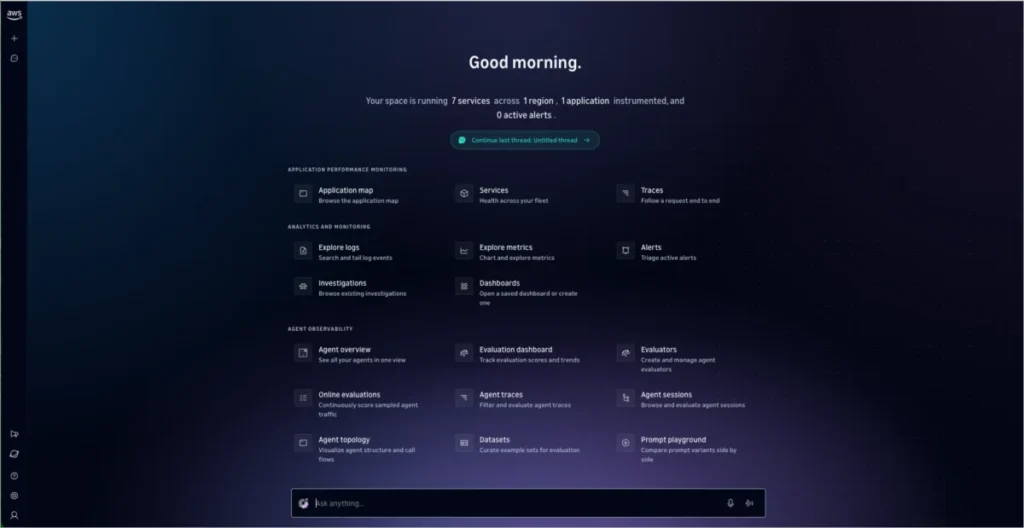
- Dual-Surface Experience: Omni operates across two primary interfaces. Developers receive a native extension inside integrated development environments (IDEs) like VS Code and Kiro, allowing real-time trace inspection as code executes. Meanwhile, operations and reliability engineering (SRE) teams utilize a standalone web experience, accessible via Single Sign-On (SSO) independent of the AWS Management Console, to monitor production fleets.
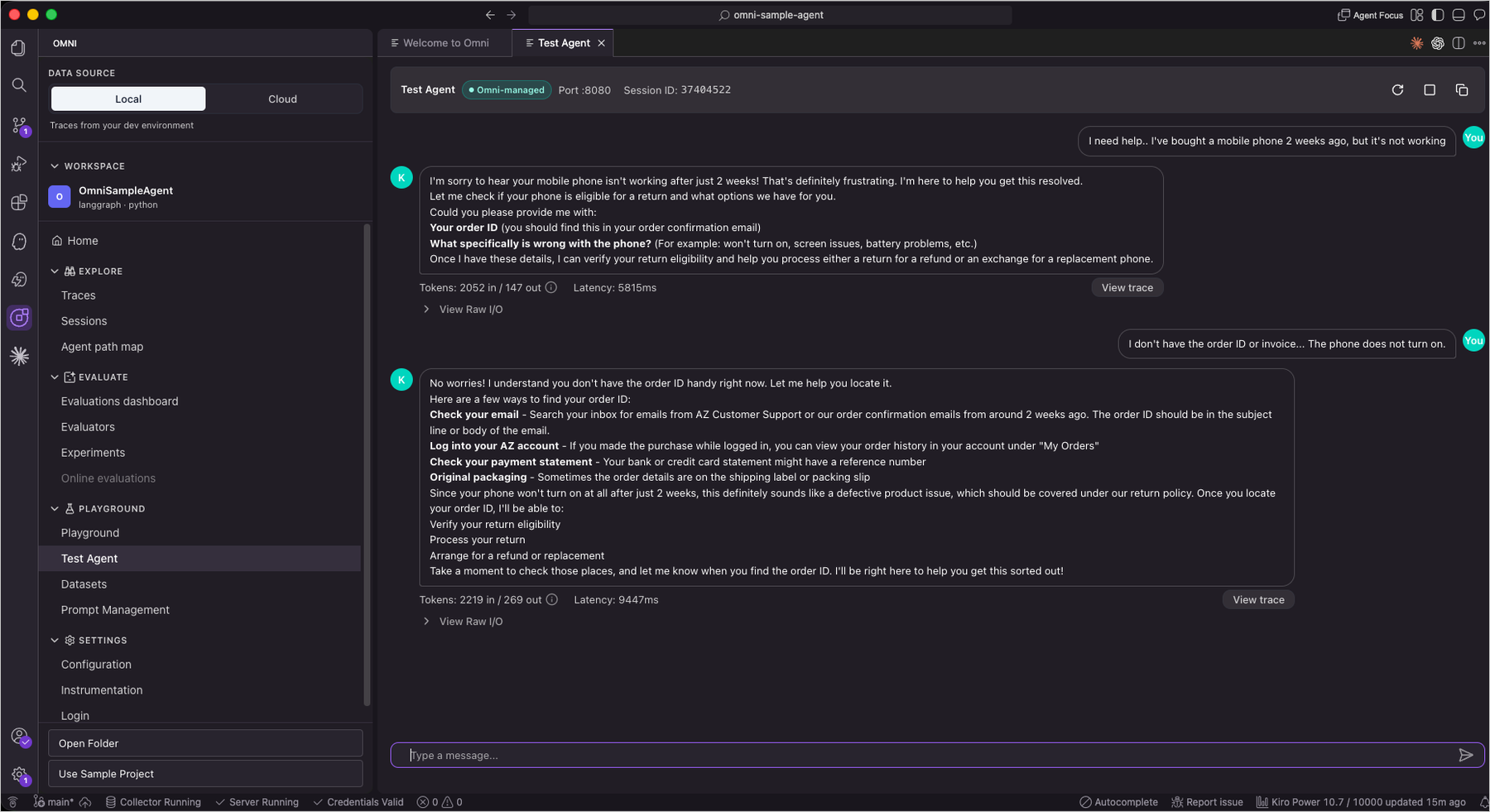
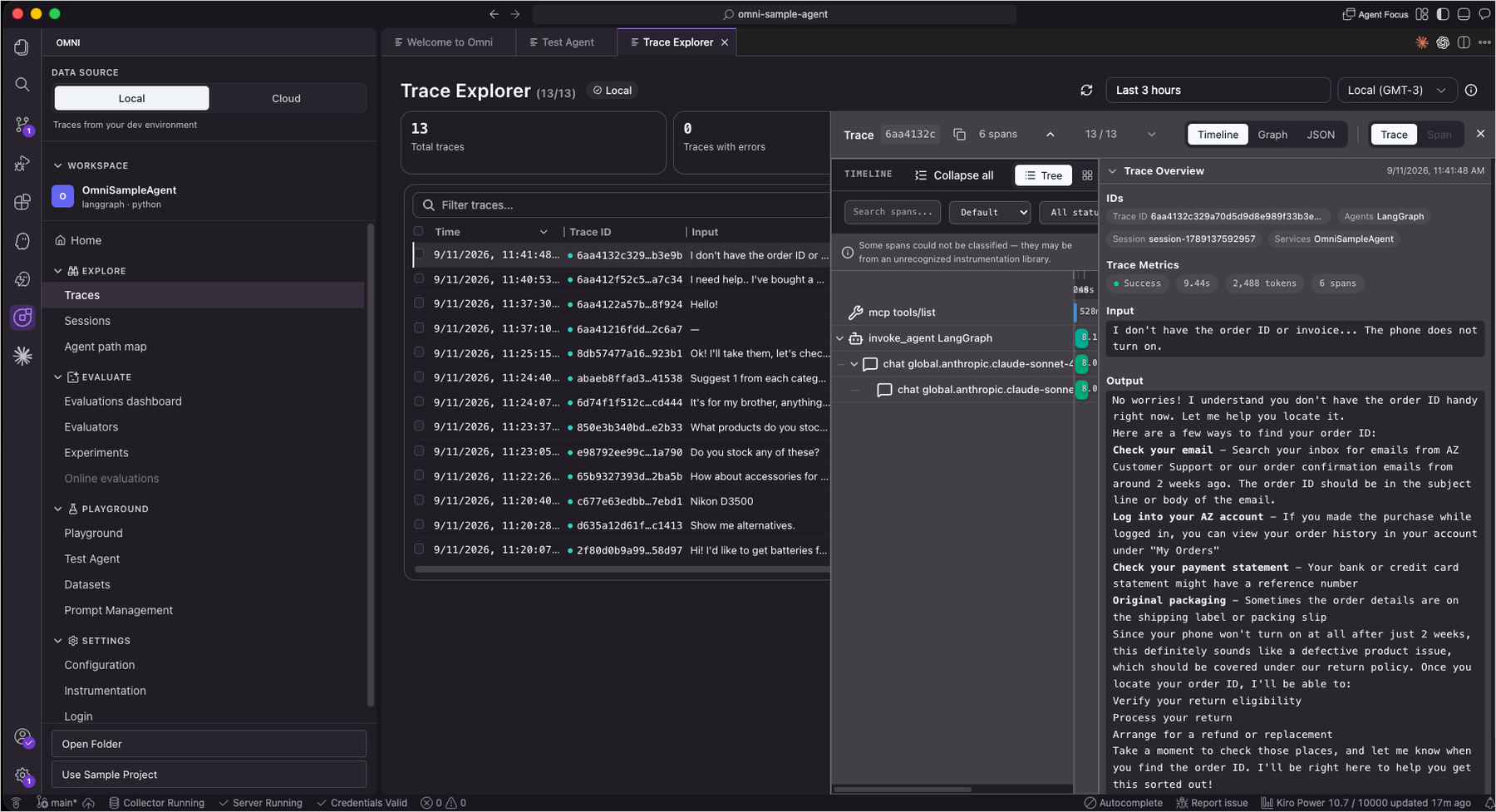
- Comprehensive Tracing and Telemetry: The platform records every single trace generated during an agent’s execution cycle. This includes complex chains of LLM calls, tool selections, prompt compositions, and reasoning steps.
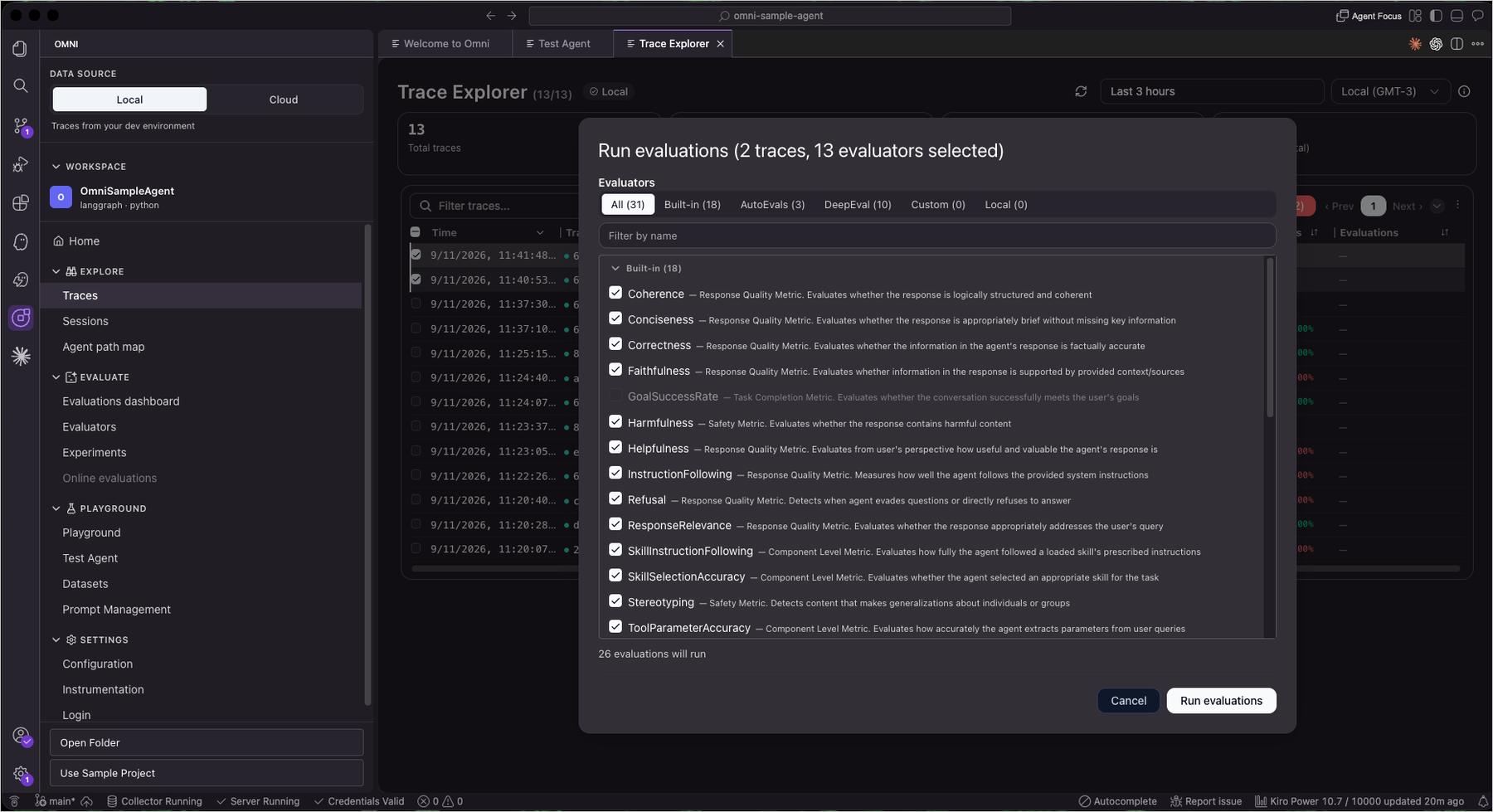
- Built-In Evaluators: Omni features 17 pre-configured evaluators designed to assess critical quality dimensions, such as semantic correctness, response coherence, retrieval-augmented generation (RAG) quality, and routing precision.
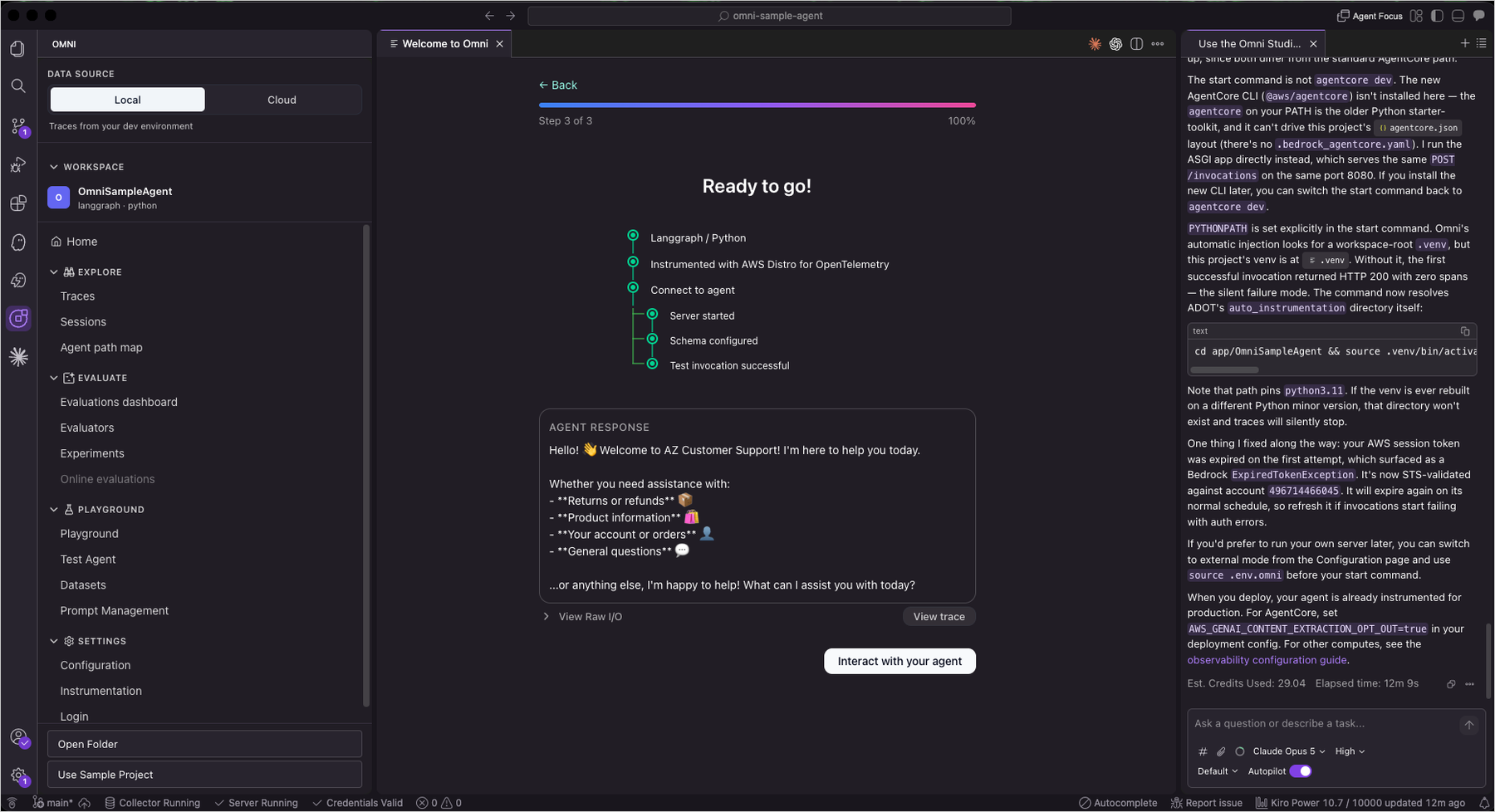
- Ecosystem and Framework Agnostic: Rather than locking users into a proprietary ecosystem, Omni integrates natively with leading agentic and generative AI frameworks—including LangChain, LangGraph, CrewAI, the OpenAI SDK, Strands, and the Vercel AI SDK—across both Python and TypeScript. It also features deep integration with Amazon Bedrock AgentCore.
Chronology: The Evolution Toward Agentic Observability
The release of CloudWatch Omni arrives at a pivotal juncture in software development. For decades, application monitoring relied on deterministic metrics: CPU utilization, memory thresholds, HTTP 500 error codes, and latency spikes. If a function failed, logs pointed directly to the line of code responsible.
However, the rapid mainstream adoption of Large Language Models (LLMs) and autonomous AI agents disrupted this paradigm.
- The Shift to Non-Deterministic Systems: Over the past two years, enterprise engineering teams rapidly transitioned from simple prompt-response wrappers to complex, multi-agent architectures capable of self-directed planning, tool usage, and iterative problem-solving.
- The Observability Crisis: As these agentic systems scaled into production, developers encountered a severe diagnostic wall. A minor, seemingly innocuous adjustment to a system prompt could severely degrade output quality or trigger infinite tool-calling loops without throwing a single standard infrastructure error.
- The Silt of Fragmented Tooling: To cope, engineers resorted to manual log parsing across disparate systems, constantly context-switching between local code editors and disconnected web dashboards.
- The Omni Solution: Recognizing that traditional Application Performance Monitoring (APM) tools were ill-equipped for generative AI, AWS developed CloudWatch Omni to unify telemetry, evaluation playgrounds, and production monitoring into a single, cohesive workflow. The platform officially rolled out to general availability, positioning itself as an end-to-end operational fabric for modern AI engineering.
Supporting Data: Addressing the Realities of AI Development
The challenges driving the adoption of CloudWatch Omni are rooted in the fundamental physics of probabilistic computing. According to industry insights cited during the launch, developers building agentic workflows lose up to 40% of their debugging time simply attempting to trace why an AI agent selected a particular path, called a specific external API twice, or hallucinated an incorrect response.
Quantifying the Omni Advantage
- 17 Built-In Evaluators: Eliminates the engineering overhead required to custom-build evaluation harnesses for correctness, faithfulness, and tool-routing accuracy.
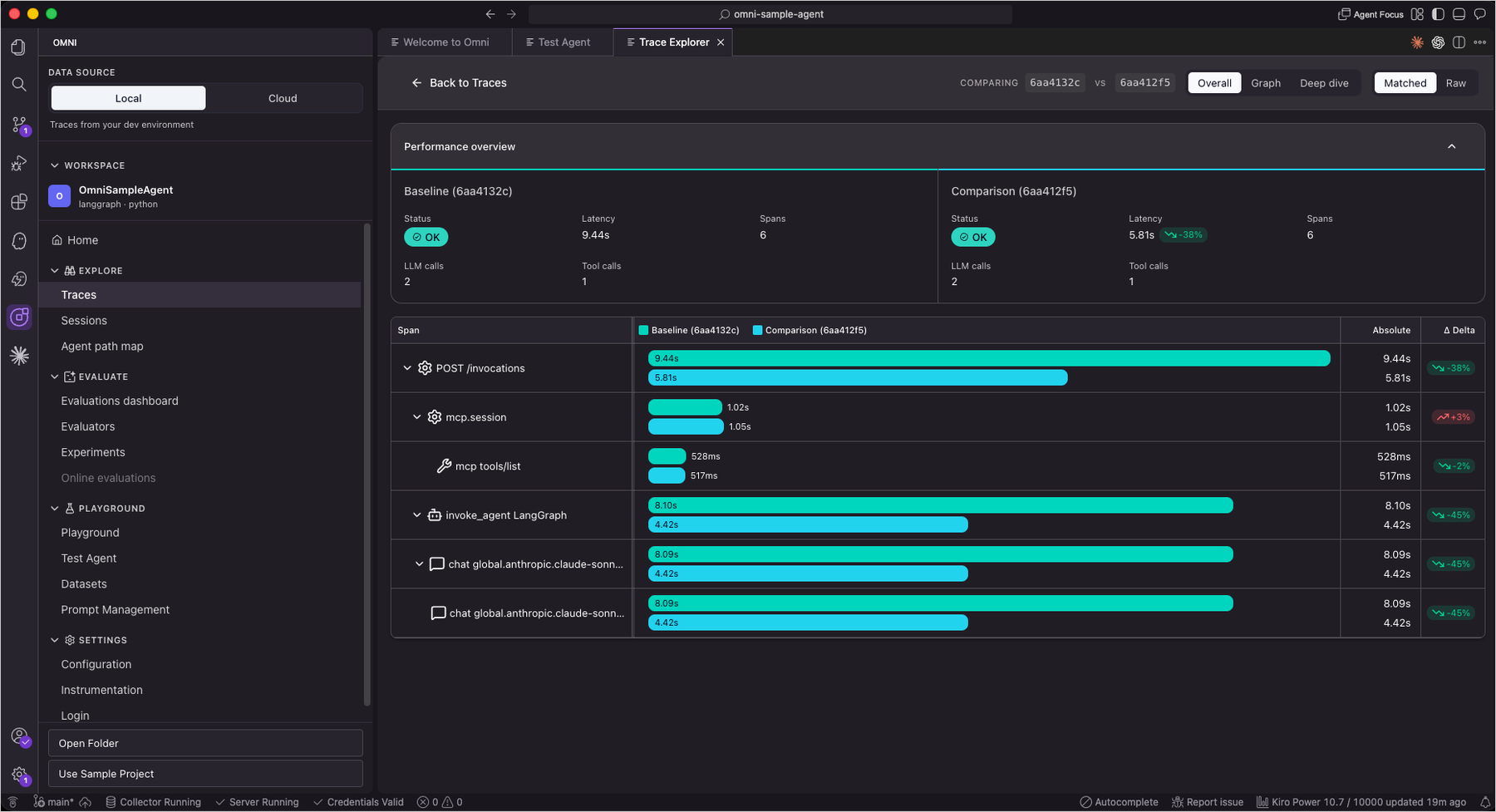
- Side-by-Side Playground and Compare Mode: Allows engineering teams to run production datasets against multiple prompt variants or model configurations concurrently, contrasting latency, token expenditure, and evaluation scores in real time.
- Zero-Friction Local-to-Cloud Pipeline: Developers can utilize Omni entirely offline or locally during the initial build phase via features like Cloud Login, ensuring data privacy. When ready, the same telemetry schemas seamlessly propagate to AWS for persistent enterprise storage and collaborative fleet monitoring.
- Zero Re-Platforming Required: Because Omni supports open standards (OpenInference and ADOT), organizations can ingest telemetry data from workloads hosted across Amazon Elastic Container Service (ECS), Elastic Kubernetes Service (EKS), AWS Lambda, or even rival cloud providers.
Official Responses and Perspectives
Industry analysts and AWS product leadership emphasize that CloudWatch Omni represents a fundamental mindset shift in how cloud providers must support artificial intelligence.
"Organizations deploying agentic AI systems face observability challenges that traditional monitoring simply cannot address," engineering leads noted during the product rollout. "Agent behavior is inherently non-deterministic. When a system fails, teams cannot rely on traditional stack traces alone. They need a granular, step-by-step breakdown of the agent’s cognitive and execution pathway."
By bridging the gap between local development and cloud-scale operations, AWS aims to alleviate the cognitive load on engineering teams. Developers can now lean on Ask Assistant—an integrated AI diagnostic feature within Omni—to query their traces directly, asking contextual questions such as, "Why did the agent invoke this retrieval tool twice during the third reasoning turn?"
Furthermore, by making the IDE extension entirely free to use and decoupled from mandatory AWS account requirements during early development phases, AWS has lowered the barrier to entry. Developers can experiment freely using third-party model API keys (such as OpenAI or Anthropic) before committing to a full AWS production infrastructure deployment.
Implications: What CloudWatch Omni Means for the Enterprise
The general availability of Amazon CloudWatch Omni carries profound implications for software engineering organizations, cloud architects, and the broader enterprise software market.
1. Standardization of AI Quality Assurance
Historically, "testing" an AI application was an ad-hoc process involving manual spot-checks of chatbot outputs. With Omni’s integration of golden datasets, automated regression testing, and continuous evaluation, AI quality assurance is maturing into a rigorous, engineering-grade discipline. Enterprises can now treat prompt engineering and agent logic with the same CI/CD rigor traditionally reserved for deterministic microservices.
2. Elimination of Context-Switching Fatigue
By embedding monitoring, playgrounds, trace explorers, and prompt management directly into popular developer environments like VS Code and Kiro, Omni minimizes the friction of context-switching. Developers no longer need to export logs into third-party evaluation tools or jump between browser tabs to understand runtime behavior; the telemetry is delivered precisely where the code is written.
3. Strengthening the AWS Ecosystem Around Bedrock
While Omni remains framework- and model-agnostic, its tight synergy with Amazon Bedrock and AgentCore creates a powerful gravitational pull for enterprise customers. Organizations building sovereign enterprise agents on Bedrock can leverage Omni’s native topology maps to visualize sub-agents, tools, and interconnections effortlessly, streamlining compliance, security auditing, and performance optimization.
4. Accessibility and Next Steps
Amazon CloudWatch Omni is available immediately. Developers can download the extension directly from the VS Code Marketplace, explore pre-configured sample projects, and begin tracing local AI agents within minutes. For teams ready to scale into production, the standalone web experience provides secure, SSO-enabled fleet monitoring without requiring access to the broader AWS Management Console.
As autonomous agents transition from experimental novelties to mission-critical enterprise infrastructure, platforms like CloudWatch Omni ensure that software engineering teams maintain total visibility, accountability, and control over the non-deterministic frontier.