Amazon S3 Vectors Introduces Metadata Pre-Filtering to Revolutionize Similarity Search and Retrieval Accuracy
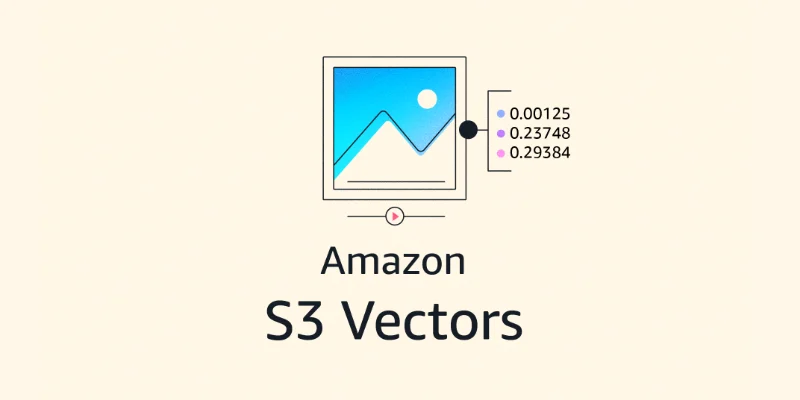
SEATTLE — In a major architectural enhancement designed to optimize vector database workloads for enterprise artificial intelligence, Amazon Web Services (AWS) has announced the rollout of metadata pre-filtering for Amazon S3 Vectors. The new feature is engineered to fundamentally improve recall performance on filtered vector searches by evaluating metadata criteria before executing the computationally intensive similarity search.
By allowing applications to seamlessly restrict search scopes using attributes such as tenant IDs, categories, statuses, timeframes, and hierarchical prefixes, the capability eliminates the historical trade-off between strict data partitioning and search precision. According to technical documentation released alongside the announcement by AWS specialist Daniel Abib, the upgrade requires zero data re-ingestion, introduces no alterations to existing query syntaxes, and carries no additional service costs.
Main Facts: What is Amazon S3 Vectors Pre-Filtering?
The introduction of metadata pre-filtering addresses a core limitation in modern vector search architecture. Historically, when developers executed filtered similarity searches—a routine requirement for multi-tenant SaaS platforms, Retrieval-Augmented Generation (RAG) pipelines, and autonomous agentic workflows—systems frequently evaluated similarity searches and metadata filters concurrently or post-search. This often resulted in lower recall rates, as the nearest-neighbor algorithm would evaluate candidates across the entire index before discarding non-matching subsets.
Under the new paradigm, Amazon S3 Vectors introduces an ENHANCED index mode. When enabled, the storage engine resolves all filter constraints prior to executing the vector similarity algorithm.
Key technical specifications of the release include:
- Metadata Capacity: Each vector can carry up to 2 KB of application-defined, filterable metadata.
- Query Constraints: A single query supports up to 100 simultaneous filter constraints.
- Advanced Operators: Support for equality, numeric ranges ($gt, $lt), set membership, boolean logic ($and, $or), existence checks, and a new prefix-matching operator (
$startsWith) designed for hierarchical keys, paths, and URLs. - Cost Structure: Available at no additional cost across all commercial AWS regions where Amazon S3 Vectors is deployed, as well as AWS China Regions, adhering to standard storage, PUT request, and query pricing models.
Chronology of Development and Deployment
The evolution of Amazon S3 Vectors has moved rapidly to meet the soaring demands of generative AI applications, which require precise data isolation and contextual retrieval at scale.
- Initial Launch of S3 Vectors: AWS initially introduced Amazon S3 Vectors to give developers native vector search capabilities directly within cloud object storage, streamlining the infrastructure stack for embedding management. At launch, indexes operated exclusively in what is now designated as
CLASSICmode—evaluating vector similarity and filters in tandem. - Identification of the Recall Bottleneck: As enterprises scaled RAG pipelines and multi-tenant document repositories into the millions of objects, developer feedback highlighted that strict metadata filters (such as isolating data by a specific enterprise tenant or document clearance level) could inadvertently restrict the pool of candidates available during similarity evaluation, driving down recall accuracy.
- Engineering and Implementation: AWS engineers developed the
ENHANCEDindex architecture, which reorders the query execution pipeline to process metadata constraints first. This ensures that the requested $k$ nearest neighbors are pulled exclusively from the subset of vectors that successfully pass all filter criteria. - General Availability: AWS officially announced general availability, deploying the feature globally across all supported regions and providing straightforward migration pathways via the AWS CLI and SDKs for existing
CLASSICindexes.
Supporting Data and Performance Benchmarks
The practical impact of pre-filtering on real-world workloads is substantial, particularly for applications characterized by high data sparsity or strict tenant isolation boundaries.
To quantify the performance delta, consider a enterprise customer support knowledge base containing 8 million historical tickets. In a scenario where an agent searches a specific customer’s interaction history to diagnose a recurring technical bug, that individual customer might account for only 400 tickets out of the total 8 million.
- Under
CLASSICMode: The similarity search executed across the entire 8-million-record corpus while simultaneously validating candidates against the customer ID. Because the broad vector space dominated the search, the result set frequently omitted highly relevant historical tickets belonging to that specific user. - Under
ENHANCED(Pre-Filtering) Mode: The database engine resolves thecustomer_idfilter first, narrowing the candidate pool instantly to the 400 relevant records. The similarity search then executes exclusively across this precise subset.
According to internal AWS performance evaluations on highly selective filters, pre-filtering returns up to 5x more matching vectors than previous legacy configurations, drastically improving the comprehensiveness of retrieved context for downstream LLMs and human operators alike.
Step-by-Step Implementation and Code Walkthrough
Integrating pre-filtering into modern cloud-native architectures requires minimal friction. Developers can instantiate, populate, and query enhanced indexes using standard AWS CLI commands.
Step 1: Creating an Enhanced Vector Index
When provisioning a new index, or updating an existing one, developers designate the index parameters, mapping dimensions to their chosen embedding model (e.g., 1536 dimensions for OpenAI text embeddings) and setting the distance metric.
aws s3vectors create-index
  --index-name product-catalog
  --vector-bucket-name my-vector-bucket
  --dimension 1536
  --distance-metric cosine
Step 2: Writing Vectors with Rich Metadata
Applications can ingest vectors alongside up to 2 KB of unconstrained, schema-less metadata using the PutVectors API. Every metadata field is automatically filterable without requiring upfront schema definitions.
aws s3vectors put-vectors
  --index-name product-catalog
  --vector-bucket-name my-vector-bucket
  --vectors '[
    "key": "doc-001",
    "data": "float32": [0.1, 0.2, 0.3, ...],
    "metadata":
      "tenant_id": "t-10428",
      "category": "legal",
      "created_date": "2026-03-15",
      "active": true

  ]'
Step 3: Executing Filtered Similarity Queries
Queries utilize a clean, compact JSON syntax to combine conditions. By passing the --return-metadata flag alongside complex $and, $or, or equality rules, applications retrieve precisely scoped nearest neighbors.
aws s3vectors query-vectors
  --index-name product-catalog
  --vector-bucket-name my-vector-bucket
  --query-vector '"float32": [0.1, 0.2, 0.3, ...]'
  --top-k 50
  --return-metadata
  --filter '"$and": [
    "tenant_id": "t-10428",
    "category": "legal",
    "active": true
  ]'
Utilizing Prefix Matching ($startsWith)
For hierarchical file systems, URL structures, or document repositories that encode folder paths directly into keys or metadata strings, the $startsWith operator streamlines scoping:
aws s3vectors query-vectors
  --index-name product-catalog
  --vector-bucket-name my-vector-bucket
  --query-vector '"float32": [0.1, 0.2, 0.3, ...]'
  --top-k 20
  --filter '"$startsWith": "document_id": "matter-4417/exhibits/"'
Upgrading Existing Indexes
For infrastructure already operating in production, transition from CLASSIC to ENHANCED mode is seamless and executed in-place without requiring data re-ingestion:
aws s3vectors update-index-mode
  --vector-bucket-name my-vector-bucket
  --index-name product-catalog
  --index-mode ENHANCED
To permanently standardize bucket behavior for all future indexes, administrators can configure the bucket-level default:
aws s3vectors put-vector-bucket-default-index-mode
  --vector-bucket-name my-vector-bucket
  --default-index-mode ENHANCED
Implications for Enterprise Architecture and AI Development
The deployment of metadata pre-filtering carries profound implications for software architects, data engineers, and security compliance officers building generative AI solutions.
1. Uncompromising Multi-Tenant Security and Isolation
In shared enterprise environments, data leakage between tenants is an existential risk. Previously, developers had to choose between maintaining fragmented, costly micro-indexes for every single tenant—which hampered administrative overhead—or utilizing shared indexes that risked lower recall under heavy filtering. Pre-filtering bridges this gap, allowing massive, consolidated vector indices to maintain absolute logical data separation without sacrificing the quality of similarity matches.
2. Enhanced Performance for Autonomous Agents
As AI systems evolve from passive chat interfaces to active agentic workflows—where autonomous agents query enterprise databases, execute multi-step tool calls, and synthesize complex reports—the speed and accuracy of scoped retrieval are paramount. Agents frequently need to isolate context to specific user permissions, project directories, or temporal windows. Pre-filtering ensures that autonomous agents receive the highest-fidelity context possible, minimizing hallucinations caused by diluted search results.
3. Operational Simplicity and Cost Efficiency
Because the upgrade requires no re-ingestion of existing vector embeddings, enterprise migration overhead is effectively zero. Teams can transition their production indices with a single API call (UpdateIndexMode). Furthermore, by keeping storage and query costs aligned with standard S3 pricing tiers, AWS ensures that scaling high-recall semantic search remains economically viable for organizations of all sizes.
Official Responses and Next Steps
Industry analysts have praised the release as a vital maturation step for cloud-native vector infrastructure. By directly tackling the computational mechanics of index traversal, AWS has removed a persistent engineering bottleneck.
Development teams looking to implement or upgrade their infrastructure can consult the official Amazon S3 Vectors Documentation for comprehensive guidelines on regional quotas, IAM permission policies, and advanced syntax configurations. Feedback and technical inquiries can be directed to the AWS re:Post for S3 community forum or through standard AWS Support channels.