SEATTLE — In a major development for the cloud computing and artificial intelligence sectors, Amazon Web Services (AWS) has officially announced the general availability of Amazon CloudWatch Omni. Billed as a unified, app-centric, and AI-powered observability experience, the new solution is designed specifically to tackle the non-deterministic nature of modern artificial intelligence workloads and autonomous AI agents.
Delivered both off-console—directly inside modern Integrated Development Environments (IDEs)—and through a dedicated, standalone web experience, CloudWatch Omni aims to bridge the long-standing gap between application performance monitoring (APM) and generative AI evaluation. By supporting open standards such as OpenInference and the AWS Distro for OpenTelemetry (ADOT), the platform functions seamlessly across virtually any model provider, framework, or runtime without forcing organizations into rigid, proprietary ecosystems.
Main Facts: What is CloudWatch Omni?
At its core, CloudWatch Omni is a purpose-built observability, evaluation, and experimentation solution tailored for the unique challenges of agentic AI workflows. Traditional monitoring tools rely heavily on deterministic error tracking, latency metrics, and standard logs. However, autonomous AI agents—which dynamically chain prompts, invoke external tools, and make multi-step decisions—operate in a non-deterministic space. A minor tweak to a system prompt can severely degrade response quality or break tool selection logic entirely, even while system error rates remain flat at zero percent.
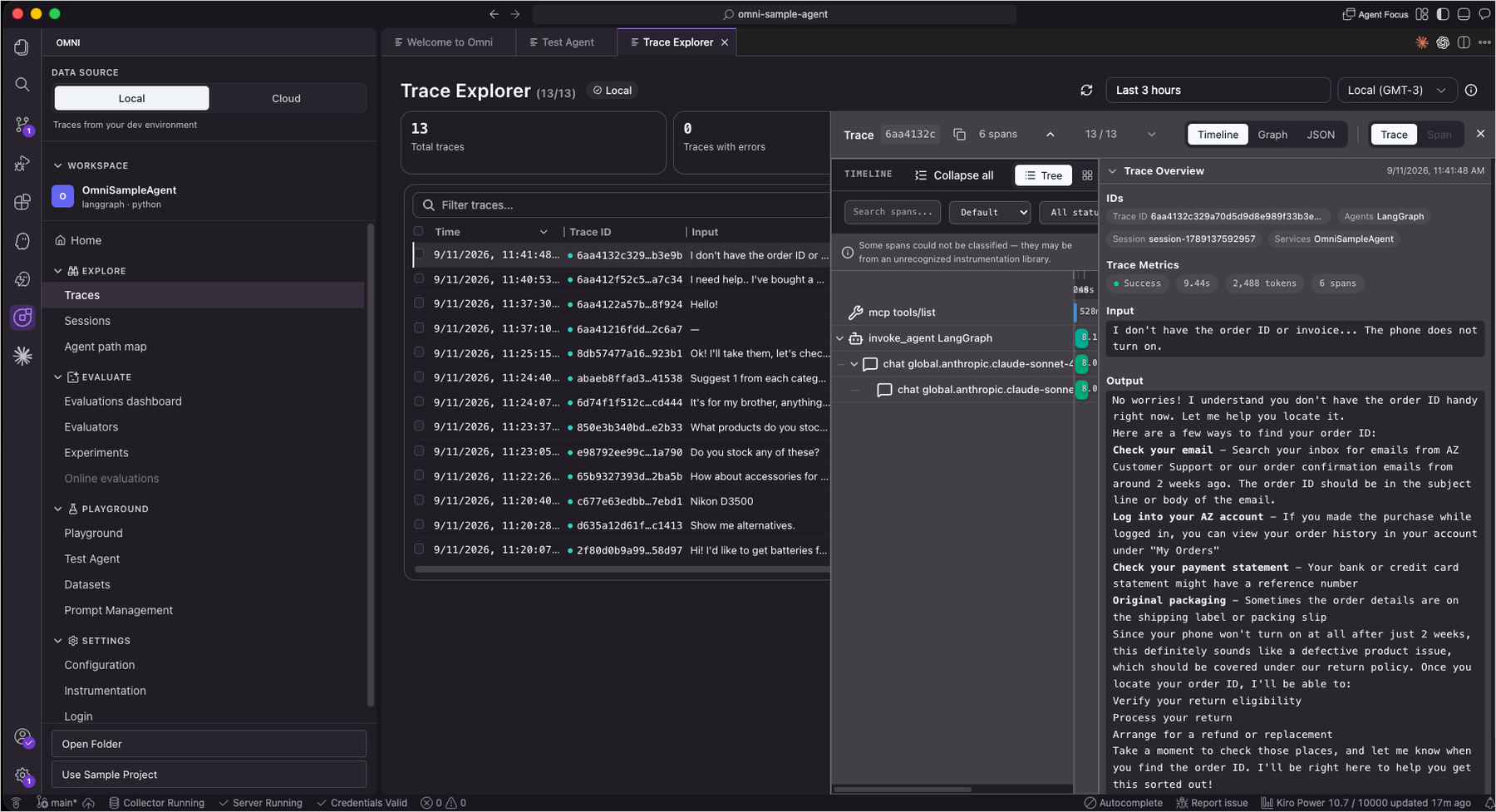
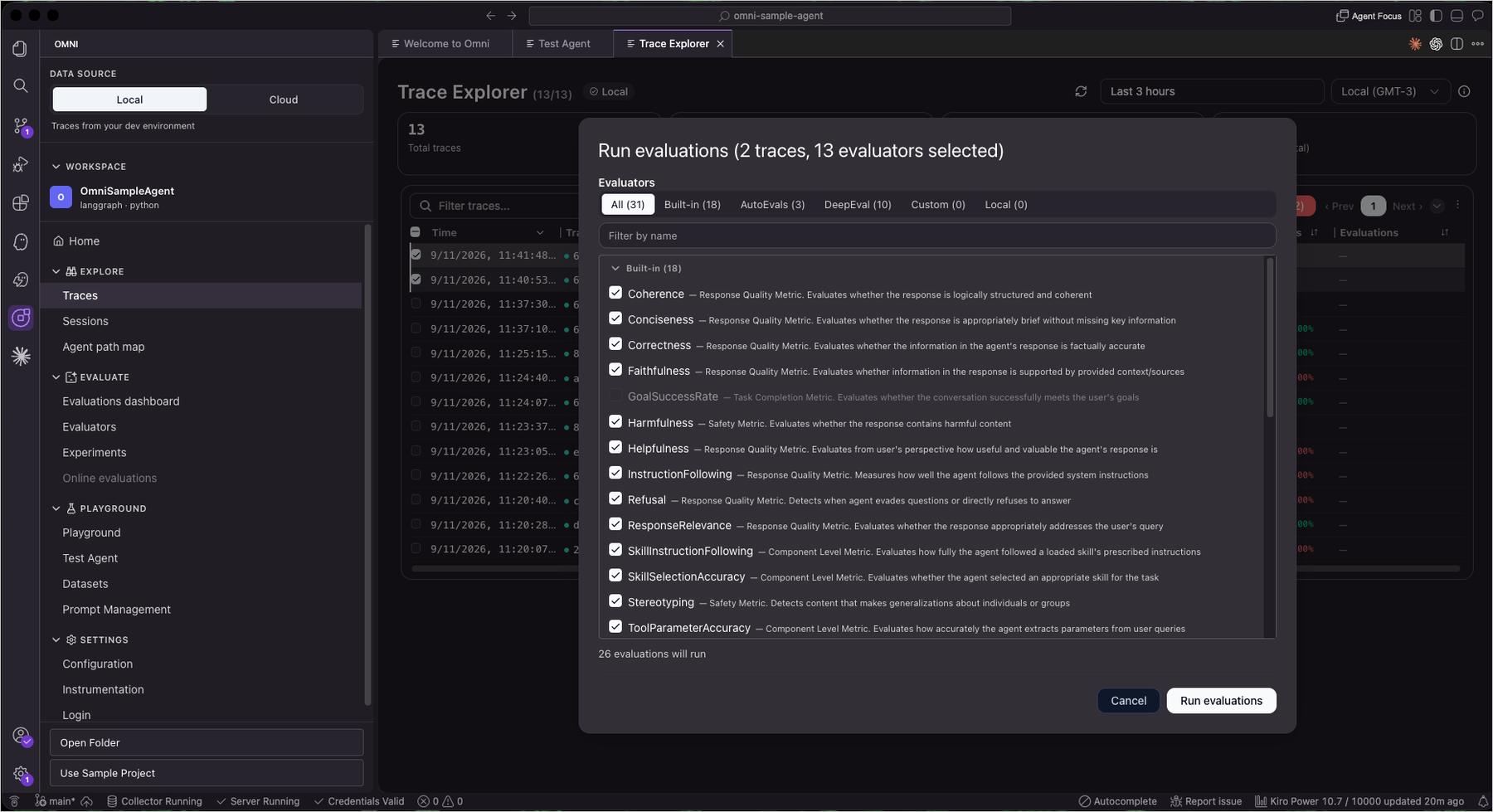
CloudWatch Omni addresses these blind spots by capturing exhaustive traces of every agent action and integrating 17 built-in evaluators. These evaluators score outputs across vital qualitative dimensions, including:
Correctness: Assessing whether the final answer achieves the user’s intent.
Coherence: Ensuring logical flow and readability in long-form generation.
Faithfulness: Verifying that responses are strictly grounded in retrieved context (mitigating hallucinations).
Routing and Tool Selection Accuracy: Monitoring whether the agent invokes the correct APIs, databases, or microservices at the right time.
The platform provides a dual-surface architecture designed to align developer workflows with operational oversight:
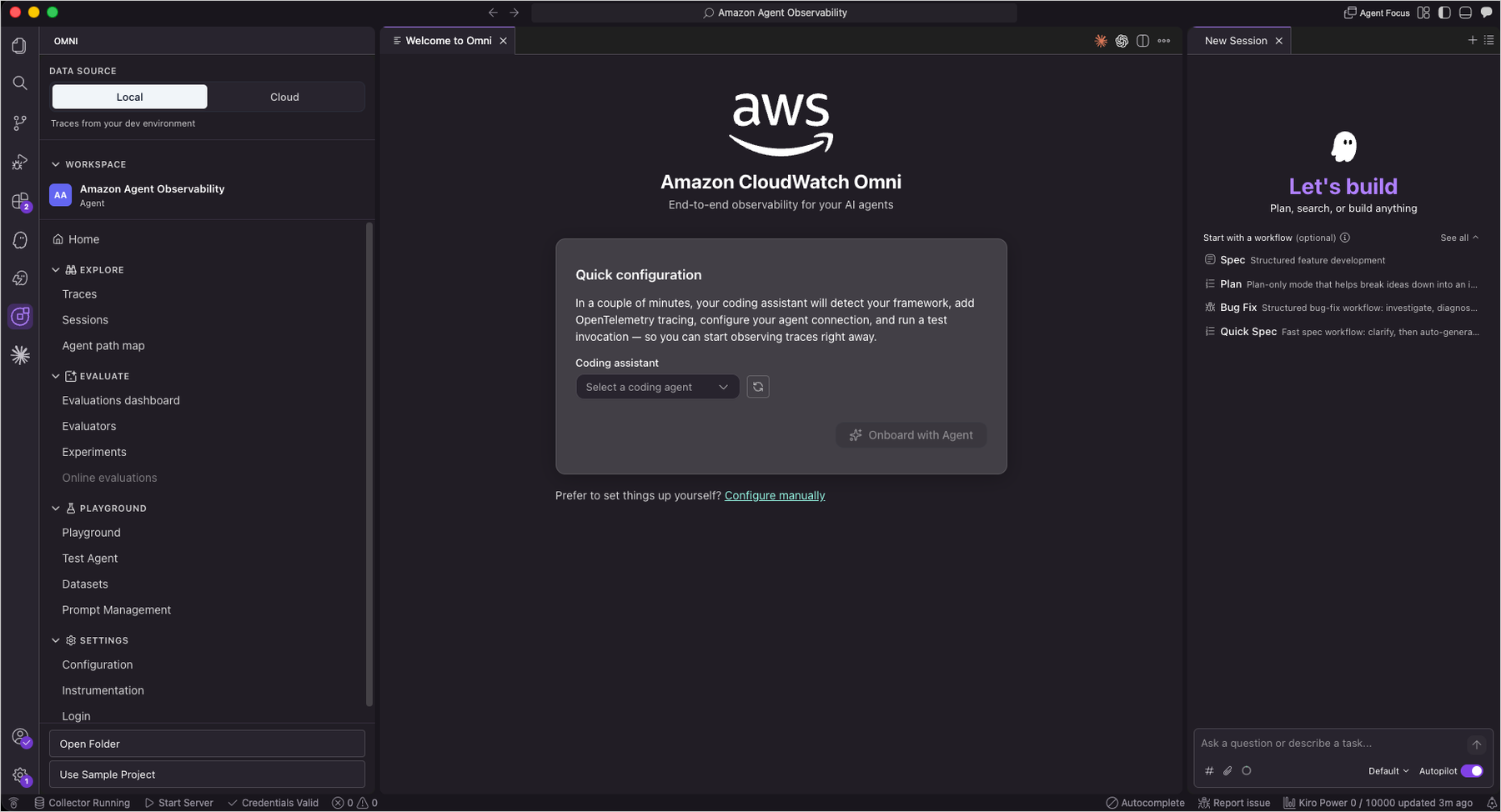
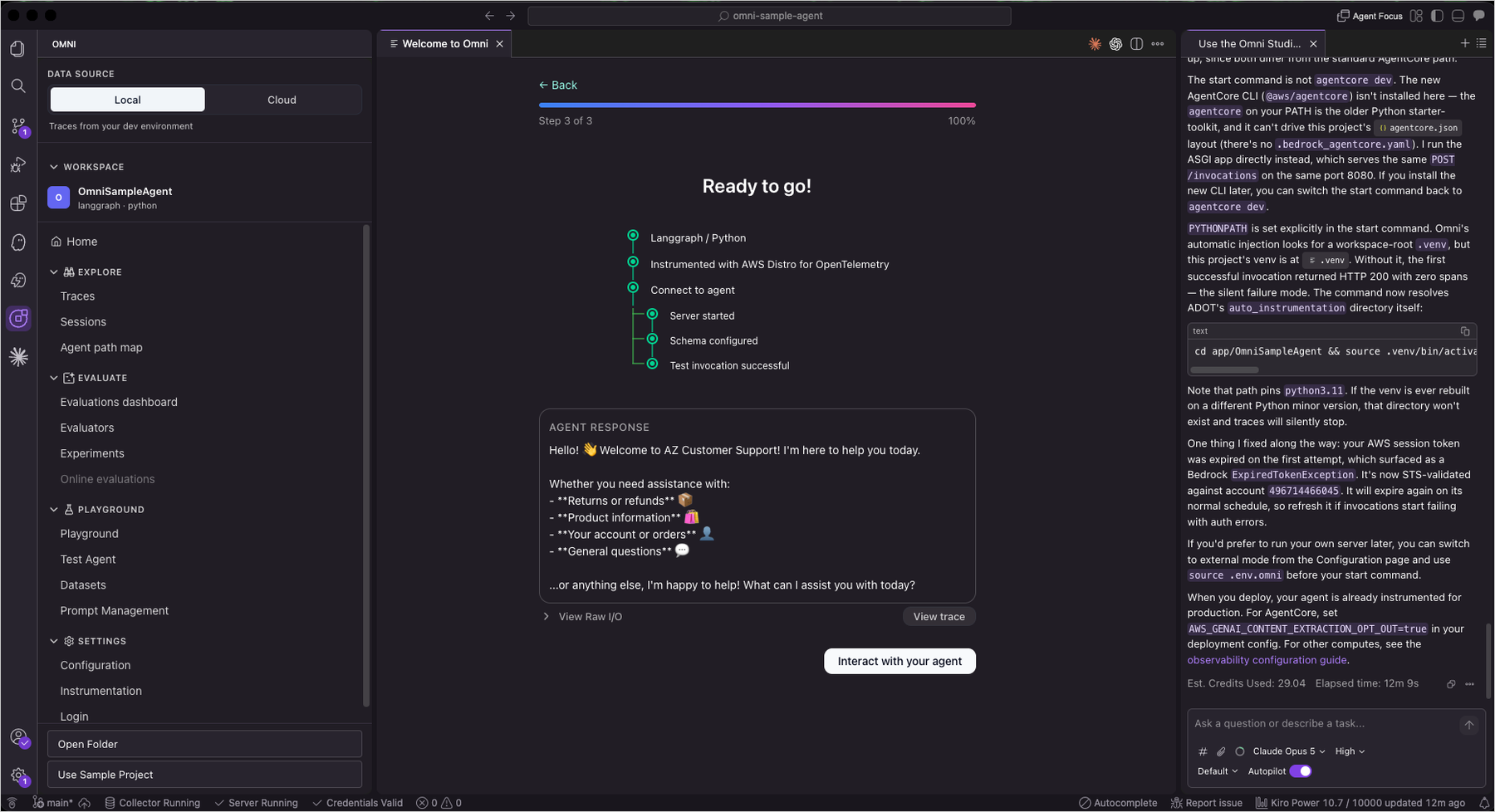
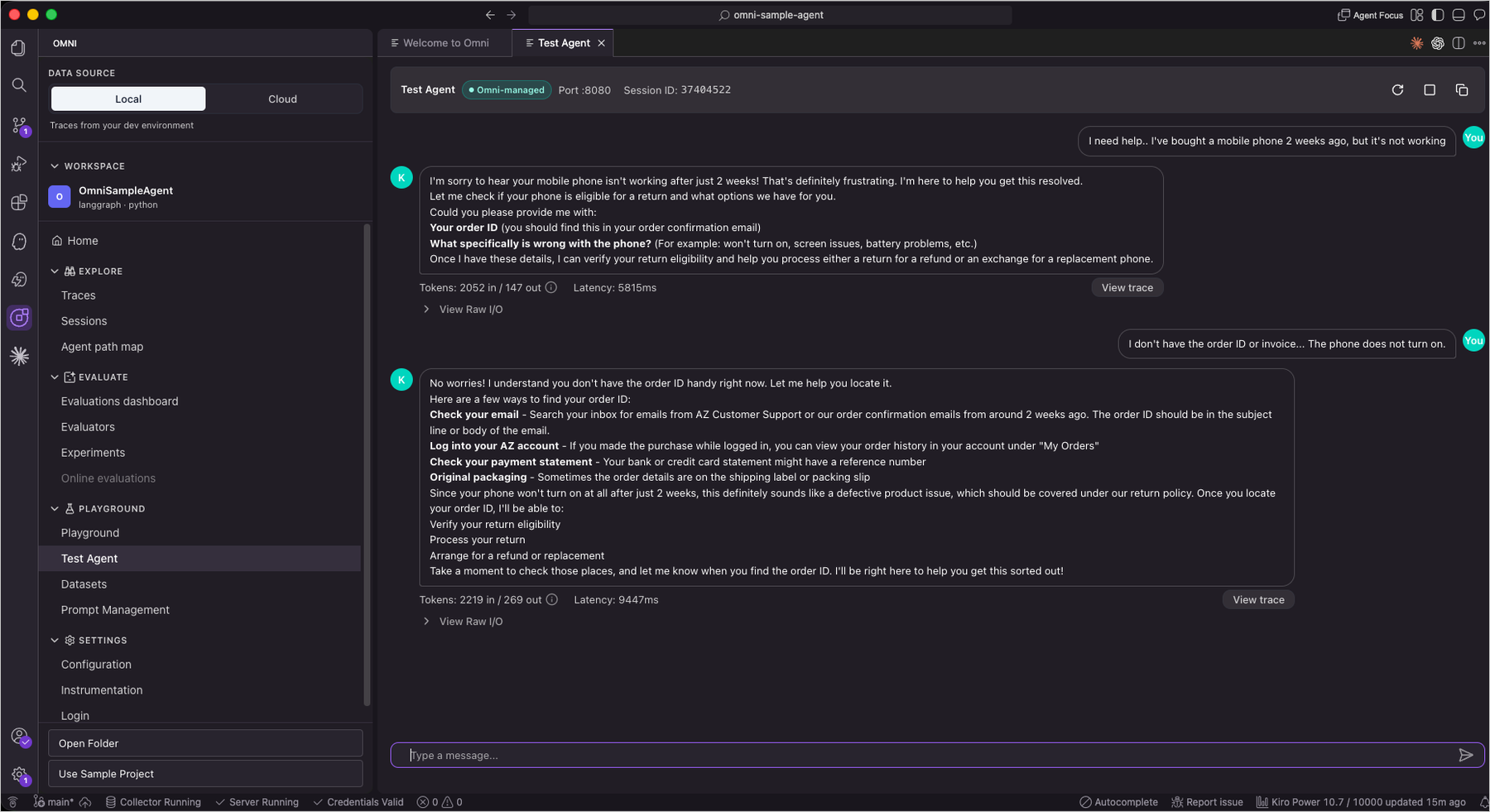
The Developer Surface: Delivered via native extensions for popular IDEs like VS Code and Kiro. Developers can test, trace, and evaluate local agent implementations instantly, utilizing AI code assistants (such as Claude Code and Codex) to automate setup, dependency installation, and OpenTelemetry instrumentation.
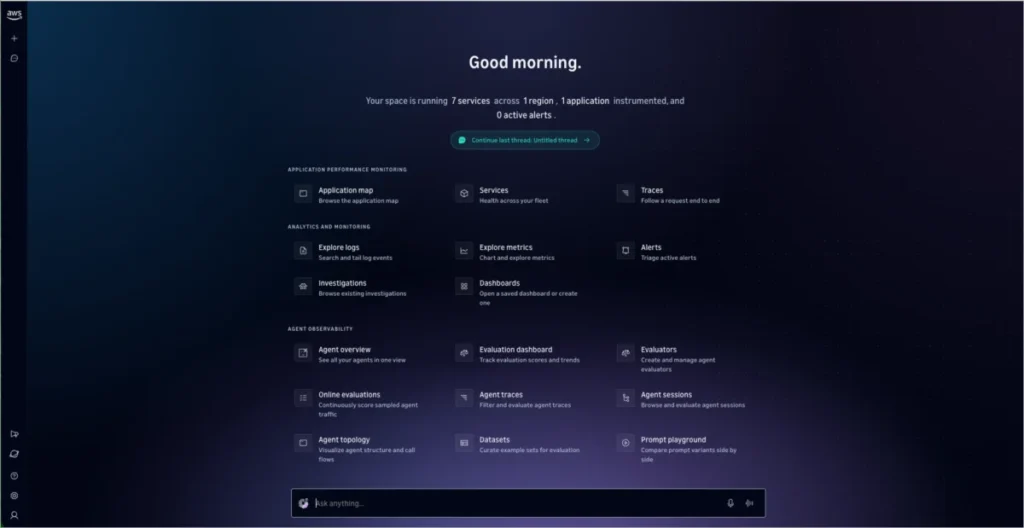
The Operator Surface: A standalone, browser-based web experience separated entirely from the traditional AWS Management Console. Accessible via Single Sign-On (SSO), it allows operations teams to monitor production fleets, analyze aggregate telemetry, and investigate anomalies without requiring direct AWS console access.
Furthermore, CloudWatch Omni is framework-agnostic. It supports leading orchestration libraries including LangChain, LangGraph, CrewAI, the OpenAI SDK, Strands, and Vercel AI SDK, in both Python and TypeScript, alongside native integration for Amazon Bedrock AgentCore.
Chronology: The Evolution Toward Agent-Centric Observability
The journey toward CloudWatch Omni reflects the rapid maturation of generative AI from static chatbots to complex, multi-agent systems.
The Generative AI Boom (2023–2024): Organizations rushed to deploy foundational models and basic Retrieval-Augmented Generation (RAG) applications. Early monitoring relied on patchwork solutions, forcing engineering teams to toggle constantly between code editors and siloed, browser-based dashboards to debug erratic model behavior.
The Rise of Agentic Workflows (2024–2025): As developers began deploying autonomous agents capable of planning, executing, and self-correcting workflows across multiple enterprise systems, traditional logging proved fundamentally inadequate. Debugging required inspecting complex execution trees, token usage matrices, and step-by-step reasoning chains.
Development and Open Standards Integration (Late 2025): AWS engineers identified the need for open, standardized telemetry for LLMs—championing frameworks like OpenInference and ADOT to ensure compatibility across multi-cloud environments.
General Availability (Today): AWS officially launches CloudWatch Omni, establishing a unified ecosystem where local development telemetry flows smoothly into cloud-scale production monitoring, evaluation, and regression testing pipelines.
Supporting Data and Technical Architecture
To understand the scale of efficiency introduced by CloudWatch Omni, industry analysts point to the friction points it eliminates. Historically, engineering teams spent upward of 40% of their AI development cycles manually reviewing raw JSON logs across disparate systems to diagnose why an agent took an unexpected execution path.
CloudWatch Omni’s technical features streamline this diagnostic lifecycle through several key modules:
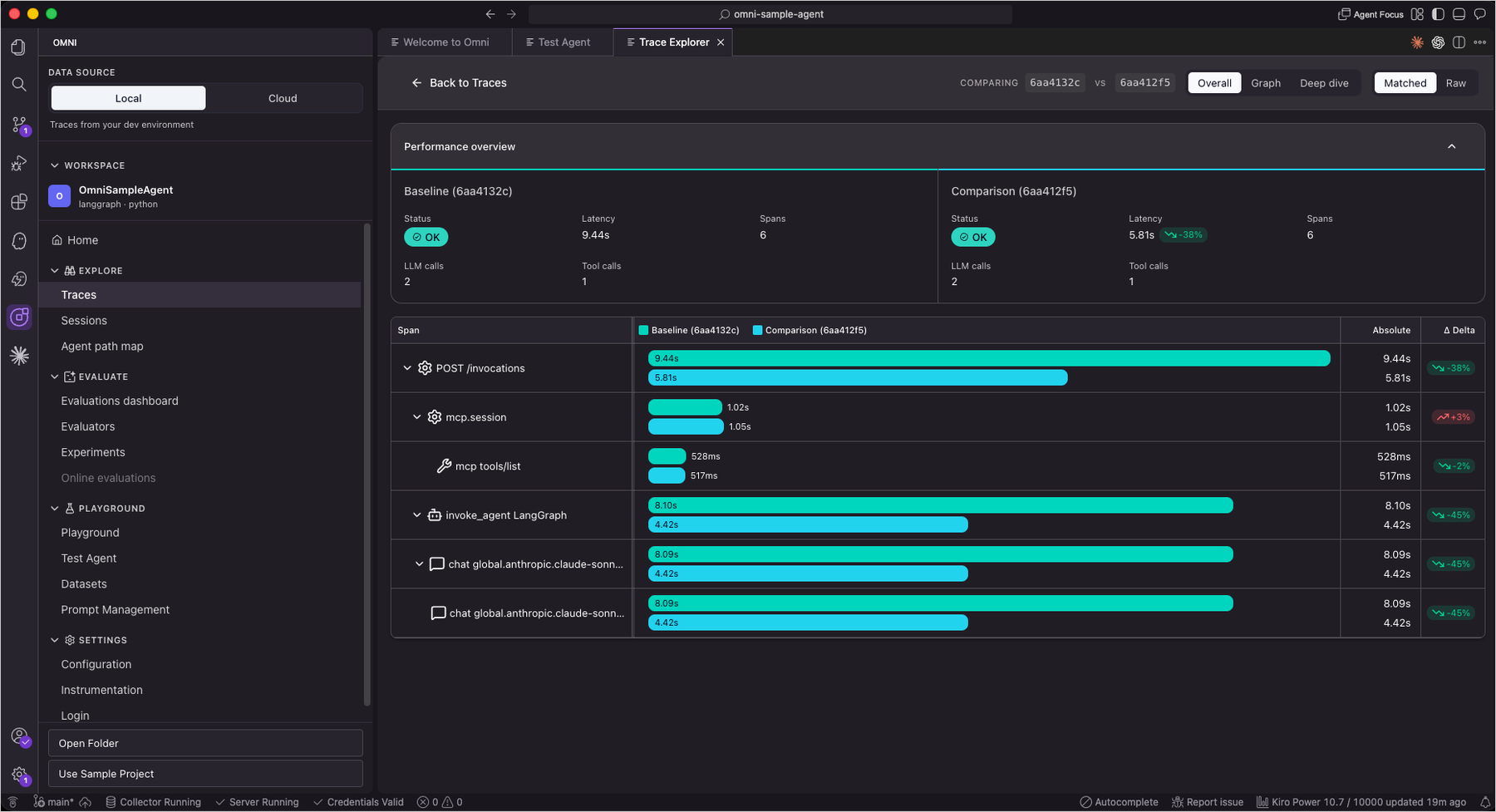
Trace Explorer & Compare Mode: Records every LLM call, prompt composition, and tool invocation in a hierarchical timeline. "Compare mode" places two traces side-by-side to visualize precisely how a prompt modification alters agent behavior during regression testing.
Ask Assistant: An embedded AI diagnostic utility that analyzes trace structures to answer natural language queries such as, "Why did the agent call this search tool twice in succession?"
Playground & Experiments View: Enables engineers to pit multiple model and prompt configurations against golden evaluation datasets in real time, scoring aggregate latency, token consumption, and quality metrics before pushing code to production.
Session & Topology Explorers: Provide comprehensive visualization of multi-turn user conversations and multi-agent network architectures, helping architects quickly spot system bottlenecks and latency spikes.
Crucially, the platform operates on an opt-in cloud model via its Cloud Login feature. Developers can utilize Omni entirely on their local machines during early development—incurring no cloud storage costs and preserving data privacy—and selectively connect to AWS when they are ready to sync production telemetry and share collaborative dashboards with their teams.
Official Responses and Industry Implications
Announcing the launch, AWS engineering leadership emphasized that the future of enterprise software is intrinsically agentic, and observability must evolve in lockstep.
"Organizations deploying agentic AI systems face observability challenges that traditional monitoring simply cannot address," noted Daniel Abib, AWS cloud operations specialist and architect behind the release. "When an agent’s behavior is non-deterministic, standard metrics tell you nothing about response quality. CloudWatch Omni brings together local IDE debugging, rigorous evaluation frameworks, and cloud-scale operations into a single, cohesive experience without demanding that teams re-platform their existing tech stacks."
Industry observers note that CloudWatch Omni represents a strategic counter-offensive against fragmented, third-party LLM observability point solutions. By embedding deep evaluation and tracing capabilities directly into the developer’s IDE while maintaining enterprise-grade compliance and SSO-secured web management for operators, AWS is positioning CloudWatch as the default control plane for the next generation of cloud-native AI applications.
Furthermore, the platform’s commitment to open standards—such as OpenInference—ensures that enterprises are not locked into a single AI vendor. Whether an organization builds agents using Amazon Bedrock, hosts open-source models on Amazon Elastic Container Service (ECS) and Elastic Kubernetes Service (EKS), or pulls models from third-party APIs like OpenAI and Anthropic, the telemetry pipeline remains uniform.
Implications for Enterprise AI Strategy
The general availability of Amazon CloudWatch Omni carries profound implications for software engineering organizations scaling AI initiatives from proof-of-concept (PoC) to enterprise-wide production:
Eradication of Context-Switching Fatigue: By embedding telemetry, playground testing, and trace analysis directly into VS Code and Kiro, developers can debug agent regressions within their native coding flow, drastically reducing time-to-resolution.
Standardization of Quality Assurance: Generative AI has long suffered from a lack of standardized QA metrics. By baking 17 automated evaluators and golden dataset experimentation directly into the deployment pipeline, companies can treat AI prompt engineering with the same rigorous continuous integration/continuous deployment (CI/CD) disciplines applied to traditional software.
Bridging Dev and Ops Silos: Historically, developers lacked visibility into production agent drift, while operators lacked context regarding underlying prompt logic. By sharing a unified data model between the IDE extension and the standalone web experience, CloudWatch Omni fosters seamless collaboration across cross-functional engineering teams.
Zero Barrier to Entry: Because the IDE extension is free to use and does not mandate an immediate AWS account creation (requiring credentials only when interacting with specific cloud model providers like Bedrock or external API keys), individual developers and small teams can adopt the tooling frictionlessly.
Getting Started
Amazon CloudWatch Omni is generally available starting today. Developers can download the extension directly from the VS Code Marketplace, while operations and management teams can access the standalone web console via the AWS Builder Center and official CloudWatch documentation channels.
As enterprises accelerate their transition toward autonomous, agent-driven architectures, solutions like CloudWatch Omni will likely serve as the foundational infrastructure required to keep complex AI systems reliable, transparent, and aligned with business objectives.