Amazon Web Services Introduces Simplified Onboarding Experience Tailored for the AI Era
SEATTLE — Amazon Web Services (AWS), the dominant force in cloud computing, has officially announced a fundamental restructuring of its onboarding experience aimed at individual developers, startups, and innovators building at the rapid pace of artificial intelligence. Unveiled today, the new workflow eliminates decades-old administrative hurdles, allowing new users to provision resources, integrate AI coding agents, and deploy live applications within minutes—all without requiring a credit card or deep initial knowledge of complex cloud architecture.
The announcement marks a strategic pivot for AWS. While the cloud provider built its trillion-dollar empire by offering granular, highly customizable enterprise infrastructure designed to satisfy the rigorous security and compliance demands of the Fortune 500, those same configuration options have long presented a steep learning curve for solo developers and early-stage creators. With this update, AWS is effectively bridging the gap between its enterprise-grade depth and the frictionless user experiences expected by a new generation of builders.

Main Facts: What is Changing on AWS?
The newly rolled-out experience introduces several key architectural and administrative changes designed to fast-track software development:
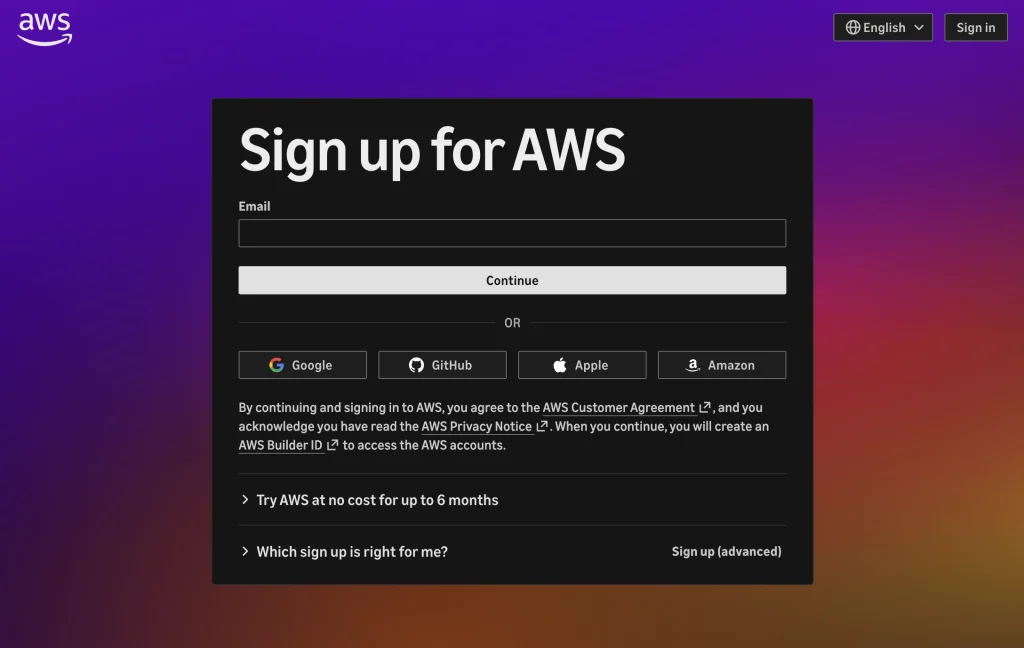
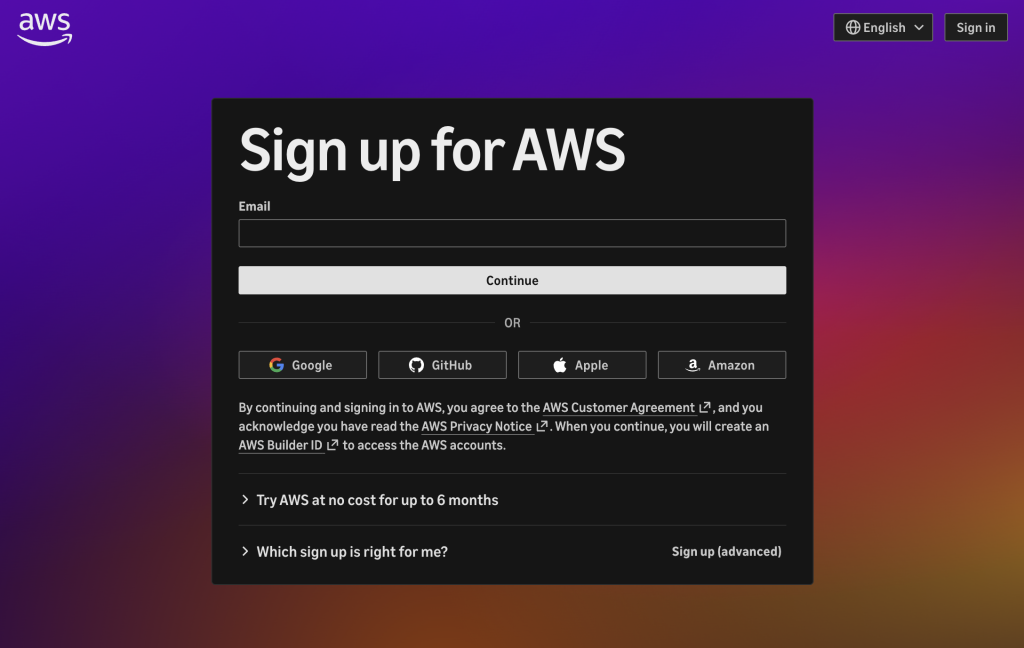
- Frictionless Authentication: New users can sign up instantly using existing third-party identities, including Google, GitHub, and Apple, removing the friction of creating standalone account credentials.
- Credit-Based Onboarding: For the vast majority of new customers, no credit card is required at sign-up. Accounts are instantly credited with $100 as part of the expanded AWS Free Tier.
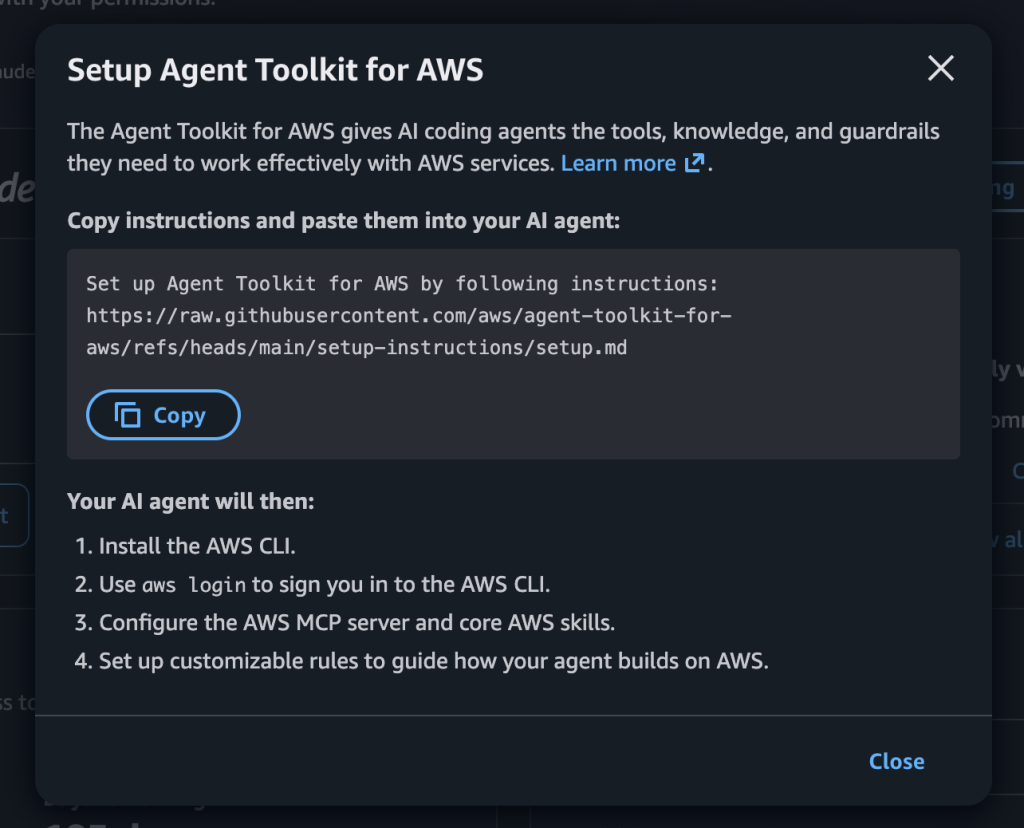
- Coding Agent Integration: The onboarding flow provides an immediate, copy-pasteable prompt designed to configure popular AI coding agents. This allows developers to instruct their agents to deploy serverless infrastructure, manage command-line tools, and write code directly into the AWS ecosystem.
- Automated Project Isolation: Work is organized into isolated "projects" containing dedicated AWS accounts and automated access controls. Team collaboration is managed strictly via email invitations, bypassing the need to manually configure AWS Identity and Access Management (IAM) policies.
- Project-Level Spend Limits: To prevent accidental bill shock, developers can establish monthly expenditure caps starting at $20 per project. If a project reaches its budget ceiling, AWS temporarily pauses operations rather than accumulating overage fees.
- Seamless Scalability: As projects mature and require enterprise capabilities—such as multi-region deployments or complex governance structures via AWS Organizations—developers can activate advanced features instantly without undergoing data migration or experiencing downtime.
Chronology: The Evolution of Cloud Onboarding
To understand the significance of today’s launch, industry analysts point to the historical trajectory of cloud computing over the past two decades.

- 2006–2010 (The Infrastructure Era): AWS launched with foundational primitives such as Amazon S3, EC2, and SQS. The platform was engineered for developers who wanted programmatic control over raw servers and storage, requiring significant manual setup.
- 2011–2020 (The Enterprise Expansion): As global corporations and government agencies migrated mission-critical workloads to AWS, demands for security, networking compliance, and granular governance exploded. AWS responded by deepening its feature sets, introducing complex organizational hierarchies, regional isolation layers, and detailed access controls.
- 2021–2025 (The AI Acceleration): The explosion of generative AI and automated coding assistants transformed how software is written. Development cycles compressed from months to days, exposing the friction inherent in traditional cloud provisioning workflows.
- Today (The Simplified Builder Experience): AWS introduces its streamlined onboarding experience, combining modern federated identity, AI agent integration, and guardrailed financial limits to match the velocity of contemporary engineering teams.
Supporting Data and Technical Implementation
The engineering philosophy behind the new experience centers on removing cognitive load. During initial demonstrations, AWS engineers showcased how the platform handles routine provisioning tasks that previously required multiple manual steps in the AWS Management Console.
When a user registers via Google, GitHub, or Apple, AWS instantly provisions a sandboxed project structure. The user is immediately presented with a prompt tailored for AI coding assistants. Pasting this prompt into an agent configures the AWS Command Line Interface (AWS CLI), installs the Agent Toolkit for AWS, and generates a structured configuration file (CLAUDE.md) establishing best practices for the environment.
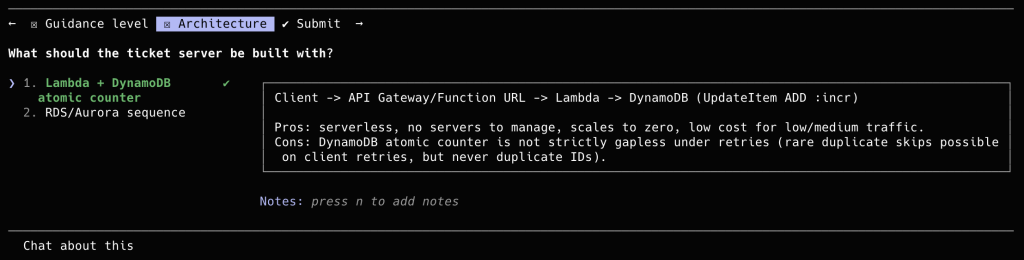
In live tests, developers issuing simple text prompts—such as requesting an API that returns unique sequential IDs—witnessed autonomous infrastructure provisioning. The coding agent seamlessly orchestrated three distinct AWS services without manual intervention:
- AWS Lambda: Deployed to execute serverless application logic.
- Amazon DynamoDB: Provisioned to store state and manage sequential numbering.
- Amazon API Gateway: Configured to expose a public HTTP endpoint securely.
Furthermore, the platform’s financial controls introduce a predictive safety net. AWS analyzes usage patterns to suggest appropriate monthly spend limits. If a project hits its configured financial ceiling (e.g., $50), execution is safely paused. This granular budget allocation allows teams to run aggressive, resource-heavy workloads on core products while keeping experimental ideas constrained to minimal monthly thresholds.
Official Responses and Industry Perspective
While AWS executives have emphasized that the core global reach, breadth, and depth of their infrastructure remain untouched, leadership acknowledges that the entry point needed a radical reimagining.
"AWS began as a place where anyone with an idea could start building," noted an AWS spokesperson during the rollout briefing. "Over the years, as we served the world’s largest enterprises, we added layers of configuration, security, and governance. Those capabilities are vital for scale, but if you are at the start of a new idea, every configuration option is friction standing in the way of shipping your dream product. With this release, we are bringing that original accessible starting point back, supercharged for the AI era."

Cloud architects and startup founders have responded with cautious optimism. Industry observers note that while hyperscalers like Heroku and various Platform-as-a-Service (PaaS) providers historically captured early-stage developers by offering simplified abstractions, they often forced startups into painful migrations once applications scaled. By allowing developers to start on a simplified abstraction layer and seamlessly unlock the full, native power of raw AWS services under the hood, Amazon is attempting to capture developers at day zero and retain them through their entire enterprise lifecycle.
Implications for the Developer Ecosystem
The introduction of this streamlined, AI-native onboarding process carries profound implications for the software development landscape:
- Lowered Barriers to Entry: By stripping away the initial necessity to master IAM roles, Virtual Private Clouds (VPCs), and billing hierarchies, non-traditional developers and domain experts can prototype complex cloud architectures using natural language.
- Accelerated Time-to-Market: The tight integration with coding agents means that architectural scaffolding—traditionally the domain of DevOps engineers during early ideation—is now automated, compressing product validation cycles from weeks to hours.
- Rethinking Cloud Economics: Predictable, project-bound spend limits eliminate the historical anxiety associated with open-ended cloud billing, encouraging aggressive experimentation among bootstrapped founders and indie hackers.
- The Future of Cloud Management: As AI agents take a more active role in infrastructure deployment, the role of the cloud console is shifting from a manual configuration dashboard to an oversight and governance portal.
AWS is currently rolling out the new experience gradually to all incoming customers. Developers eager to test the updated workflow can access the registration portal at the official AWS sign-up page, marking a new chapter in how cloud infrastructure is consumed, managed, and scaled.