Anatomy of a Security Failure: How a CISA Contractor Left the Nation’s Cybersecurity Agency Exposed
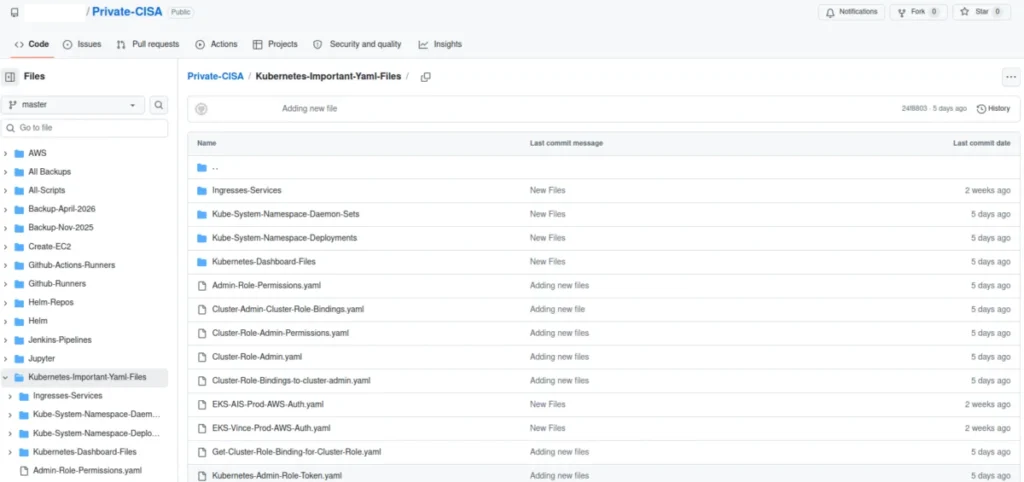
In a stunning lapse of operational security, a public GitHub repository maintained by a contractor for the Cybersecurity and Infrastructure Security Agency (CISA) has exposed highly sensitive credentials to critical government infrastructure. The breach, which was discovered and reported over the past weekend, included administrative access keys to AWS GovCloud accounts and plaintext passwords for numerous internal CISA systems.
Security experts familiar with the leak have characterized the incident as one of the most egregious government data exposures in recent history. The repository, aptly and ironically named "Private-CISA," served as a digital clearinghouse for internal agency assets, exposing not just credentials, but the very architectural blueprints of how the agency builds, tests, and deploys its software.
The Discovery: A Red Flag in the Code
The exposure was first brought to light by Guillaume Valadon, a researcher with the cybersecurity firm GitGuardian. The firm specializes in monitoring public code repositories for “secret leakage”—the accidental publication of API keys, SSH tokens, and passwords.
Valadon’s tools flagged the repository on May 15. Upon inspection, he found a trove of data that defied standard security protocols. “Passwords stored in plain text in a CSV, backups in Git, and explicit commands to disable GitHub’s secret detection features,” Valadon noted in a correspondence. “I honestly believed it was all fake before analyzing the content deeper. This is indeed the worst leak I’ve witnessed in my career.”
The investigation revealed that the repository was not a project-based archive but appeared to function as a synchronization “scratchpad.” The contractor seemingly utilized the public GitHub account to bridge the gap between various working environments, likely moving files between a secure work device and a personal home computer.
Chronology of the Exposure
- September 2018: The contractor, an employee of Dulles, Va.-based government contractor Nightwing, creates the GitHub account that would eventually house the sensitive data.
- November 13, 2025: The "Private-CISA" repository is created, initiating a six-month period of uncontrolled data exposure.
- May 15, 2026: GitGuardian’s automated systems flag the repository. Researcher Guillaume Valadon attempts to reach the repository owner, but receives no response.
- Mid-May 2026: Security consultancy Seralys and KrebsOnSecurity independently verify the contents of the repository, confirming the validity of high-level AWS GovCloud administrative credentials.
- Late May 2026: Upon notification from external security researchers, CISA moves to take the repository offline.
- Post-Removal: Despite the deletion of the repository, analysts note that the compromised AWS keys remained functional for an additional 48 hours, highlighting a dangerous lag in credential revocation.
The Contents: A Treasure Trove for Adversaries
The "Private-CISA" repository was not merely a collection of minor configuration files; it was a comprehensive map of the agency’s internal environment. Among the files uncovered were:
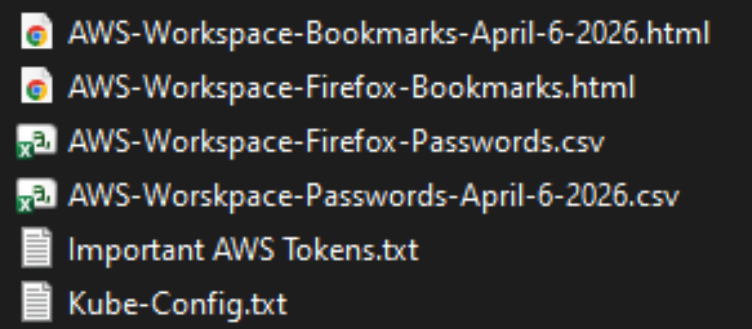
- Administrative Credentials: Files explicitly labeled “importantAWStokens” provided high-level access to three distinct Amazon AWS GovCloud environments.
- Plaintext Credentials: A file titled “AWS-Workspace-Firefox-Passwords.csv” contained dozens of username and password pairs for internal CISA systems.
- DevSecOps Access: Credentials for “LZ-DSO,” or “Landing Zone DevSecOps,” which serves as the primary environment where CISA’s secure code is developed and tested.
- Artifactory Access: The archive included credentials for the agency’s internal “artifactory,” a centralized repository for the software packages used in agency builds.
Philippe Caturegli, founder of Seralys, noted that the inclusion of the Artifactory credentials was perhaps the most dangerous component of the leak. “That would be a prime place to move laterally,” Caturegli warned. “If an attacker gained access here, they could inject backdoors into software packages. Every time the agency built something new, they would be deploying that backdoor throughout the system.”
Official Responses and Agency Accountability
CISA, the agency tasked with protecting the nation’s critical infrastructure, has been forced to grapple with its own internal security failure. In a formal statement, a CISA spokesperson acknowledged the breach and confirmed that an investigation is ongoing.
“Currently, there is no indication that any sensitive data was compromised as a result of this incident,” the spokesperson stated. “While we hold our team members to the highest standards of integrity and operational awareness, we are working to ensure additional safeguards are implemented to prevent future occurrences.”
The contractor involved, Nightwing, has remained silent. When reached for comment, the firm declined to address the specifics of the incident, directing all inquiries back to the federal agency.
The silence from the contractor and the limited nature of CISA’s public response have drawn criticism from the cybersecurity community. The fact that the AWS credentials remained active for 48 hours after the initial takedown suggests a failure in the “kill chain” of incident response—the ability to identify a compromised key and immediately rotate or invalidate it.
The Broader Implications: A Vulnerable Infrastructure
This incident occurs against a backdrop of significant institutional strain. CISA is currently navigating a period of reduced resources, having lost nearly one-third of its workforce since the onset of the second Trump administration. The resulting brain drain—fueled by early retirements, buyouts, and resignations—has raised questions about whether the agency has the necessary personnel to maintain rigorous oversight of its contractors.
Beyond the specific loss of data, the "Private-CISA" leak exposes a systemic cultural failure. The presence of weak password policies—where platforms were protected by simple passwords consisting of the platform name followed by the current year—reveals a disregard for basic security hygiene that one would not expect from an agency at the vanguard of national defense.
The Dangers of Lateral Movement
For any organization, a leak of this magnitude is catastrophic. For an agency like CISA, it provides a roadmap for nation-state actors. If an attacker had discovered this repository, they would not have needed to hunt for vulnerabilities; they would have been handed the keys to the kingdom. By using the compromised credentials, a threat actor could have established a persistent foothold, moving laterally from the DevSecOps environment into the heart of the agency’s production networks.
The "Syncing" Problem
Caturegli’s assessment that the contractor used the repository to synchronize work across environments is a common pitfall in modern remote work. However, the decision to disable GitHub’s native secret detection feature—a built-in safeguard designed to block the pushing of SSH keys and tokens—indicates a deliberate, if misguided, choice. The contractor was not merely careless; they actively bypassed safety mechanisms to facilitate their workflow.
Conclusion: Lessons Not Yet Learned
The "Private-CISA" scandal serves as a grim reminder that even the most technically sophisticated organizations are vulnerable to the human element. Security is only as strong as its weakest link, and in this instance, that link was a single contractor using a public platform to manage sensitive, highly privileged government assets.
As CISA continues its investigation, the incident will likely prompt a long-overdue audit of how the agency manages third-party access and monitors the digital footprints of its personnel. Until then, the breach stands as a testament to the risks of lax security hygiene and the dangerous intersection of convenience and state secrets. The "Private-CISA" repository may be offline, but the questions it raised about the integrity of the agency’s internal security culture remain very much in the public eye.