AWS Summit NYC: Pioneering the Era of Agentic AI and Intelligent Cloud Operations
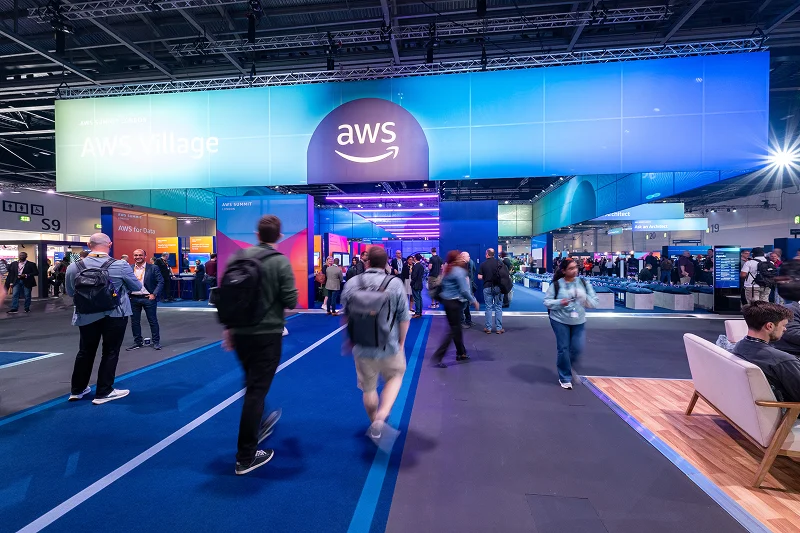
The technology landscape reached a pivotal milestone this week as the Javits Center in New York City opened its doors for the annual AWS Summit. Bringing together a global community of developers, enterprise architects, and cloud visionaries, the event served as a high-stakes showcase for the next generation of AWS infrastructure. While the summit floor buzzed with live demonstrations and technical deep dives, the broader industry has been fixated on a singular theme: the maturation of Agentic AI from experimental curiosity to a foundational pillar of software engineering.
Main Facts: The New Frontier of Development
The 2026 AWS Summit served as the launchpad for several transformative capabilities, most notably in the realm of AI-driven productivity and automated cloud financial management.
At the heart of the discourse was Dr. Swami Sivasubramanian, VP of Agentic AI, and Chet Kapoor, VP of Security Services and Observability. Their keynote address emphasized a shift away from simple chatbot interfaces toward "Agentic" workflows—autonomous systems capable of executing complex, multi-step tasks with minimal human intervention.
The marquee announcement of the week was the preview launch of the AWS FinOps Agent. This tool represents a significant leap forward in cloud governance. By leveraging generative AI, the FinOps Agent does not merely provide data dashboards; it acts as an active participant in cloud cost management. It is designed to autonomously query AWS costs, identify optimization opportunities, investigate anomalies, and—most importantly—execute remediation workflows. From generating stakeholder reports to opening Jira tickets and alerting Slack channels, the agent is positioned to replace the reactive, manual labor that has historically characterized FinOps.
Chronology of the Summit Week
The week’s activities were structured to provide a comprehensive look at how AWS is scaling its services to meet the demands of AI-native development:
- Monday, June 15: Early reports emerged detailing the internal "frontier team" experiments at Amazon. These reports set the tone for the week, focusing on how large-scale engineering organizations are restructuring their workflows to accommodate AI tools.
- Tuesday, June 16: The official start of the AWS Summit NYC. The event floor featured deep-dive sessions on security, observability, and the integration of Agentic AI within developer toolchains.
- Wednesday, June 17: The headline keynote livestream, featuring Dr. Swami Sivasubramanian and Chet Kapoor. This session provided the public unveiling of the AWS FinOps Agent and a broader roadmap for AWS’s AI infrastructure strategy.
- Thursday, June 18: Post-summit analysis and community workshops began, focusing on the practical implementation of the five core practices for "frontier teams."
Supporting Data: The Case for AI-Native Development
The most compelling data point released this week came from a deep-dive analysis of Amazon’s own internal engineering performance. Dr. Sivasubramanian’s report on "frontier teams" provided a rare, quantitative look at the impact of AI adoption within a massive corporate ecosystem.
The findings were staggering:
- Accelerated Development: A team of six engineers successfully rebuilt the Amazon Bedrock inference engine in just 76 days. This project, which had been originally scoped for 30 developers over a 12-to-18-month timeframe, represents a 10x reduction in resource expenditure.
- Productivity Gains: Across structured pilots within Amazon Stores, teams saw a median productivity gain of 4.5x in normalized deployment velocity.
- Cycle Time Reduction: Specific operational tasks saw even more dramatic improvements. For example, the "Perfect Order Experience" feature cycle was compressed from two weeks to a single afternoon. Furthermore, the WW Grocery division reduced the time required to create complex design documentation from five days to mere hours.
These figures underscore a fundamental shift in the economics of software engineering. The data suggests that when AI agents are properly integrated, the bottleneck in development is no longer coding speed, but the ability of the team to manage the intent and structure of the AI agents themselves.
The Five Practices of a Frontier Team
According to the research, the success of these teams was not merely a result of adopting new tools, but of fundamentally altering their organizational processes. The report distills these successes into five key practices:
- Invest in Agent Context: Before writing a single line of production code, teams must invest in "steering files," coding standards, and highly structured repositories. The quality of the AI’s output is directly proportional to the clarity of the context provided.
- Embrace the Initial Slump: The data indicates an initial slowdown while workflows are restructured. Teams must possess the organizational maturity to push through this period of transition.
- Maintain a Steady Backlog: AI agents are most effective when they operate in parallel. A constant, well-scoped queue of tasks allows the system to remain busy without requiring human context-switching.
- Make Intent Explicit: Structured specifications must be provided to the agents before code generation begins to prevent the "hallucination" or misalignment that often plagues generic prompting.
- Shift Testing Left: Agents must be equipped to self-correct. By integrating automated testing directly into the agent’s workflow, code is validated before it ever reaches the pipeline.
Official Responses and Strategic Implications
The implications of these developments are profound for the broader cloud ecosystem. By introducing the AWS FinOps Agent, AWS is signaling a shift toward "autonomous cloud infrastructure."
"The goal is not just to provide data, but to provide agency," noted a senior AWS spokesperson during the event. By enabling the FinOps Agent to automatically surface rightsizing recommendations from the AWS Cost Optimization Hub and take action through Jira integration, AWS is moving to eliminate the "latency of decision-making."
However, this transition is not without its challenges. The report from Dr. Sivasubramanian explicitly acknowledges that "commit velocity" is only one part of the picture. The company has promised a follow-up report that will tackle the more complex—and often riskier—aspects of AI-native engineering: release management, security operations, and the long-term maintenance of end-of-life (EOL) upgrades.

Implications: The Future of Cloud Governance
The 2026 AWS Summit has made it clear: the future of cloud computing is autonomous. The transition from human-managed cloud environments to agent-managed infrastructure is no longer a theoretical research project—it is an operational reality within Amazon, and it is being exported to the entire AWS customer base.
For developers and IT managers, the message is twofold. First, the tools provided by AWS are becoming increasingly capable of handling operational drudgery, from cost management to code generation. Second, the responsibility of the human engineer is shifting. The modern developer is becoming an "architect of intent," tasked with defining the parameters, standards, and goals that these agents follow.
As organizations begin to implement these practices, they must prepare for the "initial slowdown" identified in the Amazon pilots. The move to an AI-native workflow requires a complete redesign of the software development lifecycle (SDLC). Teams that successfully adapt will likely see the same 4x to 10x gains in velocity that Amazon internal teams have achieved.
The AWS Builder Center remains the primary resource for those looking to adopt these new methodologies. As the industry moves into the latter half of 2026, the focus will likely shift from the "novelty" of AI to the "reliability" of agentic systems. With the FinOps Agent now in preview, the industry has its first look at what a truly intelligent, self-optimizing cloud looks like. The builders of today are no longer just writing code; they are orchestrating the intelligence that writes the code for them.