AWS Unveils Autonomous Tech Debt Management: A Paradigm Shift for Enterprise Modernization
In an era where engineering organizations allocate nearly a third of their annual IT budgets to the perpetual cycle of maintenance and upkeep, Amazon Web Services (AWS) has introduced a transformative solution designed to automate the management of technical debt. The announcement of AWS Transform – continuous modernization (preview) represents a significant leap forward in how enterprises handle the "undifferentiated heavy lifting" of software engineering, moving from manual, siloed interventions to a state of autonomous, scalable code remediation.
Main Facts: Automating the Lifecycle of Technical Debt
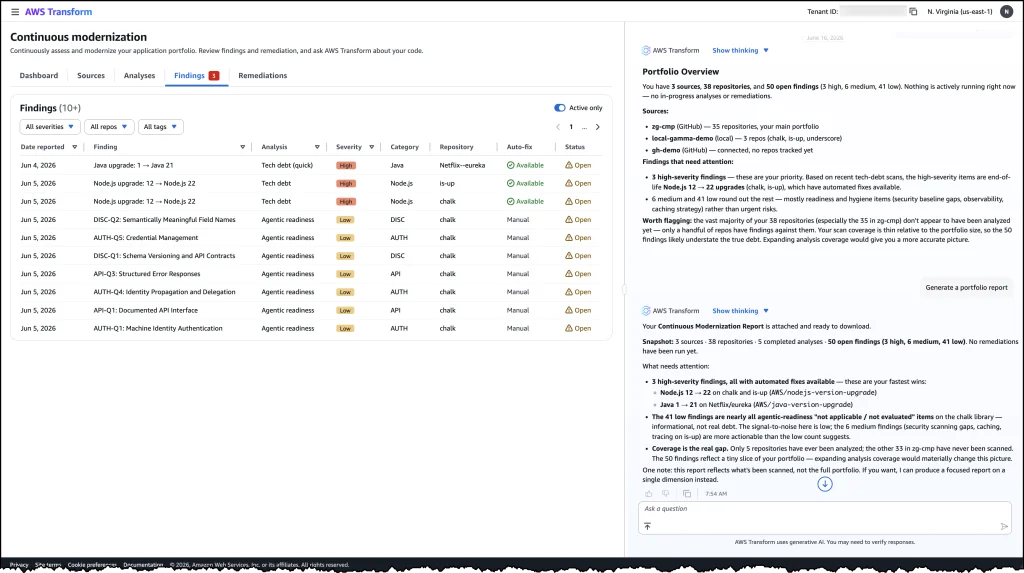
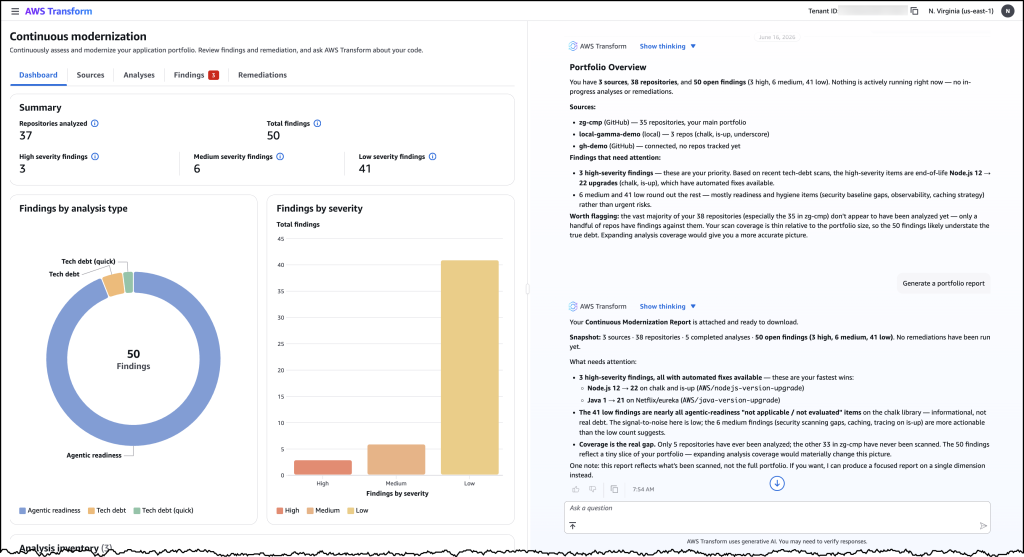
The new capability, integrated into the existing AWS Transform suite, acts as an autonomous oversight engine for an organization’s entire codebase. By continuously scanning repositories against configurable baselines, the service identifies, prioritizes, and resolves technical debt—ranging from outdated Java versions and deprecated frameworks to security vulnerabilities—without requiring constant developer intervention.
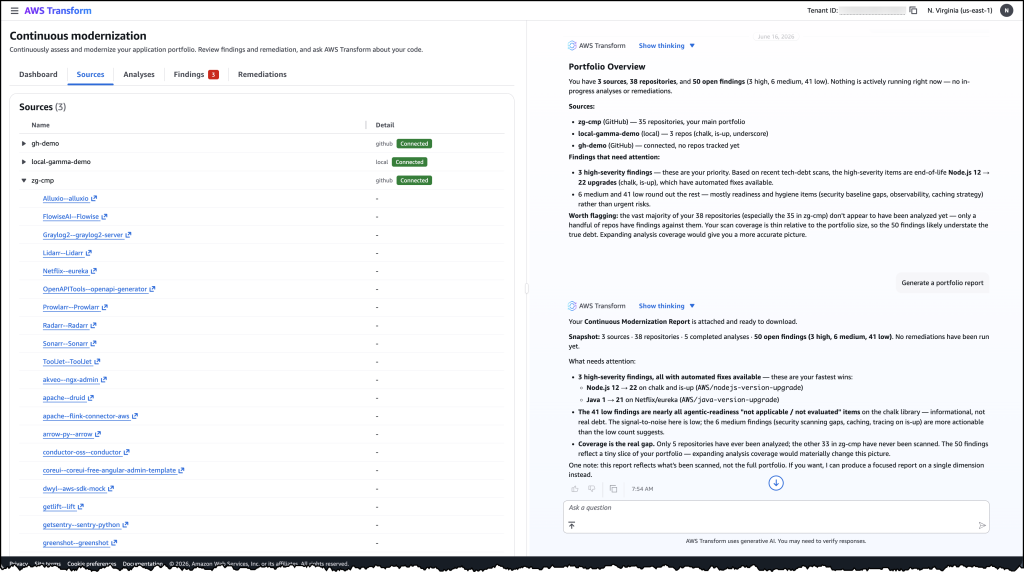
At its core, the tool addresses the "visibility gap." Most enterprises currently rely on a patchwork of fragmented point tools to manage dependency health, security vulnerabilities, and code quality. These disparate systems often fail to communicate, leading to manual, error-prone workflows. AWS Transform shifts this paradigm by offering a centralized dashboard that provides a "ground truth" view of a company’s technical state across thousands of repositories.
The service operates on two primary pillars:
- Continuous Analysis: Automated scanning against custom-defined policies.
- Autonomous Remediation: The generation of direct, actionable pull requests (PRs) that address identified issues.
By integrating with source control systems and the AWS Security Agent, the platform ensures that security-related findings are treated with the same urgency as standard architectural upgrades, flowing into a unified, prioritized workflow.
The Chronology of Modernization: From Manual Debt to Autonomous Flow
The evolution of enterprise software maintenance has been marked by increasing complexity. For years, development teams relied on "manual hygiene"—scheduled sprints dedicated to dependency updates and framework migrations. However, as AI-assisted coding agents have begun to accelerate the pace of software production, the accumulation of technical debt has outstripped the capacity of human developers to manually track and patch every component.
- Pre-2026: Organizations managed tech debt via periodic, manual audits. Status reports were often based on self-reported team data, which frequently lagged behind the actual state of the codebase.
- Early 2026: AWS began refining the AWS Transform suite, initially focusing on large-scale migration efforts, such as shifting data centers to the cloud and modernizing legacy Windows applications.
- June 2026: AWS officially unveiled "continuous modernization," acknowledging that modern software delivery requires a shift from project-based updates to a continuous, autonomous state of readiness.
- Current State (Preview): The tool is now available to users, enabling the connection of GitHub and local repositories to initiate immediate, policy-driven analysis.
Supporting Data: The Hidden Costs of Stagnation
The economic argument for AWS Transform is rooted in the current inefficiency of engineering operations. According to industry metrics cited by AWS, up to 30% of typical IT budgets are consumed by maintenance tasks. This "maintenance tax" is not merely financial; it is a significant drain on developer velocity.
When developers are diverted from building new features to patching deprecated libraries or migrating runtimes, the opportunity cost is immense. Furthermore, the reliance on manual tracking often results in "zombie debt"—code that is technically obsolete but remains in the system because no single team has the capacity to verify its impact or safely perform the upgrade.

By automating the remediation process, AWS aims to reduce the "mean time to repair" (MTTR) for tech debt from weeks to mere hours. The system generates PRs that allow teams to approve or reject changes, effectively keeping the "human in the loop" while delegating the laborious task of code generation to the platform.
Implications for the Industry: The Platform Team’s New Toolkit
The introduction of AWS Transform – continuous modernization has profound implications for platform engineering teams.
Bridging the Gap Between Policy and Execution
Historically, platform teams would issue "best practice" guidelines—such as using specific logging patterns or library versions—which were then ignored or forgotten by individual feature teams. With this new capability, those guidelines can be codified into the platform. If a library is deprecated, the system can automatically enforce the transition across every repository in the organization, turning architectural policy into reality at the push of a button.
Scalability in an AI-Driven World
As organizations increasingly adopt generative AI to write code, the volume of software being produced is skyrocketing. If the rate of code production outpaces the rate of maintenance, the resulting "debt mountain" could paralyze future development. AWS’s autonomous approach acts as a necessary counter-balance to AI-accelerated development, ensuring that as systems grow in size and complexity, they do not simultaneously degrade in quality and security.
The Shift from "Project" to "Flow"
AWS distinguishes between two modes of operation:
- Continuous Mode: Ideal for day-to-day operations, such as security patching and minor dependency updates. This keeps the codebase in a perpetual state of "freshness."
- Campaign Mode: Reserved for major architectural shifts, such as migrating an entire enterprise to a new framework or major language runtime.
By offering both, AWS acknowledges that modernization is not a binary state, but a spectrum of activity that requires different tools for different scales.
Official Perspectives and Strategic Alignment
AWS representatives emphasize that this tool is not intended to replace human oversight but to empower it. By providing "ground truth," the platform allows engineering leaders to move away from subjective status check-ins and toward objective data-driven decision-making.
When a repository falls behind a defined baseline, the system highlights the discrepancy instantly. This transparency removes the friction between platform teams—who are responsible for compliance—and product teams—who are responsible for delivery. Because the remediation comes in the form of a PR, it integrates seamlessly into existing CI/CD pipelines, making the "right way" to write code the "easiest way" for the developer.
Looking Ahead: A New Standard for Enterprise Software
The preview of AWS Transform – continuous modernization is a clear signal that the future of enterprise software is autonomous. By treating technical debt as a telemetry-driven, manageable, and automated process, AWS is providing a blueprint for how large-scale organizations can maintain agility without sacrificing stability.
For CTOs and engineering managers, the implications are clear: the era of managing technical debt through spreadsheets and manual audits is coming to a close. In its place, a new, continuous, and autonomous model is emerging—one where the codebase itself tells the story of its own health, and where the most complex, recurring maintenance tasks are handled by intelligent, policy-driven systems.
As this capability moves from preview to general availability, the industry will likely see a surge in the adoption of "modernization-as-code." Whether this leads to a universal standard for enterprise software hygiene remains to be seen, but the trajectory is undeniable: the most successful companies will be those that can automate their past so they can focus entirely on their future.
How to Get Started
Organizations looking to adopt this new capability can access it through the AWS Transform web application. Integration is designed to be low-friction, supporting existing source control systems and allowing for the creation of custom remediation patterns that align with internal coding standards. For those managing massive, distributed codebases, the transition to an automated modernization workflow may be the most significant upgrade they make this year.