AWS Unveils "Continuous Modernization": A New Frontier in Autonomous Tech Debt Remediation
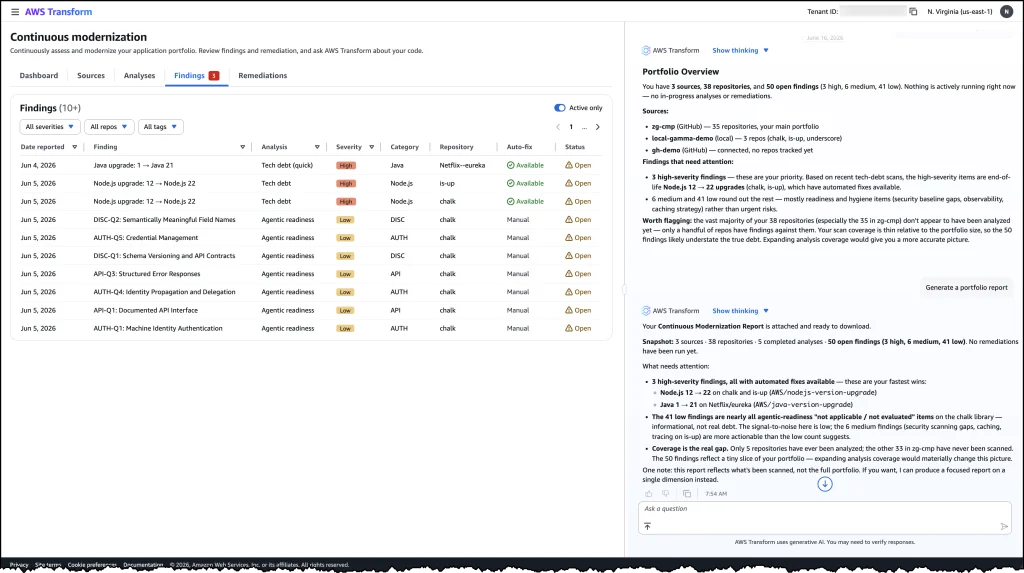
In a significant move to reshape how engineering organizations manage the long-term health of their software, Amazon Web Services (AWS) has announced the preview of AWS Transform – continuous modernization. This new capability, integrated into the existing AWS Transform suite, marks a paradigm shift from manual, episodic maintenance to an autonomous, data-driven approach to technical debt. By providing continuous visibility, prioritized remediation, and automated pull requests, AWS aims to solve the "tech debt trap" that currently consumes nearly a third of enterprise IT budgets.
Main Facts: Addressing the Silent Tax on Engineering
Modern software development is currently facing a "speed versus stability" paradox. As AI-assisted coding agents accelerate the rate at which developers churn out new features, the accumulation of technical debt—outdated dependencies, deprecated frameworks, and security vulnerabilities—is occurring at an unprecedented velocity.
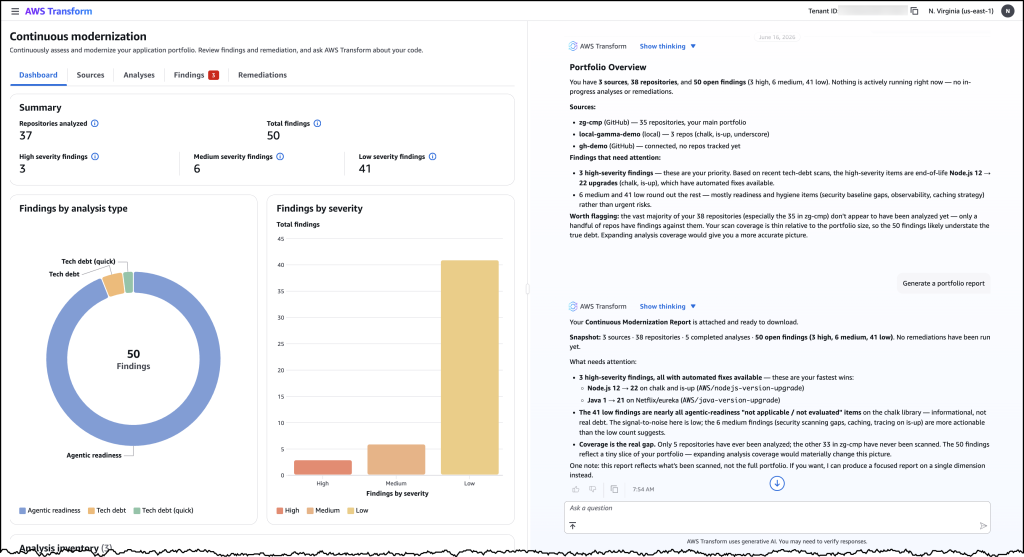
AWS Transform – continuous modernization acts as an automated governance layer that sits atop an organization’s source control systems. The tool functions on two primary pillars:
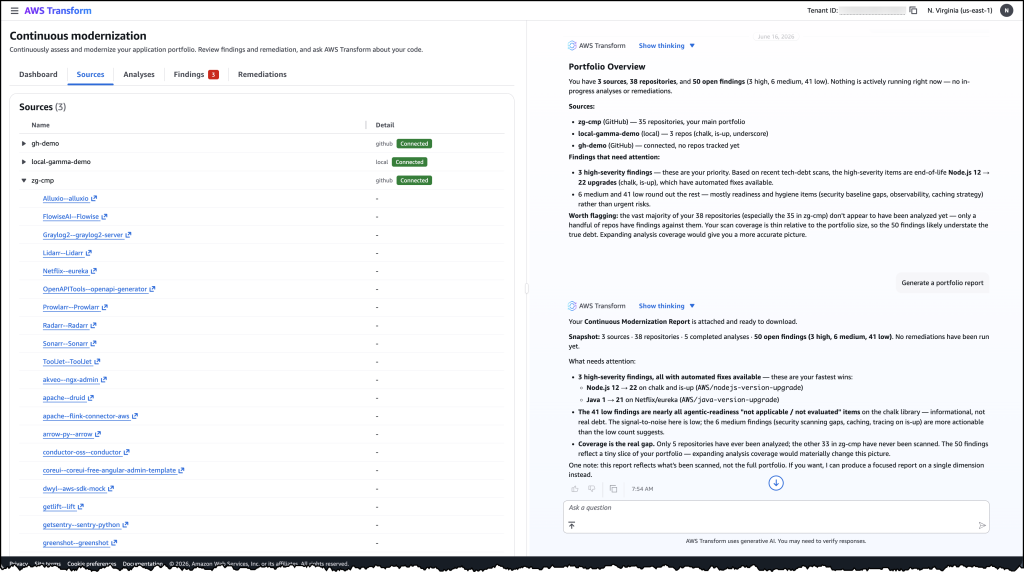
- Continuous Analysis: The service scans thousands of repositories against customizable baselines. Unlike legacy tools that operate in silos, this platform provides a unified view of code health, identifying where repositories drift from organization-wide standards.
- Autonomous Remediation: Once issues are identified, the system doesn’t just provide a report; it generates actionable pull requests (PRs). These PRs contain the specific code changes required to bring a repository back into compliance, which developers can then review and merge.
By automating the mundane aspects of software maintenance—such as upgrading Java versions, swapping out deprecated libraries, or addressing security patches identified by the AWS Security Agent—AWS is effectively offloading the "undifferentiated heavy lifting" of code hygiene.
Chronology: The Evolution of AWS Transform
The release of this feature is the latest milestone in AWS’s multi-year strategy to modernize enterprise software landscapes.
- Foundation: Initially, AWS Transform was positioned as a migration tool, focusing on moving legacy data centers to the cloud and refactoring monolithic Windows and mainframe applications.
- Expansion: Recognizing that modernization does not end after a migration, AWS began incorporating tools to assist with ongoing maintenance, such as automated runtime upgrades for AWS Lambda.
- The Current Pivot: The launch of "continuous modernization" (in preview as of June 2026) signifies a transition from a project-based migration tool to an ongoing operational platform. This reflects the reality that for modern enterprises, "modernization" is no longer a one-time event—it is a continuous state of compliance and optimization.
Supporting Data: The Cost of the "Status Quo"
The economic argument for this new tool is rooted in the high cost of manual maintenance. According to internal AWS assessments and broader industry benchmarks, engineering organizations typically allocate approximately 30% of their total IT budget to maintenance rather than innovation.
The current industry standard for managing this debt is fragmented:
- Tool Sprawl: Teams often juggle separate tools for dependency checking, vulnerability scanning, and code quality linting. This fragmentation creates "data silos" where a CTO cannot get a single, accurate view of the organization’s technical debt.
- The "Lag" Effect: Because most tech debt assessments rely on manual reporting or periodic audits, leadership often receives status updates that are weeks or even months out of date.
- Regressions: Manual remediation is prone to human error. By shifting to a policy-as-code model—where the organization defines a "golden path" for dependencies and libraries—AWS Transform ensures that every repository adheres to the same standards, reducing the risk of regressions that occur when teams handle updates in isolation.
Official Perspectives: The "Ground Truth" Strategy
AWS emphasizes that the core value proposition of this new capability is "ground truth." In a traditional development environment, team leaders must constantly check in with developers to see if security patches have been applied or if deprecated frameworks have been updated. This leads to friction and often inaccurate status updates.

With continuous modernization, the "ground truth" is derived directly from the source code. If a repository falls behind a baseline, the dashboard reflects that reality immediately. This transparency allows platform teams to transition from "policing" developers to providing the tools and policies that keep the organization healthy by default.
"We are moving from a world where developers spend their Fridays manually updating libraries to a world where they review high-quality, automated PRs generated by their platform’s own modernization policies," noted an AWS spokesperson during the preview briefing.
Implications for the Industry
The introduction of this technology has profound implications for the structure of engineering teams and the future of software development.
The Role of Platform Engineering
Platform teams are increasingly becoming the "product managers" of the internal developer experience. With this new tool, platform engineers can codify their organization’s standards—such as preferred logging patterns or internal libraries—into a policy that applies across the entire company. This ensures consistency without requiring a manual enforcement regime.
The Impact of AI-Assisted Development
The rise of AI-coding agents has made it easier to write code, but harder to maintain it. As the volume of code grows, the technical debt grows commensurately. AWS’s solution provides a necessary "counter-balance." If AI is the accelerator that creates code, AWS Transform acts as the governor that ensures that the code remains secure, modern, and performant over time.
Security as a Continuous Process
By integrating with the AWS Security Agent, the platform bridges the gap between traditional security scanning and software engineering. Vulnerability remediation is no longer a "security team problem" that is handed off to developers via a ticket; it becomes a part of the standard PR workflow. This "shift-left" approach, combined with the capability to automatically apply fixes, significantly reduces the "mean time to remediate" (MTTR) for critical vulnerabilities.
Getting Started: A Two-Pronged Approach
AWS has designed the system to be flexible, supporting two primary modes of operation:
- Continuous Mode: Designed for "business-as-usual" maintenance. It is the steady-state operation of keeping libraries updated and enforcing coding standards on a day-to-day basis.
- Campaign Mode: Designed for "big-bang" events. When an organization decides to move from an older Java version to a new LTS (Long-Term Support) release, or when they decide to migrate from a legacy framework to a modern alternative, they can trigger a "campaign." This allows for a massive, orchestrated push across hundreds of repositories, providing real-time tracking of which teams have completed the migration and which are still in progress.
Conclusion: The New Normal
The preview of AWS Transform – continuous modernization is a clear signal that AWS views the management of technical debt as a core infrastructure challenge. By automating the detection and remediation of debt, AWS is not just helping companies save money; they are helping them increase their "velocity of innovation."
When developers are freed from the constant cycle of fixing deprecated code, they are empowered to focus on the business-critical features that drive growth. As this service moves toward general availability, it is likely to become a standard tool in the kit of any enterprise operating at scale, fundamentally changing the relationship between developers, platform teams, and the codebases they manage.
Organizations interested in participating in the preview can access the service through the AWS Transform web application, the AWS Transform Kiro Power, or through integrated MCP and skills for their existing coding environments.