Beyond the Average: How Custom AI Personas and Feedback Loops Are Redefining Content Quality
By AI Explored Staff
Co-created by Austin Marchese and Michael Stelzner
Main Facts: The Death of Generic AI Output
As artificial intelligence platforms become increasingly sophisticated, the barrier to entry for content creation, report writing, and professional deliverables has effectively plummeted to zero. Today, virtually anyone can prompt an LLM to generate dozens of short-form content ideas, extensive business proposals, or marketing copy in a matter of seconds.
However, this democratization of text generation has introduced a massive new problem: homogenization.
When everyone uses the same foundational AI tools with standard prompts, the resulting output is overwhelmingly average. In modern markets, average carries no real value. Audiences, consumers, and corporate managers have rapidly developed a discerning eye—and ear—for raw, unrefined AI-generated material. Whether it is an over-polished corporate report or a synthetically styled image, work that lacks human nuance immediately erodes trust and perceived value.
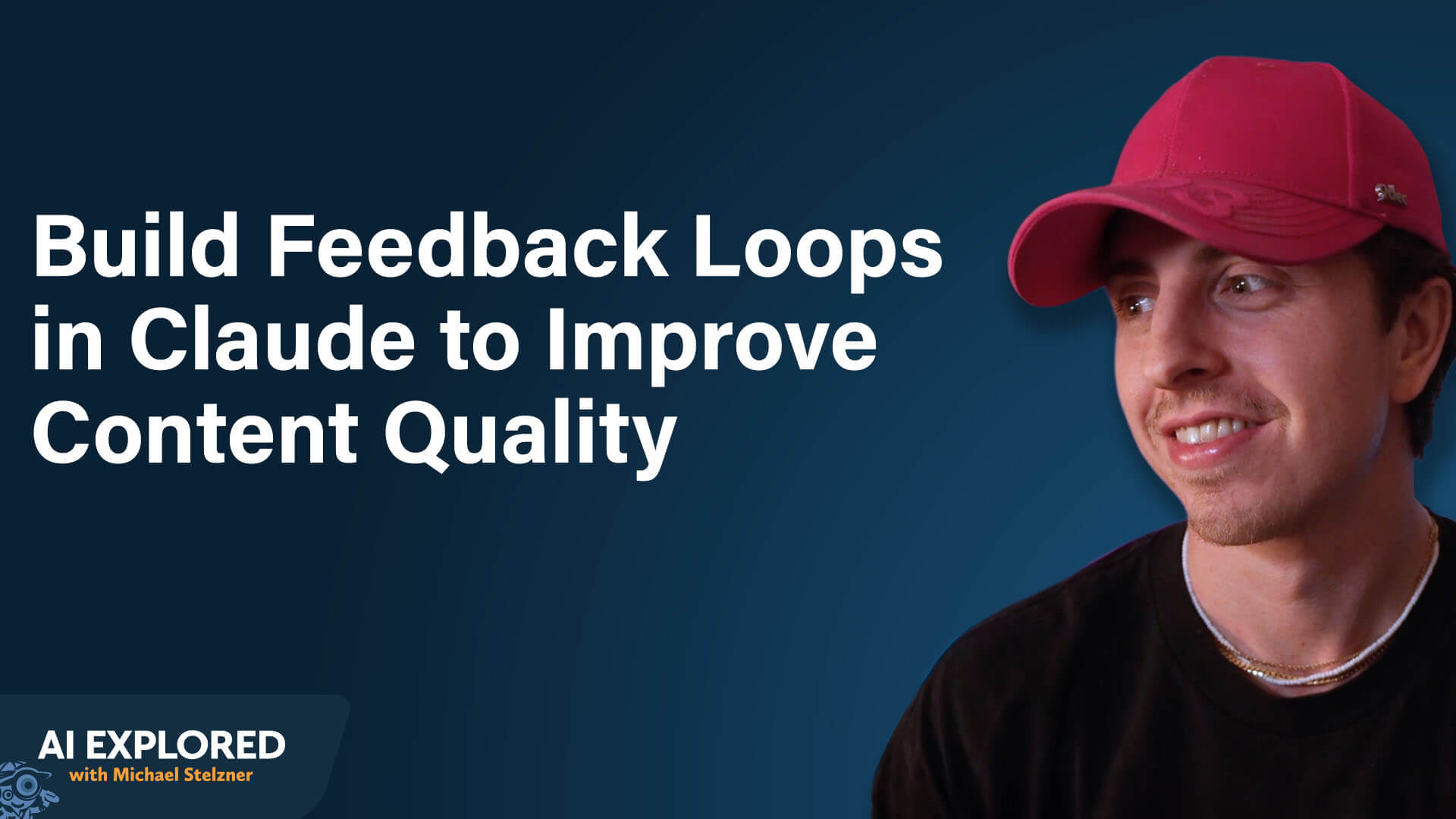
According to insights shared by expert practitioner Austin Marchese on the AI Explored podcast, the ultimate goal of leveraging artificial intelligence is no longer simply to increase output volume. Instead, the strategic differentiator is utilizing AI to drastically improve quality across high-stakes deliverables before they ever reach a human audience. By integrating custom AI personas, structured knowledge bases, and rigorous iterative feedback loops, professionals can filter out generic flaws internally, ensuring that every piece of work stands out in an increasingly crowded digital landscape.
Chronology: The Evolution of Quality Control in the Age of Generative AI
To understand how modern creators and enterprises are solving the quality crisis, it helps to examine how workflow optimization has evolved alongside LLM capabilities:
- Phase 1: The Novelty Era (Early LLM Adoption). When tools like ChatGPT and early image generators first emerged, audiences were captivated by the sheer capability of automated generation. Speed and volume were the primary metrics of success.
- Phase 2: The Fatigue and Saturation Wave. Within months, audiences grew fatigued by predictable phrasing, uniform visual aesthetics, and cookie-cutter reporting. Unfiltered AI content began triggering immediate skepticism, signaling a steep drop in perceived authority.
- Phase 3: The Manual Refinement Bottleneck. Professionals attempted to combat this by endlessly rewriting prompts, manually editing drafts, or engaging in sluggish human-to-human review cycles (e.g., submitting drafts up a corporate chain of command, waiting for edits, and revising).
- Phase 4: The Autonomous AI Persona Loop (Current Standard). Pioneered by forward-thinking creators like Marchese, workflows have shifted toward building hyper-specific, data-backed AI audience clones. Rather than relying on slow human feedback or single-prompt generation, creators route their initial drafts through simulated internal focus groups, refining the output until it meets real-world standards prior to external release.
Supporting Data: The Current Landscape of AI Adoption
The urgency for sophisticated quality control systems is underscored by broader industry trends regarding how professionals are actually learning and deploying these technologies.
Recent industry data highlights a critical gap in professional enablement:
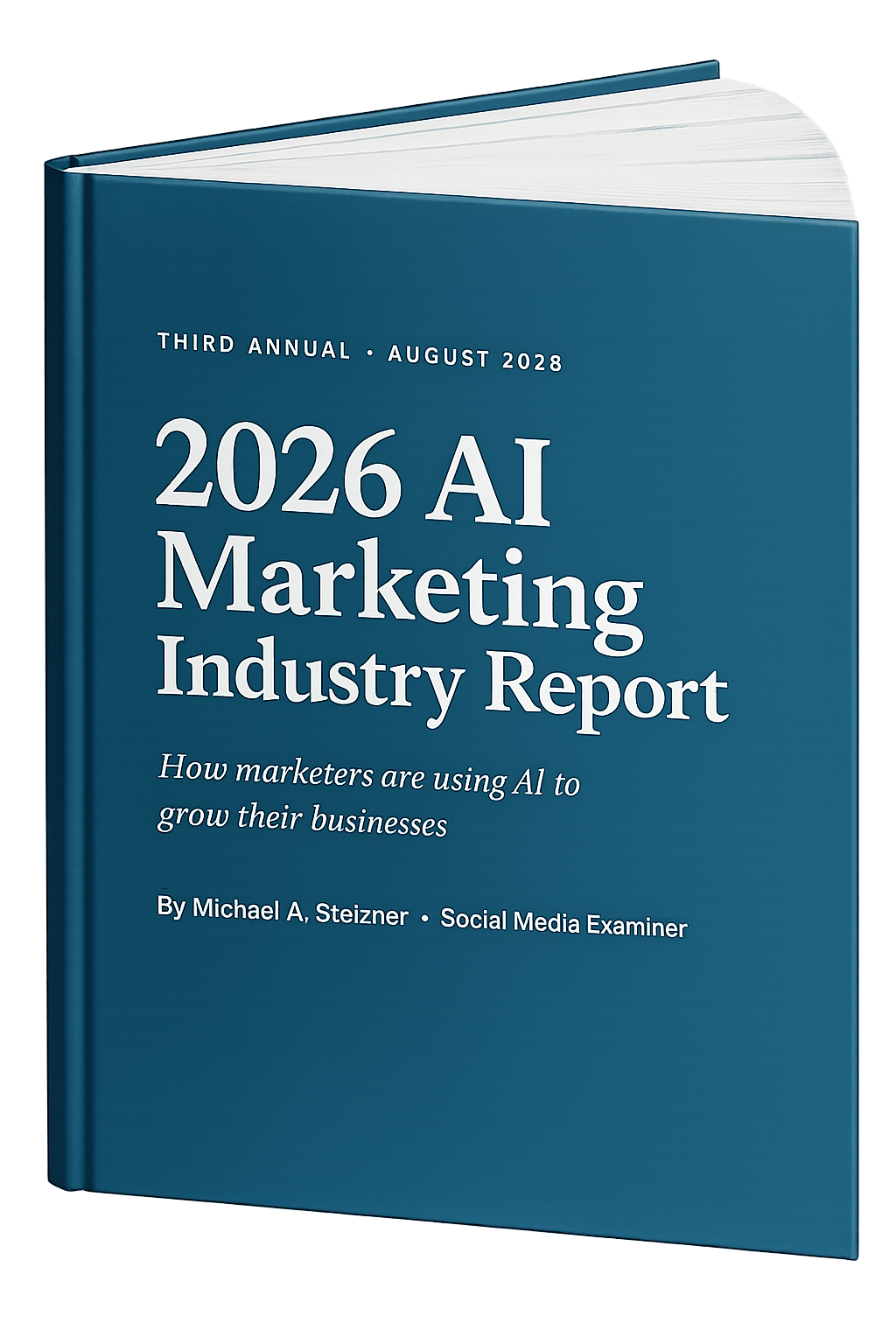
- The Self-Taught Majority: Approximately 85% of marketers and business professionals are forced to learn artificial intelligence entirely through independent experimentation.
- Corporate Lags: Only 7% of professionals receive formal, structured training from their employers, leaving the vast majority to absorb the financial and operational costs of tool adoption out of pocket.
- The Pivot to Strategy: With third-party surveys and comprehensive marketing industry reports distilling data from hundreds of active practitioners, the consensus is clear: surface-level prompt engineering is no longer enough. Professionals are urgently seeking frameworks that move beyond basic text generation to drive measurable business outcomes, such as audience growth and conversion optimization.
Marchese’s own application of these quality systems offers a stark empirical proof-of-concept. By deploying an internal AI focus group to pre-test and refine his YouTube video packaging (titles and thumbnails), he reported a 10x growth in subscriber metrics following the system’s implementation—pinpointing the exact pivot on his growth charts where automated audience simulation replaced guesswork.
Official Insights & Methodology: Building Your AI Quality Control System
Establishing an enterprise-grade AI quality control framework requires a deliberate, multi-layered technical setup. According to Marchese, the architecture relies on three foundational pillars:
1. The Technical Infrastructure (Projects, Files, and Skills)
- Claude Projects: For individuals starting out, dedicated AI projects serve as an accessible entry point. Uploading audience preferences, historical communications, and direct feedback samples into a project context provides roughly 80% of the effectiveness of advanced setups.
- Local Knowledge Bases (Owning vs. Renting Intelligence): Advanced users working within specialized environments can leverage local file systems. Following a knowledge-base architecture popularized by researchers like Andrej Karpathy, data is split into two distinct tiers: a "raw" folder containing unprocessed transcripts and message exports, and a "wiki" folder holding AI-processed summaries and distilled preferences. This ensures the user—rather than a SaaS platform—owns their intellectual property and can seamlessly migrate their context across different LLM models.
- Reusable Skills: Instead of re-typing complex instructions for every task, workflows are packaged into modular "skills." Using voice-input software (such as Wispr Flow or native audio features) to converse with the AI during skill creation captures linguistic nuance that traditional typing often misses.
2. Identifying High-Impact Force Multipliers
Applying the 80/20 rule is vital. Professionals must isolate the 20% of tasks where quality improvements yield 80% of the strategic impact. For a content creator, this might be video packaging; for a corporate consultant, it is client deliverables; for a mid-level manager, it is the weekly executive summary. Optimization should be laser-focused on these critical output points rather than applied indiscriminately.
3. Constructing Data-Driven AI Personas
The core mechanism of this system replaces slow human-to-human review cycles with rapid human-to-AI-clone simulations. By gathering real historical data—such as Slack threads, text message transcripts, past managerial critiques, and direct consumer engagement metrics—creators build hyper-realistic AI clones of their target audience or decision-makers.

4. Running an Internal AI Focus Group
Rather than relying on a single perspective, work is passed through a multi-persona board (e.g., founders, technical users, price-sensitive buyers, or risk-averse executives). Each persona evaluates the draft and rates it on a structured numerical scale (0 to 10), providing granular, individualized feedback across multiple metrics before the work is ever seen by a real human.
5. Iterative Calibration
The system relies on continuous calibration. Creators test AI feedback against real-world reactions. When the AI persona misjudges an output, the user feeds the actual human conversation back into the system with the prompt: "Update this specific skill based on this interaction so you don’t make the same mistake again." After a handful of iterations, the AI model aligns so closely with real human responses that the external feedback loop becomes largely redundant.
Implications: The Future of Professional Work and Intellectual Property
The shift toward AI-driven quality control loops carries profound implications for the future of knowledge work, marketing, and enterprise operations:
- The Revaluation of Human Judgment: As automated generation lowers the market value of raw text and media, human value will concentrate entirely on taste, curation, and system architecture. Professionals who master the art of training AI to critique its own work will vastly outperform those who merely act as passive prompters.
- Data Sovereignty and Ownership: The transition toward local file-based knowledge bases emphasizes a broader movement toward digital sovereignty. Professionals who house their proprietary feedback loops and audience profiles locally are no longer "renting intelligence" from third-party platforms; they are building defensible, portable intellectual property.
- The Compression of Production Timelines: By shifting the QA (Quality Assurance) process to an automated pre-flight check, businesses can eliminate weeks of revision lag time. Deliverables hit final approval stages fully optimized, drastically raising the baseline standard of professional communication across industries.
Ultimately, the future belongs not to those who use AI to produce more, but to those who maintain their own strategic thinking while leveraging AI as an uncompromising, data-driven quality filter.