Beyond the Click: Why Your Data-Driven Strategy Might Be Missing the Point
In the high-stakes world of digital marketing, the playbook has become remarkably standardized. Marketing teams globally pour billions of dollars into a familiar triad: Google Ads, LinkedIn campaigns, and Meta retargeting. These platforms are the darlings of the modern CMO, prized for their granular attribution models and the promise of quantifiable return on investment (ROI). However, an emerging school of thought suggests that this reliance on "safe" platforms may be creating a dangerous blind spot.
Are we optimizing for the metrics that matter, or are we simply optimizing for the metrics that are easiest to report?
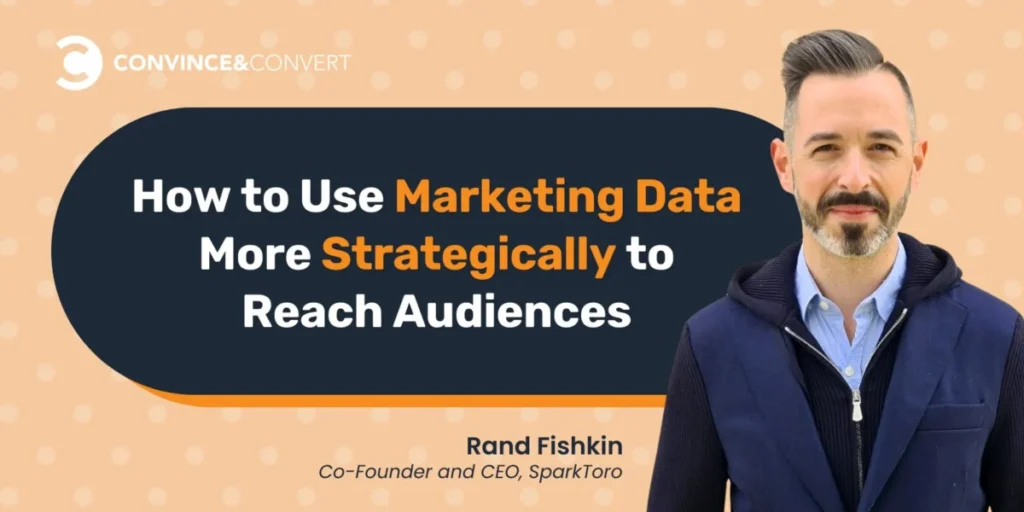
According to Rand Fishkin, founder of audience research tool SparkToro, the industry is currently suffering from a crisis of location. In a recent appearance on the Data-Driven Decisions podcast, hosted by Zontee Hou, Fishkin argued that marketers have become so obsessed with "attribution-friendly" channels that they have abandoned the actual places where their customers live, breathe, and solve problems.
The Mirage of Attribution: Why Google Isn’t the Beginning of the Journey
The primary trap for modern marketing departments is the "last-click" fallacy. Many organizations attribute the entirety of a sale’s value to the final touchpoint—often a Google Search ad—because that is the point where the transaction becomes trackable.
"A ton of what happens in Google is actually a response to something else," Fishkin explains. "People who performed a search query in Google, very rarely was that a spontaneous first-touch thing. It was like, ‘Oh, I heard about this software, so I went to Google and searched for it and clicked on it.’ And of course, the attribution looks like Google drove all the value. No, Google was just the middleman."
The Chronology of Customer Discovery
When a customer discovers a new product, their journey typically follows a non-linear path that rarely begins on an advertising platform:
- Awareness: A potential customer hears about a solution on an industry-specific podcast, reads a discussion on Reddit, or hears a recommendation at a conference.
- Consideration: The customer engages with content that provides value without a direct sales pitch (the "zero-click" phase).
- Intent: The customer, now familiar with the brand, goes to Google to find the specific URL or pricing.
- Conversion: The brand captures the lead via a search ad, incorrectly assigning 100% of the credit to that ad spend.
By failing to account for the first three stages, marketers over-invest in the final stage, effectively paying a premium to reach people who were already convinced.
The SparkToro Philosophy: Mapping the Audience Ecosystem
To break free from this cycle, marketers must shift their focus from "where can I buy ads?" to "where does my audience actually spend their time?" This is the core mission of SparkToro. Instead of relying on platforms that provide black-box ad targeting, SparkToro aggregates data on online habits—what websites users visit, which podcasts they subscribe to, and which influencers they trust.
Strategic Applications: Real-World Success Stories
Fishkin points to several case studies where companies redirected their budgets from broad paid ads to high-relevance niche channels:
- The Podcaster’s Strategy: A podcaster seeking sponsorship revenue used audience data to identify guests who commanded high influence within specific, relevant segments. By inviting these influencers onto the show, the podcaster leveraged their existing reach, effectively "borrowing" the trust of the influencer’s audience to attract high-quality sponsors.
- The Event Organizer’s Pivot: A technology event organizer used similar audience insights to curate speaker lists. By selecting speakers with established, highly-engaged followings, the organizer ensured that the event’s target demographic would be naturally drawn to the conference, reducing the need for expensive, broad-spectrum advertising.
The Rise of "Zero-Click" Marketing
Perhaps the most significant departure from traditional tactics is the rise of "zero-click" marketing, a term championed by Amanda Natividad, VP of Marketing at SparkToro.
The strategy is simple yet radical: deliver value directly to the user on the platforms they already frequent, without demanding they click through to your website.
Case Study: Chartr and the Power of Reddit
Consider the example of Chartr, a data-storytelling company. Rather than running banner ads on business websites, they focused their efforts on the subreddit "r/dataisbeautiful." They didn’t spam the community with links or aggressive branding. Instead, they shared high-quality, standalone graphics that provided genuine value to the community.
The result? The brand became a staple in the community. When those users eventually needed data services, Chartr was already the authority in their minds. By prioritizing engagement over clicks, they achieved deeper market penetration at a fraction of the cost of paid advertising.
Implications for Modern Marketing Teams
The implications of this shift are profound for both agency leadership and in-house teams. Moving away from "safe" attribution-heavy channels requires a fundamental change in how marketing teams justify their budgets to stakeholders.
1. Re-evaluating the "Safe Bet"
Platforms like Meta and LinkedIn provide clean, automated reports that are easy to present in a boardroom. However, the data confirms that the "top 10%" of spend in these areas often yields zero incremental growth. If you are spending $100,000 on ads to reach people who were already going to buy your product, you are essentially paying a tax on your own brand recognition.
2. The Limits of Data
While Fishkin advocates for data-driven decisions, he warns against "data fundamentalism." He stresses that data cannot solve every problem. "I’m not saying don’t be data-informed, but I think it pays to be responsible in your recognition of what problems data can solve and what it can’t solve," he notes.
For instance, data can tell you that a user clicked on a link, but it cannot tell you why they are frustrated with your user interface, or why a segment of your target market is ignoring your product entirely. For these insights, qualitative research—surveys and direct customer interviews—is indispensable.
A Roadmap for Strategic Redirection
To align your marketing strategy with these modern realities, consider the following structural changes:
- Invest in Qualitative Research: Complement your quantitative dashboard with regular, recurring customer interviews. This fills the "blind spot" left by click-tracking software.
- Diversify Beyond Paid Media: If your entire strategy relies on ad-tech algorithms, you are at the mercy of platform changes (like cookie deprecation or algorithm updates). Build equity in "owned" channels like podcasts, newsletters, and niche community forums.
- Measure Brand Sentiment, Not Just Clicks: Shift your focus toward engagement and brand recall. If you are a B2B brand, does your target audience know your name before they search for your service? If not, you have a top-of-funnel issue that no amount of Google Ads will fix.
- Be Patient with ROI: True brand-building takes time. While paid ads provide an immediate, short-term spike in traffic, community-driven "zero-click" marketing builds a moat of trust that competitors cannot easily breach.
Conclusion: Getting Closer to the Audience
As Zontee Hou explores in her book, Data-Driven Personalization, the goal of all data strategy should be to get closer to the audience, not just to track them more efficiently. The industry has reached a point of diminishing returns with broad, automated paid media.
The winners of the next decade of marketing will not be those with the largest ad budgets or the most sophisticated attribution software. Instead, they will be the organizations that use data to identify where their customers congregate and then provide enough value in those spaces that the "click" becomes an afterthought rather than the primary goal.
By stepping out of the comfort zone of measurable, yet often ineffective, ad channels, marketers can begin to build something more sustainable: a brand that is present, relevant, and trusted in the places that matter most to their audience.
To hear more from Rand Fishkin on the future of marketing, you can listen to his full episode on the Data-Driven Decisions podcast. For those looking to deepen their understanding of how data shapes company culture and strategy, explore the complete eight-episode series featuring interviews with leaders from IBM, Salesforce, and more, and discover Zontee Hou’s insights in Data-Driven Personalization.