Beyond the Screen: How the Rashmika Mandanna Deepfake Scandal Exposed the Vulnerability of Digital Identity in India
Published: November 24, 2023
Main Facts
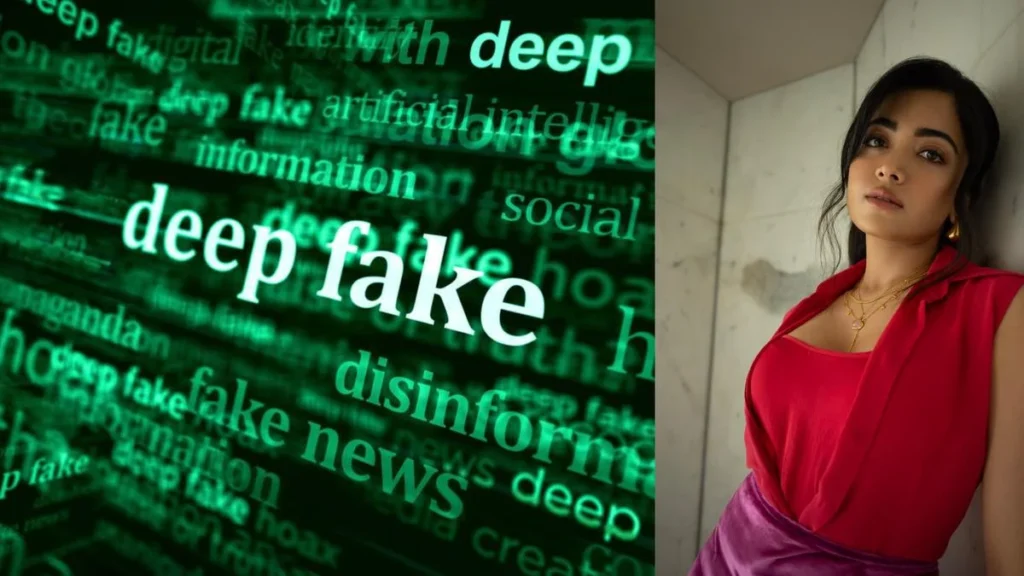
In November 2023, the landscape of digital safety and artificial intelligence ethics in India shifted dramatically following a high-profile cyber incident. Popular pan-Indian cinematic star Rashmika Mandanna became the unwitting target of a sophisticated deepfake operation, thrusting the dark side of generative AI into the mainstream consciousness of the nation.
A digitally manipulated video surfaced across various social media platforms, featuring Mandanna’s facial likeness seamlessly—yet eerily—morphed onto the body of British-Indian social media personality Zara Patel. While the original video belonged to Patel, the AI-generated alteration substituted her face with Mandanna’s, creating a hyper-realistic illusion that the actor was featured in the clip.
This incident marked a critical watershed moment. Mandanna became the first prominent Indian film actor to publicly and forcefully speak out against the menace of deepfake abuse. Because of her immense popularity across multiple film industries in India, the video’s rapid viral dissemination triggered national outrage, dominated news cycles, and ultimately escalated to the highest corridors of power, drawing a direct intervention from Prime Minister Narendra Modi.
The incident laid bare an unsettling reality: the rapid democratization and accessibility of generative artificial intelligence tools have outpaced both legal frameworks and societal awareness, leaving individuals—particularly women in the public eye—vulnerable to severe digital harassment and identity exploitation.
Chronology of Events
The unfolding of the Rashmika Mandanna deepfake controversy follows a rapid timeline from digital creation to national policy debate:
- Late October 2023: British-Indian influencer Zara Patel posts an original reel on her Instagram account, featuring herself in a casual setting wearing a black outfit. Little does she know that her content will soon be hijacked.
- Early November 2023: An anonymous user or group utilizes advanced, accessible deepfake software—leveraging generative adversarial networks (GANs) and face-swapping algorithms—to extract Mandanna’s facial features from public appearances and map them onto Patel’s body in the video.
- November 5–6, 2023: The altered video begins circulating on platforms like X (formerly Twitter), Reddit, and WhatsApp. It quickly gains traction among fan clubs and meme pages before spreading to a broader audience.
- November 10, 2023: Tech-savvy users and journalists begin pointing out discrepancies in the video, identifying it as a deepfake due to lighting inconsistencies, unnatural facial blending, and background frame drops.
- November 11, 2023: Rashmika Mandanna breaks her silence. Taking to her official social media accounts, she issues a strongly worded statement expressing her deep distress over the incident, highlighting the urgent threat deepfakes pose not just to celebrities, but to society at large.
- Mid-November 2023: The incident spirals into a massive national debate. Prominent actors, filmmakers, tech experts, and activists rally behind Mandanna, demanding immediate regulatory intervention from the government and accountability from social media intermediaries.
- November 17, 2023: Prime Minister Narendra Modi publicly addresses the deepfake crisis during a public event, expressing deep concern over the misuse of AI to spread misinformation and manufacture non-consensual imagery, announcing that the government would soon formulate strict regulations.
- November 20–24, 2023: The Ministry of Electronics and Information Technology (MeitY) summons social media executives, outlining stringent guidelines for compliance, content moderation, and the mandatory labeling of AI-generated media.
Supporting Data & The Mechanics of Deepfakes
To understand the gravity of the Mandanna incident, one must look at the underlying technology and the alarming statistics surrounding the proliferation of deepfakes globally and in India.
The Technology Behind the Illusion
Deepfakes rely on Deep Learning—specifically, autoencoders and Generative Adversarial Networks (GANs). An encoder compresses facial images into a lower-dimensional latent space, while a decoder reconstructs the face to match a target video frame. By training an algorithm on hundreds of photographs of a target individual (such as Rashmika Mandanna), the software learns to mimic expressions, lighting angles, and skin textures, pasting them over a source video (in this case, Zara Patel’s reel).
What once required Hollywood-grade visual effects studios and millions of dollars can now be executed on a consumer-grade laptop using open-source software available on GitHub.
The Global and Domestic Data Landscape
- Exponential Growth: According to reports by cybersecurity firms like Deeptrace and Home Security Heroes, the number of deepfake videos online has been doubling every six months. Between 2019 and 2023, deepfake content grew by over 550% globally.
- The Gendered Impact: Data reveals that a staggering 96% of all online deepfakes are non-consensual pornography (NCP) targeting women, predominantly actors, musicians, politicians, and everyday private citizens whose photos are scraped from social media.
- India’s Vulnerability: As one of the world’s largest digital consumer markets with over 800 million internet users and some of the highest daily engagement rates on platforms like WhatsApp, Instagram, and YouTube, India is prime ground for the viral spread of synthetic media.
- Detection Deficit: Studies indicate that the untrained human eye can only successfully identify a high-quality deepfake about 24% to 30% of the time without the aid of specialized forensic detection tools.
Official Responses and Governmental Actions
The uproar surrounding the Mandanna video forced Indian policymakers and law enforcement agencies to transition from passive observers to active regulators.
Prime Minister Narendra Modi’s Intervention
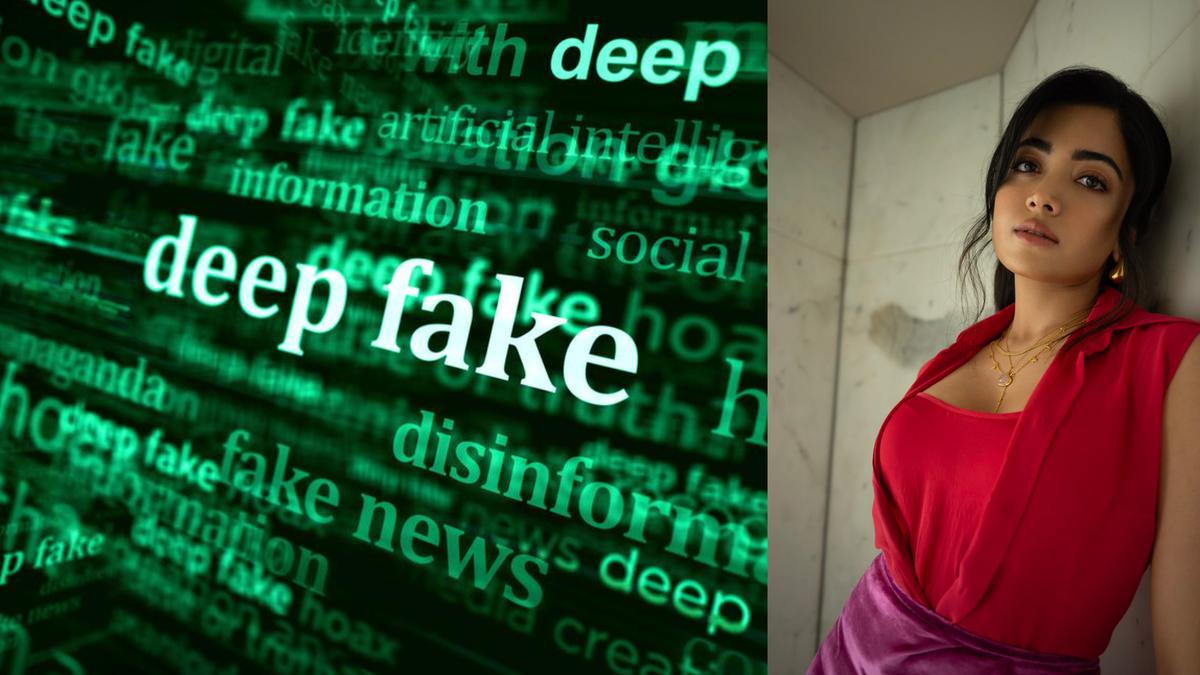
Recognizing the threat to democratic discourse and personal safety, Prime Minister Narendra Modi addressed the issue head-on. Comparing the dangers of unchecked AI to historical technological disruptions, he warned citizens about the menace of deepfakes. The Prime Minister emphasized that AI-driven misinformation has the power to not only ruin individual lives and reputations, but also to incite social unrest and destabilize nations during election cycles. He called for a collaborative effort between tech giants, civil society, and the state to watermark AI-generated content and establish strict guardrails.
Ministry of Electronics and Information Technology (MeitY) Directives
Following the Prime Minister’s remarks, MeitY stepped up its oversight. The government convened high-level meetings with representatives from major technology platforms, including Google, Meta (Facebook and Instagram), X, and Microsoft.
The government’s stance was unambiguous: intermediary liability protections under the Information Technology (IT) Rules, 2021, would be heavily scrutinized if platforms failed to proactively remove deepfake content. Key mandates issued to tech companies included:
- Strict Timelines for Removal: Platforms must take down reported deepfake content, particularly non-consensual intimate imagery and impersonation scams, within 24 to 36 hours of notification.
- Mandatory Watermarking and Labeling: AI-generated images, audio, and video must carry visible or metadata watermarks indicating that they have been synthetically produced or altered.
- Proactive Moderation: Tech giants were directed to deploy advanced algorithmic filters to catch and flag deepfakes before they achieve viral reach, rather than relying solely on post-facto user reporting.
Implications for the Future: Privacy, Trust, and Democracy
The Rashmika Mandanna deepfake controversy is far more than a localized celebrity scandal; it is a preview of the existential challenges society faces in an AI-dominated era.
1. The Death of Visual Verification ("Seeing is No Longer Believing")
For generations, photographic and video evidence has been the gold standard of truth in journalism, legal proceedings, and personal verification. Deepfakes shatter this paradigm. When any person’s face can be placed into any scenario—committing a crime, making inflammatory statements, or engaging in compromising acts—the foundational trust in digital media collapses. This creates a "liar’s dividend," where guilty individuals can dismiss authentic footage of themselves as mere "deepfakes."
2. The Toll on Mental Health and Personal Autonomy
For Mandanna and other victims of digital impersonation, the psychological toll is profound. The violation of bodily autonomy and the loss of control over one’s own likeness strike at the core of personal dignity. Unlike traditional defamation, where words can be retracted or apologized for, a deepfake leaves a persistent, haunting digital footprint that can be resurrected and shared indefinitely across dark web forums and fringe messaging apps.
3. Cybersecurity and Financial Fraud
Beyond entertainment and politics, deepfake technology is rapidly evolving as a weapon for corporate and financial fraud. Cybercriminals now routinely use real-time audio and video deepfakes (known as "presentation attacks") to bypass biometric KYC (Know Your Customer) verifications, trick banking systems, and execute sophisticated social engineering scams against corporate executives.
4. A Call for Digital Literacy and Robust Legal Frameworks
Experts agree that technology alone cannot solve a problem created by technology. Combating the deepfake epidemic requires a three-pronged approach:
- Legal Reform: India’s existing legal frameworks—such as the Information Technology Act, the Indian Penal Code (IPC), and the newly introduced Digital Personal Data Protection (DPDP) Act—must be explicitly updated to criminalize the creation, distribution, and monetization of malicious deepfakes without ambiguity.
- Technological Countermeasures: Continued investment in robust deepfake detection software and cryptographic watermarking standards (such as those being developed by the Coalition for Content Provenance and Authenticity – C2PA) is essential.
- Public Education: Digital literacy must become a core component of school curricula. Citizens must be taught how to critically evaluate digital media, recognize manipulation markers, and understand the implications of uploading high-resolution facial images to public social media profiles.
Conclusion
The moment Rashmika Mandanna spoke out against the weaponization of her likeness, she inadvertently forced a nation of digital consumers to wake up from their collective slumber. The incident served as the painful wake-up call India needed to recognize that the future of AI is not a distant, abstract concept belonging to science fiction—it is here, it is accessible, and unless regulated with swift and resolute authority, it poses an unprecedented threat to personal privacy, social harmony, and the fundamental verification of truth.