The Era of Granular Intelligence: OpenAI’s GPT-6 Series and Anthropic’s Claude Opus 5.5 Arrive on Amazon Bedrock
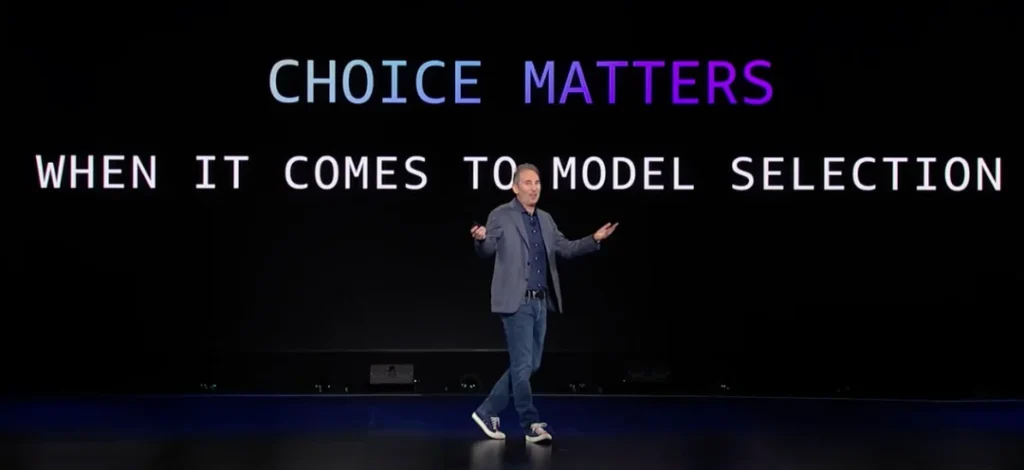
SEATTLE — The defining narrative of the contemporary artificial intelligence landscape has decisively shifted from a singular pursuit of raw capability to a nuanced calculus of choice, cost, and latency. As frontier models proliferate at a breathtaking pace, developers and enterprise architects no longer ask simply, “How intelligent is the model?” Instead, the prevailing design philosophy centers on a far more granular optimization problem: “Which specific model fits this exact workflow step, at the optimal cost threshold, within acceptable latency constraints?”
This architectural paradigm took center stage last week with a wave of high-profile model integrations on Amazon Bedrock. Amazon Web Services (AWS) announced the immediate availability of OpenAI’s GPT-6 Sol and GPT-6 Luna, alongside Anthropic’s Claude Opus 5.5. Together, these additions represent a major evolutionary leap in how organizations deploy artificial intelligence, offering precise calibration points along the intelligence-versus-efficiency curve while delivering dramatic price-to-performance improvements over their predecessors.
Main Facts
The latest updates to Amazon Bedrock underscore the rapid democratization and specialization of enterprise-grade foundational models. The key developments include:
- OpenAI GPT-6 Sol: Engineered specifically for the demanding, recurring workflows of software development and IT operations (DevOps). It provides advanced reasoning capabilities tailored for complex, multi-step engineering tasks while pricing itself significantly lower than the preceding GPT-5.6 generation.
- OpenAI GPT-6 Luna: Optimized for high-volume, focused, and repeatable enterprise tasks. Luna brings high-speed, cost-effective inference to scenarios requiring massive scale without sacrificing the contextual understanding expected from a frontier-class model.
- Anthropic Claude Opus 5.5: The inaugural release in the Claude 5.5 family. This model introduces advanced token-efficiency, achieving higher output fidelity with fewer tokens than its predecessor, Opus 5. It is heavily tuned for agentic coding workflows and long-running, autonomous operational tasks.
- Strategic Shift in AWS Ecosystem: The platform integration reflects a broader industry movement away from the "one-size-fits-all" mega-model approach, encouraging engineering teams to dynamically route workloads to the most cost-effective model for each specific sub-task within an agentic pipeline.
Chronology of the Rollout
The deployment of these next-generation models on Amazon Bedrock represents the culmination of months of infrastructure optimization and collaborative engineering between AWS, OpenAI, and Anthropic.
Early Preparation and Infrastructure Scaling
Throughout late 2025 and early 2026, AWS steadily expanded its underlying hardware accelerators—incorporating next-generation Trainium and Inferentia chips alongside high-performance GPU clusters—to prepare for the massive computational footprint required by the GPT-6 and Claude 5.5 architectures. Enterprise customers had increasingly signaled a desire to move beyond experimental generative AI deployments toward deeply integrated, production-grade agentic systems that demand low-latency guarantees.
Mid-Week Announcements on Amazon Bedrock
The rollout occurred in a synchronized wave across AWS developer channels.
- OpenAI Integration: AWS engineering teams published documentation and walkthroughs detailing how organizations can leverage GPT-6 Sol and GPT-6 Luna for automated code refactoring, system monitoring, and high-throughput data processing.
- Anthropic Integration: Concurrently, the AWS Machine Learning blog announced the arrival of Claude Opus 5.5, highlighting its capability to handle extended contexts and execute complex, multi-step software engineering projects without degrading token efficiency.
Ecosystem Synchronization
As the models went live, auxiliary services across AWS—particularly in the realms of observability, logging, and security—began rolling out native instrumentation updates. These enhancements were specifically designed to monitor multi-agent workflows running on the new models, providing developers with granular visibility into token consumption, latency bottlenecks, and execution accuracy.
Supporting Data and Technical Breakdown
To understand the impact of these new models, industry analysts and enterprise architects are looking closely at how they alter the unit economics of generative AI deployment.
The Intelligence-Versus-Efficiency Curve
| Model Name | Primary Developer | Target Use Case | Efficiency & Cost Profile |
|---|---|---|---|
| GPT-6 Sol | OpenAI | Complex development, DevOps, reasoning-heavy tasks | Significantly lower pricing than GPT-5.6; optimized for high-complexity steps. |
| GPT-6 Luna | OpenAI | High-volume, repeatable enterprise operations | Cost-effective at massive scale; optimized for rapid, focused execution. |
| Claude Opus 5.5 | Anthropic | Agentic coding, long-running workflows | Greater output per token compared to Opus 5; tailored for autonomous execution. |
Token Economy and Operational Overhead
Historically, running long-running autonomous agents (systems capable of executing dozens of sequential tool calls and code generation steps) incurred prohibitive costs due to compounding token overhead. Claude Opus 5.5 directly addresses this bottleneck. By optimizing internal attention mechanisms and prompt handling, it achieves comparable or superior logical synthesis while consuming fewer tokens than the Opus 5 generation.
Similarly, the dual-model strategy from OpenAI—splitting the workload between Sol and Luna—allows enterprise architectures to implement tiered routing. Routine classification, data extraction, and formatting tasks can be routed to the high-efficiency GPT-6 Luna, preserving the more expensive, reasoning-heavy GPT-6 Sol exclusively for complex architectural decisions and debugging sequences.
Official Responses and Industry Perspectives
Cloud architects and AI researchers have responded enthusiastically to the flexibility introduced by the latest Amazon Bedrock updates.
Daniel Abib, noting the rapid pace of developments within the AWS ecosystem, emphasized the overarching theme defining the current technology cycle: "If there’s one theme that defined last week, it’s choice. The frontier models keep arriving, and the interesting question is no longer just ‘how smart is it?’ but ‘which model fits this step, at this cost, at this latency?’ That’s exactly what landed on Amazon Bedrock over the past few days."

Enterprise technology leaders have echoed this sentiment, pointing out that managing multi-model strategies is becoming a core competency for modern engineering organizations. Rather than locking infrastructure into a single vendor’s flagship model, platforms like Amazon Bedrock allow development teams to dynamically swap underlying engines based on real-time cost-benefit analyses.
Furthermore, industry observers have highlighted the maturation of observability tools. As agentic systems transition from isolated chatbots to interconnected workers capable of modifying production environments, the ability to trace every token, function call, and latency spike across models like Claude Opus 5.5 and GPT-6 Sol has transformed from a nice-to-have feature into a strict enterprise requirement.
Implications for Enterprise Architecture and the Future of AI
The arrival of GPT-6 Sol, GPT-6 Luna, and Claude Opus 5.5 on Amazon Bedrock signals several profound shifts for the enterprise software development lifecycle:
- The Rise of Heterogeneous AI Workflows:
Organizations are moving away from monolithic AI pipelines. Future software architectures will increasingly rely on heterogeneous model chains—where a fast, lightweight model handles initial parsing, a mid-tier model manages execution, and a heavy reasoning model intervenes only when anomalies or complex architectural decisions arise. - Compression of Development Cycles:
With Claude Opus 5.5’s enhanced proficiency in agentic coding, the role of human developers is shifting further toward system design and code review. Automated agents can now sustain longer horizons of independent work without losing context or blowing past budgetary constraints. - Economic Sustainability of AI Integration:
As OpenAI and Anthropic push pricing downward while expanding capabilities, the return on investment (ROI) for enterprise AI projects is improving rapidly. High-volume operations that were previously economically unfeasible due to inference costs are now viable candidates for automation via models like GPT-6 Luna. - Community and Collaborative Growth:
AWS continues to anchor these technological shifts through community platforms like the AWS Builder Center, where developers can share architectural patterns, optimize routing scripts, and access tutorials on orchestrating multi-model environments.
As the AI landscape continues its relentless march forward, the differentiator for modern enterprises will not simply be which model they use, but how intelligently they orchestrate a diverse ecosystem of specialized models to solve complex business problems at scale.