Chaos at the Capital: Cockroach Janta Party’s ‘Sansad Chalo’ March Sparks Nationwide Uproar Over Examination Integrity
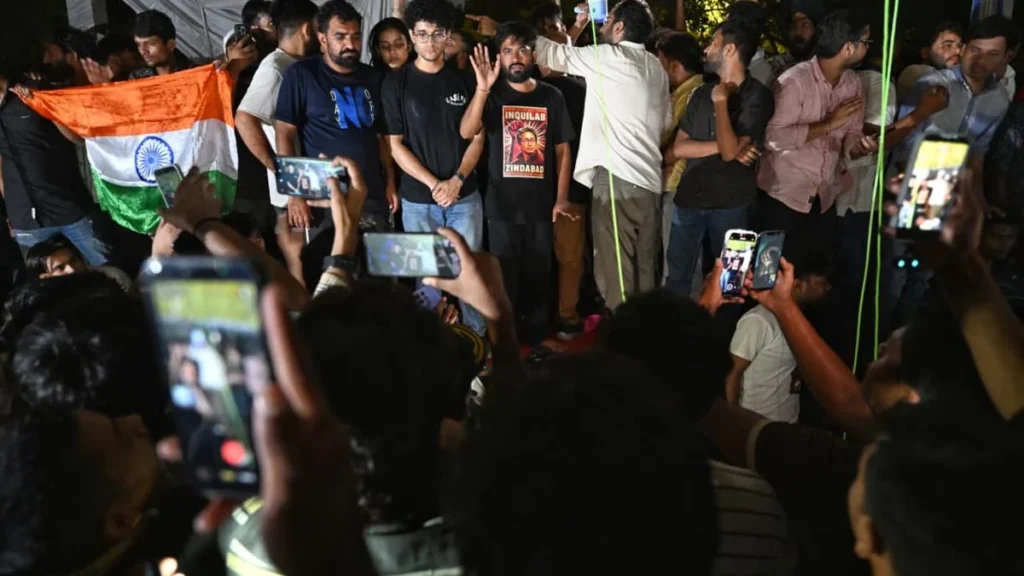
NEW DELHI – In what has emerged as one of the most significant displays of civil unrest in the national capital in recent years, the streets surrounding Jantar Mantar and the Parliament precinct were transformed into a theater of confrontation on July 20, 2026. The "Sansad Chalo" (March to Parliament) protest, spearheaded by the Cockroach Janta Party (CJP), saw thousands of students and activists clash with security forces, resulting in widespread injuries, mass detentions, and a temporary blackout of digital communications in the New Delhi district.
The agitation, centered on allegations of systemic corruption, massive examination irregularities, and the controversial NEET paper leak, has galvanized a youth-led movement that is now demanding the immediate resignation of Union Education Minister Dharmendra Pradhan.
The Spark: A Movement Against Systemic Failure
The Cockroach Janta Party, a nascent political entity that has rapidly gained traction by positioning itself as a voice for disillusioned students, mobilized supporters from across the country to descend upon Delhi. The protesters argue that the sanctity of India’s competitive examination process—specifically the NEET and CBSE board examinations—has been compromised beyond repair.
For months, reports of question paper leaks and opaque marking schemes have plagued the Education Ministry. While government officials have frequently promised investigations, the CJP contends that these measures are mere optics designed to shield top-tier officials from accountability. By choosing to march on the Parliament, the movement aimed to force a direct confrontation with the political establishment, signaling that the era of passive grievance has ended.
Chronology of the Confrontation: July 20, 2026
The day began with a tense calm as protesters gathered at the designated site of Jantar Mantar. However, the atmosphere shifted rapidly as the crowd swelled and began to push toward the restricted zones leading to Parliament.
- 07:00 AM: Thousands of protesters, led by CJP founder Abhijeet Dipke, arrived at Jantar Mantar, setting the stage for a prolonged sit-in.
- 10:30 AM: As the "Sansad Chalo" march commenced, police barricades were breached at multiple entry points. Security forces responded with tear gas shells and lathi-charges to prevent the crowd from reaching the Parliament building.
- 12:00 PM: The situation turned chaotic. Reports of heavy injuries began circulating, and the Delhi Police initiated mass detentions, clearing the protest site by force.
- 02:00 PM: An internet shutdown was enforced across the New Delhi district to disrupt the coordination of protesters and prevent the spread of visuals depicting the police crackdown.
- 04:30 PM: A CJP delegation, led by spokespersons Saurav Das and Ashutosh Ranka, gained access to meet with Union Minister J.P. Nadda.
- 09:00 PM: Following the release of several detained activists, CJP supporters, including founder Abhijeet Dipke, reclaimed the dismantled protest site at Jantar Mantar, signaling that the movement would not be silenced by state force.
The Hunger Strike and Moral Stakes
The protest gained significant moral weight through the involvement of noted environmental activist Sonam Wangchuk. Having already been a central figure in youth-led reform movements, Wangchuk announced that he would continue an indefinite hunger strike in solidarity with the CJP marchers.
In a statement that resonated across social media platforms before the internet blackout, Wangchuk declared, "The police action against peaceful youth leaders is a testament to the state’s fear of transparency. I will extend my fast until the government allows these student leaders to meet with parliamentarians, or until I am permitted to hold these discussions from my hospital bed."
Wangchuk’s involvement has elevated the protest from a localized agitation to a broader national debate on the state of the Indian education system. Other prominent figures, including activist Neha, have remained steadfast in their commitment to the hunger strike, further complicating the government’s ability to dismiss the protest as a fringe event.

Official Responses and the Standoff
The meeting between the CJP delegation and Union Minister J.P. Nadda marked the first direct communication between the protesters and the ruling establishment. According to CJP spokesperson Saurav Das, the meeting was formal but yielded no immediate concessions.
"We clearly communicated our three core demands: the immediate resignation of Dharmendra Pradhan, an independent, time-bound judicial inquiry into the NEET paper leak, and a total restructuring of the National Testing Agency (NTA)," Das stated. "Minister Nadda assured us that he would discuss these demands at the ‘appropriate level.’ However, there were no concrete commitments. We made it clear that the peaceful protesters will not rest until these demands are met."
Critics within the government have labeled the protest an "opportunistic political display," accusing the CJP of attempting to destabilize the academic calendar. However, the scale of the protest and the intensity of the student participation suggest that the grievances are deeply rooted and transcend partisan politics.
Implications for the Education Sector
The events of July 20 serve as a critical inflection point for the Ministry of Education. The accusations regarding the NEET paper leak have shattered the trust of millions of students and parents. If the Ministry fails to address the structural flaws within the examination system, the current unrest may prove to be merely the beginning of a prolonged period of instability.
Structural Failures Identified by Protesters:
- Transparency Deficits: The lack of access to raw data and answer sheets for competitive exams.
- Lack of Accountability: The failure to hold top officials responsible for recurring technical and logistical failures in exam administration.
- Inequality of Access: The argument that the current system favors wealthy candidates who can afford coaching and are shielded from the consequences of administrative failures.
The Path Forward: What Happens Next?
As of the morning of July 21, the situation remains fluid. While the protest site at Jantar Mantar has been partially reclaimed, the threat of further police action looms. The government faces a delicate balancing act: a heavy-handed approach risks alienating the youth demographic, while conceding to the protesters’ demands would be seen as a sign of weakness and an admission of systemic failure within the Education Ministry.
The "Sansad Chalo" march has successfully forced the issue of examination integrity to the forefront of national discourse. As the CJP continues to gather support, the pressure on the Union Government to provide a transparent, time-bound solution will only intensify. For thousands of students, the question is no longer just about the next exam date—it is about whether the system can ever be trusted again.
The coming days will be crucial. Whether the government opts for a dialogue-based resolution or continues the path of suppression will define not only the future of the current protest movement but also the credibility of India’s educational governance for years to come.
Data Summary of the July 20 Protests:
- Primary Demands: Resignation of Education Minister Dharmendra Pradhan, independent judicial probe into NEET irregularities.
- Key Actors: Cockroach Janta Party (CJP), Sonam Wangchuk, Union Minister J.P. Nadda.
- Government Action: Deployment of tear gas and lathi-charges, internet suspension in New Delhi, detention of protesters.
- Current Status: Ongoing hunger strike by key leaders; protest site reclaimed at Jantar Mantar; standoff continues.