Dalal Street’s New Frontier: India’s Tech Startup IPO Boom Reaches Historic Highs
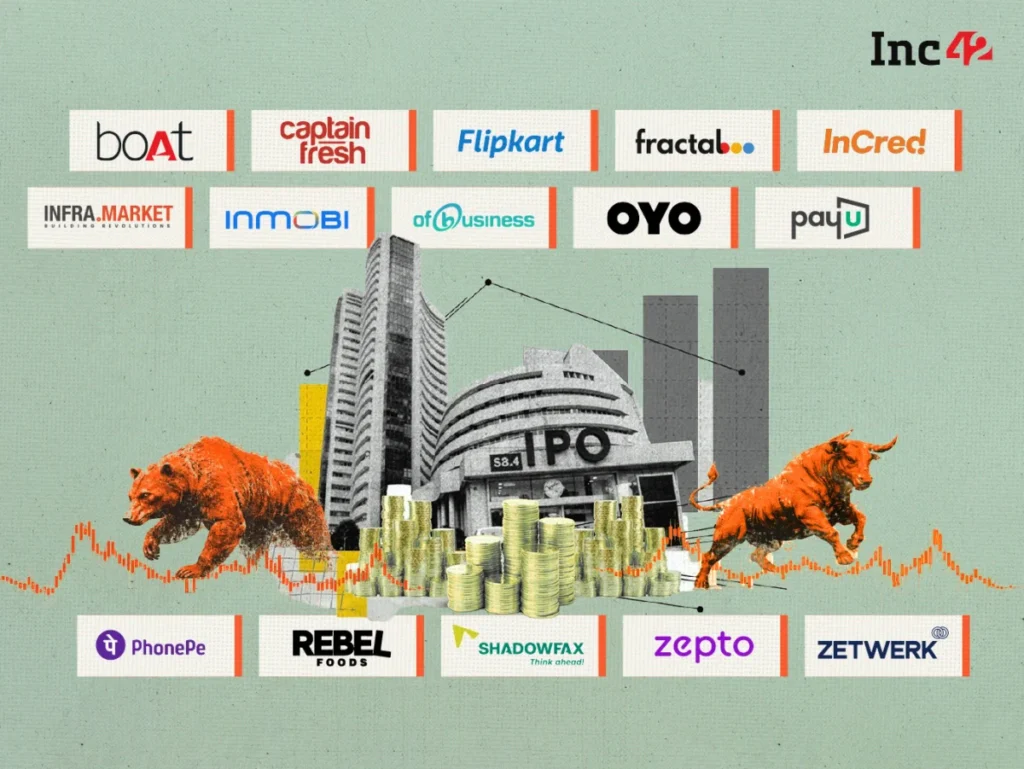
India’s public markets have firmly transitioned into a founder’s paradise. In 2025, Dalal Street witnessed an unprecedented surge in new-age tech listings, with 18 Indian startups making their public market debuts and collectively mopping up a record-shattering INR 41,248 Cr. This frenzy of capital formation has continued relentlessly into 2026, positioning India as one of the world’s most vibrant hubs for startup initial public offerings (IPOs).
The momentum has been propelled by a potent mix of macroeconomic tailwinds, robust GDP growth projections, and progressive regulatory reforms. Most notably, the Securities and Exchange Board of India (SEBI) has streamlined regulatory pathways, notably simplifying Draft Red Herring Prospectus (DRHP) filings to reduce administrative friction. Furthermore, more flexible Employee Stock Ownership Plan (ESOP) guidelines have enabled founders to retain meaningful stakes while taking their companies public.
Retail investors have also turbocharged this market momentum, pushing the total number of demat accounts past the milestone 20-crore mark. Concurrently, Offer for Sale (OFS) components have dominated public issues, supplying vital liquidity and lucrative exits to early-stage venture capital backers.
The Macro Landscape: Tailwinds Meet Operational Discipline
Despite the enthusiasm, 2026 is shaping up to be a year of rigorous recalibration. Public market investors are increasingly pivoting away from unbridled top-line growth toward strict fundamentals, predictable cash flows, and sustainable unit economics.
“IPO-bound startups in 2026 will be increasingly defined by their ability to demonstrate predictable cash flows, sustainable unit economics, and operational discipline rather than headline growth alone,” noted Orios Venture Partners Managing Partner Rehan Yar Khan. “Public market investors will place greater emphasis on governance, capital efficiency, and long-term value creation.”
This sentiment is echoed by institutional leaders. Ashish Kumar, cofounder and general partner at Fundamentum Partnership, observed: “Besides the readiness that startups showed in their unit economics, there is also an increase in founders committing to their businesses for the next couple of decades and growing their enterprises by adding adjacent profit pools—something that the public markets reward handsomely.”
Yet, headwinds remain. Average retail subscription levels are experiencing moderation, and Foreign Institutional Investors (FIIs) have pulled back significantly amid ongoing macroeconomic volatility, geopolitical tensions, and conflicts in West Asia. Despite these external pressures, the domestic capital pool is deeper and more resilient than ever, underpinning a buoyant long-term outlook.
Market Chronology: Key Debuts of 2026
十四 (Fourteen) new-age tech companies have already marked their D-Street debuts so far this year. Among them, several companies have captured investor imagination through stellar listings:
Amagi
Founded in 2008, cloud-based software-as-a-service (SaaS) provider Amagi secured a major regulatory nod before launching its RHP for a fresh issue of ₹816 Cr and an OFS component. Despite closing its public issue with a robust 30.2X oversubscription at a valuation of ₹7,966 Cr, its shares experienced a lacklustre debut, listing at a 12.2% discount on the BSE.
ESDS Software Solution
Backed by ace investor Ashish Kacholia, data centre and cloud solutions provider ESDS Software Solution staged one of the most remarkable market entries of the year. Following an oversubscription of 135.88X, its shares listed on the NSE at a staggering 76.5% premium over the issue price of ₹429. ESDS reported a consolidated net profit of ₹120.8 Cr in FY26, doubling its performance from the previous year.
Moneyview
Fintech unicorn Moneyview made a bumper debut on the exchanges, listing at a 64% premium over its issue price of ₹34. Backed by strong institutional bidding that drove an oversubscription of 98.46X, the digital lender reported robust FY26 operating revenues of ₹3,351.2 Cr.
RentoMojo & LEAP India
Omnichannel rental platform RentoMojo surged 19.42% upon listing after its IPO was oversubscribed 72.88X, brushing aside an eleventh-hour NCLT challenge from a former cofounder. Meanwhile, supply chain solutions provider LEAP India recorded a successful listing at a 4.4% premium following an 8.38X oversubscription.
Comprehensive Startup IPO Pipeline & Status Overview
The pipeline for 2026 and beyond remains heavily populated. Unicorns and mid-stage startups alike are lining up to tap the public markets. Below is an exhaustive structural overview of prominent startups across various stages of their IPO journey:
| Name | Sector | DRHP Status | IPO Size (₹ Cr) | Key Investors |
|---|---|---|---|---|
| AceVector | Ecommerce | Filed / Active | ₹300 Cr Fresh + OFS | SoftBank, eBay, Nexus |
| Acko | Insurtech | Yet To File | $300 Mn – $400 Mn | General Atlantic, Amazon |
| Amagi | SaaS | Listed | ₹1,788.6 Cr | Accel, Norwest, Premji Invest |
| Atomberg | D2C | Yet To File | ₹1,500 Cr – ₹2,000 Cr | Steadview Capital, Jungle |
| Aye Finance | Fintech | Listed | ₹1,010 Cr | Google, ABC Impact, FMO |
| boAt | D2C | Filed | ₹1,500 Cr | Warburg Pincus, Qualcomm |
| Captain Fresh | D2C | To Be Refiled | ₹3,013 Cr – ₹3,443 Cr | Prosus, Tiger Global |
| CarDekho | Auto Tech | Yet To File | ₹3,500 Cr | Peak XV, Google, Hillhouse |
| Cult.fit | Ecommerce | Yet To File | ₹2,500 Cr | Zomato, Accel, Tata Digital |
| Curefoods | Foodtech | Filed | ₹2,582 Cr – ₹3,443 Cr | Iron Pillar, Accel, Chiratae |
| Fibe | Fintech | Filed | ₹750 Cr Fresh + OFS | TPG, Norwest, Eight Roads |
| Flipkart | Ecommerce | Yet To File | Undisclosed | Walmart, Google |
| Fractal | SaaS | Listed | ₹2,833.9 Cr | TPG, Khazanah, Apax |
| InCred Holdings | Fintech | Filed | ₹1,250 Cr Fresh + OFS | KKR, FMO, Paragon Partners |
| Infra.Market | Ecommerce | Filed | ₹5,000 Cr | Tiger Global, Accel, Nexus |
| InMobi | SaaS | Yet To File | ₹9,634 Cr | SoftBank, Kleiner Perkins |
| Kissht | Fintech | Listed | ₹925.9 Cr | Vertex Growth, Endiya |
| Klassroom | Edtech | Listed | ₹39 Cr | ah! Ventures, LetsVenture |
| Kuku | Consumer Internet | Filed | ₹2,500 Cr – ₹3,500 Cr | Vertex, Krafton, IFC |
| LEAP India | Logistics | Listed | ₹2,480 Cr | KKR, Sixth Sense Ventures |
| MakeMyTrip | Travel Tech | Filed | ₹9,521 Cr (OFS Only) | GIC, Elevation Capital |
| Moneyview | Fintech | Listed | ₹1,500 Cr Fresh + OFS | Accel India, Nexus Ventures |
| OfBusiness | Ecommerce | Yet To File | ₹7,600 Cr | Tiger Global, SoftBank |
| OYO (PRISM) | Travel Tech | Filed | ₹6,650 Cr | Microsoft, JP Morgan |
| PhonePe | Fintech | Filed | ₹10,700 Cr – ₹13,400 Cr | Walmart, General Atlantic |
| PlaySimple | Gaming | Filed | ₹3,150 Cr (OFS Only) | Elevation, Chiratae |
| Purple Style Labs | D2C | Listed | ₹680 Cr Fresh Issue | Alchemy Capital, Bajaj |
| Razorpay | Fintech | Filed | ₹4,760 Cr – ₹6,664 Cr | Peak XV, Lone Pine Capital |
| RentoMojo | Ecommerce | Listed | ₹150 Cr Fresh + OFS | Accel, Bain Capital |
| SEDEMAC | Deeptech | Listed | ₹1,087 Cr | A91 Partners, Xponentia |
| Shadowfax | Logistics | Listed | ₹1,907 Cr | Flipkart, Mirae Asset |
| Shiprocket | Logistics | Listed | ₹1,617 Cr | Temasek, Bertelsmann |
| Spinny | Auto Tech | Yet To File | Undisclosed | Tiger Global, General Catalyst |
| Table Space | Coworking | Yet To File | ₹2,300 Cr – ₹2,856 Cr | Hillhouse, Rava Partners |
| Tonbo Imaging | Deeptech | Filed | OFS of 1.81 Cr Shares | Artiman Ventures, Celesta |
| Travelstack Tech | Travel Tech | Filed | ₹250 Cr Fresh + OFS | Accel, Goldman Sachs |
| Turtlemint | Fintech | Listed | ₹882.7 Cr | Peak XV, Nexus, Jungle |
| Zepto | Quick Commerce | Filed | ₹8,010 Cr Fresh + OFS | Y Combinator, General Catalyst |
| Zetwerk | Ecommerce | Yet To File | ₹4,284 Cr | Greenoaks, Lightspeed |
| Zypp Electric | Cleantech | Yet To File | ₹1,890 Cr | ENEOS Group, 100Unicorns |
Supporting Data & Financial Metrics
The evolution of these IPO candidates highlights a fundamental shift in business strategies. Companies are no longer going public on the back of vanity metrics; rather, profitability and efficient capital allocation dictate valuation multiples.
- Revenue Scale: Industrial B2B giants like OfBusiness (FY26 revenue of ₹20,645 Cr) and Flipkart‘s B2B/B2C apparatus demonstrate massive operational volumes. Quick commerce leader Zepto reported a massive leap to ₹22,623.6 Cr in operating revenue for FY26, albeit paired with substantial scaling investments resulting in a net loss of ₹5,905.2 Cr.
- Margin Expansion: SaaS and deeptech players such as Amagi, Fractal, and SEDEMAC have successfully demonstrated positive bottom-line metrics or resilient operational cash flows, attracting institutional interest.
- The Reverse Flip Phenomenon: A striking trend throughout 2025 and 2026 has been the "reverse flip" wave. Major startups including PhonePe, Razorpay, Zepto, and Flipkart have systematically redomiciled their parent entities back to India from offshore jurisdictions like Singapore and the US to align with domestic regulatory expectations and unlock broader public market participation.
Official Perspectives and Market Implications
The broader implications of this ongoing IPO wave extend far beyond individual startup balance sheets. By shifting the centre of gravity for tech capital formation from Silicon Valley to Mumbai and Bengaluru, India is establishing a robust sovereign ecosystem of risk capital.
Industry experts emphasize that governance will remain the ultimate differentiator for upcoming aspirants. As Orios’ Rehan Yar Khan stated, structural resilience and predictable cash flows will separate sustainable enterprises from fleeting market fads.
Furthermore, with heavyweights like OYO (PRISM), Razorpay, and Zetwerk preparing to launch public offerings projected to raise upwards of ₹34,000 Cr in the near term, 2026 is poised to cement its legacy as a landmark epoch for India’s digital economy. The maturation of domestic institutional investors, mutual funds, and retail demat participation ensures that India’s public markets possess the depth required to absorb these capital-intensive listings, securing a self-sustaining cycle of innovation and wealth creation.