From Waste to Wealth: How Rural Entrepreneurs Are Revolutionizing the Coir Industry
By Reema Sharma
Updated: September 14, 2026, 04:49 PM IST
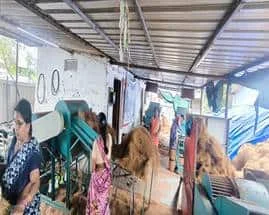
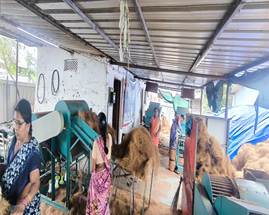
In the heart of India’s rural landscape, a quiet revolution is taking root—one fiber at a time. The Ministry of Micro, Small, and Medium Enterprises (MSME) has recently spotlighted a series of inspiring success stories that exemplify the "Waste to Wealth" philosophy. By transforming discarded coconut husks and coir waste into high-value commercial products, rural entrepreneurs are not only revitalizing a traditional craft but are also proving that sustainable business models can generate significant economic returns.
At the center of this narrative is the transformation of a humble byproduct of the coconut industry into a booming enterprise, with reports indicating that an initial investment of approximately ₹10 lakh can yield an annual turnover of nearly ₹35 lakh.
The Core Concept: Turning Agricultural Waste into Global Commodities
The coir industry has long been a staple of India’s rural economy, particularly in the coastal belts of Kerala, Tamil Nadu, and Karnataka. However, for decades, much of the coconut husk—the outer shell of the fruit—was treated as agricultural waste or burnt, contributing to environmental concerns.
Modern rural entrepreneurs, backed by government-led technological support and credit schemes, are now processing this waste into value-added products. These include coir pith blocks for agriculture, geo-textiles for soil erosion control, sustainable packaging materials, and interior decor products. This shift from raw fiber production to manufacturing sophisticated, market-ready goods is the engine driving the recent surge in profitability.
Chronology of the Transformation: From Subsistence to Scaling
The journey toward this industrial shift has been marked by three distinct phases:
1. The Era of Stagnation (Pre-2015):
For years, the coir sector operated in a disorganized, unmechanized fashion. Small-scale farmers sold husks to middlemen for pennies, while the fiber extraction process remained labor-intensive and low-margin. The lack of standardized machinery meant that high-quality coir pith (often referred to as "cocopeat") was frequently discarded.
2. Policy Intervention and Technological Adoption (2016–2023):
The Indian government, through the MSME Ministry and the Coir Board, began aggressive campaigns to modernize the industry. Schemes like the Coir Vikas Yojana (CVY) provided subsidies for the purchase of modern defibering machines and automatic spinning units. This period marked the transition from manual labor to semi-automated processes, allowing for consistent quality and increased output.
3. The Scaling Phase (2024–Present):
The current landscape is defined by the entry of young, tech-savvy rural entrepreneurs. These individuals have integrated digital marketing, e-commerce, and export-quality packaging into their business models. By tapping into global demand for eco-friendly, biodegradable products, they have moved beyond local village markets to international supply chains.
Supporting Data: The Economics of the Coir Venture
The figures shared by the MSME Ministry provide a compelling blueprint for aspiring entrepreneurs. For a mid-sized coir processing unit, the financial breakdown typically follows this trajectory:
- Initial Capital Investment: ₹10 Lakh. This covers the procurement of machinery (defibering machines, hydraulic baling presses), basic factory infrastructure, and working capital for the first quarter.
- Operational Costs: ₹15–18 Lakh per annum. This includes labor, electricity, raw material procurement (husks), and transportation.
- Revenue Generation: Annual turnovers have been documented in the range of ₹30–35 Lakh.
- Profit Margins: After accounting for overheads, entrepreneurs are reporting net profit margins of 20–25%, a significant improvement over traditional agricultural ventures.
The high demand for "cocopeat"—a natural soil conditioner that retains water and nutrients—in urban horticulture and greenhouse farming globally has been the primary driver for these high returns. As the world shifts away from peat moss (which is environmentally damaging to harvest), coconut coir has emerged as the premier sustainable alternative.
)
Official Responses and Strategic Vision
The Ministry of MSME has hailed these entrepreneurs as "Green Champions." During a recent press briefing, an official spokesperson stated, "The success stories we are seeing are not just about profit; they are about resilience. By utilizing coir waste, these entrepreneurs are solving a waste management problem while creating jobs in areas where migration to cities was once the only path to employment."
The Ministry has pledged to continue supporting these ventures through:
- Skill Development: Training programs focusing on the production of specialized items like coir geo-textiles, which are in high demand for government infrastructure projects (road and hill slope stabilization).
- Credit Facilitation: Simplified access to collateral-free loans under the Credit Guarantee Fund Trust for Micro and Small Enterprises (CGTMSE).
- Market Linkages: Creating digital platforms that connect rural producers directly with large-scale exporters and retailers, eliminating the need for predatory middlemen.
The Broader Implications: Sustainability and Rural Empowerment
The implications of this movement are profound, extending beyond individual business balance sheets.
1. Environmental Impact
The coir industry is a quintessential circular economy model. By utilizing 100% of the coconut husk, these entrepreneurs are preventing carbon emissions associated with burning waste and reducing the need for chemical-heavy soil enhancers in agriculture.
2. Social Empowerment
The sector is particularly inclusive, with a high participation rate from women’s self-help groups (SHGs). In many clusters, women manage the entire production cycle—from fiber cleaning to the creation of finished goods—providing them with financial independence and decision-making power within their households.
3. Mitigating Urban Migration
By creating high-value jobs in rural areas, the growth of the coir industry helps decentralize economic development. When a village can host a facility that generates a ₹35 lakh annual turnover, it creates a local ecosystem of support services—logistics, maintenance, and trade—that keeps the youth employed in their home regions.
Overcoming Challenges: The Road Ahead
While the "waste-to-wealth" narrative is overwhelmingly positive, the MSME Ministry acknowledges that challenges remain. These include:
- Energy Costs: The power-intensive nature of processing machinery can eat into profit margins. The Ministry is currently encouraging the adoption of solar-powered processing units.
- Logistics: The cost of transporting bulky raw husks remains a hurdle. To address this, the government is promoting "Cluster-based Development," where processing units are situated near large-scale coconut plantations to minimize transit costs.
- Standardization: To compete in global markets, small entrepreneurs must adhere to strict quality standards. The Coir Board is actively providing certification support to ensure that products meet international specifications.
Conclusion: A Blueprint for the Future
The success of these rural entrepreneurs serves as a vital lesson for India’s economic growth strategy. It underscores the fact that the most sustainable businesses are often those that look at the ignored corners of our economy—the waste, the byproducts, and the traditional crafts—and apply modern innovation to them.
With an investment of just ₹10 lakh, these individuals are not just building businesses; they are building a sustainable future. As the MSME Ministry continues to highlight these stories, the message is clear: the path to a $5 trillion economy will be paved by those who can find value where others see only waste.
For aspiring entrepreneurs, the coir industry offers a low-risk, high-impact opportunity. It is a sector where profitability aligns perfectly with ecological responsibility, proving that in the new India, the most successful business ideas are the ones that give back to the earth as much as they take from it.