Global Open-Source Education: How WordPress Initiatives Are Empowering Students Across Four Continents
Main Facts
In July, a quiet revolution in open-source education accelerated across the globe. Powered by two primary initiatives—WordPress Campus Connect and WordPress Credits—thousands of students from Bangladesh to Costa Rica, Spain, and Uganda discovered that building for the web is no longer reserved for elite computer science graduates.
The scope of these programs is as diverse as the geographies they touch:
- Massive Output: In Bangladesh alone, students across two campuses in Kishoreganj built a staggering 108 functional websites over a two-week period in July.
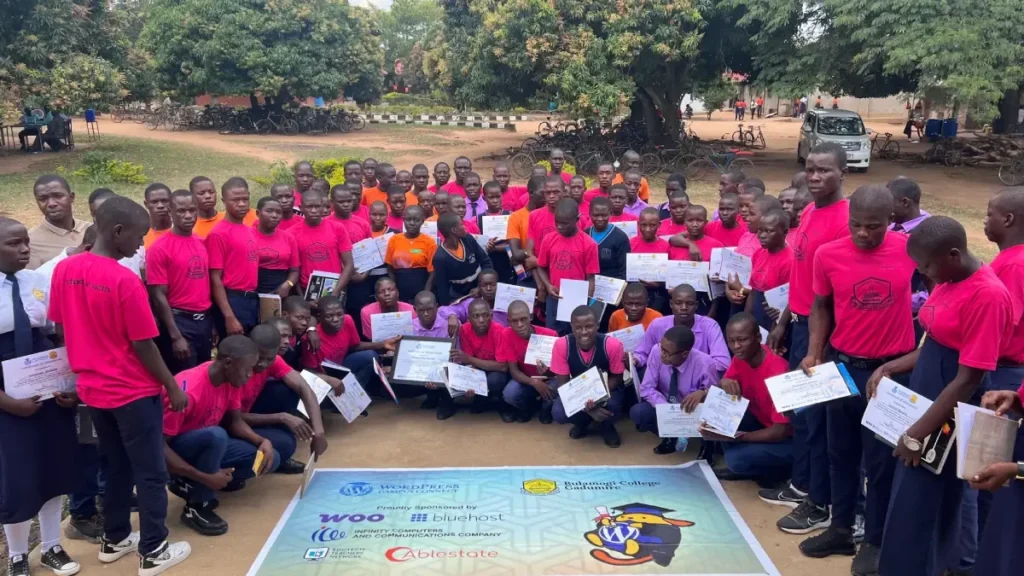
- Overcoming Adversity: In eastern Uganda, a scheduled WordPress workshop at Bulamogi College Gadumire faced a total blackout with no electricity. Rather than canceling, the organizers transformed the limitation into an energized, blackboard-driven question-and-answer seminar for over 100 eager learners.
- Peer-to-Peer Mentorship: In Costa Rica, university students from Universidad Fidélitas stepped into the role of educators, teaching a tailored WordPress curriculum to high school girls at an MIT-affiliated STEM camp, subsequently publishing a fully replicable open-source guide for future workshops.
- Institutional Scale: The WordPress Credits program, which places students in mentored internships contributing directly to the WordPress core software while earning academic credit, saw its graduate count climb to 226 in July (up from 199 in June). The initiative now partners with 38 academic institutions across 16 countries.
None of these students paid a registration fee to participate, and the vast majority had zero prior experience in web development or coding. By lowering the barrier to entry, these education initiatives are democratizing digital literacy and proving that open-source software can act as a powerful engine for local economic opportunity.
Chronology of July 2026 Initiatives
The month of July proved to be one of the most active periods in the history of WordPress educational outreach. The timeline of events highlights how quickly these decentralized programs are expanding:
Early July: The Kishoreganj Blitz in Bangladesh
Organizer Muhibul Haque spearheaded a two-week educational drive across two distinct institutions in Kishoreganj, Bangladesh.

- Session One: Students at Kishoreganj University successfully engineered 38 websites from scratch.
- Session Two: Traveling more than 80 kilometers to attend as a guest speaker, Shipon Karmakar joined Haque at the Kishoreganj Polytechnic Institute, where students constructed nearly 70 additional sites. Total participation for the series surpassed 150 students, with additional institutions slated for upcoming sessions.
Mid-July: Vocational Innovation in Spain
In Mataró, Spain, Josep Morán conducted two intensive four-hour sessions for 100 vocational students at Escola Pia Sta. Anna. Utilizing WordPress Playground and artificial intelligence tools, the students successfully built and deployed a working plugin designed to calculate optimal shore-fishing times for the local coastal city.
Late July: Adapting to the Dark in Uganda
On July 29, organizer Moses Ssebunya, alongside first-time volunteer Mariam Nairuba, arrived at Bulamogi College Gadumire in Kaliro, eastern Uganda. Originally arranged by Nairuba—a former student of the institution—the event was met with an unexpected crisis: the Director of Studies announced there was no electricity to power the school’s computer lab. Abandoning the digital slides, the team pivoted to an interactive blackboard session that engaged more than 100 students in a vibrant discourse on digital security, open-source philosophy, and web development pathways.
Late July: Peer Teaching and Localization in Costa Rica
Rita Robles Loaiza coordinated two groundbreaking pilots in Central America:
- The STEM Pilot: Three students from the second WordPress Credits cohort at Universidad Fidélitas delivered a hands-on workshop to 40 high school girls during a "Patrones Hermosos" camp (run by Tecnológico de Monterrey and MIT).
- The Localization Effort: Thirteen students at Liceo Experimental Bilingüe José Figueres Ferrer began working alongside the Costa Rican Spanish Polyglots team to translate WordPress core elements into es_CR, fulfilling community service requirements while permanently shaping the digital landscape of their home country.
Supporting Data and Metrics
The rapid expansion of WordPress educational programs is underpinned by concrete participation metrics and institutional partnerships. The following data points illustrate the reach of Campus Connect, WordPress Credits, and associated student clubs:
| Metric Category | Current Statistics | Growth Trend |
|---|---|---|
| WordPress Credits Graduates | 226 total graduates | Up from 199 in June 2026 |
| Global Institutional Partners | 38 partner institutions | Spanning 16 countries worldwide |
| Kishoreganj Output (Bangladesh) | 108 websites built | Achieved over a two-week period |
| Ugandan Workshop Engagement | 100+ learners | Conducted entirely off-grid via blackboard |
| Costa Rican STEM Workshop | 40 high school girls | 100% satisfaction rating reported |
Beyond these specific milestones, the broader open-source ecosystem benefits directly from these contributions. Because WordPress powers over 40 percent of the entire internet, student contributions through the Credits program do not amount to superficial classroom exercises; they represent genuine patches, translations, and feature developments integrated into global enterprise software.

Official Responses and Perspectives
The human impact of these programs is best understood through the reflections of the organizers, educators, and students who experienced them firsthand.
When faced with the power outage at Bulamogi College Gadumire in Uganda, the organizers noted the sudden, explosive energy in the room once the floor was opened to questions. Rather than delivering a top-down lecture, the volunteers found themselves fielding rapid-fire inquiries regarding website security, hosting costs, and the feasibility of rural students becoming professional developers. The event concluded with the school’s Head Teacher proudly accepting a Certificate of Appreciation before the governing body.
In Spain, the feedback from vocational students at Escola Pia Sta. Anna emphasized practical utility. Faculty and participants alike pointed to two major takeaways: the tangible certificate of completion, and the realization that the digital skills acquired mapped directly onto existing jobs within the local economy.
Rita Robles Loaiza, reflecting on the Costa Rican pilots, emphasized the philosophy of sustainable scalability. By having university students teach high schoolers, and subsequently documenting the exact methodology into a replicable open-source guide, the program ensures that local communities are never perpetually dependent on external volunteers.
"The students who just learned this are the best people to teach it next," Loaiza explained in her Make WordPress community report, highlighting a decentralized model that can be deployed anywhere in the world at zero financial cost.

Implications for Global Digital Education
The success of the July 2026 education initiatives points toward a larger, more inclusive future for digital skills training. Traditional technology education models often stumble over prohibitive costs, rigid proprietary software licenses, and an over-reliance on stable, modern infrastructure. The WordPress Education framework bypasses these barriers through three core pillars:
- Zero Financial Cost: By relying on open-source software, free community curricula, and volunteer mentors, schools in lower-income regions or rural areas can access top-tier digital literacy frameworks without institutional budgets.
- Infrastructure Resilience: As demonstrated in Uganda, the underlying philosophy of open-source—problem-solving, collaboration, and inquiry-based learning—can survive the loss of electricity, projectors, and laptops, transforming a logistical failure into a memorable pedagogical triumph.
- Real-World Relevance: Programs like WordPress Credits ensure that education is not isolated from industry. Students graduate not merely with a conceptual understanding of computers, but with verifiable code contributions, translated language packs, and fully functional portfolios that can be leveraged for freelance work or traditional employment.
As detailed in the Monthly Education Buzz Report for July 2026, this momentum shows no signs of slowing. Upcoming initiatives feature self-organized student runs at institutions like the Kyoto University of Advanced Science in Japan and newly formed student clubs in Dhaka taking charge of their own campus events.
For schools, universities, and community leaders interested in bridging the digital divide, these programs offer a turnkey solution: ready-made curricula, structured mentorship, and an invitation to help build the open web.