Global Open-Source Education: How WordPress Initiatives Are Empowering Students Across Four Continents
By Global Education Desk
Published in partnership with Open Source Community News
Main Facts
In an era where digital literacy is no longer a luxury but a fundamental economic requirement, global open-source education initiatives are bridging the gap between traditional classrooms and real-world technology markets. Driven by grassroots volunteers, dedicated academic institutions, and passionate learners, programs like WordPress Campus Connect and WordPress Credits are reshaping how the next generation interacts with the web.
The scope and scale of these initiatives achieved remarkable milestones in July alone. Across diverse geographical landscapes—from the bustling academic hubs of Bangladesh and the rural classrooms of eastern Uganda to high-tech youth camps in Costa Rica and vocational workshops in Spain—thousands of students engaged in hands-on web development without paying a single cent.
Key highlights from the July reporting period include:
- The Kishoreganj Surge: Students across two separate campuses in Kishoreganj, Bangladesh, built an astounding 108 functional websites in a span of just two weeks.
- Expanding Impact: The WordPress Credits program—which places students in mentored internships where they contribute directly to the core software while earning academic credit—saw its graduate count rise to 226 in July, up from 199 in June. The initiative now actively collaborates with 38 partner institutions spread across 16 countries.
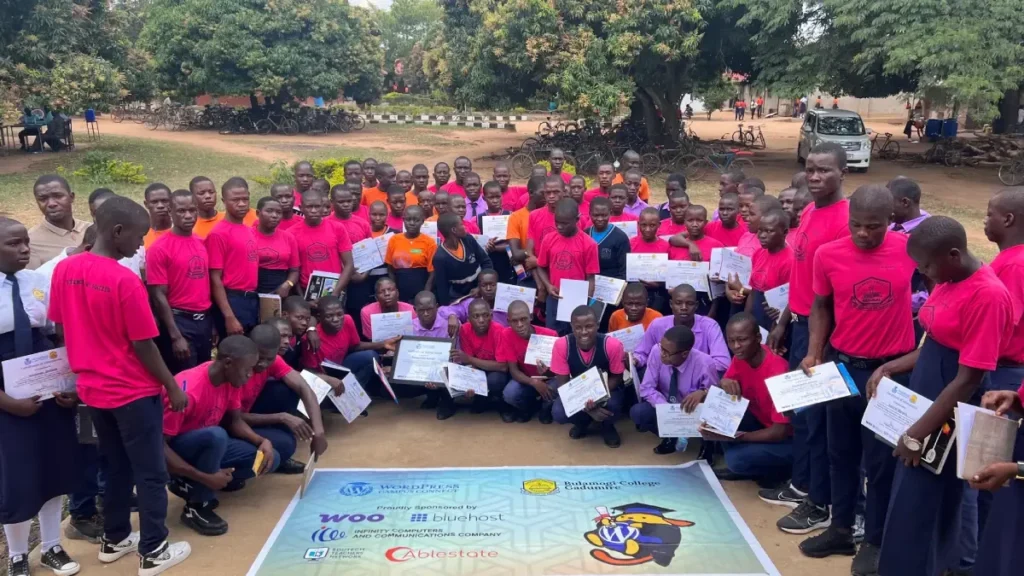
- Resilient Learning: In eastern Uganda, a workshop at Bulamogi College Gadumire proceeded successfully for over 100 learners despite an unexpected total lack of electricity, transforming a logistical challenge into an engaging, interactive blackboard seminar.
- Peer-to-Peer Empowerment: In Costa Rica, university students designed and taught a specialized WordPress curriculum to high schoolers, subsequently publishing a fully replicable guide to allow educators worldwide to duplicate their success.
Chronology of July’s Global Initiatives
The momentum behind these educational programs unfolded rapidly over the course of July, illustrating how localized passion can generate worldwide educational waves.
Early July: Bangladesh and the Kishoreganj Sprint
The month kicked off with a massive push in Bangladesh. Organized by local community leader Muhibul Haque, the WordPress Campus Connect program rolled out across two distinct educational institutions within a fortnight.

- Session One: Students at Kishoreganj University rolled up their sleeves and successfully deployed 38 fully functional websites.
- Session Two: Shortly thereafter, at the Kishoreganj Polytechnic Institute—where guest speaker Shipon Karmakar traveled over 80 kilometers to support the event—students built nearly 70 additional sites.
To date, the Kishoreganj series has engaged more than 150 student participants, with plans to expand to two additional institutions.
Mid-July: Technological Innovation in Spain and Adaptability in Uganda
Moving to Europe, Josep Morán directed two intensive four-hour vocational sessions for 100 students at Escola Pia Sta. Anna in Mataró, Spain. Utilizing WordPress Playground and cutting-edge AI assistance, these vocational students successfully engineered a working plugin designed to calculate optimal shore-fishing times for their local municipality.
Simultaneously, preparations were underway for a uniquely challenging workshop in Kaliro, eastern Uganda. Initiated by former student Mariam Nairuba and organized alongside Moses Ssebunya, the team arrived at Bulamogi College Gadumire on July 29 to find over 100 eager learners waiting—and zero electrical power. Adapting instantly, the instructors transformed the projector-and-laptop seminar into a dynamic, dialogue-driven blackboard workshop.
Late July: Costa Rican STEM Empowerment and Polyglot Projects
Closing out the month, Rita Robles Loaiza published two major pilot reports from Costa Rica highlighting peer-led instruction.
- First Pilot: Three students from the second WordPress Credits cohort at Universidad Fidélitas designed a specialized workshop for 40 high school girls participating in Patrones Hermosos—a prestigious science and engineering camp brought to Costa Rica by Tecnológico de Monterrey and MIT.
- Second Pilot: Thirteen students at Liceo Experimental Bilingual José Figueres Ferrer embarked on a longer-term community service project, partnering with the Costa Rican Spanish Polyglots team to translate WordPress core into es_CR.
Supporting Data and Institutional Metrics
The success of these global programs rests on a solid framework of institutional partnerships, standardized yet flexible curricula, and measurable student outcomes.
Program Architecture
WordPress educational efforts are generally divided into three core pillars:

- WordPress Campus Connect: Designed for schools and universities, this initiative provides local volunteers with a ready-made, standardized curriculum. Every student who completes the course receives an official certificate of completion.
- WordPress Credits: A more advanced academic integration. Students work under the direct mentorship of seasoned open-source contributors, writing code and documentation for the WordPress platform—which powers over 40 percent of the entire internet—in exchange for official university credits.
- Student Clubs: Campus-based organizations that provide a structural framework for learners to continue meeting, coding, and collaborating long after a single workshop has concluded.
Growth Metrics (As of July)
- Total Credits Graduates: 226 active graduates (up from 199 in June).
- Global Reach: 38 partner institutions actively participating.
- Geographic Spread: Programs currently operating across 16 countries.
- Participant Satisfaction: Reported satisfaction rates for specialized workshops, such as the Costa Rican STEM camp, frequently hit 100 percent.
Official Responses and Participant Perspectives
The psychological and professional impact of these workshops on students and educators alike has been profound. For many participants, these sessions represent their very first interaction with professional software development.
"The room exploded," organizers noted in their official recap of the powerless workshop at Bulamogi College Gadumire. When instructors asked students what they wanted to know about the web, hands shot up across the room. Learners eagerly questioned whether WordPress was truly free, how web security operated in practice, and—most importantly—whether rural students could realistically grow up to become professional software developers.
Faculty members and administrative heads have similarly praised the alignment between open-source education and local job market demands. In Spain, both students and faculty emphasized two major takeaways from their plugin-building sessions: the tangible certificate of completion they earned, and the immediate realization that the digital skills they acquired map directly onto existing, well-paying regional jobs.
Furthermore, student instructors have noted a unique multiplier effect when teaching peers. By empowering university students to instruct high schoolers—as seen in the Patrones Hermosos partnership in Costa Rica—the programs build not only technical capability but also public speaking, leadership, and instructional design skills.
Implications for the Future of Open Source and Digital Literacy
The remarkable success stories emerging from Bangladesh, Uganda, Costa Rica, Spain, and beyond carry significant implications for the future of global technology education.
Democratizing Digital Access
Traditional computer science education is frequently hindered by expensive software licenses, proprietary barriers, and rigid institutional overhead. By leveraging open-source ecosystems like WordPress, these initiatives bypass financial gatekeeping. Students from economically disadvantaged backgrounds or rural areas—such as those at Bulamogi College Gadumire—gain equal access to enterprise-grade publishing and development tools.

Bridging the Global Talent Gap
The modern digital economy demands workers who understand not just how to consume digital content, but how to build, secure, and maintain digital infrastructure. Programs that integrate students directly into open-source contributions (such as the WordPress Credits initiative) serve as an invaluable pipeline into the tech sector. Contributors build verifiable public portfolios long before they graduate, drastically improving their employability in local and remote markets alike.
Scaling Through Replicability
One of the most sustainable aspects of the July initiatives was the emphasis on documentation. When Costa Rican university students formalized their high school workshop into a replicable guide, and when Spanish vocational students documented their AI-assisted plugin development, they created blueprints that can be executed anywhere in the world. This decentralized model ensures that the movement can scale exponentially without requiring central administrative oversight for every new workshop.
Looking Ahead
As detailed in the Monthly Education Buzz Report for July 2026, the momentum shows no signs of slowing down. Upcoming reports highlight entirely student-run Campus Connect programs at institutions like the Kyoto University of Advanced Science, as well as newly formed student clubs in Dhaka taking the initiative to organize their own campus events.
By placing the tools of the global web directly into the hands of students—regardless of whether they have reliable electricity, expensive hardware, or prior coding experience—the WordPress education community is actively proving that the future of the internet belongs to anyone willing to build it.