Guarding the Silicon Frontier: India Warns of Geopolitical Risks and Cyber Threats Amid Semiconductor Surge
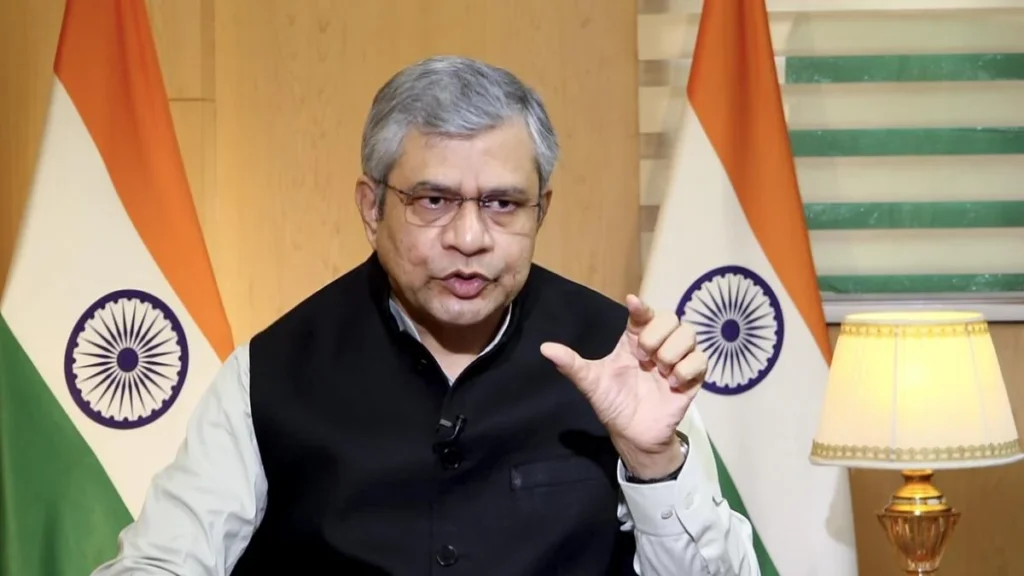
NEW DELHI — As India rapidly ascends to become a vital pillar in the global semiconductor ecosystem, Union Minister for Electronics and Information Technology, Ashwini Vaishnaw, has issued a stern warning regarding the emerging geopolitical and cybersecurity risks facing the nation’s burgeoning chip industry.
Speaking in an exclusive interview in New Delhi, Vaishnaw emphasized that India’s strategic emergence as a trusted hub capable of both designing and manufacturing microchips is increasingly perceived as a competitive challenge by established players within the traditional global value chain. Consequently, domestic stakeholders and international partners operating on Indian soil must maintain unyielding vigilance against potential cyberattacks, operational disruptions, and external sabotage.
The minister’s remarks underscore a critical inflection point for the nation. Once heavily reliant on imports and limited to basic assembly, India is actively rewriting its technological destiny. Backed by aggressive policy incentives, multi-billion-dollar investments, and a rapidly expanding talent pool, the country is positioning itself as an indispensable alternative in a world fraught with supply chain fragilities. However, this high-stakes ambition brings unique vulnerabilities, requiring a robust defense framework to safeguard critical national infrastructure.
Main Facts: Securing the Semiconductor Ecosystem
The core of India’s semiconductor narrative rests on its transition from a consumer of technology to a primary producer. Minister Vaishnaw’s recent advisories to industry leaders highlight the complex realities of entering a heavily guarded global market.

- The Geopolitical Reality: India’s rapid integration into the global chip supply chain threatens entrenched international monopolies. Vaishnaw noted that established hubs view India’s rise not merely as a commercial shift, but as a strategic realignment that demands careful mitigation of external risks.
- Call for Enhanced Cybersecurity: Industry players have been candidly advised to fortify their digital and physical architectures. The government has stressed that state-backed or competitor-driven cyberattacks and supply chain interruptions are probable vectors that malicious actors might exploit to derail India’s technological momentum.
- Expanding Horizons: India’s semiconductor mission is no longer restricted to outsourced semiconductor assembly and test (OSAT) facilities. The nation is aggressively scaling up its capabilities in cutting-edge chip design, fabrication (fabs), specialized chemicals, electronic materials, and advanced packaging technologies.
- Commercial Milestones: With multiple manufacturing units already operational—including projects by Micron, Kaynes, and CG Semi—India is proving its execution capabilities on a global scale.
Chronology: The Evolution of India’s Semiconductor Mission
India’s journey toward semiconductor self-reliance has accelerated dramatically over the past several years, shifting from a visionary policy framework to an aggressive, multi-layered industrial execution model.
- December 2021: The Union Cabinet initially approved the Semicon India program with an outlay of ₹76,000 crore to catalyze the establishment of semiconductor and display manufacturing ecosystems in the country.
- Phase I Momentum (2022–2025): The government reviewed and approved 12 major semiconductor manufacturing projects, unlocking cumulative investments exceeding ₹1.64 lakh crore. Commercial production lines began rolling out products from key global and domestic players.
- July 2026: The Union Cabinet greenlit Semicon 2.0, a massive financial and structural evolution of the original program, backed by a staggering outlay of ₹1,27,500 crore designed to foster end-to-end capabilities spanning research and development, materials, specialized equipment, and advanced packaging.
- September 2026 (SEMICON India Event): The nation’s semiconductor ambitions took center stage at a landmark industry showcase in New Delhi. The event served as a magnet for massive foreign direct investment (FDI) and strategic joint ventures, cementing India’s status as a top-tier destination for semiconductor innovation.
- September 19–20, 2026: Minister Ashwini Vaishnaw delivers his candid assessment regarding geopolitical threats and cybersecurity imperatives during a media interaction in the capital, urging immediate risk-mitigation strategies across the board.
Supporting Data: Investments and Industrial Expansion
The viability of India’s semiconductor roadmap is anchored by substantial financial commitments from both the public exchequer and global tech giants. Recent data reveals an unprecedented surge of capital into the domestic tech sector.
- Semicon 2.0 Outlay: The government’s second-phase program boasts an investment allocation of ₹1,27,500 crore, specifically targeted at building resilient domestic supply chains for chip design, raw materials, fabrication plants, and advanced research infrastructure.
- Phase I Production Success: Under the initial rollout, 12 projects absorbed over ₹1.64 lakh crore. Crucially, five of these ventures—highlighted by heavyweights like Micron, Kaynes, and CG Semi—have already transitioned into active commercial production.
- Recent Investment Influx: Government disclosures indicate that approximately ₹1 lakh crore in fresh investment commitments have already been secured under the framework of the second-phase scheme.
- Landmark Deals at SEMICON India 2026:
- Applied Materials: Announced a monumental $5 billion investment plan for India extending through 2035.
- Lam Research: Proposed a ₹10,000-crore investment to strengthen the domestic equipment and engineering ecosystem.
- Tata Electronics: Unveiled plans for a sprawling 363-acre vendor park in Dholera, Gujarat, designed to anchor local component manufacturing.
- Fujifilm: Committed to establishing an $800-crore specialized semiconductor materials manufacturing plant in the country.
Official Responses and Industry Reactions
The government’s transparent approach regarding external vulnerabilities has been met with a pragmatic and proactive response from corporate leaders and industry associations.
According to Minister Vaishnaw, the frank discussions held with industry stakeholders have yielded positive behavioral shifts. Rather than dismissing geopolitical warnings as speculative, domestic and international executives are actively re-evaluating their risk management models.

- Corporate Endorsements: Global corporations setting up operations in India recognize that operating within a strategic growth corridor entails navigating geopolitical crosscurrents. Industry leaders have expressed alignment with the Ministry’s directives, committing to heightened internal security audits and robust infrastructure hardening.
- Collaborative Defense: Experts note that the Indian government is working closely with private entities and academic institutions to build indigenous cybersecurity frameworks tailored specifically for industrial control systems (ICS) and semiconductor fabrication environments.
- Talent and R&D Synergy: Alongside physical security, official policy responses emphasize the cultivation of domestic intellectual property. By fostering deep-tech engineering talent through Semicon 2.0, India aims to reduce its reliance on foreign proprietary systems that could serve as single points of failure or vulnerability.
Implications: Navigating the Geopolitical Tightrope
India’s emergence as a formidable semiconductor player carries profound geopolitical, economic, and technological implications for both the subcontinent and the wider international order.
1. Diversification of Global Supply Chains
For decades, the global chip industry has suffered from acute geographic concentration, leaving supply chains vulnerable to natural disasters, geopolitical tensions, and localized pandemics. By positioning itself as a reliable, democratic, and structurally sound alternative, India offers global tech giants a secure harbor. This diversification enhances global economic resilience while integrating India deeper into Western and allied technological frameworks.
2. Heightened Cybersecurity Imperatives
As Vaishnaw warned, entering the elite club of chip manufacturers inevitably draws the attention of malicious state and non-state actors. Semiconductors are the bedrock of modern defense systems, telecommunications, artificial intelligence, and critical infrastructure. A successful cyberattack on an Indian fab or design house could have cascading international consequences. Therefore, India’s push must be accompanied by state-of-the-art cybersecurity protocols, strict supply chain provenance tracking, and zero-trust operational frameworks.
3. Economic Transformation and High-Value Job Creation
The transition from simple assembly (OSAT) to capital-intensive fabrication and design shifts India’s economic footing upward along the value chain. Initiatives like the Dholera vendor park, combined with multi-billion-dollar commitments from firms like Applied Materials and Lam Research, promise to generate hundreds of thousands of high-paying, high-skilled engineering jobs, cementing India’s status as a global powerhouse in the knowledge economy.

4. Strategic Autonomy
Ultimately, mastering semiconductor technology is a matter of strategic sovereignty. In an era where microchips dictate geopolitical leverage—often referred to as the "new oil"—India’s ability to design, manufacture, and secure its own silicon ensures that its national security and digital future remain self-determined.
As the construction dust settles on new fabs across Gujarat, Karnataka, and beyond, India’s semiconductor journey is proving to be as much a test of geopolitical resilience and cybersecurity fortitude as it is an industrial triumph.