AWS and Open Source Communities Converge at Open Source Summit Korea 2026 and MCP DevSummit Seoul 2026
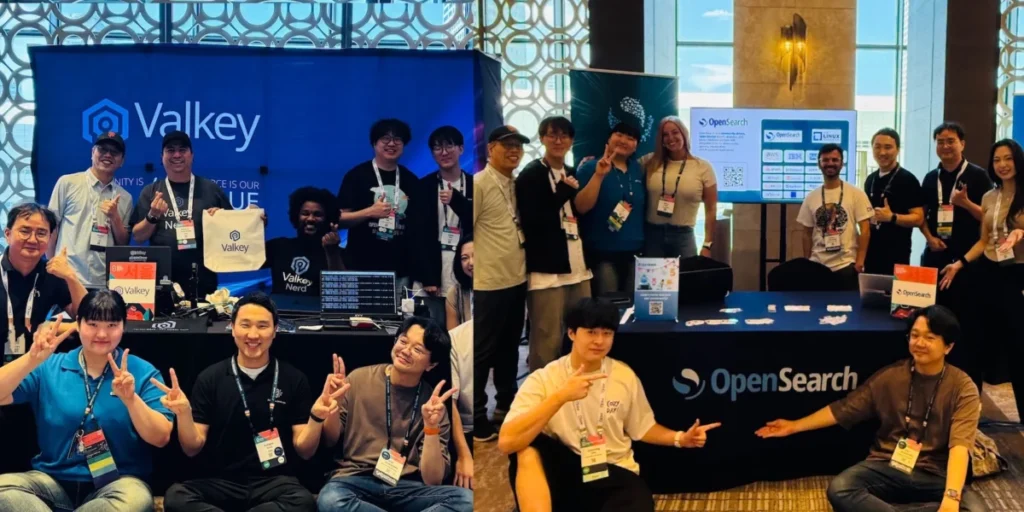
SEOUL, South Korea — In a vibrant display of global open-source collaboration, Amazon Web Services (AWS) contributors recently united with the OpenSearch and Valkey communities at the prestigious Open Source Summit Korea 2026 and the MCP DevSummit Seoul 2026. Spanning four dynamic days, the dual conferences served as an international melting pot for developers, project leaders, enterprise architects, and technology enthusiasts from the Linux Foundation ecosystem.
The gathering underscored the escalating momentum behind community-driven, enterprise-grade software and highlighted AWS’s deepening integration of open-source architectures into its managed cloud infrastructure. Beyond technical workshops and keynote presentations, the event provided a platform for regional developer engagement, featuring active contributions from local Korean OpenSearch community leaders who managed interactive booths and hosted a dedicated user group meetup to foster deeper local networking.
Main Facts: Ecosystem Convergence in Seoul
The joint presence of AWS, OpenSearch, and Valkey at the Seoul summits highlights a broader industry shift toward collaborative, transparent software development.
- The Event Scope: Open Source Summit Korea 2026 and MCP DevSummit Seoul 2026 brought together thousands of open-source developers, contributors, and enterprise adopters under the umbrella of the Linux Foundation.
- Core Technologies Highlighted: The spotlight shone brightly on OpenSearch—an enterprise-grade search and observability suite—and Valkey, a high-performance, open-source key/value datastore optimized for caching, messaging, and primary database workloads.
- Cloud Integration: Both projects have recently seen major upstream version releases that have been rapidly integrated into AWS managed services, specifically Amazon OpenSearch Service and Amazon ElastiCache.
- Community Leadership: Local Korean OpenSearch community volunteers played an instrumental role in driving engagement, proving that localized chapters are vital for the global adoption and sustainability of open-source tools.
Chronology of Innovation: Milestones Leading Up to the Summits
To understand the technological weight of the discussions in Seoul, it is necessary to examine the rapid developmental timeline that preceded the events during the first half of 2026. Both the OpenSearch and Valkey communities introduced landmark version updates that drastically altered performance metrics, resource efficiency, and feature sets.
1. Valkey 9.1 Launch (May 19, 2026)
Valkey kicked off the summer engineering cycle by releasing Valkey 9.1. This version introduced a comprehensively redesigned I/O threading model specifically engineered to maximize modern multi-core processor architectures.
2. Amazon ElastiCache Integration for Valkey 9.1 (June 23, 2026)
Recognizing the immediate enterprise demand for these performance enhancements, AWS made Valkey 9.1 generally available within Amazon ElastiCache for node-based clusters just over a month later. This allowed multi-tenant workloads to immediately capitalize on the updated datastore’s enhanced throughput and security controls.
3. OpenSearch 3.7 Release (June 9, 2026)
OpenSearch pushed the boundaries of enterprise observability and search technology with the launch of OpenSearch 3.7. This release centralized log, trace, and metric analysis into a unified interface while introducing advanced vector retrieval algorithms capable of processing complex AI-driven queries at unprecedented speeds.
4. Amazon OpenSearch Service Integration (July 30, 2026)
AWS integrated OpenSearch 3.7 into its managed cloud infrastructure, enabling organizations to deploy the latest search relevance, Query Insights, and vector search capabilities without the operational overhead of self-managed clusters.
5. Open Source Summit Korea and MCP DevSummit Seoul (August 2026)
Culminating these technological milestones, contributors and maintainers converged in Seoul to demonstrate these exact capabilities live, bridging the gap between upstream open-source code and production-grade cloud deployments.
Supporting Data: Performance Benchmarks and Metrics
The synergy between AWS and these open-source projects is not merely philosophical; it is grounded in hard performance data released alongside the recent version updates. Enterprise workloads demand high throughput, low latency, and efficient memory utilization, metrics that both OpenSearch 3.7 and Valkey 9.1 delivered in abundance.
Valkey 9.1: Efficiency at Scale
Memory footprint and transaction speeds are the lifeblood of high-performance key/value stores. Valkey 9.1 introduced critical optimizations that directly address cloud cost-efficiency:
- Throughput Increase: The redesigned I/O threading model yielded up to a 17% boost in overall throughput, allowing existing cluster infrastructures to handle heavier concurrent request loads without requiring immediate hardware scaling.
- Memory Optimization: For strings under 128 bytes—which make up a massive percentage of typical caching and session-store keys—Valkey 9.1 successfully reduced memory consumption by up to 20%. This memory compression directly translates to lower cloud footprint costs and denser multi-tenant allocations within Amazon ElastiCache.
OpenSearch 3.7: Accelerating AI and Observability
As unstructured data scales exponentially and artificial intelligence drives the adoption of vector embeddings, search speed is paramount. OpenSearch 3.7 introduced architectural refinements that transformed data retrieval:
- Vector Search Acceleration: OpenSearch 3.7 achieves vector retrieval speeds up to 5.5x faster than previous iterations. This exponential leap is critical for enterprises building Retrieval-Augmented Generation (RAG) pipelines, semantic search engines, and generative AI applications.
- Unified Observability: The 3.7 release eliminated data silos by empowering engineers to query, alert, and track Service Level Objectives (SLOs) across logs, traces, and metrics through a singular, cohesive interface, dramatically reducing Mean Time to Detection (MTTD) during production incidents.
Official Responses and Perspectives
The convergence of corporate cloud providers and independent open-source foundations has historically faced scrutiny, but events like the Open Source Summit Korea 2026 demonstrate a thriving, cooperative model.
The Community-First Approach
Leaders from the Linux Foundation open-source projects emphasized that community-driven governance remains the bedrock of their success. The active participation of regional groups—such as the OpenSearch Project Seoul user group—illustrates that open source is fundamentally a human network. Volunteers who stepped up to manage booths and lead networking sessions highlighted that regional participation is vital for translating global software specifications into localized enterprise solutions.

AWS’s Commitment to Open Source
AWS representatives reiterated their ongoing dedication to upstream contributions. Rather than merely packaging open-source software for commercial gain, AWS engineers actively collaborate on core repositories, performance benchmarks, and security enhancements. By integrating updates like Valkey 9.1 and OpenSearch 3.7 into Amazon ElastiCache and Amazon OpenSearch Service shortly after their public releases, AWS bridges the gap between community innovation and enterprise reliability. This ensures that developers can leverage cutting-edge upstream features backed by enterprise-grade security, automated patching, and managed scalability.
Implications for Enterprise Architecture and Developers
The announcements, technological upgrades, and community gatherings witnessed in Seoul carry profound implications for software developers, database administrators, and enterprise cloud architects worldwide.
1. Accelerated AI and Vector Search Adoption
With OpenSearch 3.7 delivering vector searches up to 5.5 times faster, enterprises no longer need to compromise between massive data indexing and real-time AI retrieval. Organizations building modern generative AI applications can seamlessly store and query high-dimensional vector embeddings at scale. When combined with the managed capabilities of Amazon OpenSearch Service, developers can deploy production-ready semantic search and RAG architectures with minimal friction.
2. Cost-Optimized Cloud Caching
Memory efficiency is a primary driver of cloud expenditure. Valkey 9.1’s 20% memory reduction for small strings and 17% throughput enhancement mean that companies running high-volume caching tiers, rate limiters, or message queues can achieve higher performance with fewer cluster nodes. Through Amazon ElastiCache, these efficiencies translate directly into lower infrastructure bills and superior multi-tenant isolation, making high-performance caching more accessible to startups and enterprises alike.
3. The Power of Regional Developer Ecosystems
The enthusiasm displayed at the Open Source Summit Korea and the MCP DevSummit Seoul proves that the center of gravity for software development is increasingly global. Regional meetups and localized community leadership cultivate talent, spark grassroots innovation, and ensure that upstream projects reflect diverse operational use cases.
Looking Forward
As the 2026 developer conference circuit continues, AWS has signaled that its contributors will maintain an active presence at upcoming OpenSearch and Valkey community events across the globe. For builders, architects, and technologists looking to stay at the vanguard of cloud and open-source innovation, engaging with these communities—both online through the AWS Builder Center and in person at global summits—offers an unmatched avenue for professional growth and collaborative problem-solving.