How to Get Recommended by AI: Why Traditional SEO Isn’t Enough in the Age of ChatGPT and Claude
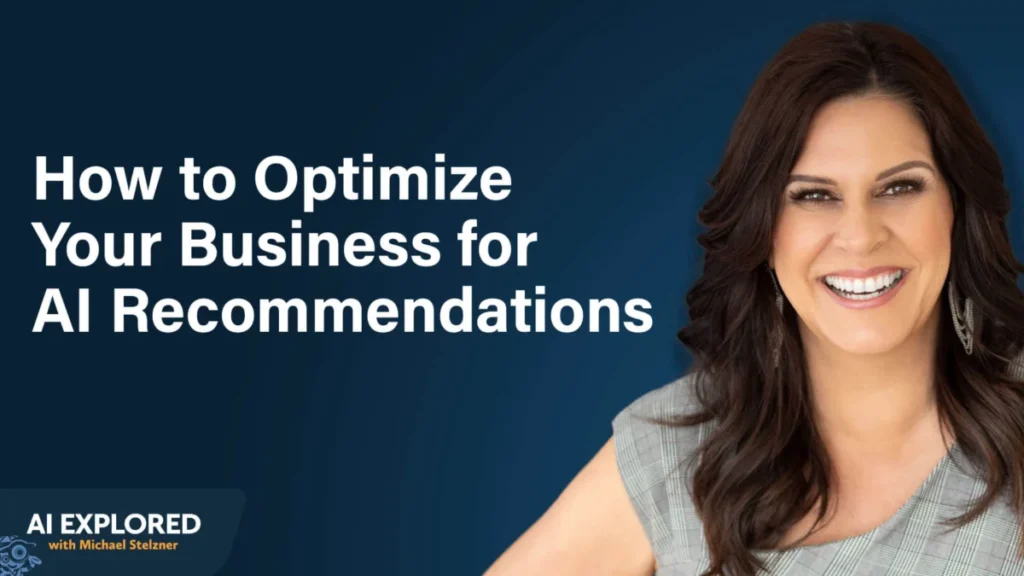
As artificial intelligence platforms like ChatGPT, Claude, Gemini, and Perplexity rapidly transform how consumers discover products and services, a fundamental shift is occurring in digital marketing. Simply being "found" in traditional search engine results is no longer sufficient. Today, businesses must position themselves to be actively recommended by AI matchmakers.
Drawing from insights shared by strategist Vivienne Wagner on the AI Explored podcast—co-created with Michael Stelzner—this article explores a comprehensive, four-step framework designed to align your brand with how modern AI tools evaluate, understand, and pair businesses with high-intent buyers.
Main Facts: The AI Matchmaker Revolution
The digital discovery landscape has evolved past keyword-matching and blue links. AI engines now act as sophisticated matchmakers, synthesizing conversational context across months of user interactions to connect individuals with businesses uniquely suited to their specific life situations or pain points.
- The AI Matchmaker Dynamic: Unlike traditional search engines that rely heavily on exact-match keywords, AI tools build a holistic understanding of a user’s needs over time. They then cross-reference this contextual data with brand ecosystems to provide tailored, highly specific recommendations.
- The "Clear Choice" Framework: To capitalize on this shift, Vivienne Wagner’s agency developed a four-step methodology: Define, Diagnose, Align, and Prove It.
- Ecosystem Consistency: AI does not look at a website in a vacuum. It evaluates a brand’s entire digital footprint—including social media, email marketing, and Google Business Profiles—looking for a unified, unambiguous narrative about who the company is, what it offers, and who it serves.
Chronology: The Evolution from Traditional Search to Conversational AI Discovery
Understanding how we arrived at the era of AI recommendations requires looking at how search behavior has transformed over the past decade.
- Phase 1: The Keyword Era (Early 2010s): Digital marketing was dominated by exact-match SEO, keyword stuffing, and static web pages designed strictly to appease search engine crawlers rather than address human intent.
- Phase 2: Intent-Driven and Conversational Search (Late 2010s to Early 2020s): Search queries grew longer and more natural as voice assistants and mobile devices proliferated. Users began asking full questions rather than typing fragmented search strings.
- Phase 3: The AI Assistant Era (Present Day): Consumers now lean on large language models (LLMs) for complex problem-solving. For instance, instead of searching Google for a chemical skin product (which requires knowing the technical term beforehand), a user might spend months discussing skin irritation with ChatGPT until the AI identifies the root cause and recommends a specific, lesser-known cleanser that fits the user’s criteria.
Supporting Data: Why Clarity Trumps Volume
The mechanics of how AI selects businesses rely heavily on semantic clarity, structured authority, and ecosystem alignment rather than brute-force keyword volume.
- The Problem with Vague Definitions: Businesses that attempt to appeal to "everyone" effectively signal nothing to AI models. For example, a med spa describing its target market as "anyone with skin" provides zero actionable data for an LLM trying to solve a specific consumer ailment.
- The Power of Pain-Point Targeting: Consumer search behavior is rooted in symptoms and emotional pain points (e.g., an adult child losing sleep over a parent’s early signs of dementia) rather than dry, clinical service requirements (e.g., "20 hours of in-home senior care per week"). Brands that structure their content around these real-world frustrations dramatically increase their chances of being matched by AI.
- The Shift in SEO Nomenclature: While new acronyms like AEO (Answer Engine Optimization), AIO (AI Optimization), and GEO (Generative Engine Optimization) have entered the marketing lexicon, the foundational rule remains unchanged: SEO answers three core questions—Who are you? What do you do? Who is it for?
Official Recommendations: The Four-Step "Clear Choice" Framework
To ensure your brand successfully bridges the gap between traditional web presence and AI recommendation algorithms, experts recommend executing the following four-step strategy.
1. Define: Establish Your Brand Positioning via AI Interview
Brands must construct a razor-sharp positioning statement that outlines who they serve, what they offer, and—crucially—who they do not work with.
- Start with the Best 80%: Focus on the clients behind the 80% of work your team genuinely loves doing, or the products that drive 80% of your sales.
- Leverage AI as an Interviewer: Feed an initial draft of your positioning statement into an LLM (such as Claude) with a prompt like: "This is what we think we know about ourselves. What are we missing? Please interview us and ask us other things we should be considering as we decide how to position ourselves in the market."
- Filter Everything Through the Statement: Treat your final positioning statement as a core reference document, vetting every piece of marketing copy against it to ensure absolute consistency.
2. Diagnose: Uncover the Gaps in Your Digital Footprint
Once your positioning is clear, you must evaluate how well your current online presence reflects that reality.
- Run an AI Gap Analysis: Provide your brand positioning statement alongside your website URLs to an AI tool and ask it to identify misalignments, outdated services, or conflicting brand narratives.
- Preserve SEO Value via Redirects: When updating or removing legacy pages for discontinued services, avoid deleting them outright (which generates damaging 404 errors). Instead, properly redirect them or update the copy to explain the pivot.
- Optimize Core Metadata: Keep homepage messaging concise. State what your business does in 70 characters or less, ensuring title tags (ideally 50 to 60 characters) and H1 headings clearly communicate your core value proposition to automated crawlers.
3. Align: Restructure Your Website and Content Ecosystem
Alignment is the remedial phase where you correct the gaps exposed during your diagnostic audit.
- Prioritize Static Service Pages: Ensure your primary service pages firmly establish your stake in the ground regarding your target audience.
- Commit to Ongoing Content: Publish regular blog posts to continuously feed AI models fresh context regarding your subject matter expertise.
- Establish Human Authority: Attribute content to real, named individuals rather than anonymous corporate entities. Create robust author boxes and standalone author pages detailing credentials, experience, and industry affiliations to build algorithmic trust.
4. Prove It: Optimize Your Google Business Profile and Reviews
AI platforms heavily weight verified third-party data sources, making your Google Business Profile and customer reviews critical proof points.
- Fully Complete Your GBP: Write a precise business description, select accurate primary and secondary categories, and treat your profile like an active social media channel by regularly posting updates, product imagery, and testimonials.
- Strategic Review Responses: Never waste a review response with generic pleasantries like "Thanks for the five stars." Instead, use a structured formula that thanks the reviewer while explicitly reiterating your core services, niche specialties, and brand strengths for future buyers—and AI scrapers—to read.
Implications for Marketers and Business Owners
The transition from traditional search engine visibility to AI recommendation engines carries profound implications for the future of digital marketing:
- The Death of Generic Branding: Companies that rely on vague corporate mission statements, stock photography, and catch-all positioning will become invisible to AI tools, which prioritize hyper-specific utility and clear problem-solving capabilities.
- Authority Over Anonymity: Ghostwritten content published under generic corporate monikers will lose ground to transparent, expert-led content backed by verified human credentials (E-E-A-T principles scaled for machine consumption).
- Holistic Marketing Integration: Siloed marketing efforts—where a company’s social media tells one story, its website tells another, and its Google Business Profile tells a third—will actively confuse AI matchmakers, resulting in lost referral opportunities.
Ultimately, getting recommended by AI requires businesses to stop shouting to be the loudest voice in the room and instead focus on becoming the clearest voice. By clearly defining your identity, diagnosing digital discrepancies, aligning your ecosystem, and proving your claims through structured data and reviews, your business can secure its place as a trusted recommendation in the conversational AI era.