AWS Revolutionizes Container Networking with the Launch of Amazon ECS Gateway: A New Era for Microservices Ingress Management
SEATTLE — Managing containerized applications at scale has long presented platform engineering teams with a persistent operational friction point: ingress networking. For years, deploying microservices on the Amazon Elastic Container Service (Amazon ECS) meant that every time a new service was spun up, engineers had to manually or semi-manually provision, wire, and maintain a complex web of infrastructure. This typically included Application Load Balancers (ALBs), AWS Certificate Manager (ACM) certificates, AWS WAF web ACLs, and intricate security group rules.
As organizations scale to hundreds or thousands of containerized services, this per-service operational overhead can rapidly throttle deployment velocity. Furthermore, it introduces significant risks of configuration drift and security misalignments.
Addressing these challenges head-on, Amazon Web Services (AWS) has announced the official launch of Amazon ECS Gateway, a powerful new account-level resource designed to completely streamline and automate ingress networking for containerized workloads. By dynamically provisioning and managing the underlying infrastructure directly within customer accounts, ECS Gateway bridges the gap between infrastructure automation and application developer agility.
Main Facts: Understanding Amazon ECS Gateway
At its core, Amazon ECS Gateway acts as an intelligent, automated intermediary that abstracts the complexity of ingress networking. Instead of forcing platform teams to provision dedicated load balancing infrastructure for every single service, ECS Gateway introduces host-based routing via ALBs.

Under this architecture, up to 25 distinct services can securely share a single Application Load Balancer, radically optimizing infrastructure costs and reducing resource bloat.
Key Architectural Highlights:
- Automated Lifecycle Management: Amazon ECS automatically manages the complete lifecycle of the underlying infrastructure. It provisions the initial ALB when the first service connects, scales out by adding more ALBs as capacity thresholds are reached, and gracefully decommissions them when they are no longer needed.
- Instant DNS Provisioning: The moment provisioning completes, every connected service receives a unique DNS hostname, providing development teams with an immediate, ready-to-use endpoint.
- Many-to-Many Association: A single ECS Gateway can be associated with up to 10,000 ECS clusters, while an individual cluster can support up to five distinct gateway associations (such as separate public and internal gateways).
- Zero Additional Software Cost: Amazon ECS Gateway is available immediately across all commercial AWS Regions where ECS is supported, at no additional service charge. Users pay solely for the underlying AWS infrastructure provisioned in their accounts (such as ALB hours, ACM certificates, CloudWatch logs, and data transfer).
Chronology: The Evolution to Automated Ingress Management
The path to Amazon ECS Gateway is the result of years of feedback from enterprise platform teams striving to find the optimal balance between centralized governance and developer self-service.
- The Early Era of ECS (Manual Configuration): In the early days of container adoption, developers or platform engineers had to explicitly define AWS CloudFormation or Terraform templates for every single microservice’s ingress path. Every deployment required manual target group creation, listener rule updates, and certificate associations.
- The Rise of Controller Patterns: As Kubernetes and custom controllers gained popularity, users began demanding similar levels of reconciliation loops for native AWS services. While tools like the AWS Load Balancer Controller helped bridge gaps for Amazon EKS, ECS users often relied on custom scripts or complex service meshes to handle dynamic routing.
- The Introduction of ECS Gateway: Recognizing the friction inherent in per-service load balancing, AWS engineering teams developed the ECS Gateway concept. Moving away from service-bound networking, AWS engineered an account-level resource model. This model defers infrastructure provisioning until an application service explicitly connects via a gateway connector, ensuring that resources are only created when actual workload demand exists.
Supporting Data & Technical Architecture
To understand how Amazon ECS Gateway functions in a production environment, one must examine its mechanics from creation to deployment.
1. Creating the Gateway
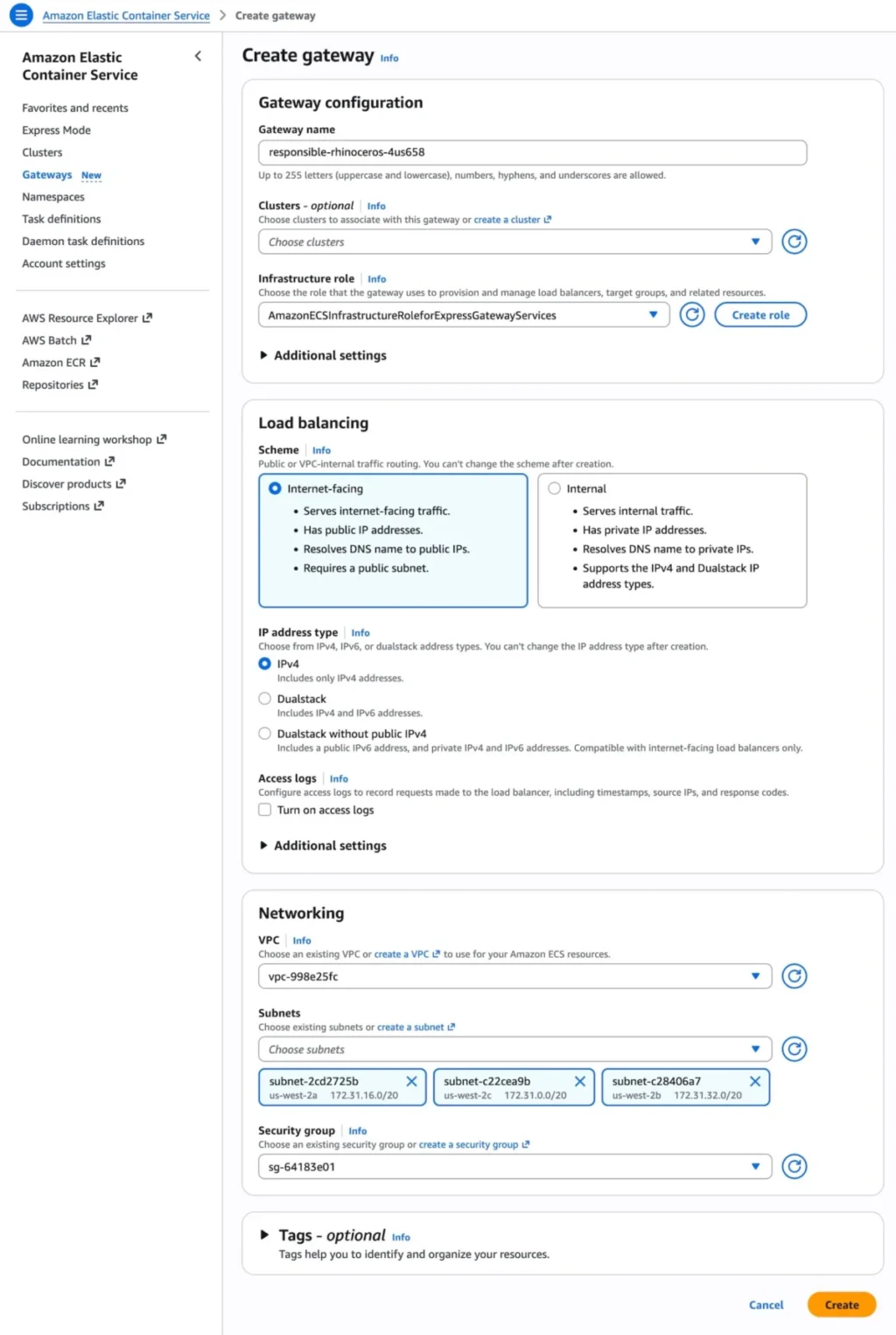
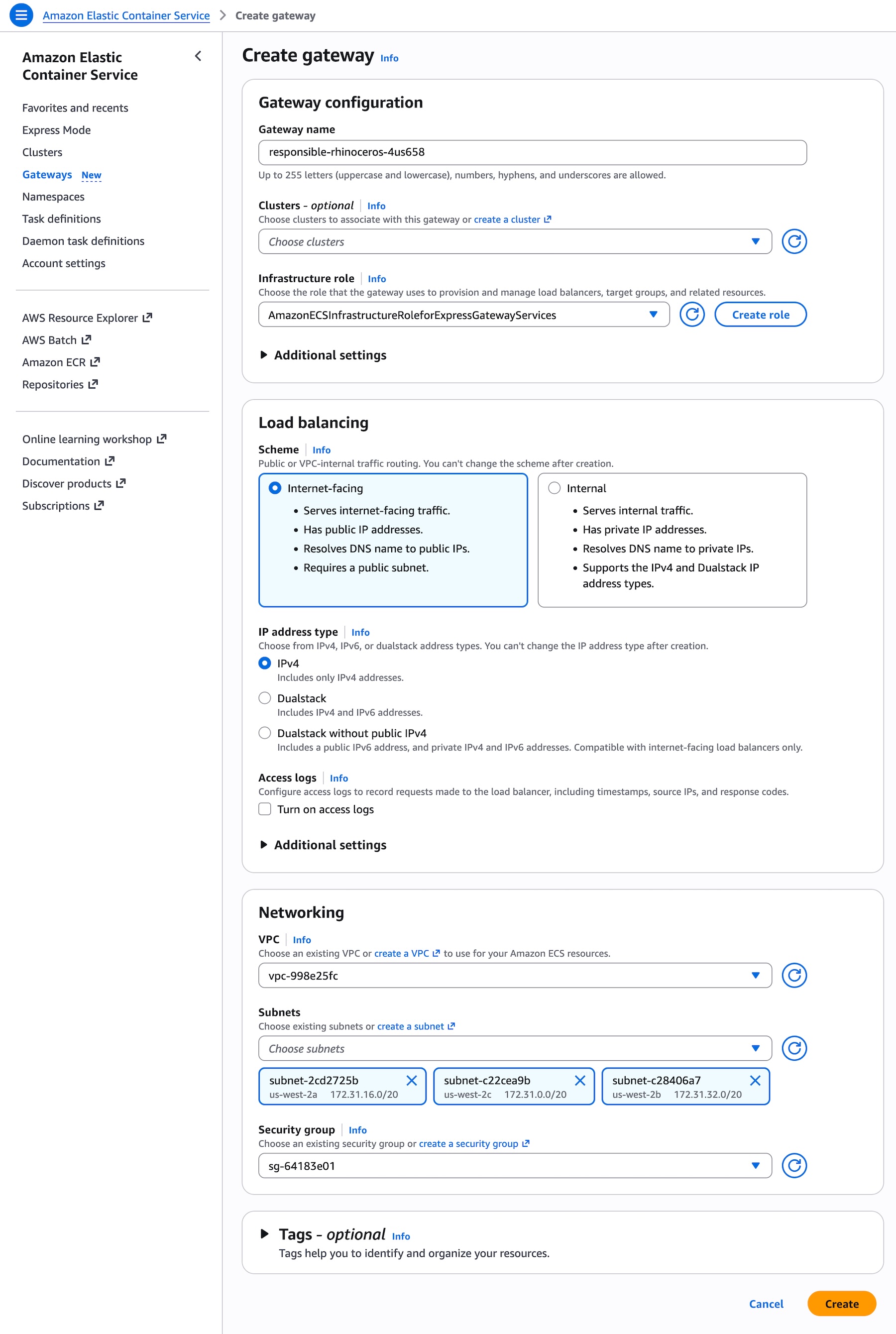
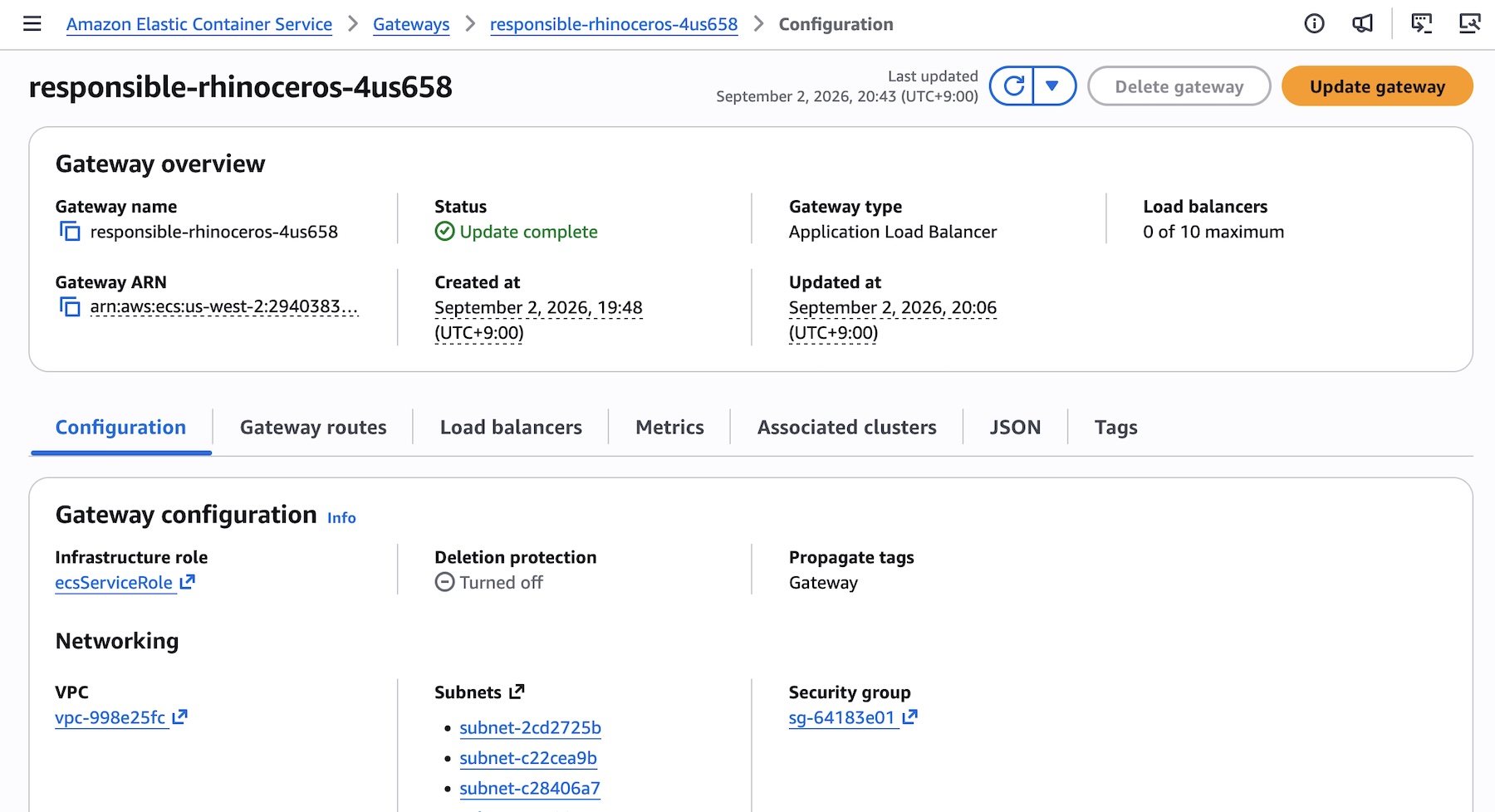
Platform teams initiate the process via the AWS Management Console or the AWS Command Line Interface (AWSCLI). By calling CreateGateway, administrators specify a unique name, an IAM infrastructure role (which ECS assumes to manage ALBs, security groups, and certificates), and a configuration object detailing subnets and traffic schemes.

aws ecs create-gateway
  --name my-team-gateway
  --infrastructure-role-arn arn:aws:iam::123456789012:role/ECSGatewayRole
  --configuration '
    "HostSharedAlb":
      "networkConfiguration":
        "subnets": [
          "subnet-080779f9bd887757a",
          "subnet-03d5b2fead6bc6258",
          "subnet-0861210a397d31252",
          "subnet-06539e194023cb77a"
        ],
        "ipAddressType": "ipv4"
      ,
      "scheme": "internet-facing"

  '
Once established, the gateway is associated with target ECS clusters using the AssociateGatewayWithCluster API call.
2. Service-Level Adoption and Incremental Migration
Application teams do not need to rewrite their entire architecture to benefit from the new feature. By modifying service definitions using CreateService or UpdateService, developers can inject a gateway connector:
aws ecs create-service
  --cluster my-cluster
  --service my-api-service
  --task-definition my-api-service:1
  --gateway-connectors '[ "portName": "api", "filters": "accessTypes": ["PUBLIC"], "healthCheck": ... ]'
For legacy systems already utilizing individual load balancers, ECS Gateway supports an incremental migration path. Both ingress paths can run concurrently, allowing platform engineers to validate the gateway connection before safely decommissioning older load balancer configurations.
3. Behind-the-Scenes Resource Orchestration
When a service connects, Amazon ECS evaluates cluster compatibility based on access types, VPC boundaries, and Availability Zone coverage. For each valid connection, ECS automatically provisions:
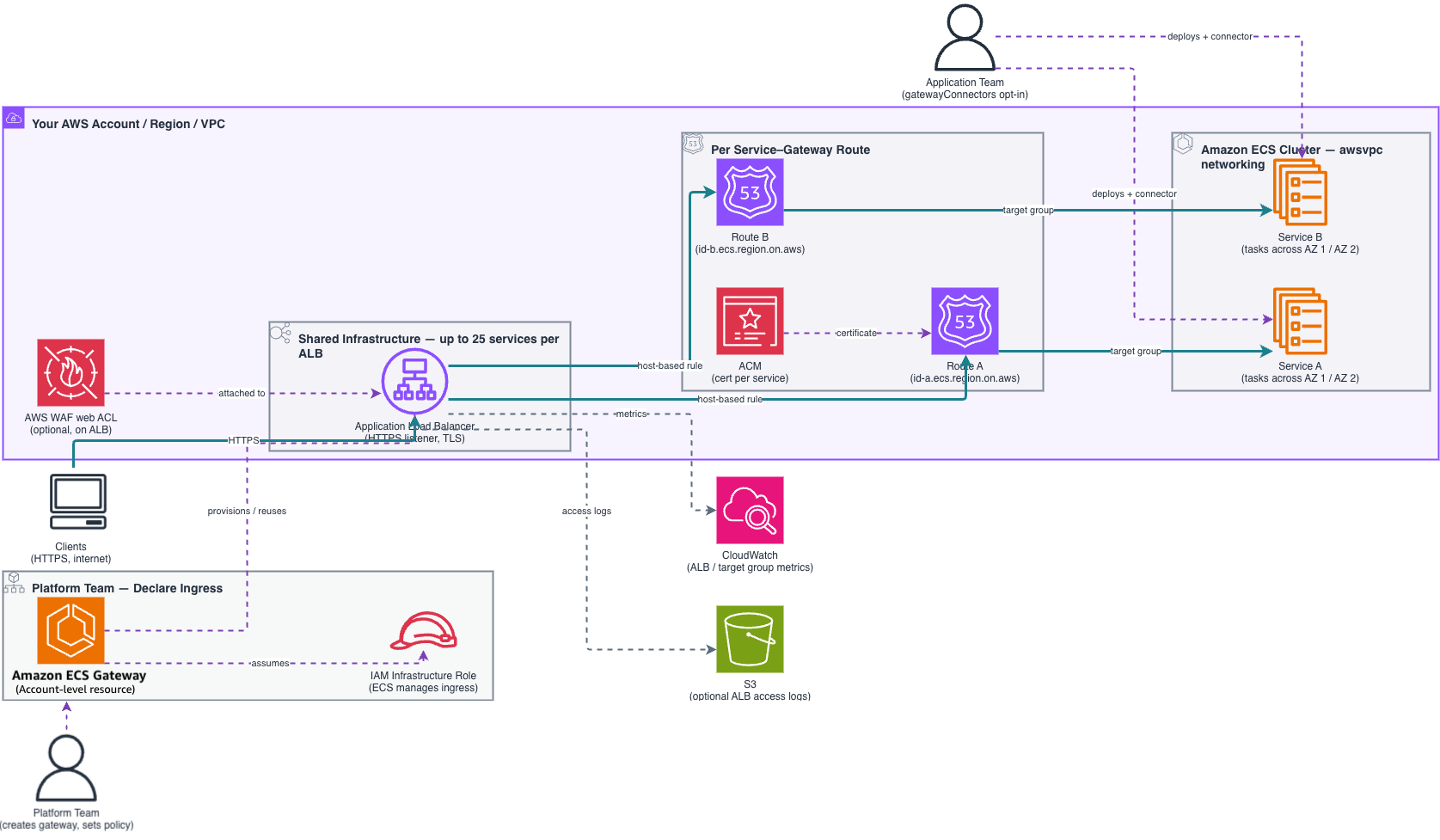
- An ACM SSL/TLS certificate.
- A unique DNS hostname.
- An ALB listener rule that routes traffic for that specific hostname to the service’s target group.
- A tightly scoped service security group allowing inbound traffic exclusively from the ALB security group.
Official Responses & Industry Perspective
AWS leadership and community advocates have emphasized that ECS Gateway marks a philosophical shift in how cloud-native networking should be managed.
Speaking on the release, AWS Principal Developer Advocate Channy Yun highlighted the stark division of labor that the feature enforces. "ECS Gateway introduces a clear separation of responsibilities between platform teams and application teams," Yun noted. "Platform teams establish the security boundaries, subnets, and gateway policies once, while application teams simply attach their services to the shared fabric without ever needing to worry about target groups, certificates, or listener rules."
Early enterprise adopters who tested the feature during its preview phases have echoed these sentiments. Platform engineers managing multi-tenant architectures report that consolidating up to 25 services per Application Load Balancer has resulted in immediate, measurable reductions in AWS infrastructure bills—particularly by eliminating the idle cost of underutilized, per-service load balancers.
Furthermore, AWS has integrated modern tooling into the release. Developers can programmatically create and manage ECS Gateways, query APIs, and search documentation directly from AI-powered coding environments using the AWS MCP Server and associated IDE plugins, signaling AWS’s commitment to developer productivity in the age of AI-assisted engineering.
Implications for Enterprise Architecture and Future Operations
The rollout of Amazon ECS Gateway carries profound implications for enterprise cloud strategies, security postures, and organizational workflows.
1. Eradication of Configuration Drift
In traditional environments, manual updates to load balancers often lead to discrepancies between staging, testing, and production environments. Because ECS Gateway automates the creation of DNS entries, security rules, and certificate mappings as an atomic operation tied directly to the ECS service lifecycle, configuration drift is drastically minimized.
2. Enhanced Security Governance
Security and compliance teams frequently struggle to ensure that every microservice deployed by application developers is properly shielded by Web Application Firewalls and encrypted via valid TLS certificates. By allowing platform teams to configure web ACLs, listener protocols, and IAM execution roles at the gateway level, organizations establish mandatory guardrails. Application teams inherit these robust security defaults automatically when connecting their workloads.
3. Streamlined FinOps and Resource Optimization
Load balancers carry fixed hourly costs regardless of traffic volume. In environments characterized by hundreds of microservices—many of which may experience low or intermittent traffic—maintaining a dedicated ALB per service represents severe financial waste. By enabling high-density, host-based routing across shared ALBs with automated scaling and cleanup, ECS Gateway aligns closely with modern FinOps best practices.
Looking Ahead
As organizations continue to scale their container investments, features that abstract undifferentiated heavy lifting will define the next generation of cloud computing. With Amazon ECS Gateway, AWS has transformed container ingress from a tedious, error-prone manual chore into a streamlined, automated, and cost-effective utility. Platform teams can now focus less on wiring networks and more on delivering business value, secure in the knowledge that their application ingress layer is scalable, resilient, and fully governed.