Huawei’s Next Frontier: Decoding the Rumored Specifications of the Mate 90 Pro Max
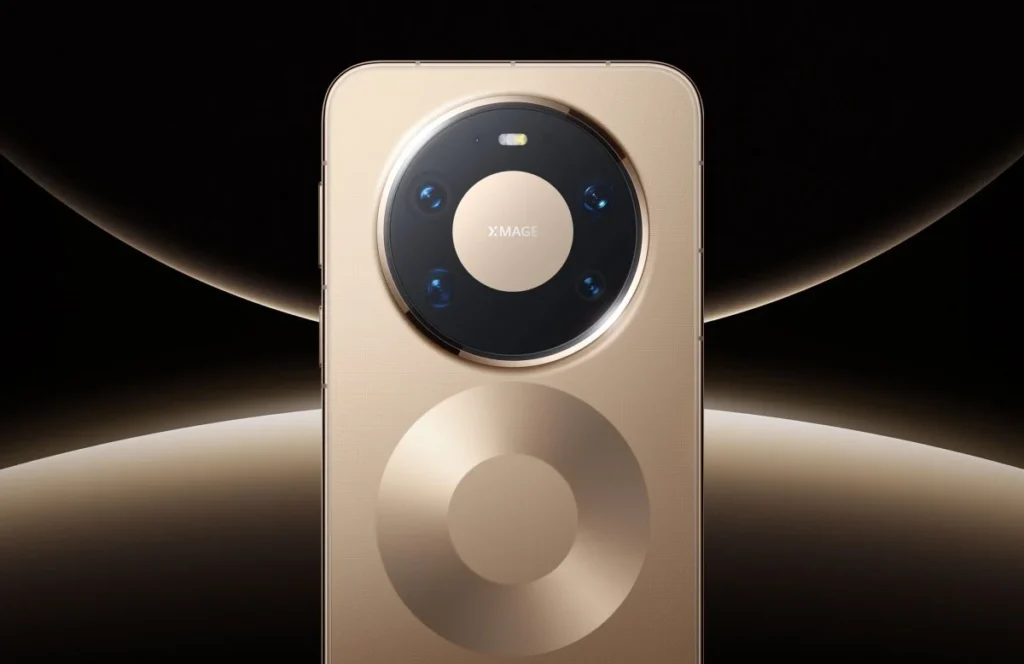
As the mobile industry turns its gaze toward the final quarter of the year, all eyes are on Shenzhen. Huawei, a company that has navigated unprecedented geopolitical headwinds to re-establish itself as a global leader in mobile innovation, is preparing to unveil its next flagship series: the Huawei Mate 90 lineup. While the anticipation surrounding the standard models is high, a new wave of leaks concerning the top-tier "Pro Max" variant has sent shockwaves through the tech community.
According to reports from industry insider Smart Pikachu on Weibo, the Huawei Mate 90 Pro Max is shaping up to be more than just a smartphone; it is positioned as a technological statement piece. From a proprietary silicon architecture to revolutionary imaging systems, the device promises to push the boundaries of what is possible in a handheld form factor.
Main Facts: The Anatomy of a Flagship
The core of the Mate 90 Pro Max rumor mill centers on a confluence of high-end hardware. At its heart lies the Kirin 9050 Pro chipset. This processor, which recently debuted in the groundbreaking Mate XT 2 Ultimate Design—the world’s most advanced tri-folding smartphone—is expected to provide the computational backbone for the Mate 90 Pro Max. By integrating this silicon into its flagship candy-bar form factor, Huawei is signaling that it intends to prioritize extreme performance and power efficiency.
The device is also expected to debut a next-generation dual-layer OLED display. This display technology is rumored to offer superior brightness, improved color accuracy, and, notably, an optional privacy screen configuration. This move suggests that Huawei is targeting the enterprise and security-conscious consumer segments, providing a hardware-level solution to privacy concerns.
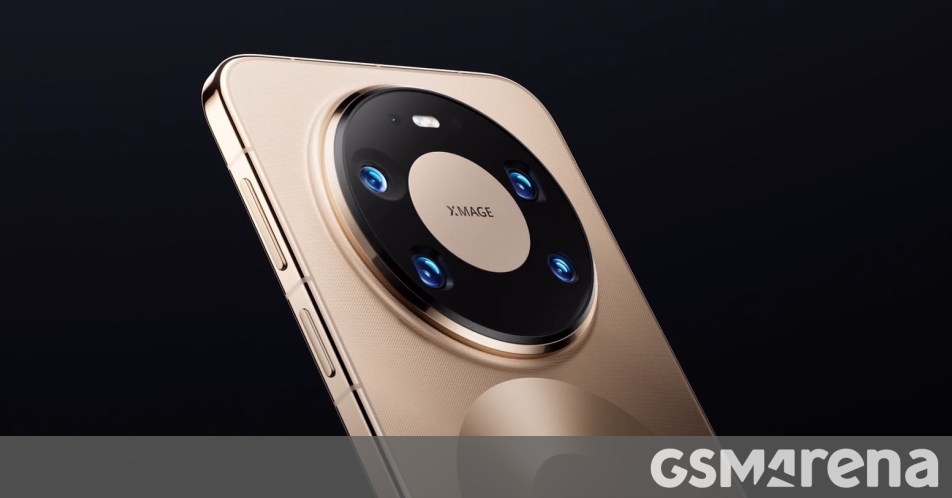
Furthermore, the optics package is being touted as a potential industry benchmark. The Mate 90 Pro Max is rumored to house a massive 200MP periscope telephoto lens, supported by an upgraded ultrawide sensor and a near 1-inch primary camera. These components will be orchestrated by the "Red Maple" imaging system, a proprietary software-hardware integration suite that Huawei is expected to leverage to compete with the industry’s top-tier image processing algorithms.
Chronology: The Road to the Mate 90 Series
To understand the significance of the Mate 90 Pro Max, one must look at the trajectory of Huawei’s flagship releases over the last 24 months.
The Post-Sanction Renaissance
Following the limitations imposed on its access to foundry services, Huawei spent 2022 and 2023 rebuilding its internal supply chain. The launch of the Mate 60 series, powered by the Kirin 9000s, served as a "proof of life" for the company’s semiconductor division. It proved that Huawei could circumvent trade barriers and deliver 5G-capable devices at scale.
The Iterative Evolution
The Mate 70 and Mate 80 series followed in rapid succession, each refining the industrial design and perfecting the HarmonyOS ecosystem. The Mate 80 Pro Max, in particular, introduced the dual-telephoto camera setup, establishing a baseline for the high-end photography capabilities that users now expect from the brand.
The Current Moment
Throughout the summer of 2024, rumors began to circulate regarding the Mate 90. The recent launch of the Mate XT 2 Ultimate Design has provided the necessary context for the Mate 90 Pro Max, as the two devices share the same Kirin 9050 Pro platform. The transition from a tri-folding experimental device to a mainstream flagship indicates that Huawei has successfully reached mass-production stability for its latest chipset, setting the stage for an October 2024 unveiling.
Supporting Data: Technical Implications and Imaging Power
The hardware specifications rumored for the Mate 90 Pro Max represent a significant departure from standard industry trends.
The Imaging Suite
The move to a 200MP periscope telephoto camera is perhaps the most audacious spec reported. In the current market, most telephoto lenses hover between 48MP and 64MP. By pushing to 200MP, Huawei is likely attempting to solve the issue of digital zoom degradation. With a sensor of this resolution, even at 10x optical zoom, the device could technically perform pixel-binning to maintain high-fidelity output.
The inclusion of a "near 1-inch" primary sensor is also critical. Larger sensors allow for greater light capture, which naturally results in better low-light performance and more realistic depth-of-field effects, effectively reducing the reliance on artificial "portrait mode" blurring.
The "Red Maple" Imaging System
While hardware is essential, the "Red Maple" system represents Huawei’s answer to Google’s Tensor or Apple’s Photonic Engine. This system is expected to utilize real-time neural processing to adjust white balance, dynamic range, and texture retention at the moment of capture. If the rumors hold, this will be the most significant overhaul to Huawei’s internal image processing pipeline in five years.
Display Innovation
The dual-layer OLED technology is not merely for brightness. By stacking organic light-emitting layers, Huawei can significantly extend the lifespan of the display, preventing burn-in and allowing for a higher peak luminance that remains stable over long periods of usage. The privacy screen option, likely achieved through a specialized micro-louver layer, is an enterprise-grade feature rarely seen in the consumer flagship space.
Official Responses: Navigating the Silence
As of this writing, Huawei has maintained a policy of strict silence regarding the Mate 90 series. This is consistent with the company’s traditional marketing strategy, which relies on generating "organic" hype through leaks and regulatory filings before transitioning into a coordinated, high-production-value launch event.
Industry analysts, however, have been vocal. Representatives from major supply chain monitoring firms have noted that Huawei has significantly increased orders for high-end camera sensors and customized display substrates from domestic suppliers. While Huawei has not confirmed the "Mate 90 Pro Max" moniker, the frequency of supply chain activity suggests that a premium device—distinct from the standard Mate 90—is indeed in the final stages of manufacturing.
When questioned about the potential for future Kirin chipsets, Huawei executives have repeatedly emphasized their commitment to "independent innovation." During the Mate XT launch, senior representatives alluded to the fact that the Kirin 9050 Pro architecture would serve as the "foundation for the company’s core product lines through 2025," providing the closest thing to an official confirmation that the next Mate series will share this silicon.
Implications: A Shifting Global Landscape
The potential launch of the Huawei Mate 90 Pro Max carries profound implications for the global smartphone market.
Competitive Pressure
If the Mate 90 Pro Max delivers on the promise of a 200MP telephoto lens and a 1-inch primary sensor, it will put immediate pressure on rivals such as Samsung and Xiaomi. The "camera wars" have largely plateaued in terms of megapixel count, but shifting the focus to high-resolution telephoto capabilities could force a new trend in flagship design.
The Domestic Chinese Market
Huawei’s resurgence in China has been nothing short of a phenomenon. By positioning the Mate 90 Pro Max as an ultra-premium device, the company is successfully competing with Apple for the "prestige" segment of the Chinese market. Should the Mate 90 Pro Max prove successful, it will further cement Huawei’s transition from a brand once defined by its utility to one defined by its exclusivity and cutting-edge status.
Geopolitical Resilience
Beyond the specs, the existence of the Kirin 9050 Pro in a mass-market flagship is a political statement. It demonstrates that the technological barriers established by international trade restrictions are being eroded by internal R&D. For other global markets, this suggests that the "decoupling" of supply chains is not only possible but is already yielding competitive results.
The Future of HarmonyOS
The Mate 90 Pro Max will undoubtedly be the flagship vehicle for the latest iteration of HarmonyOS. As Huawei continues to move away from AOSP (Android Open Source Project) dependencies, the Mate 90 series will likely feature a more refined, fully indigenous operating system. This is a crucial step for the company as it seeks to create a self-sustaining ecosystem that is independent of external software dependencies.
Conclusion: The Final Countdown
As October approaches, the excitement surrounding the Huawei Mate 90 Pro Max is palpable. While rumors remain unconfirmed, the convergence of high-end imaging, next-generation display technology, and the proven power of the Kirin 9050 Pro chipset suggests that this will be one of the most significant mobile releases of the decade.
Huawei is currently walking a tightrope, balancing the need to showcase its technological prowess with the realities of a fragmented global market. If the Mate 90 Pro Max succeeds, it will not just be a win for the company’s sales figures—it will be a definitive declaration that the "new" Huawei is here to stay, fully equipped to challenge the established order of the mobile industry.
For the consumer, the question remains: will the price point match the ambition? Given the "Pro Max" designation and the complexity of the hardware involved, it is safe to assume that the device will command a premium. Yet, for those who value the absolute bleeding edge of mobile hardware, the Mate 90 Pro Max is shaping up to be a device that is well worth the wait.