India’s Railway Revolution: A Decadal Journey to Global Electrification Leadership
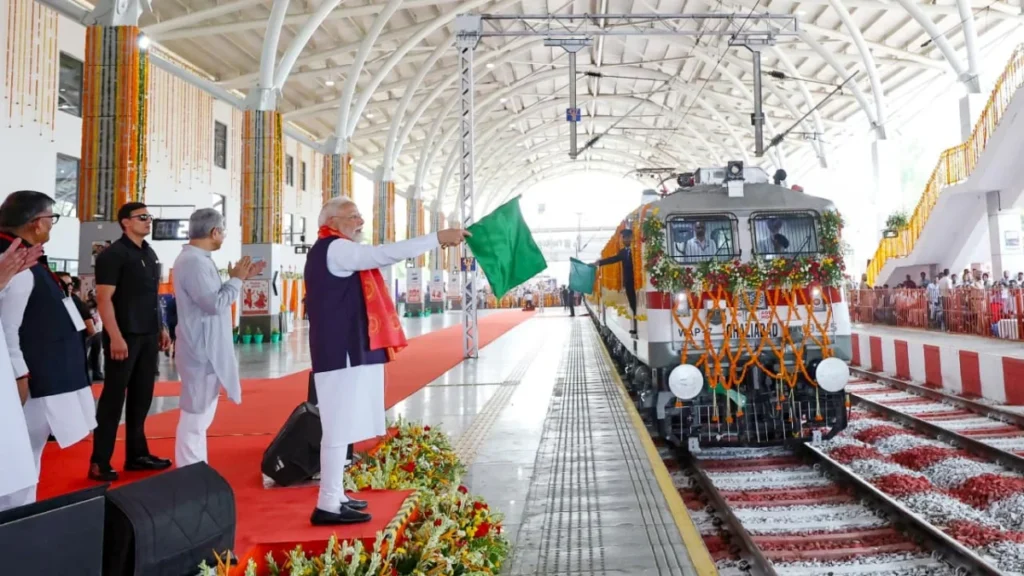
New Delhi: In a landmark achievement that underscores India’s aggressive pursuit of sustainable infrastructure, the Indian Railways has successfully completed the electrification of its vast network on a mission mode. According to data released on July 22, 2026, the national transporter has electrified an unprecedented 48,072 route kilometers (RKM) between 2014 and 2026. This monumental transformation has positioned India as a global leader in railway electrification, effectively setting a new benchmark for energy efficiency and environmental sustainability in mass transit.
The Magnitude of the Transformation: Main Facts
The sheer scale of the Indian Railways network makes this feat one of the most significant engineering accomplishments of the 21st century. Managing one of the largest rail networks in the world, the Ministry of Railways transitioned from a reliance on fossil-fuel-heavy diesel locomotives to a sophisticated, electric-traction-led operation.
Between 2014 and 2026, the pace of electrification witnessed a historic acceleration. While the electrification process had been ongoing for decades, the "mission mode" approach adopted over the last twelve years transformed the landscape. By replacing diesel engines with electric traction, the Indian Railways has not only optimized operational costs but has also significantly reduced its carbon footprint, aligning with the nation’s broader "Net Zero" climate goals.
The 48,072 RKM figure represents a massive shift in how the country moves its people and goods. Today, the vast majority of the Indian rail network is fully electrified, allowing for faster train speeds, higher freight-carrying capacity, and a drastic reduction in greenhouse gas emissions.
A Chronology of Progress: The Path to 2026
The journey toward total electrification was not overnight; it was the result of a calibrated, multi-phase strategic roadmap.
- 2014-2016: The Foundation Years. The government identified railway electrification as a top priority for economic efficiency. During this period, the focus was on clearing technical bottlenecks and securing funding for large-scale infrastructure projects.
- 2017-2019: Scaling Up. The Ministry of Railways shifted from traditional execution methods to a mission-oriented approach. This involved the streamlining of tender processes and the adoption of modern construction technologies to accelerate the installation of Overhead Equipment (OHE).
- 2020-2022: Navigating Challenges. Despite the global disruptions caused by the pandemic, the electrification drive continued unabated. This era saw the introduction of innovative "block" scheduling, allowing for infrastructure work to proceed even during periods of restricted passenger movement.
- 2023-2025: The Final Sprint. As the mission neared its conclusion, resources were concentrated on the final non-electrified stretches, often traversing difficult terrains, including hilly regions and remote border areas.
- 2026: The Milestone. By mid-2026, the mission reached its culmination, with the Indian Railways declaring a near-total electrified network, marking a definitive end to the era of diesel-dominant mainline operations.
Supporting Data: The Statistics of Success
To understand the gravity of this achievement, one must look at the numbers. The electrification of 48,072 RKM is not just a statistical increase; it is an economic powerhouse.
Economic and Operational Impact
- Cost Efficiency: Electric traction is significantly cheaper than diesel. Estimates suggest that the annual saving in fuel costs for the Indian Railways runs into billions of rupees.
- Freight Throughput: Electric locomotives offer higher torque and acceleration, allowing for longer, heavier freight trains. This has increased the average speed of freight operations by nearly 30% since the start of the mission.
- Environmental Impact: The reduction in diesel consumption has led to a massive decrease in carbon emissions, positioning the Indian Railways as the single largest contributor to India’s commitment under the Paris Agreement.
Technical Metrics
- Locomotive Fleet: The transition necessitated the procurement and retrofitting of thousands of electric locomotives. The integration of high-speed indigenous electric locos (like the WAG-12B series) has provided a technological edge to the network.
- Infrastructure Investment: The government invested heavily in substation construction and the modernization of power grids to support the heavy load of a fully electrified railway network.
Official Responses and Strategic Vision
Railway Minister Ashwini Vaishnaw has been at the forefront of this transformation, frequently highlighting that this project is about more than just wires and poles.
"The electrification of our railways is a testament to the ‘Atmanirbhar Bharat’ (Self-Reliant India) vision," Minister Vaishnaw noted in recent statements. "By moving to electric traction, we have reduced our dependence on imported fossil fuels, empowered our domestic manufacturing sector, and provided a cleaner, faster, and more efficient transport solution for the citizens of India."
The Ministry of Railways has emphasized that the project was executed with a focus on "local sourcing." Almost all components, from the copper wires used in the OHE to the sophisticated traction transformers, were manufactured within India, creating thousands of jobs and fostering a robust domestic supply chain.
Implications for the Future
The completion of this mission has profound implications for the future of India’s logistics and transportation sector.
1. Logistical Dominance
With the rail network fully electrified, the "National Rail Plan" becomes easier to execute. The ability to run longer, heavier, and faster trains means that the railways can effectively compete with road transport for high-value logistics, lowering the cost of doing business in India.
2. The Net Zero Target
India has set an ambitious target to become carbon neutral by 2070. The railways, as the largest consumer of energy in the public sector, play a pivotal role in this. By transitioning to electricity—and progressively sourcing that electricity from solar and wind farms—the railway network is becoming a "Green Railway."
3. Passenger Experience
For the common traveler, the impact is visible in the form of improved punctuality and the introduction of modern, semi-high-speed trains like the Vande Bharat series. These trains require a stable, high-voltage electric supply, which was only possible through the comprehensive electrification of the network.
4. Strategic Defense and Connectivity
The electrification of lines in border areas and remote regions has improved the strategic readiness of the nation. Enhanced connectivity to the Northeast and the Himalayan regions ensures that the Indian Railways remains the backbone of both economic growth and national security.
Conclusion: A New Era of Rail Travel
The achievement of 48,072 RKM of electrification in just twelve years is a masterclass in governance and project management. It reflects a shift in India’s administrative philosophy—from planning to execution, and from maintenance to modernization.
As India moves into the latter half of the 2020s, the focus will likely shift toward further optimizing energy consumption through regenerative braking technologies and implementing AI-driven traffic management systems. However, the foundational work is complete. The Indian Railways has successfully shed its colonial-era legacy of steam and diesel, emerging as a modern, efficient, and sustainable engine of growth for a rising global power.
This monumental effort stands as a beacon for other developing nations, demonstrating that large-scale infrastructure transformation is not only possible but essential for sustainable national development. As the trains glide silently across the Indian landscape, powered by the nation’s own energy grid, they carry the weight of a transformed economy—one that is faster, greener, and undeniably more connected than ever before.