India’s Startup IPO Boom: A Paradigm Shift on Dalal Street
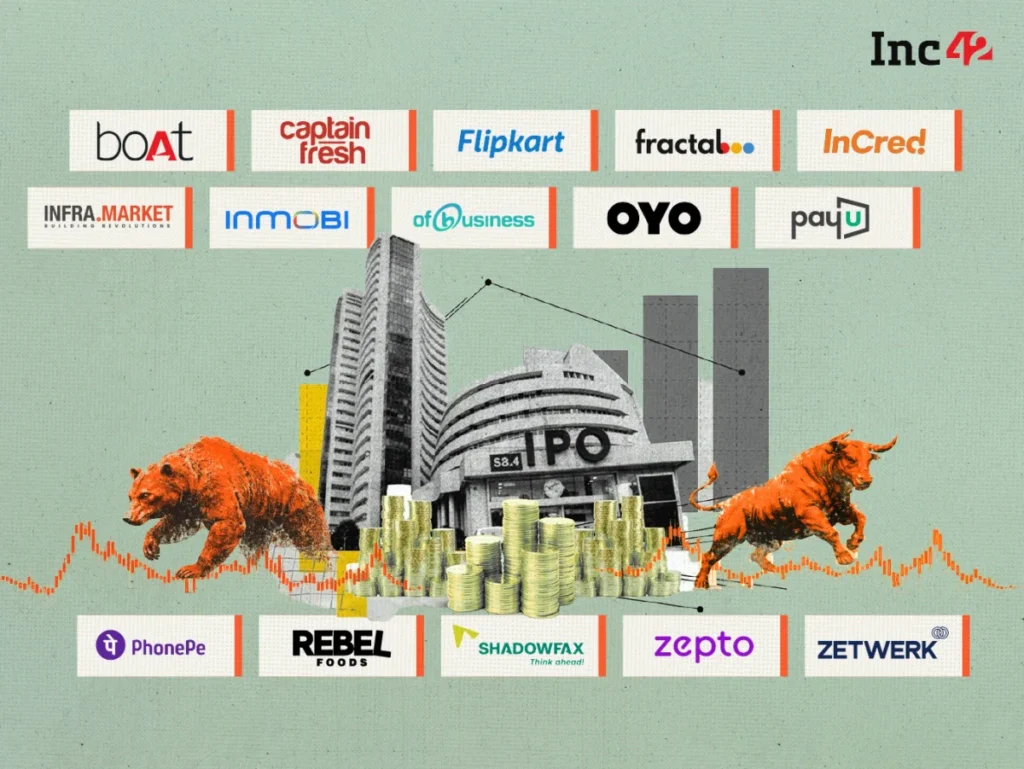
Dalal Street cemented its status as a "founder’s paradise" in 2025, capturing a historic milestone as 18 Indian startups made their public market debuts. Together, these new-age technology firms mopped up a staggering INR 41,248 Cr from public investors. Powered by robust macroeconomic tailwinds, upward-trending GDP growth projections, and progressive regulatory reforms by the Securities and Exchange Board of India (SEBI)—including simplified DRHP filings and flexible ESOP rules—the domestic capital market witnessed an unprecedented wave of liquidity.
With retail demat accounts soaring past the 20-crore mark, the market ecosystem has rapidly matured. Investors have shown a distinct preference for structural fundamentals, predictable cash flows, and sustainable unit economics over vanity growth metrics, laying down a rigorous blueprint for future aspirants in 2026.
Macroeconomic Tailwinds and Regulatory Evolution
The unprecedented surge in tech listings is underpinned by a confluence of supportive fiscal policies and strategic regulatory frameworks. SEBI’s targeted reforms have notably streamlined the regulatory onboarding process. Measures such as simplified draft red herring prospectus (DRHP) filings have drastically minimized bureaucratic red tape. Furthermore, modern frameworks surrounding employee stock ownership plans (ESOPs) have empowered founders to retain meaningful structural ownership while transitioning to the public markets.
However, the operating environment in 2026 demands a nuanced recalibration. While domestic capital pools have deepened, average retail subscription levels are moderating. Concurrently, foreign institutional investors (FIIs) have adopted a more defensive posture, pulling back amid persistent geopolitical tensions, secondary market volatility, and conflicts in West Asia.
Market experts emphasize that valuation multiples are no longer dictated by hype. Rehan Yar Khan, Managing Partner at Orios Venture Partners, noted:
"IPO-bound startups in 2026 will be increasingly defined by their ability to demonstrate predictable cash flows, sustainable unit economics, and operational discipline rather than headline growth alone. Public market investors will place greater emphasis on governance, capital efficiency, and long-term value creation."
Echoing this sentiment, Ashish Kumar, Cofounder and General Partner at Fundamentum Partnership, pointed out:
"Besides the readiness that startups showed in their unit economics, there is also an increase in the founders committing to their businesses for the next couple of decades and growing their businesses by adding adjacent profit pools — something that the public markets reward handsomely."
Chronology of 2026 Dalal Street Debuts
Building upon the monumental momentum of 2025, over a dozen new-age tech companies have made their highly anticipated D-Street debuts. Standout listings include firms such as ESDS Software Solution, Klassroom, RentoMojo, SEDEMAC, Kissht, LEAP India, and Shiprocket, many of which commanded robust initial market demand.
1. AceVector (Snapdeal Parent)
- Sector: Ecommerce
- Financials: Operating revenue rose 29.2% YoY to INR 510.3 Cr in FY26; net losses narrowed 64% to INR 45.5 Cr.
- IPO Details: Filed its RHP outlining a fresh issue of INR 287 Cr and an OFS of up to 4.16 Cr shares at a price band of INR 30–32. The issue was oversubscribed 4.93X, though shares eventually made a weak debut on October 5, listing at an 11.6% discount on the BSE (INR 28.30).
2. Amagi
- Sector: SaaS
- Financials: Turned profitable in H1 FY26 with a net profit of INR 6.5 Cr; operating revenue climbed 35% YoY to INR 704.8 Cr.
- IPO Details: Detailed a fresh issue of INR 816 Cr and an OFS component of up to 2.69 Cr shares. The public issue closed with an oversubscription of 30.2X at a price band of INR 343–361, but listed at a 12.2% discount on the BSE at INR 317.
3. Aye Finance
- Sector: Fintech (NBFC)
- Financials: H1 FY26 net profit declined 40% YoY to INR 64.6 Cr; operating revenue rose 21.8% to INR 843.5 Cr.
- IPO Details: Raised INR 1,010 Cr via a fresh issue and OFS at INR 129 per share. The issue saw an undersubscription of 97%, listing flat on both the BSE and NSE.
4. ESDS Software Solution
- Sector: Data Center & Cloud Computing
- Financials: FY26 consolidated net profit surged 117% YoY to INR 120.8 Cr; operating revenue grew 30.7% to INR 472.2 Cr.
- IPO Details: Comprised solely of a fresh issue worth INR 720 Cr. The issue closed with an exceptional oversubscription of 135.88X, resulting in a stellar debut on the NSE at a 76.5% premium (INR 757).
5. Fractal
- Sector: Enterprise AI & SaaS
- Financials: H1 FY26 net profit dipped roughly 3% YoY to INR 70.9 Cr; operating revenue grew 20% to INR 1,559 Cr.
- IPO Details: Comprised a fresh issue worth INR 1,023.54 Cr and an OFS worth INR 1,810.4 Cr. Oversubscribed 2.66X, the stock listed at a slight 2.7% discount on the NSE at INR 876.
The 2026–2027 IPO Pipeline: Giants on the Horizon
Looking forward, the upcoming public offering pipeline remains exceptionally robust. Over 26 startups have officially filed their DRHPs with SEBI, while more than 25 others are in advanced stages of finalizing their listings. Prominent unicorns such as OYO (PRISM), Razorpay, and Zetwerk are collectively projected to raise over INR 34,000 Cr, setting the stage for one of the largest capital influxes in Indian startup history.
Strategic Pipeline Highlights
- PhonePe: The Walmart-backed digital payments titan has revived its public listing plans following clarity on the Unified Payments Interface (UPI) Merchant Discount Rate (MDR) framework. Targeting a valuation of $10 Bn, the company aims to file its updated papers for a public debut by March 2027.
- OYO (PRISM): Rebranded as PRISM, the hospitality major secured shareholder approval in late 2025 to raise INR 6,650 Cr via a fresh issue. Targeting a valuation between $7 Bn and $8 Bn, the company reported a net profit of INR 748 Cr in the first nine months of FY26.
- Zepto: The quick commerce unicorn briefly paused its IPO plans to prioritize cash burn mitigation, but is actively steering toward an offering between February and May 2027, backed by a planned pre-IPO round.
- Acko & Spinny: Both companies have actively appointed top-tier merchant banking partners (including Morgan Stanley, Kotak Mahindra Capital, and Citigroup) to pilot their confidential DRHP filings ahead of projected 2027 listings.
Supporting Financial Data & Metrics
A systemic overview of select startup financials, funding milestones, and valuation metrics across the current ecosystem highlights the maturation of these entities:
| Company Name | Sector | Total Funding | FY25/FY26 Revenue (INR Cr) | DRHP Status | Proposed IPO Size (INR Cr) |
|---|---|---|---|---|---|
| Acko | Insurtech | $458 Mn | INR 2,836.8 Cr (FY25) | Yet To File | $300 Mn – $400 Mn |
| Atomberg | D2C | $126 Mn | INR 1,293.8 Cr (FY26) | Yet To File | INR 1,500 Cr – INR 2,000 Cr |
| boAt (Imagine Marketing) | D2C | $171 Mn | INR 3,073.3 Cr (FY25) | Filed | INR 1,500 Cr |
| Curefoods | Foodtech | $175 Mn | INR 745.8 Cr (FY25) | Filed | INR 2,582 Cr – INR 3,443 Cr |
| Fibe | Fintech | $266 Mn | INR 1,584.6 Cr (FY26) | Filed | INR 750 Cr Fresh Issue + OFS |
| InCred Holdings | Fintech | $318 Mn | INR 1,873.6 Cr (FY25) | Filed | INR 1,250 Cr + 9.9 Cr OFS |
| MakeMyTrip | Travel Tech | $3.85 Bn | $1.04 Bn (FY26) | Filed | INR 9,521 Cr (OFS Only) |
| OYO (PRISM) | Travel Tech | $3.47 Bn | INR 6,252.8 Cr (FY25) | Filed | INR 6,650 Cr |
| PhonePe | Fintech | $2.29 Bn | INR 7,920.5 Cr (FY26) | Filed | INR 10,700 Cr – INR 13,400 Cr |
| Razorpay | Fintech | $816 Mn | INR 3,783 Cr (FY25) | Filed | INR 4,760 Cr – INR 6,664 Cr |
| Spinny | Auto Tech | $784 Mn | INR 4,656 Cr (FY25) | Yet To File | Undisclosed (INR 2,500–3,000 Cr) |
| Zetwerk | Ecommerce | $793 Mn | INR 15,913.3 Cr (FY26) | Yet To File | INR 4,284 Cr |
| Zepto | Quick Commerce | $1.60 Bn | INR 22,623.6 Cr (FY26) | Filed | INR 8,010 Cr + OFS |
Market Implications and Outlook
The evolution of India’s capital markets reflects a profound structural transition. The era of loose capital allocations and unchecked burn rates has definitively closed. Public market investors are enforcing a rigorous screening process, prioritizing profitability, operational efficiency, corporate governance, and sustainable unit economics.
Despite short-term external headwinds—such as tightening foreign institutional liquidity and regional geopolitical friction—the structural outlook for new-age technology listings remains fundamentally robust. As domestic capital pools deepen and regulatory frameworks continue to champion transparency, India stands firmly entrenched as a global powerhouse for startup public offerings, charting a sustainable roadmap for long-term wealth creation.