Navigating Regulatory Changes: Home Minister Amit Shah Meets CBCI Amid Concerns Over FCRA Amendments
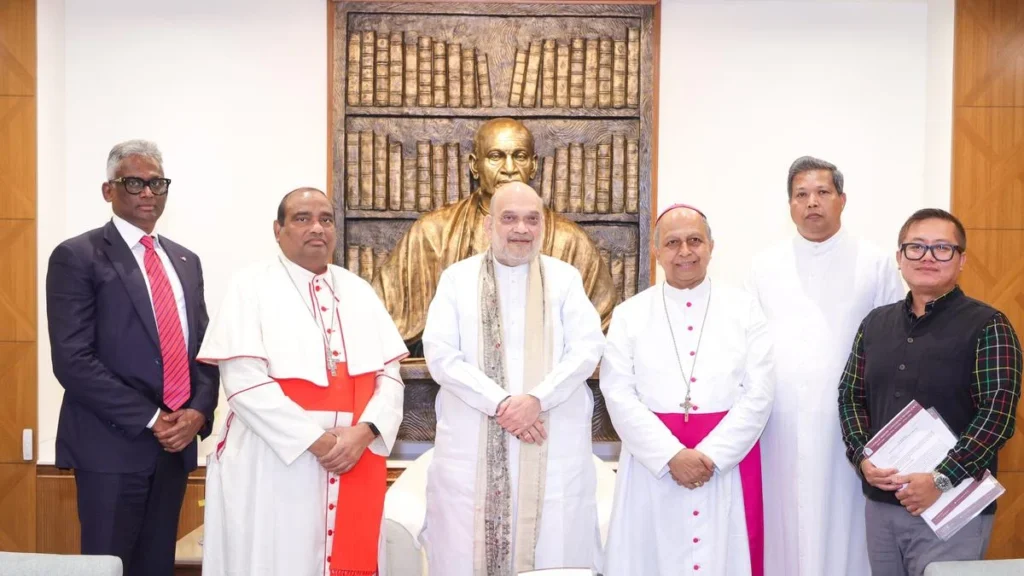
New Delhi, July 11, 2026 — In a significant high-level engagement, Union Home Minister Amit Shah met with a high-powered delegation from the Catholic Bishops’ Conference of India (CBCI) to address mounting anxieties surrounding the proposed Foreign Contribution (Regulation) Amendment Bill, 2026. The 45-minute meeting, held on July 10, served as a crucial platform for the church leadership to voice apprehensions regarding the potential impact of new regulatory frameworks on charitable and educational institutions across the country.
The meeting, which included key government officials, including Union Home Secretary Govind Mohan, sought to bridge the communication gap between the state and the Christian community. For the CBCI, the dialogue was essential to clarify the government’s stance on the legislative tightening of foreign funding, an area where the church plays a vital role in national development.
The Core Conflict: FCRA and the 2026 Amendment
The primary catalyst for the meeting was the introduction of the Foreign Contribution (Regulation) Amendment Bill, 2026, in the Lok Sabha on March 25. While the bill was deferred following significant pushback from Opposition parties, its provisions remain a point of contention for various NGOs, particularly those managed by religious organizations.
Key Provisions Under Scrutiny:
- Designated Authority: The Bill proposes a "designated authority" empowered to seize, manage, or dispose of assets created using foreign funds if an NGO’s registration is suspended, cancelled, or not renewed. This authority would possess the powers of a civil court, raising fears regarding the potential for the state to take over institutional assets.
- Defining "Proselytisation": The FCRA Amendment Rules, notified on June 22, 2026, mandate that NGOs classify their activities into five categories: social, political, educational, cultural, and religious. While 16 categories of religious activities—such as meditation and moral instruction—are permitted, the rules specifically bar "proselytisation." The CBCI has argued that the lack of a clear, legal definition for "proselytisation" leaves the term vulnerable to misuse and arbitrary enforcement.
- Retrospective Application: There has been widespread anxiety that the new asset-transfer powers could be applied retrospectively, potentially affecting properties acquired years ago.
Addressing the "Communal Angle" in Manipur
Beyond the legislative debates, the meeting delved into the persistent ethnic violence in Manipur, which has been ongoing since May 3, 2023. The conflict, which began as a clash between the tribal Kuki-Zo and the Meitei people, has evolved into a more complex web of confrontations, now involving sections of the Naga community.

Jonathan Lalremruata, advisor to the CBCI, noted that Home Minister Amit Shah was firm in his assessment of the crisis. "The Minister was categorical that the ongoing tension in Manipur is an ethnic conflict and it should not be given a communal angle," Lalremruata stated.
The Home Minister urged the Church leadership to actively work toward brokering peace in the region. Furthermore, acknowledging the grievances regarding violence against community members, Mr. Shah provided a clear directive: any instance of aggression against the Church or the Christian community must be met with the filing of a First Information Report (FIR).
In response to the delegation’s concern that local police often refuse to register complaints, Mr. Shah reportedly advised them to report such administrative failures directly to the Ministry of Home Affairs (MHA), citing his own history of intervening in specific cases to ensure justice.
Statistical Context: The Reality of Foreign Donations
A pivotal moment in the meeting was the presentation of data regarding the flow of foreign funds into India. In an attempt to dispel the notion that the 2026 Bill is designed to target Christian NGOs specifically, the Home Minister shared figures regarding the national landscape of foreign contributions.

- Total Annual Inflow: Approximately ₹17,000 crore in foreign donations entered India in the previous fiscal year.
- Christian NGOs’ Share: Christian bodies received roughly ₹3,000 crore, which constitutes just under 15% of the total national foreign donation pool.
Mr. Shah utilized these figures to emphasize that the Bill is an exercise in national regulation rather than a targeted strike against any single religious denomination. He further acknowledged the historical contribution of the Church to nation-building, particularly in the sectors of healthcare and education. The government also invited the CBCI to submit a list of any NGOs they believe have had their registrations cancelled or suspended in an unfair or discriminatory manner, promising a review process.
Chronology of the Legislative and Diplomatic Process
- May 3, 2023: Outbreak of ethnic violence in Manipur.
- March 25, 2026: The Foreign Contribution (Regulation) Amendment Bill, 2026, is introduced in the Lok Sabha.
- Late March 2026: Opposition parties raise significant objections to the bill, forcing the government to defer the discussion.
- June 22, 2026: Government notifies the new FCRA Amendment Rules, tightening reporting requirements and explicitly barring "proselytisation."
- July 5, 2026: Meghalaya Chief Minister Conrad Sangma meets with Amit Shah to express concerns over how the new rules might disrupt essential community services in the Northeast.
- July 10, 2026: CBCI delegation, including Cardinal Anthony Poola and Archbishop Anil Couto, meets the Home Minister to discuss the Bill and the situation in Manipur.
Official Responses and Strategic Implications
The CBCI delegation, led by Anthony Cardinal Poola (Metropolitan Archbishop of Hyderabad and President of the CBCI) and Anil Couto (Metropolitan Archbishop of Delhi), expressed their gratitude for the Minister’s willingness to listen.
One of the most significant assurances provided by the Home Minister was regarding the "retrospective" fear. Mr. Shah explicitly stated that the provisions of the Bill would not be applied retroactively. Furthermore, he clarified that in the event of property attachment due to FCRA violations, the affected institution would be granted a 12-month window to appeal the decision.
The Institutional Perspective
The church views these developments as a balancing act between state security concerns and the operational freedom of non-profit organizations. By engaging directly with the MHA, the CBCI is attempting to ensure that the regulatory environment remains conducive to their charitable work.

Meghalaya CM Conrad Sangma’s intervention a few days prior underscores the regional significance of this issue. For states like Meghalaya, where church-run institutions are the backbone of social infrastructure, any disruption in funding could lead to a collapse of primary healthcare and educational services. The government’s willingness to discuss these concerns suggests a desire to maintain administrative control while preventing a larger socio-political backlash.
Future Outlook
As the monsoon session of Parliament approaches, the fate of the FCRA Amendment Bill, 2026 remains a subject of intense political maneuvering. The government’s emphasis on "regulating" rather than "prohibiting" suggests that the bill will likely proceed, albeit perhaps with amendments aimed at addressing the concerns raised by the CBCI and other stakeholders.
The onus now lies on the Church to document its grievances through the mechanisms suggested by the Home Minister. Whether this dialogue results in tangible policy shifts or merely serves as a diplomatic measure to lower tensions will become clearer in the coming months. For now, the focus remains on ensuring that the legal frameworks governing foreign contributions do not inadvertently dismantle the social safety nets that many faith-based organizations have spent decades weaving across the Indian landscape.
The dialogue between the Union Home Minister and the CBCI highlights a sophisticated, if challenging, era of engagement between the state and religious institutions. As India continues to refine its legislative framework for international funding, the transparency of the process and the protection of essential social services will remain the ultimate benchmarks of success.