Retailers Call Off ‘No UPI Day’ Protest After High-Level Meeting With Finance Minister Over Proposed MDR Charges
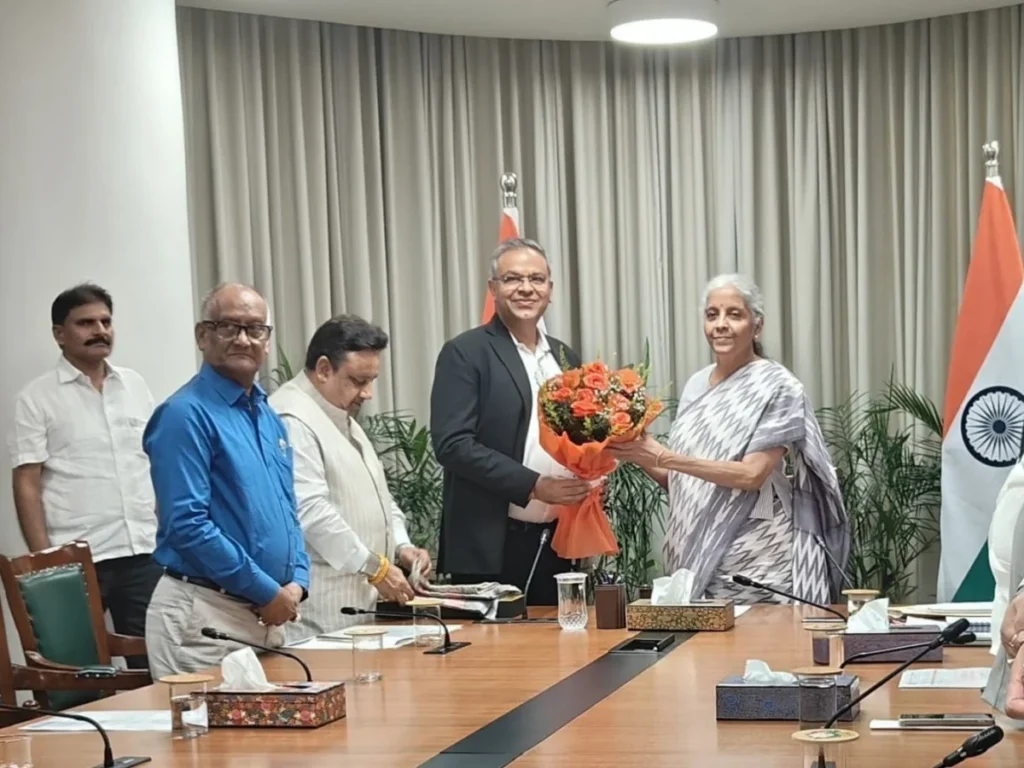
New Delhi — In a significant development that averts potential nationwide disruptions to digital payments, major Indian trade associations have officially called off their proposed “No UPI Day” protest, which was slated for October 2. The decision follows a high-stakes, constructive dialogue between a delegation of nearly 20 trade bodies and Union Finance Minister Nirmala Sitharaman, where representatives voiced deep-seated concerns regarding the impending imposition of Merchant Discount Rate (MDR) charges on Unified Payments Interface (UPI) transactions.
While the immediate threat of a retail blackout has been averted, the core debate surrounding the economic sustainability of India’s digital payments ecosystem—balancing the financial viability of banks and payment aggregators against the profit margins of micro, small, and medium enterprises (MSMEs)—remains a pressing national conversation.
1. Main Facts and Core Controversy
At the center of the dispute is the finance ministry’s recent policy shift allowing a 0.4% MDR on specified Person-to-Merchant (P2M) UPI transactions exceeding ₹2,000, with the fee capped at ₹300 for transactions amounting to ₹75,000 and above. Scheduled to come into effect on October 15, this framework marks a decisive departure from the zero-MDR regime that has governed UPI transactions for nearly seven years.
The zero-MDR policy was originally introduced to catalyze digital adoption, driving India’s peer-to-peer and peer-to-merchant payment transactions to unprecedented global heights. However, the lack of monetization avenues under the zero-MDR regime severely squeezed the revenues of banks, payment aggregators (PAs), and Third-Party Application Providers (TPAPs), who argued that maintaining robust, cyber-secure digital infrastructure without processing fees was unsustainable.
Conversely, retail associations, consumer goods distributors, and fuel dealers contend that imposing transaction fees will disproportionately hurt small-scale businesses, discouraging them from accepting digital payments just as the high-volume festive shopping season kicks off.
2. Chronology of Events
The unfolding controversy has moved rapidly through political, economic, and judicial channels over the past few weeks:
- Early September 2024: The finance ministry introduces the framework permitting a 0.4% MDR on specified P2M UPI transactions above ₹2,000, set to take effect on October 15.
- Mid-September 2024: Industry bodies, including the All India Mobile Retailers Association (AIMRA) and the All India Consumer Products Distributors Federation (AICPDF), warn of widespread pushback, arguing that the charges will stifle retail business recovery.
- Late September 2024: AICPDF and AIMRA announce a nationwide “No UPI Day” strike for October 2, claiming that a massive network comprising approximately 4.5 lakh distributors and 1.3 crore retailers would halt digital transactions in protest.
- Simultaneously: A public interest petition is filed in the Supreme Court challenging the constitutional and economic validity of the new MDR framework, arguing that costs will ultimately be passed down to everyday consumers.
- Shortly After: The Supreme Court declines to grant an immediate interim stay on the new MDR framework but issues notices seeking formal responses from the Central Government, the Reserve Bank of India (RBI), and the National Payments Corporation of India (NPCI).
- Days Before October 2: A delegation of 20 trade associations, led by Chandni Chowk Member of Parliament and Confederation of All India Traders (CAIT) Secretary General Praveen Khandelwal, holds a high-level meeting with Finance Minister Nirmala Sitharaman.
- Post-Meeting: Citing positive assurances from the Finance Minister, AIMRA and AICPDF officially withdraw their call for the October 2 nationwide protest.
3. Supporting Data and Industry Demands
The scale of the pushback highlights the deep reliance of India’s unorganized and semi-organized retail sectors on UPI infrastructure. The AICPDF’s initial call to arms was backed by an extensive grassroots network representing millions of merchants across Tier-1, Tier-2, and Tier-3 cities.
During their presentation to Finance Minister Nirmala Sitharaman, the delegation of 20 trade bodies formally laid out a series of calibrated demands aimed at cushioning the blow to small businesses:
- Deferment of the Proposed MDR: Trade organizations have strongly urged the government to postpone the rollout of the MDR framework beyond the lucrative festive season (encompassing Diwali and the subsequent wedding season), a period when average ticket sizes frequently cross the ₹2,000 threshold and transaction volumes peak.
- Exemption for B2B Transactions: The associations requested that merchant-to-merchant (M2M) or business-to-business (B2B) transactions be kept entirely outside the ambit of the proposed MDR regime to protect wholesale supply chains from compounding costs.
- Upward Revision of Monthly Exemptions: Under current frameworks, merchants enjoy exemptions up to certain limits. Trade bodies have petitioned the government to scale up the current ₹1 Lakh monthly receipt limit for merchant exemptions to ₹5 Lakh, reflecting actual inflationary trends and modern business turnovers.
Despite the withdrawal of the strike, representatives emphasized that dialogue with the government remains ongoing. CAIT Secretary General Praveen Khandelwal noted that future discussions will encompass broader operational challenges faced by merchants, including data privacy and cybersecurity measures.
4. Official Responses and Stakeholder Perspectives
The debate over UPI monetization has created a sharp divide across India’s financial and commercial landscapes.
The Trade and Retailer Stance
Retailer groups and consumer product distributors maintain that while they are not inherently opposed to digital banking modernization, imposing fees on transactions above ₹2,000 creates an unfair burden. Because profit margins in fast-moving consumer goods (FMCG) and mobile retail are often razor-thin, absorbing a 0.4% cut per transaction threatens to wipe out substantial portions of net earnings. Furthermore, fuel dealer associations have similarly petitioned the government, highlighting that processing costs eat heavily into regulated petroleum retail margins.
The Financial Sector and Fintech Perspective
On the other side of the ledger, traditional banking institutions, payment gateways, and fintech firms have cautiously welcomed the framework. Companies operating within the UPI ecosystem—including payment aggregators and TPAPs—have long argued that maintaining a 24/7, ultra-reliable instant payment infrastructure requires massive capital expenditures. Without a rationalized monetization model like MDR, the financial burden of scaling server capacity, enhancing cybersecurity defenses against fraud, and expanding rural reach falls disproportionately on banks, threatening long-term systemic stability.
The Judicial Intervention
The legal challenge brought before the Supreme Court highlights broader consumer protection concerns. Petitioners argued that the introduction of MDR creates a back-door mechanism where merchants, unable to absorb the 0.4% fee, will indirectly pass the cost on to consumers through inflated retail pricing, thereby undermining the cashless economy’s affordability. While the Supreme Court refused to grant an immediate stay—recognizing the complex regulatory nature of monetary policy—its decision to demand formal affidavits from the Centre, RBI, and NPCI ensures that the legality and consumer impact of the framework will face rigorous judicial scrutiny.
5. Broader Implications for India’s Digital Economy
The resolution—or temporary truce—surrounding the “No UPI Day” protest holds profound lessons for India’s digital economy as it matures.
- Balancing Scale and Sustainability: India’s digital payment volumes have routinely shattered global records, crossing billions of monthly transactions. However, the long-term viability of public digital goods requires a sustainable financial architecture where the costs of infrastructure maintenance, fraud prevention, and innovation are equitably distributed among beneficiaries rather than absorbed entirely by one segment of the ecosystem.
- The Power of Collective Bargaining: The swift pivot from a nationwide trade shutdown to a collaborative table discussion demonstrates the political and economic clout wielded by MSME trade bodies in India. By leveraging political channels—exemplified by CAIT’s leadership—traders successfully secured a high-level audience to voice structural economic grievances.
- Uncertainty Ahead of the Festive Season: Although the immediate retail strike has been called off, uncertainty lingers among merchants regarding how transactions between October 15 and the end of the festive season will be managed. Much will depend on whether the Ministry of Finance and the Reserve Bank of India choose to implement temporary grace periods, adjust the exemption thresholds, or proceed with the framework as initially planned.
As India navigates the delicate transition from a subsidized, hyper-growth adoption phase to a mature, self-sustaining financial market, the upcoming weeks will prove decisive. The eyes of the nation’s 300 million digital consumers and millions of offline merchants remain fixed on New Delhi, waiting to see how policymakers balance the competing demands of fintech innovation and Main Street commerce.