Decoding the Billion-User Equation: How India’s Tech Leaders are Engineering AI for Scale, Affordability, and Diversity
BENGALURU — Artificial intelligence (AI) has captured the global imagination with its promise of frictionless automation, hyper-personalization, and unprecedented computational power. Yet, deploying these cutting-edge models in the Western world is an entirely different enterprise than scaling them for the unique socioeconomic and infrastructural realities of India.
At Inc42’s inaugural ‘The CTO Summit 2026’ in Bengaluru, the country’s leading technology executives confronted this reality head-on. The consensus was stark yet pragmatic: AI products built for India cannot simply be imported or casually adapted from Silicon Valley playbooks. Instead, they must carefully balance model flexibility, strict cost efficiency, and hyper-localized user needs.
For the nation’s premier tech companies—spanning social media, social commerce, hyper-local logistics, and ride-hailing—the true test of AI is not its theoretical intelligence, but its ability to function seamlessly across budget smartphones, a complex mosaic of regional languages, and notoriously patchy network connectivity, all while keeping operational costs within razor-thin margins.
1. Main Facts: The Anatomy of India’s AI Challenge
The primary friction point for scaling AI across the subcontinent is the intersection of infrastructure constraints and extreme demographic diversity. Unlike Western markets, where high-end smartphones and robust broadband are standard, India’s digital transformation is anchored by budget devices operating on fluctuating mobile data connections.
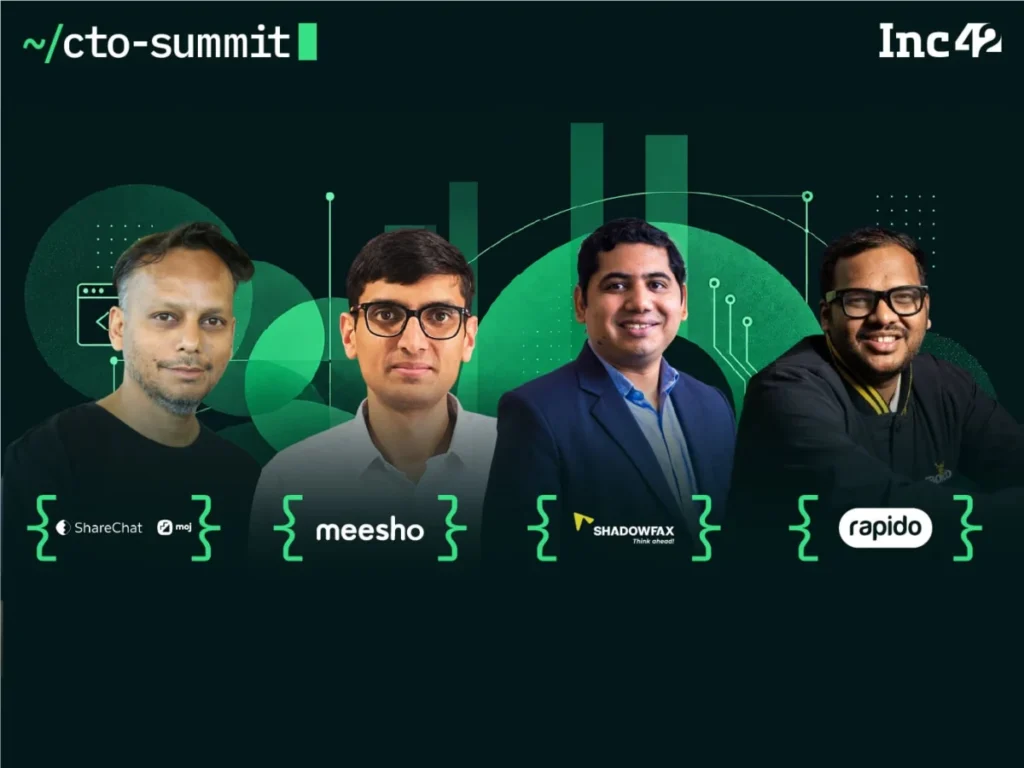
During the flagship panel session titled ‘Building AI Systems For Indian Scale’, engineering heads from ShareChat and Moj, Meesho, Rapido, and Shadowfax detailed the multi-layered hurdles of mass AI deployment:
- Hardware and Network Limitations: Millions of Indian users rely on entry-to-mid-range smartphones with limited processing power, constrained memory (RAM), and sensitive battery thresholds. Furthermore, erratic cellular connectivity requires AI systems to be exceptionally lightweight.
- Linguistic Diversity: Serving a population that communicates in dozens of distinct languages and dialects—often mixed within the same sentence (such as Hinglish or Spanglish variants)—demands sophisticated natural language processing (NLP) that transcends rigid Western tokenization paradigms.
- The Cost-Monetization Mismatch: While computational costs for heavy AI processing are globally standardized in US dollars, the average revenue per user (ARPU) in India remains comparatively low. Tech companies must therefore innovate ways to extract maximum utility from AI without driving unit economics into the red.
- The Imperative of Model Agnosticism: Given the breakneck pace of AI model evolution, companies are increasingly wary of vendor lock-in. Building resilient infrastructure capable of swapping out foundational models without requiring a ground-up application rebuild has become an existential requirement for enterprise tech stacks.
2. Chronology: The Evolution of India’s AI-First Architecture
The journey toward localized, hyper-scale AI in India has evolved rapidly over the past half-decade, transitioning from basic data digitization to complex, agentic, and multi-modal architectures.
- Phase 1: Basic Digitization and Keyword Search (Pre-2022): Early tech architectures relied heavily on deterministic algorithms, keyword matching, and rudimentary translation tools. These systems struggled with unstructured regional text and voice inputs, creating a high barrier to entry for non-English speakers.
- Phase 2: The Generative AI Boom and Cloud Dependency (2022–2024): The global explosion of Large Language Models (LLMs) saw Indian startups aggressively plug into third-party cloud APIs. However, companies quickly realized that the unit economics of routing millions of low-value transactions through expensive, proprietary Western LLMs were unsustainable.
- Phase 3: The Hybrid & On-Device Shift (2024–2026): By 2025 and into 2026, the focus shifted toward architectural modularity, open-weight model fine-tuning, and edge computing. Companies began experimenting with on-device AI processing to bypass network latency and cloud infrastructure costs. The discourse at The CTO Summit 2026 marked a mature realization: the future belongs to those who treat AI as a flexible utility layer rather than a fixed vendor dependency.
3. Supporting Data & Industry Insights
The summit provided a rare window into the hard metrics driving India’s digital economy. Behind the polished user interfaces lie rigorous optimization equations designed to squeeze maximum performance out of minimal resources.
Social Media and Multi-Modal Adaptation
Nitin Jain, Chief Technology Officer at ShareChat and Moj, emphasized the architectural dangers of technological monogamy.
"If we get married to one particular kind of model or approach, that’s not going to work," Jain noted during the panel discussion.
To future-proof its operations, ShareChat has engineered an infrastructure layer that allows internal teams to seamlessly swap out underlying AI providers, reuse contextual information pipelines, and continuously benchmark performance metrics.
Jain pointed out that ShareChat’s platform must cater to users constrained by mid-range hardware and limited bandwidth, all while maintaining competitive engagement despite low platform monetization levels. This economic reality has forced the company to direct heavy capital expenditure into hyper-optimized data processing engines and recommendation systems capable of serving hundreds of millions of active users efficiently.
Reimagining E-Commerce Discovery
At social commerce giant Meesho, the friction of text-based product discovery for first-time digital shoppers prompted the creation of Vaani, an advanced voice-led shopping assistant designed to let users verbally articulate their exact purchasing desires.
Anand Jain, Head of Engineering at Meesho, explained that Vaani was specifically built to dismantle literacy and digital navigation barriers. The results have been striking: Meesho reported a 22% higher conversion rate among Vaani users compared to non-users across Tier III and Tier IV demographic cohorts. In its inaugural month alone, the feature was actively engaged by 1.5 million users.
This user-intent-first approach mirrors strategies deployed across the broader e-commerce ecosystem. Earlier at the summit, Flipkart CPTO Balaji Thiagarajan detailed how India’s homegrown e-commerce pioneer is actively converging search, conversational dialogues, voice commands, and visual inputs to completely overhaul product discovery.
To sustainably scale features like Vaani, Meesho is actively experimenting with open-weight models and testing on-device AI workloads. Anand Jain noted that the engineering team is currently evaluating how local AI inference impacts device memory allocation, battery preservation, and overall UX on low-end hardware.
Unit Economics in Ride-Hailing
In the hyper-local mobility sector, where margins are measured in fractions of a rupee, operational cost control is critical. Rishikesh SR, Co-founder of Rapido, highlighted the company’s pragmatic implementation of internal software governance layers. These layers allow engineering teams to experiment with diverse AI models under strict compliance rules while democratizing access to advanced AI capabilities across the workforce.
Demonstrating the fiscal discipline required at Indian scale, Rishikesh revealed that Rapido’s combined model acquisition and personnel costs amount to less than four paise per ride. This hyper-efficient metric underscores a broader industry truth: as AI adoption deepens, experimentation must be strictly bound to operational accountability.
Solving the Logistics Labyrinth
Logistics and supply chain networks face some of the most uniquely chaotic data environments in India, where standardized addressing systems are often secondary to landmark-based descriptions.
At Shadowfax, AI is being deployed to solve a notoriously persistent logistics bottleneck: matching incomplete, colloquial, or inaccurate customer addresses to precise geographical coordinates. Vaibhav Khandelwal, Co-founder and CTO of Shadowfax, explained that the company leverages deep historical delivery logs alongside advanced AI-driven address-matching algorithms to drastically accelerate location identification.
According to Khandelwal, unoptimized address resolution—marked by incorrect pincodes and vague landmarks—has historically resulted in delivery delays and inflated logistics overheads, eating up approximately 1% of the company’s operating margins. By deploying AI to decode these spatial anomalies, Shadowfax is directly protecting its bottom line.
4. Official Responses and Industry Perspectives
The dialogues at The CTO Summit 2026 exposed a profound ideological shift among India’s technology stewards. The prevailing sentiment is no longer about blindly adopting Western technological standards, but rather about engineering indigenous resilience.
- On Vendor Independence: Executives uniformly agreed that proprietary, single-vendor lock-ins represent a systemic risk to Indian tech companies. As Nitin Jain of ShareChat asserted, the velocity of AI research means architectures must remain fluid, modular, and vendor-agnostic.
- On Voice as the Ultimate Interface: The resounding success of voice commerce tools like Meesho’s Vaani signals that text-based search boxes are rapidly becoming obsolete for vast segments of India’s emerging digital populace. Voice, localized dialects, and multi-modal inputs are now recognized as foundational UX requirements rather than novel luxury features.
- On Edge Computing vs. Cloud Dependency: With inference costs posing a constant threat to unit economics, the industry is looking increasingly toward on-device processing and open-weight models. Moving intelligence to the edge allows companies to circumvent cloud computing bottlenecks and data latency issues while respecting user privacy.
5. Strategic Implications for the Future of AI in India
The insights emerging from Bengaluru’s tech ecosystem carry profound implications for the global AI landscape. India is effectively serving as a high-stress testing laboratory for the rest of the Global South. The constraints faced by Indian CTOs—extreme cost sensitivity, hardware fragmentation, infrastructure unpredictability, and linguistic pluralism—are the exact challenges that will define the next phase of global technology deployment.
As Indian enterprises continue to refine their architectures, several long-term trends are becoming clear:
- The Rise of Lean, Open-Weight Ecosystems: Heavy reliance on closed, expensive Western foundation models will likely give way to hybrid architectures. Companies will fine-tune smaller, open-weight models locally, optimizing them specifically for regional linguistic nuances and low-power hardware.
- Micro-Optimizations as a Competitive Moat: In sectors like logistics (Shadowfax) and ride-hailing (Rapido), survival depends on shaving off fractional costs per transaction. AI systems that can optimize routing, address matching, and fraud detection at sub-rupee costs will dictate market dominance.
- Hyper-Personalization Without Pervasive Cloud Infrastructure: The shift toward on-device AI inference will enable personalized experiences—such as real-time voice shopping assistants—to operate smoothly even in remote areas with intermittent connectivity.
- Redefining Global Tech Exportability: Solutions engineered to survive and thrive under India’s demanding constraints are inherently robust. The frameworks, middleware layers, and cost-control methodologies being built in Bengaluru today are likely to become the exportable blueprint for emerging markets across Southeast Asia, Africa, and Latin America tomorrow.
Ultimately, the narrative of AI in India is shifting away from speculative hype toward pragmatic, high-impact engineering. By prioritizing model flexibility, structural affordability, and deep localization, India’s tech leaders are not just solving regional problems—they are writing the operational manual for how AI can be successfully scaled to serve the next billion users.