Rocket Accelerates: AI ‘Vibe Coding’ Startup in Talks for Series A Funding with SIG
In the rapidly evolving landscape of generative artificial intelligence, the "vibe coding" revolution—a movement focused on building software through natural language prompts—is attracting significant capital. Rocket, the Surat-based startup at the forefront of this shift, is currently in advanced discussions with the US-based Susquehanna International Group (SIG) to secure a fresh round of funding, according to sources familiar with the matter.
This potential Series A capital injection underscores the intense appetite among venture capitalists for platforms that democratize software development. The move comes less than a year after Rocket’s successful $15 million seed round, signaling a rapid maturation phase for the company as it seeks to scale its enterprise offerings and solidify its footprint in key international markets.
The Strategic Shift: Moving Toward Series A
Industry insiders have confirmed that Rocket has engaged in multiple rounds of discussions with SIG. While the exact financial parameters of the deal remain undisclosed, the nature of the talks suggests a significant Series A round.
“The startup has held multiple rounds of discussions with SIG for its Series A round. The talks are progressing well,” a source close to the development noted.
Significantly, the round is expected to include continued support from Rocket’s existing cap table, including Salesforce Ventures and Accel. The participation of these marquee investors suggests strong internal confidence in the platform’s architectural roadmap and its ability to monetize the generative AI boom. Despite requests for comment, Rocket has remained silent regarding the specific valuation or the timeline for closing, maintaining a standard posture of discretion common in high-stakes venture negotiations.
Chronology: From Seed to Scale
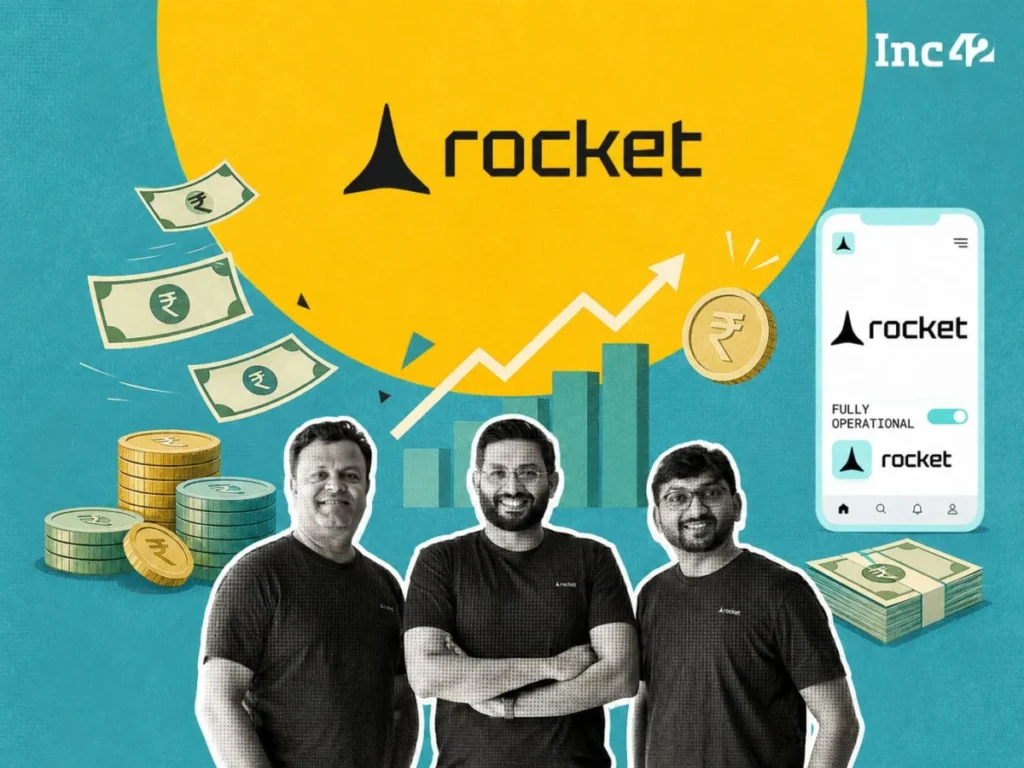
Founded in 2021 by Vishal Virani, Rahul Shingala, and Deepak Dhanak, Rocket was born out of a vision to simplify the app-building process. In an era where traditional coding requires years of technical training, Rocket’s founders focused on a platform that empowers non-technical founders, entrepreneurs, and developers to generate websites, dashboards, and internal tools via natural language instructions.
The Seed Milestone
In early 2024, Rocket captured the attention of the global venture community by securing $15 million in a seed funding round. The round, led by Salesforce Ventures and Accel—with additional participation from the Together Fund—provided the company with the necessary runway to refine its AI models and expand its product suite. This influx of capital served as a validation of the “vibe coding” thesis: the belief that the functionality of software matters as much as, or more than, the underlying syntax.
The Enterprise Pivot
Following its seed success, the company didn’t rest on its laurels. In April 2024, Rocket launched "Rocket 1.0," a pivotal expansion into the enterprise solutions segment. This iteration moved beyond simple app generation, offering businesses tools to analyze competition post-launch and generate detailed documentation regarding market dynamics and strategy. This shift toward "business-in-a-box" capabilities signaled to investors that Rocket was not merely a prototyping tool, but a comprehensive platform for business lifecycle management.
Supporting Data: Market Traction and Revenue Dynamics
Rocket’s growth trajectory is heavily fueled by its international expansion. Unlike many startups that prioritize the domestic market first, Rocket has found significant resonance in mature Western markets.
- US Market Dominance: The United States remains Rocket’s largest revenue contributor, accounting for 26% of its total earnings. This highlights the high demand for low-code/no-code AI tools in the US startup ecosystem.
- European Footprint: Europe follows closely, contributing 15-20% of the total top-line revenue.
- Domestic Performance: The Indian market accounts for 10% of revenue, suggesting that while the product has a global reach, its current sweet spot lies in regions with higher per-capita spending on SaaS (Software as a Service) products.
Pricing Model and User Accessibility
Rocket maintains a tiered pricing model designed to capture both individual hobbyists and scaling enterprises:
- Starter Plan: Free for users, providing 1 million tokens.
- Subscription Tiers: Priced at $25, $50, and $100 per month.
- Enterprise Value: Higher-priced tiers offer critical features for professional teams, including private project hosting, direct code downloads, and—crucially for sensitive businesses—the ability to opt out of data training, ensuring proprietary code remains secure.
The ‘Vibe Coding’ Phenomenon: A Broader Industry Context
The term "vibe coding" refers to the ability to instruct an AI model to build software without worrying about the underlying technical intricacies. It is a subset of the broader AI-coding boom that has taken the venture world by storm.
The sector has seen massive capital inflows. Earlier this year, Emergent, a startup co-founded by former Dunzo executive Mukund Jha, secured $70 million in funding from heavyweights like Khosla Ventures and SoftBank. Reports suggest Emergent is already eyeing a unicorn valuation. Globally, the race for dominance is reaching a fever pitch; the industry was recently electrified by reports of Elon Musk’s xAI potentially engaging in significant acquisitions to bolster its coding capabilities, specifically pointing to the integration of tools like Cursor.
According to Inc42’s Annual Indian Startup Trends Report 2025, Indian AI startups are performing exceptionally well, raising nearly $500 million across 63 deals in the first year alone. Rocket is positioned at the intersection of this trend, proving that Indian-origin AI companies can compete on the global stage.
Implications: What This Means for the Future
1. The Death of Technical Barriers
The success of Rocket and its peers signals a shift in the labor market. As natural language becomes the primary interface for software creation, the barrier to entry for building complex applications is collapsing. This shift will likely lead to an explosion in micro-SaaS companies, as individuals can now build and deploy specialized tools in minutes rather than months.
2. Enterprise Trust and Security
Rocket’s move to allow enterprises to "opt-out" of data training is a critical inflection point. For many corporations, the fear of their proprietary logic being used to train a public AI model has been a major hurdle. By addressing this directly, Rocket is positioning itself as a secure, "corporate-grade" tool, which is likely a key component of their pitch to SIG.
3. The Consolidation of the AI Coding Space
With massive capital flowing into firms like Emergent and the competitive pressure from established giants, the market for AI coding assistants is becoming crowded. The upcoming Series A round for Rocket will likely be used to build a "moat"—either through deeper proprietary model training or through strategic acquisitions of smaller tools that handle specific verticals (e.g., UI/UX design or database management).
4. Regional Scaling Challenges
While 26% of revenue from the US is impressive, the remaining revenue is distributed across a wide geography. To justify a high-valuation Series A, Rocket will likely need to double down on its US sales operations. The involvement of SIG—a firm known for its expertise in trading, technology, and global markets—could provide Rocket with not just capital, but the strategic guidance needed to navigate the hyper-competitive US enterprise landscape.
Conclusion: A Turning Point for Rocket
Rocket stands at a crossroads. Its transition from a seed-stage developer tool to a Series A enterprise platform is a testament to the founders’ vision and the surging demand for AI-driven productivity. If the deal with Susquehanna International Group (SIG) closes as expected, it will provide the company with the fuel to accelerate its product roadmap, enhance its enterprise security, and potentially capture a larger slice of the US software development market.
As the industry continues to debate whether "vibe coding" will replace traditional software engineering or merely augment it, companies like Rocket are proving that the market isn’t waiting for an answer—it is already building. For developers, founders, and investors alike, the next 18 months will be defining, as the "vibe" transforms into a standard operational paradigm for the global digital economy.