Samsung Redefines Premium Segment in India with Eighth-Generation Foldables and Ultra Wearables
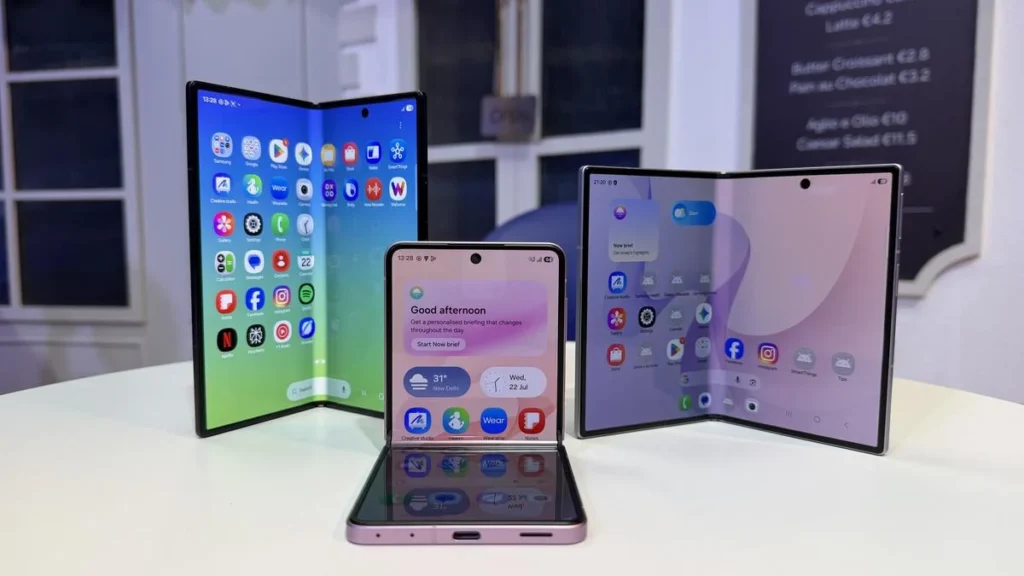
NEW DELHI — In a major bid to cement its dominance in the premium smartphone segment, Samsung Electronics officially unveiled its highly anticipated eighth-generation foldable lineup in India on Wednesday, July 22, 2026. The launch marks a historic pivot for the South Korean tech giant, which has introduced an "Ultra" variant to its foldable portfolio for the first time.
The newly launched lineup includes the ultra-premium Galaxy Z Fold 8 Ultra, the refined Galaxy Z Fold 8, and the stylish clamshell Galaxy Z Flip 8. Alongside these flagship smartphones, Samsung expanded its wearable ecosystem with the debut of the Galaxy Watch Ultra 2 and the Galaxy Watch 9.
Packed with cutting-edge "flex titanium" engineering, next-generation silicon, and deep artificial intelligence integration via Android 17, Samsung’s latest offerings aim to solidify its grasp on the rapidly expanding Indian super-premium consumer market.
Main Facts: The Next Era of Foldable Technology
The headline of Samsung’s July 2026 launch is the restructuring of its foldable portfolio to mirror its successful Galaxy S-series strategy. By introducing the Galaxy Z Fold 8 Ultra, Samsung is catering to power users demanding uncompromising camera systems and expansive screen real estate, while the standard Z Fold 8 offers a highly portable, "passport-style" design.
Key Highlights of the Launch:
- The "Ultra" Paradigm Shift: For the first time, Samsung has brought its top-tier "Ultra" branding to the foldable category with the Galaxy Z Fold 8 Ultra, boasting a 200-megapixel main camera and an ultra-thin 4.1mm chassis when unfolded.
- Flex Titanium Construction: Moving away from traditional aluminum armor, Samsung has integrated a state-of-the-art flex titanium plate across its eighth-generation foldables, significantly improving structural integrity while reducing weight.
- Extended Software Lifecycle: All three smartphones ship with One UI 9 based on Android 17 out of the box. Samsung has committed to an industry-leading 7 years of Android OS upgrades and 7 years of security patches, guaranteeing support until 2033.
- Wearable Innovations: The Galaxy Watch Ultra 2 raises the bar for outdoor smartwatches with an astonishing 5,000 nits of peak brightness and an IP69K durability rating, powered by Qualcomm’s new Snapdragon Wear Elite processor.
Chronology: The Evolution of Samsung’s Foldable Leadership
Samsung’s journey to the eighth generation of foldables represents a decade-long commitment to a form factor once deemed a risky gimmick.
[2019] Galaxy Fold (1st Gen) -> Introduced the commercial foldable concept
       |
[2021] Galaxy Z Fold 3 & Flip 3 -> Brought IPX8 water resistance & mainstream pricing
       |
[2024] Galaxy Z Fold 6 & Flip 6 -> Integrated Galaxy AI & refined slim designs
       |
[2026] Galaxy Z8 Series (8th Gen) -> Debut of "Ultra" foldables & Flex Titanium plates
The Path to July 22, 2026
When Samsung launched the original Galaxy Fold in 2019, the device was met with both awe and skepticism regarding durability. Over subsequent iterations, the company systematically resolved these engineering pain points:
- Generations 1–3 (2019–2021): Focused on basic structural viability, culminating in the introduction of water resistance and UTG (Ultra Thin Glass).
- Generations 4–6 (2022–2024): Refined the hinge mechanisms to eliminate the screen gap and introduced system-wide "Galaxy AI" to leverage the unique dual-screen form factor.
- Generations 7–8 (2025–2026): Transitioned to exotic materials like titanium and diversified the lineup into "Standard" and "Ultra" tiers to counter rising competition from Chinese OEMs and prepare for rumored premium rivals.
The July 22, 2026 launch in New Delhi showcases Samsung’s recognition of India as one of its most critical growth engines, choosing to deploy its entire premium hardware and software stack simultaneously in the region.
Supporting Data: Specifications and Indian Pricing Matrix
Samsung has engineered distinct identities for each of its three new foldables and two companion smartwatches. Below is a detailed technical and financial breakdown of the launch.
Hardware Specifications Comparison
| Feature | Galaxy Z Fold 8 Ultra | Galaxy Z Fold 8 | Galaxy Z Flip 8 |
|---|---|---|---|
| Main Display | 8.0-inch QXGA+ Dynamic AMOLED 2X, 120Hz, 3000 nits | 7.6-inch QXGA+ Dynamic AMOLED 2X, 120Hz, 3000 nits | 6.9-inch FHD+ Dynamic AMOLED 2X, 120Hz, 3000 nits |
| Cover Display | 6.5-inch FHD+ Dynamic AMOLED 2X, 120Hz | 5.5-inch FHD+ Dynamic AMOLED 2X, 120Hz | 4.1-inch HD+ Super AMOLED, 60-120Hz |
| Processor | Snapdragon 8 Elite Gen 5 | Snapdragon 8 Elite Gen 5 | Exynos 2600 |
| RAM / Storage | Up to 16 GB / Up to 1 TB | Up to 16 GB / Up to 1 TB | Up to 12 GB / Up to 512 GB |
| Rear Camera | 200 MP (Wide) + 50 MP (UW) + 10 MP (Telephoto) | 50 MP (Wide) + 50 MP (UW) | 50 MP (Wide) + 12 MP (UW) |
| Front Camera | 10 MP (Cover) + 10 MP (Main) | 10 MP (Cover) + 10 MP (Main) | 10 MP (Selfie) |
| Battery & Charging | 5,000 mAh (45W Wired / 20W Wireless) | 4,800 mAh (45W Wired / 20W Wireless) | 4,300 mAh (25W Wired / 15W Wireless) |
| Build & Protection | Titanium frame, Gorilla Glass Ceramic 3, IP48 | Titanium frame, Gorilla Glass Ceramic 3, IP48 | Titanium frame, Gorilla Glass Victus 2, IP48 |
| Weight & Thickness | 215g (4.1mm unfolded / 8.9mm folded) | 201g (4.5mm unfolded / 9.7mm folded) | 180g (6.1mm unfolded / 13.1mm folded) |
Detailed Device Breakdowns
1. Galaxy Z Fold 8 Ultra
The crown jewel of the launch, the Fold 8 Ultra, breaks engineering barriers by measuring just 4.1mm thick when unfolded, making it one of the thinnest devices on the market despite housing a massive 5,000 mAh battery. The inclusion of a 200 MP main sensor brings Samsung’s legendary mobile photography prowess directly to the foldable form factor.
2. Galaxy Z Fold 8
Representing the "passport style" design, the standard Z Fold 8 is highly compact at 201 grams. While it scales down the main display to 7.6 inches and features a dual 50 MP camera array, it maintains the same elite Snapdragon 8 Elite Gen 5 processor and 3,000 nits peak brightness as its Ultra sibling.
3. Galaxy Z Flip 8
Targeting lifestyle-focused users, the Z Flip 8 features an expanded 4.1-inch cover display running at a variable 60-120Hz refresh rate. It is powered by Samsung’s proprietary 3nm Exynos 2600 processor and boasts a highly durable glass fiber-reinforced polymer back panel.
Wearables: Galaxy Watch Ultra 2 & Watch 9
Samsung also updated its wearable portfolio, introducing high-performance chips and ultra-bright displays designed to operate seamlessly within the One UI ecosystem.
- Galaxy Watch Ultra 2 (47mm): Designed for extreme environments, featuring an outdoor-optimized 1.52-inch Super AMOLED screen reaching a record-breaking 5,000 nits peak brightness. It is equipped with an 800 mAh battery, 2 GB RAM, 64 GB storage, an IP69K rating, and 10ATM pressure certification.
- Galaxy Watch 9 (40mm / 44mm): A sleek daily companion featuring a 1.47-inch Super AMOLED Always-On Display (AOD) with 3,000 nits peak brightness, powered by a 445 mAh battery. It holds an IP68 and 5ATM rating for water and dust protection.
- Shared Architecture: Both watches run on the Qualcomm Snapdragon Wear Elite platform, operating on Wear OS customized with Samsung’s OS 7 and One UI 9 Watch.
India Pricing and Color Options
Samsung’s premium pricing reflects its target audience of business professionals, creators, and tech enthusiasts.
Galaxy Z Fold 8 Ultra Pricing:
  - 12 GB / 256 GB: ₹1,99,999
  - 12 GB / 512 GB: ₹2,19,999
  - 16 GB / 1 TB:   ₹2,25,999
  * Colors: Graphite, Cream, Violet Shadow, Green Shadow (Online Exclusive)

Galaxy Z Fold 8 Pricing:
  - 12 GB / 256 GB: ₹1,79,999
  - 12 GB / 512 GB: ₹1,99,999
  - 16 GB / 1 TB:   ₹2,39,999
  * Colors: Graphite, Cream, Lavender, Pistachio (Online Exclusive)

Galaxy Z Flip 8 Pricing:
  - 12 GB / 256 GB: ₹1,24,999
  - 12 GB / 512 GB: ₹1,44,999
  * Colors: Graphite, Cream, Pink, Mint (Online Exclusive)
(Note: Pricing for the Galaxy Watch Ultra 2 and Watch 9 in the Indian market will be announced by the company at a later date.)
Official Responses and Market Context
According to Samsung India’s product division, the design decisions guiding the eighth generation of foldables were heavily influenced by changing user behaviors in the Indian subcontinent.
"Indian consumers are no longer viewing foldables as novelty items," a Samsung spokesperson noted during the launch event. "Our market research indicates that Indian users leverage foldable screens primarily for heavy content consumption, multitasking, and enhancing their professional productivity using integrated Galaxy AI. Additionally, the camera remains a primary purchasing driver, which is why we have integrated our industry-leading 200 MP sensor into the Galaxy Z Fold 8 Ultra."
Industry analysts point out that Samsung’s introduction of the Ultra variant is a calculated response to the maturing premium smartphone market in India. Over the past three years, the Indian market has seen a dramatic "premiumization" trend, with consumers increasingly willing to spend upwards of ₹1,500,000 on devices that offer distinct productivity advantages and social prestige. By offering an Ultra option, Samsung creates a new ceiling for mobile luxury and utility, directly countering high-end slab phones and rival foldables.
Implications: How Samsung is Reshaping the Tech Landscape
The release of the Galaxy Z8 series and the new Watch lineup has profound implications for the consumer electronics market, both in India and globally.
1. The Death of the "Fragile Foldable" Narrative
By transitioning to a flex titanium plate design and securing an IP48 rating across all three foldable models, Samsung has largely resolved the durability concerns that plagued earlier generations. The integration of Corning Gorilla Glass Ceramic 3 on the cover displays represents a significant leap forward in scratch resistance and shatter prevention, bringing foldables on par with—or ahead of—traditional flagship smartphones.
2. Setting a New Benchmark for Software Longevity
Samsung’s pledge to deliver 7 years of OS updates (taking these devices all the way to Android 24 in 2033) is an aggressive move aimed at increasing the residual value of foldables. This long-term commitment directly challenges competitors who offer shorter update cycles, appealing to enterprise clients and premium consumers who demand that their high-investment devices remain secure and functional for nearly a decade.
3. The Titanium Armaments Race
With Apple adopting titanium in its Pro-series iPhones and Samsung utilizing it across its premium flagships, the implementation of "flex titanium" in foldables represents the next phase of materials engineering. Titanium allows Samsung to drastically reduce the thickness of the Z Fold 8 Ultra (to a mere 4.1mm unfolded) and the Z Fold 8 (4.5mm) without compromising structural rigidity or risking the bending issues common to ultra-thin form factors.
4. Wearable Supremacy and the 5,000-Nit Threshold
The introduction of the Galaxy Watch Ultra 2, boasting 5,000 nits of peak brightness, marks a technical milestone in wearable display technology. Designed to combat the harsh, direct sunlight of Indian summers, this display ensures perfect legibility in any outdoor environment. By pairing this hardware with Qualcomm’s Snapdragon Wear Elite processor, Samsung is establishing a robust hardware moat to fend off competing premium sports watches.
Ultimately, Samsung’s eighth-generation launch is a statement of technological maturity. By refining the design, upgrading to premium materials, and expanding the portfolio to include an Ultra tier, Samsung is not merely maintaining its lead in the foldable space—it is actively redefining what a flagship mobile ecosystem looks like in 2026.