Semiconductor Summit 2026: Charting the Future of Global Chip Innovation and Sustainable Manufacturing in Chennai
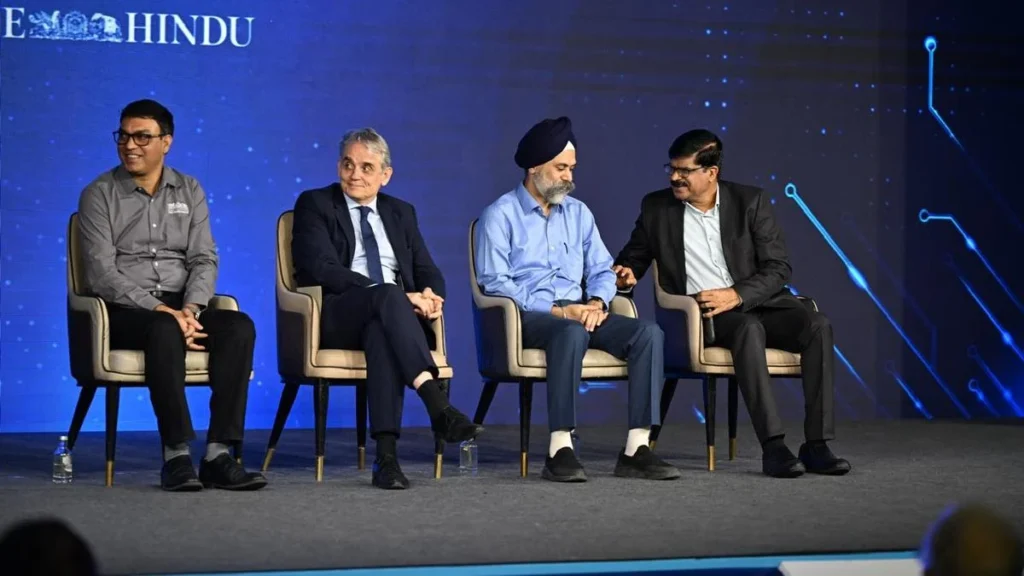
CHENNAI — In an era defined by hyper-connectivity, artificial intelligence, and the relentless miniaturization of technology, the foundational building block of the modern digital economy remains the semiconductor. On October 27, 2026, the SRM Institute of Science and Technology (SRMIST), in strategic association with The Hindu Group, convened the Semiconductor Summit 2026 in Chennai.
The premier global gathering drew an elite assemblage of international diplomats, policymakers, top-tier researchers, and industry pioneers. As the world navigates supply chain vulnerabilities, geopolitical realignments, and the urgent imperative for green technology, the summit served as a critical nexus for discussing advanced lithography, chip design breakthroughs, power efficiency, and next-generation material sciences.
Main Facts
The Semiconductor Summit 2026 stands out as one of the most influential technology conclaves hosted in Southern India, drawing significant international and domestic stakeholders.
- Event Date & Location: October 27, 2026; Chennai, India.
- Organizers: SRM Institute of Science and Technology (SRMIST) in association with The Hindu Group.
- Key Dignitaries in Attendance:
- Navneet, Chief Executive Officer, The Hindu
- Michael Hasper, Consul General of the Federal Republic of Germany
- Kamaljeet Singh, Director General, Semi-Conductor Laboratory (SCL), Mohali, operating under the Ministry of Electronics and Information Technology (MeitY), Government of India
- Dr. C. Muthamizhchelvan, Vice-Chancellor, SRM Institute of Science and Technology (SRMIST)
- Core Themes: Advanced lithography, sustainable semiconductor manufacturing, power-efficient chip architectures, public-private partnerships, international bilateral cooperation (specifically India-Germany synergies), and talent development for the global semiconductor workforce.
- Photographic Credits: Captured by Raghunathan S.R. for The Hindu.
Chronology of the Summit
The day-long conclave followed a meticulously structured agenda designed to transition participants from high-level geopolitical strategy to granular technical breakthroughs.
09:00 AM – Inaugural Address and Welcome
The summit commenced with an opening plenary session led by SRMIST Vice-Chancellor Dr. C. Muthamizhchelvan, alongside The Hindu CEO Navneet. The opening remarks emphasized the pivotal role of media, academia, and industry in demystifying the semiconductor ecosystem and fostering a culture of indigenous innovation. Dr. Muthamizhchelvan highlighted SRMIST’s ongoing commitments to cutting-edge research and development (R&D) and engineering curricula tailored to modern fab requirements.
10:30 AM – International Diplomacy and Global Supply Chain Panel
Following the inauguration, a high-profile diplomatic and strategic panel took center stage. German Consul General Michael Hasper delivered a keynote focusing on European-Indian technological corridors. He emphasized that Germany’s robust industrial engineering base combined with India’s immense talent pool creates an ideal synergy for semiconductor design and manufacturing resilience.
11:30 AM – National Roadmap: The SCL Perspective
Kamaljeet Singh, Director General of the Semi-Conductor Laboratory (SCL) in Mohali, took the podium to outline India’s domestic semiconductor mission under MeitY. His address offered a transparent look at India’s transition from a consumption-led market to a producer-centric ecosystem, detailing modernization efforts at SCL and the government’s ongoing support for fabless startups and OSAT (Outsourced Semiconductor Assembly and Test) facilities.
01:00 PM – Technical Breakouts and Industry Networking
Afternoon sessions delved deep into the mechanics of advanced lithography—moving deeper into sub-nanometer nodes—as well as novel semiconductor materials such as Gallium Nitride (GaN) and Silicon Carbide (SiC) for high-power electric vehicle (EV) and renewable energy applications.
Supporting Data and Industry Context
The urgency of the Semiconductor Summit 2026 cannot be understood without examining the macroeconomic and technical landscapes governing the global chip industry.
The Exponential Growth of the Global Semiconductor Market
According to recent global technology market intelligence, the semiconductor industry is projected to surpass $1 trillion in annual revenue before the end of the decade. Driven by generative AI servers, Internet of Things (IoT) endpoints, 5G/6G communication infrastructure, and autonomous vehicles, the demand for silicon and compound semiconductors has never been higher.
India’s Semiconductor Ambitions (India Semiconductor Mission – ISM)
With the launch of the India Semiconductor Mission, the central government has committed multi-billion-dollar incentives to attract global fabrication (fab) and display units. However, industry experts at the Chennai summit noted that hardware manufacturing must be supported by deep-tech R&D and specialized academic training. Institutions like SRMIST are stepping up to bridge this gap, ensuring a pipeline of domestic talent capable of managing cleanrooms, designing complex system-on-chips (SoCs), and driving packaging innovations.
The European-Indian Axis
Germany’s active participation through Consul General Michael Hasper underscores a broader European Union strategy to diversify supply chains. Europe, via the European Chips Act, is aggressively investing in local manufacturing, while simultaneously forging strategic partnerships with trusted democratic allies like India to secure resilient, transparent, and sustainable tech corridors.
Official Responses and Key Insights
Bridging Academia and Industry
Speaking on the necessity of institutional alignment, SRMIST Vice-Chancellor Dr. C. Muthamizhchelvan noted:

"The semiconductor landscape is no longer just about heavy manufacturing; it is an intricate web of material science, quantum physics, advanced software, and environmental engineering. At SRMIST, our mission is to prepare our students not just to participate in this industry, but to lead its next wave of breakthroughs. Summits like these act as vital bridges connecting classroom theory with real-world industrial scale."
The Media’s Role in Technological Literacy
Navneet, CEO of The Hindu, emphasized the responsibility of premier journalistic institutions in tracking and contextualizing technological shifts:
"Semiconductors dictate the geopolitical and economic pulse of the 21st century. By partnering with visionary academic institutions like SRMIST, The Hindu aims to foster a national and global dialogue that moves beyond mere headlines—delving deep into the policy, science, and human capital required to sustain this technological revolution."
Strengthening Indo-German Ties
Reflecting on bilateral cooperation, German Consul General Michael Hasper remarked:
"Germany and India share a profound commitment to democratic values, technological excellence, and sustainable development. The semiconductor ecosystem requires unprecedented global collaboration. By combining Germany’s engineering heritage with India’s vibrant software and hardware talent, we are building a foundation for mutual prosperity and technological security."
National Policy and Fabrication Readiness
Kamaljeet Singh, Director General of SCL Mohali (MeitY), shed light on institutional preparedness:
"India is at a historical inflection point. Our focus at the Semi-Conductor Laboratory is to ensure that national research aligns seamlessly with commercial viability. Initiatives under MeitY are laying down the bedrock, but the active collaboration of academic powerhouses like SRMIST and international partners from Europe and beyond will determine how rapidly we scale our domestic capabilities."
Implications for the Future
The conclusions and alliances forged at the Semiconductor Summit 2026 carry profound implications for regional development, national sovereignty, and global technology standards.
1. Regional Tech Hub Status for Chennai and Tamil Nadu
By hosting a summit of this magnitude, Chennai and the broader state of Tamil Nadu reinforce their position as India’s premier destination for advanced manufacturing, automotive engineering, and electronics hardware design. The cross-pollination of ideas between global diplomats and local technocrats paves the way for regional investments, startup incubations, and specialized industrial parks.
2. Sustainability as a Core Metric
A major takeaway from the summit was the paradigm shift toward sustainable manufacturing. Semiconductor fabrication is notoriously resource-intensive, consuming massive amounts of ultra-pure water and electricity. Discussions around power-efficient chip architectures and green fab practices highlight the industry’s commitment to minimizing its carbon footprint while scaling production.
3. Talent Sovereignty and Workforce Development
As multinational corporations set up design centers and packaging units across India, the demand for skilled microelectronics engineers has skyrocketed. The summit highlighted that institutions must continuously upgrade their laboratories and curricula. By fostering direct mentorship between industry leaders and university students, SRMIST and its partners are actively mitigating the global talent crunch.
Conclusion
As the Semiconductor Summit 2026 drew to a close, participants left with a renewed sense of urgency and collaboration. The event successfully mapped out a collective path forward—one where public policy, international diplomacy, academic rigor, and industrial innovation converge to power the digital future sustainably and securely.