Security Catastrophe: CISA Contractor Exposes Sensitive Infrastructure via Public GitHub Repository
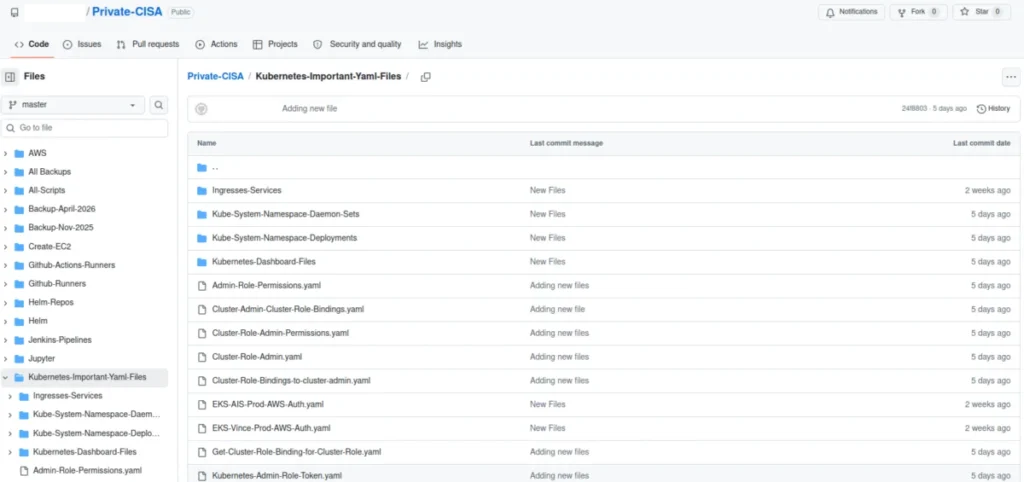
In what cybersecurity experts are calling one of the most egregious data leaks in recent government history, a contractor for the Cybersecurity and Infrastructure Security Agency (CISA) inadvertently exposed a treasure trove of highly sensitive credentials and internal deployment files on a public GitHub repository. The breach, which remained active for months, potentially provided malicious actors with the keys to the kingdom regarding the U.S. government’s secure code development environment and high-privilege cloud architecture.
The incident underscores a harrowing reality in modern digital defense: even the agency tasked with safeguarding the nation’s critical infrastructure is not immune to the catastrophic risks of poor security hygiene and human error.
The Anatomy of the Breach: "Private-CISA"
The exposure centered on a public GitHub repository aptly, if alarmingly, named "Private-CISA." Maintained by an employee of Nightwing, a Dulles, Virginia-based government contractor, the repository served as an uncurated "scratchpad" for the individual to synchronize work files across multiple environments, including personal and professional devices.
Discovered by Guillaume Valadon, a researcher with the security firm GitGuardian, the repository contained a staggering volume of internal data. GitGuardian, which specializes in monitoring public code repositories for exposed secrets, flagged the account after automated systems detected highly sensitive patterns. Upon inspection, Valadon found that the repository included:
- Administrative credentials to three highly privileged Amazon AWS GovCloud accounts.
- Plaintext usernames and passwords for dozens of internal CISA systems.
- Documentation and logs detailing the internal software development lifecycle, testing protocols, and deployment strategies.
- Access tokens for CISA’s internal "Artifactory," a central repository used for managing software packages and build dependencies.
The breach was not merely a case of accidental publication; it was a testament to a total failure of standard security protocols. Evidence within the repository’s commit logs indicates that the administrator actively disabled GitHub’s built-in "Secret Scanning" feature—a tool specifically designed to prevent the accidental pushing of SSH keys, API tokens, and passwords to public repositories.
"Passwords stored in plain text in a CSV, backups in Git, explicit commands to disable GitHub’s secrets detection feature," Valadon remarked. "I honestly believed that it was all fake before analyzing the content deeper. This is indeed the worst leak that I’ve witnessed in my career."
Chronology of the Exposure
The timeline of this incident reveals a prolonged window of vulnerability that potentially spans over six months.
- November 13, 2025: The "Private-CISA" repository is created. Security researchers believe the contractor began using the repository to sync work-related files between a secure government-issued device and a personal computer.
- May 15, 2026: Guillaume Valadon of GitGuardian identifies the repository. After realizing the owner is unresponsive to initial outreach, Valadon escalates the report to the security community.
- Late May 2026: Philippe Caturegli, founder of the security consultancy Seralys, conducts an independent analysis. He confirms the validity of the AWS GovCloud credentials and identifies the potential for lateral movement within CISA’s network.
- The Takedown: Shortly after being notified by both KrebsOnSecurity and Seralys, the GitHub account is taken offline. However, a significant security lapse occurs post-takedown: the exposed AWS keys remain valid for an additional 48 hours, leaving the agency’s cloud infrastructure vulnerable even after the primary leak was removed from public view.
The "Landing Zone" and Lateral Movement Risks
Perhaps the most alarming aspect of the breach involves the exposure of credentials to "LZ-DSO," or "Landing Zone DevSecOps." This environment serves as the backbone for CISA’s secure code development.
Philippe Caturegli, who validated the extent of the exposure, noted that the inclusion of Artifactory credentials represents a "prime place to move laterally." By compromising these repositories, an attacker could theoretically inject malicious backdoors into the software packages CISA develops and deploys. Because these packages are trusted components of the agency’s internal infrastructure, the malicious code would be distributed throughout the network, granting the adversary a persistent, undetected foothold.
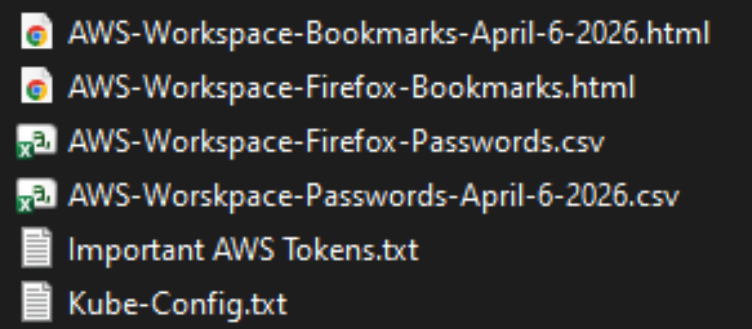
Furthermore, the audit revealed a pattern of "security by convenience." Many of the exposed credentials utilized weak, predictable naming conventions—often consisting of the platform name followed by the current year (e.g., [PlatformName]2026). Such practices are considered a foundational security failure, providing attackers with an easy path to escalate privileges once they have breached the perimeter.
Official Responses and Agency Context
In response to inquiries, a CISA spokesperson maintained a stance of cautious optimism regarding the impact of the leak. "Currently, there is no indication that any sensitive data was compromised as a result of this incident," the statement read. "While we hold our team members to the highest standards of integrity and operational awareness, we are working to ensure additional safeguards are implemented to prevent future occurrences."
Nightwing, the government contractor responsible for the employee managing the repository, declined to provide a statement, directing all inquiries back to the agency.
The timing of this breach is particularly sensitive. CISA is currently navigating a period of unprecedented institutional instability. Under the current administration, the agency has seen a loss of nearly one-third of its workforce, a result of early retirements, buyouts, and sweeping resignations. This "brain drain" has left the agency operating with reduced capacity and oversight, raising questions about whether the necessary institutional guardrails—such as mandatory security training and automated compliance monitoring—are being strictly enforced during this period of transition.
The Broader Implications for National Security
The "Private-CISA" incident serves as a sobering case study in the risks posed by third-party contractors. Government agencies frequently rely on a vast ecosystem of private firms to build, manage, and maintain critical systems. When these contractors treat public, insecure platforms like GitHub as their personal synchronization tools, they effectively bypass the hardened security perimeters the government spends billions of dollars to maintain.
Experts argue that the incident highlights two major systemic issues:
- The Failure of "Shadow IT": The use of personal cloud services and unauthorized repositories to handle sensitive government data remains a pervasive problem. Despite strict internal policies, the convenience of synchronization often outweighs the perceived risk of a leak for individuals working across fragmented environments.
- The Myth of Perimeter Security: The incident proves that an organization is only as strong as its weakest contractor. In an era of interconnected software supply chains, the exposure of credentials for internal development tools is functionally equivalent to handing over the keys to the agency’s entire digital architecture.
As CISA continues its internal investigation, the security community remains on edge. While the agency claims no data was compromised, the fact that administrative-level credentials were sitting exposed on the open web for over half a year leaves little room for comfort. The incident serves as a harsh reminder that in the realm of cybersecurity, the most dangerous vulnerability is often not a sophisticated zero-day exploit, but a simple, public repository and an ignored security setting.
For the cybersecurity community, this event is a clarion call for more rigorous oversight of third-party contractors and a fundamental reassessment of how internal credentials are managed, stored, and audited within the federal government. The "Private-CISA" repository is gone, but the lessons it leaves behind regarding the fragility of modern infrastructure are likely to resonate for years to come.