Shadows in the Server Rack: Dutch Authorities Dismantle Infrastructure Linked to Russian Hybrid Warfare

In a high-stakes operation targeting the digital underbelly of European security, Dutch authorities have dealt a significant blow to a network accused of facilitating Russian state-sponsored cyber warfare. On May 18, investigators from the Dutch financial crimes agency, the Tax Intelligence and Investigation Service (FIOD), executed a series of coordinated raids, leading to the arrest of two prominent figures in the Internet hosting industry. The suspects—a 57-year-old Amsterdam resident and a 39-year-old from The Hague—are accused of violating international sanctions by providing critical IT infrastructure to entities operating on behalf of Russian intelligence.
The arrests follow a prolonged investigation into the hosting provider known as Stark Industries Solutions, an entity previously sanctioned by the European Union for its role in staging cyberattacks and disinformation campaigns. The crackdown resulted in the seizure of laptops, mobile devices, and more than 800 servers, effectively silencing a digital pipeline that officials claim was instrumental in destabilizing European democratic institutions.
The Chronology of a Digital Conduit
The rise and fall of this infrastructure is a testament to the agility of modern proxy-based cyber warfare. The saga began in early 2022, just two weeks before the Russian invasion of Ukraine, when Stark Industries Solutions materialized on the global stage. It quickly established itself as a "bulletproof" hosting provider, catering to malicious actors by offering robust anonymity and DDoS (Distributed Denial of Service) capabilities.
2024: The Spotlight Turns
In May 2024, investigative reporting by KrebsOnSecurity unveiled the true nature of Stark Industries, identifying it as a primary staging ground for Russian-linked hacking groups. The report linked Stark to the Moldovan brothers Ivan and Yuri Neculiti and their company, PQHosting. By providing essential internet connectivity to Stark, the Neculitis became central figures in a broader web of digital aggression.
2025: Sanctions and Evasion
By May 2025, the European Union officially sanctioned PQHosting and the Neculiti brothers for their contributions to Russia’s hybrid warfare efforts. However, the sanctions revealed a significant loophole: while PQHosting was blocked, Stark Industries maintained a secondary "umbilical cord" to the open internet via a Dutch-based provider, MIRhosting.
As leaked internal documents and subsequent investigations suggested, the network operators anticipated the sanctions. Weeks before the EU’s formal announcement, assets were quietly transferred from the compromised PQHosting to a new entity, the[.]hosting, which operated under the corporate umbrella of WorkTitans BV. This Dutch firm was controlled by the two men arrested in May 2026—Andrey Nesterenko and Youssef Zinad.
2026: The Final Shutdown
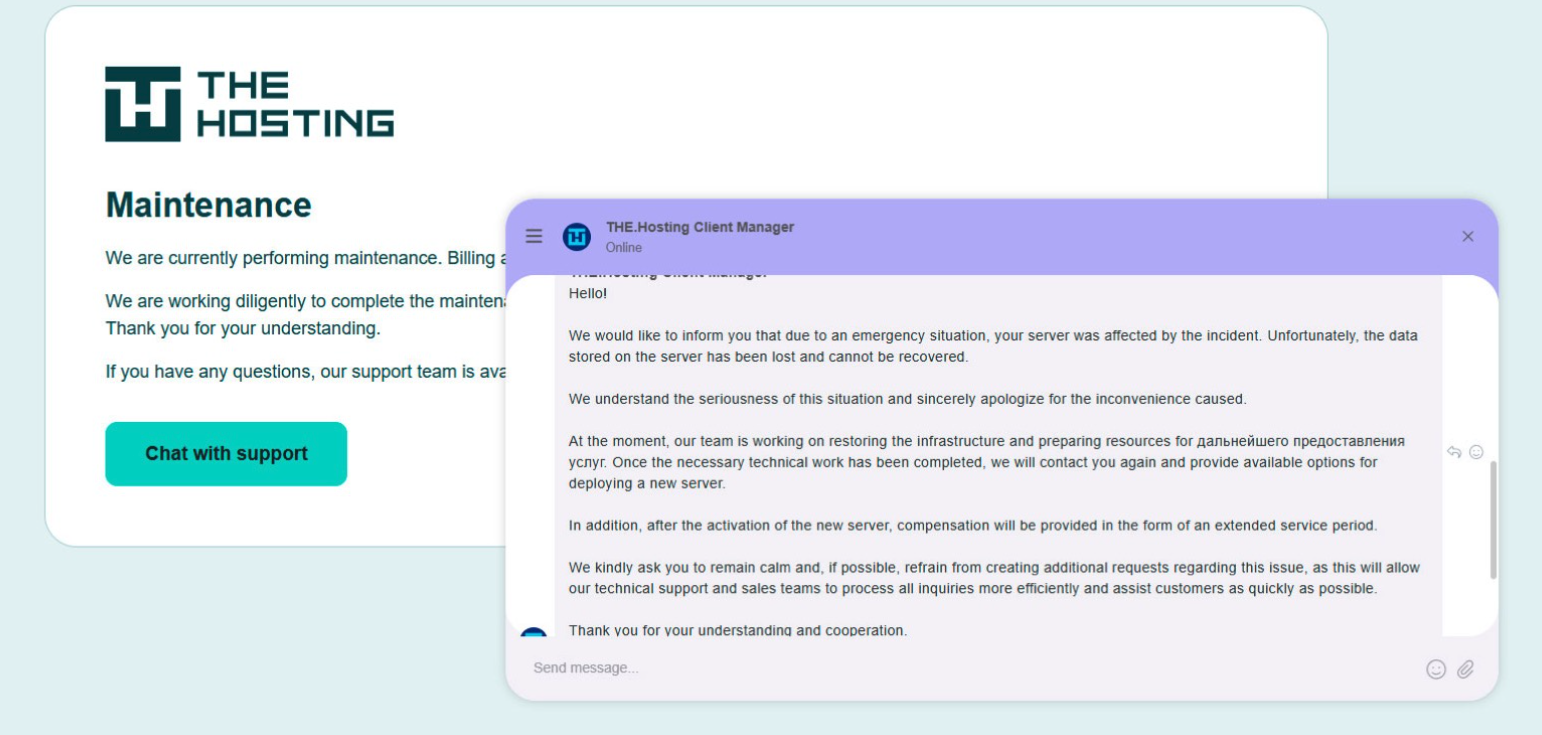
The investigation reached its climax on May 18, 2026, when FIOD officers searched businesses in Enschede and Almere, as well as critical data centers in Dronten and Schiphol-Rijk. The seizure of 800 servers marked the end of the line for "the[.]hosting," leaving its customer base with a stark message: their data had been seized and was unrecoverable.
Supporting Data: Evidence of Influence
The scale of the operation’s impact on European stability is not merely theoretical. Investigative analysis by the Dutch daily de Volkskrant uncovered data linking WorkTitans and MIRhosting to a surge in attacks against Danish government infrastructure.
Between November 13 and November 19, 2025—the critical week of Denmark’s municipal elections—these networks were identified as the most active conduits for pro-Russian cyber-disruption. The timing suggests a deliberate attempt to undermine the integrity of the democratic process. While the operators attempted to obscure their involvement through shell companies and complex routing, the traffic patterns provided a digital breadcrumb trail that investigators could no longer ignore.
Official Responses and Denials
The individuals caught in the crosshairs of the FIOD have adopted vastly different strategies in the wake of their arrests.
The Stance of Andrey Nesterenko
Andrey Nesterenko, the 39-year-old Russian-born founder of MIRhosting, has vehemently denied the allegations. Nesterenko, who rose to notoriety in the tech world as a former piano prodigy, has spent two decades building his reputation in the hosting industry. His company, Innovation IT Solutions Corp., has long been scrutinized; it previously hosted stopgeorgia[.]ru, a site that served as a hub for hacktivists during the 2008 Russo-Georgian War—a conflict widely considered the first instance of simultaneous military and cyber warfare.
In correspondence following his arrest, Nesterenko maintained his innocence: "The transition to ‘the[.]hosting’ was not intended to evade sanctions. The hardware and customer portfolio had already been transferred to WorkTitans before the sanctions appeared. Closing or damaging a legitimate Dutch infrastructure company will not stop cybercrime, but it will harm many people who have done nothing wrong."
MIRhosting, in an official statement, claimed that an internal audit found no anomalies in their traffic during the Danish elections. They argued that because they received no official abuse reports prior to the media exposure, they had no reason to believe their infrastructure was being misused.
The Elusiveness of Youssef Zinad
The 57-year-old Youssef Zinad has proven a far more enigmatic figure. Since the initial reports in 2025, Zinad has largely vanished from public view. He deleted his LinkedIn profile, severed communication with colleagues, and, according to neighbors, left his residence in a hurried state, leaving behind piles of trash and drawn blinds. When finally apprehended in an Amsterdam apartment, his isolation served as a stark contrast to his previous role as a vocal proponent of MIRhosting’s services.

Nesterenko attempted to distance himself from Zinad, claiming the latter was never an employee but rather a contractor providing "business tasks." This defense is contradicted by previous digital records, including email correspondence where Zinad used a @mirhosting.com address and was identified as a member of the company’s legal team.
Implications: A Shifting Legal Landscape
The arrest of Nesterenko and Zinad serves as a landmark moment in the enforcement of international sanctions within the digital domain. For years, "bulletproof" hosters have operated in a legal gray area, exploiting the difficulty of attribution and the cross-border nature of the internet to provide a safe haven for state-sponsored malice.
The Accountability Gap
The Dutch investigation signals that the "safe harbor" era for such providers is closing. By charging the operators with violating sanctions laws, the FIOD is establishing a precedent: service providers can no longer claim ignorance of their clients’ activities if they ignore clear patterns of malicious behavior. This "willful blindness" defense is increasingly being rejected by European courts.
Future Security Risks
While the seizure of 800 servers is a tactical victory, experts warn that the underlying threat remains fluid. The ease with which these operators moved from PQHosting to WorkTitans illustrates the "whack-a-mole" nature of cyber infrastructure. As sanctions tighten in one jurisdiction, actors simply migrate to another, often in countries with less robust regulatory frameworks.
Moreover, the human cost of these operations—the erosion of trust in digital services and the tangible harm to democratic processes—remains a significant challenge for the European Union. The case of Stark Industries highlights the need for closer cooperation between national intelligence agencies, financial regulators, and the private sector to map the interdependencies of the global internet.
Conclusion
As the legal proceedings against the two men progress, the Dutch authorities have sent an unambiguous message to the tech industry: the infrastructure of the internet is not a neutral space. When hosting companies facilitate the hybrid warfare of hostile states, they are no longer merely service providers—they are participants in the conflict. The dismantling of this network serves as a warning that in the age of cyber warfare, the gatekeepers of the digital world will be held accountable for the keys they turn for the wrong clients.