Standoff at Rudraprayag: Nihang Sect Occupies Gurdwara, Takes Hostage Amid Growing Tensions in Uttarakhand
Rudraprayag, Uttarakhand – June 21, 2026
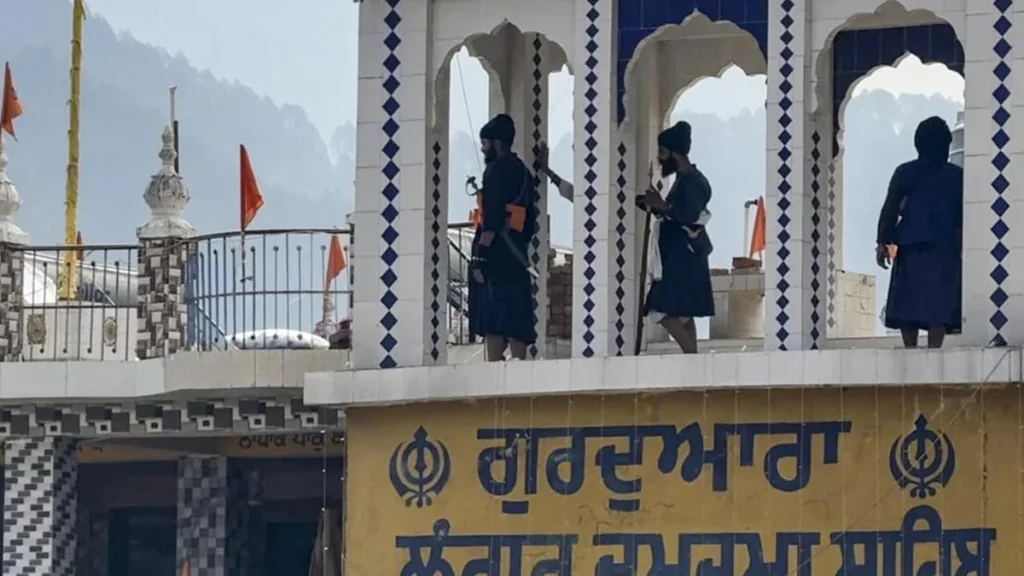
A high-stakes standoff unfolded this weekend at a gurdwara in Nagrasu, situated along the strategic Badrinath Highway in Uttarakhand, as a group of Nihangs—a Sikh order known for its martial tradition—seized control of the building. The group, armed with traditional weapons including spears, swords, and axes, took an elderly Sikh devotee hostage on the rooftop, setting the stage for a tense confrontation with local law enforcement.
The incident, which began on the evening of June 20, 2026, serves as a flashpoint following a week of escalating communal and legal friction between members of the sect and local authorities in the Chamoli district. As of Sunday, June 21, local administration reports indicate that while the situation remains delicate, active negotiations are underway to ensure the safety of the hostage and a peaceful resolution to the occupation.
The Chronology of the Standoff
The Catalyst: The Karnaprayag Clash (June 16)
The origins of the current unrest can be traced back to June 16, when a verbal altercation over parking near a hotel in the Karnaprayag market escalated into violence. A group of Nihangs, who were returning from the holy pilgrimage at Sri Hemkund Sahib, became embroiled in a dispute with local residents.
Reports indicate that the confrontation turned physical, with the pilgrims allegedly using swords to attack the locals. The clash resulted in injuries to four residents and one member of the Nihang sect. In the immediate aftermath, local police moved to restore order, leading to the arrest of four Nihangs, all of whom are reportedly from Mohali, Punjab. The arrests sparked significant resentment among the sect members, who claimed the police action was "one-sided."
The Occupation at Nagrasu (June 20–21)
Driven by a desire to protest the arrests, a group of Nihangs arrived at the Nagrasu gurdwara on the afternoon of Saturday, June 20. The gurdwara, located between Rudraprayag and Gauchar, serves as a vital waystation for thousands of pilgrims traveling to the sacred Hemkund Sahib.
According to Beant Singh, one of the primary managers of the Nagrasu facility, the group arrived with a specific ultimatum: they demanded the provision of 50 to 60 rooms to house a large contingency of protesters expected to arrive for a demonstration against the Karnaprayag arrests. When the gurdwara committee, citing logistical and space constraints, explained that they could not fulfill this demand, the situation deteriorated rapidly.
The Nihangs allegedly engaged in vandalism before forcing their way to the third floor of the building. They blocked the stairwell and took an elderly Sikh devotee hostage, moving him to the roof. From this elevated position, the group began raising slogans, visibly armed with an arsenal of traditional weaponry, including spears, kirpans, and axes.
Official Responses and Administrative Management
The Stance of the Rudraprayag District Administration
Superintendent of Police (SP) Niharika Tomar and District Magistrate (DM) Vishal Mishra have been at the forefront of the de-escalation efforts. Throughout Sunday, the administration maintained a dual-track strategy: deploying a heavy police presence to secure the perimeter while simultaneously engaging in constant dialogue with the occupiers.
"The police, district administration, and the Gurudwara management committee are in constant dialogue with the Nihang Sikhs, attempting to understand their concerns and find a solution," SP Tomar stated. She confirmed that by midday Sunday, the negotiations had yielded a breakthrough, with one of the Nihangs agreeing to descend from the roof to engage in direct talks with the authorities.
DM Vishal Mishra has been keen to reassure the public that the broader regional peace remains intact. "An internal dispute took place inside the gurdwara. Police and administrative officials are present on site to maintain law and order. There is no disruption of any kind," Mishra stated, adding that daily religious activities—including ardas (prayers) and the operation of the langar (community kitchen)—have continued uninterrupted.
Gurdwara Management’s Perspective
The management committee, headed by Sardar Sukhdev Singh and Sardar Beant Singh, has found itself in an unenviable position. Having built the Nagrasu gurdwara several years ago to serve the Sikh community in the Himalayan foothills, the managers are now caught between the demands of the militant protesters and the strictures of the law.
Beant Singh confirmed that SP Tomar has offered the Nihangs a "safe passage" back to Punjab, provided they relinquish their weapons, release the hostage, and vacate the premises. As of Sunday evening, while the standoff continues, the mood is described as "contained," with the administration expressing cautious optimism that a violent confrontation will be avoided.
Implications for Regional Stability and Pilgrimage
The standoff in Nagrasu occurs at a sensitive time for Uttarakhand, a state that heavily relies on the annual religious tourism circuit. The Badrinath Highway is a critical artery for the Char Dham Yatra and the Hemkund Sahib pilgrimage. Any disruption to the security of these routes has the potential to cause widespread panic among pilgrims and local business owners.
The Challenge of Managing Sectarian Demands
The incident highlights the growing complexity of policing pilgrimage routes where diverse groups converge. The Nihangs, a historical sect of Sikhism, maintain a distinct identity characterized by their adherence to traditional martial codes. When these traditions intersect with modern civil laws—particularly in the context of criminal arrests—the resulting friction can lead to explosive situations, as seen in the Karnaprayag incident.
The Uttarakhand government has already ordered an official enquiry into the initial clash at Karnaprayag. Observers suggest that the findings of this inquiry will be crucial in addressing the root causes of the "one-sided action" complaints raised by the Nihangs.
The "Hostage" Dynamic
The decision to hold a fellow Sikh devotee hostage has been particularly jarring for the local community and the gurdwara administration. It represents a deviation from the traditional role of the gurdwara as a place of refuge and safety. By turning a site of worship into a site of a standoff, the protesters have drawn sharp criticism from community leaders, who argue that such tactics undermine the sanctity of the institution and the broader cause they claim to represent.
Looking Forward: Prospects for Resolution
As night fell on June 21, the situation remained under a heavy security blanket. The presence of the police is not just a tactical measure but a psychological one, intended to signal that while the administration is committed to a peaceful resolution, it will not tolerate the indefinite occupation of a public facility or the endangerment of citizens.
The resolution of this crisis will likely hinge on two factors:
- Legal Assurance: The degree to which the administration can assure the Nihangs of a fair, transparent investigation into the June 16 clash without compromising the integrity of the ongoing criminal proceedings.
- De-escalation: The ability of the gurdwara management and local elders to mediate between the armed group and the police, effectively de-weaponizing the protest.
While the district administration maintains that the situation is "fully under control," the events at Nagrasu have left a mark on the local community. The incident serves as a stark reminder of the fragile balance between upholding the law and respecting the sentiments of religious groups traveling through the Himalayan region.
For the time being, the eyes of the region remain fixed on the third floor of the Nagrasu gurdwara, where the hope remains that the standoff will conclude not with a clash, but with a return to the peaceful traditions that the gurdwara was established to uphold.