Stop the Bleeding: The Definitive Guide to E-commerce Conversion Rate Optimization (CRO)

In the hyper-competitive digital marketplace, the survival of an e-commerce venture hinges on a singular, critical flow: the movement of potential customers from discovery to checkout. For many business owners, this flow is severely compromised. Marketing budgets are often funneled into acquiring new traffic, yet the underlying issue remains unaddressed. Your business is effectively "bleeding" capital—losing potential revenue at every stage of the funnel. Before increasing your ad spend, you must first stop the bleeding.
E-commerce Conversion Rate Optimization (CRO) serves as the tourniquet for your business. In an industry where acquiring a new customer can cost significantly more than retaining an existing one, the fact that over 90% of website traffic fails to convert is a staggering loss. By optimizing your existing traffic rather than chasing new, costly visitors, you can unlock a "magical" increase in sales without raising your marketing overhead.
Understanding the Anatomy of Conversion
Defining the Conversion Rate
At its core, the conversion rate is the fundamental metric of e-commerce health. While its specific definition shifts based on business models, it essentially measures the ratio of individuals who progress from one stage of a journey to the next. Whether it is a brick-and-mortar customer trying on a dress or a digital visitor adding an item to their cart, the principle remains constant: tracking the success of a transition.
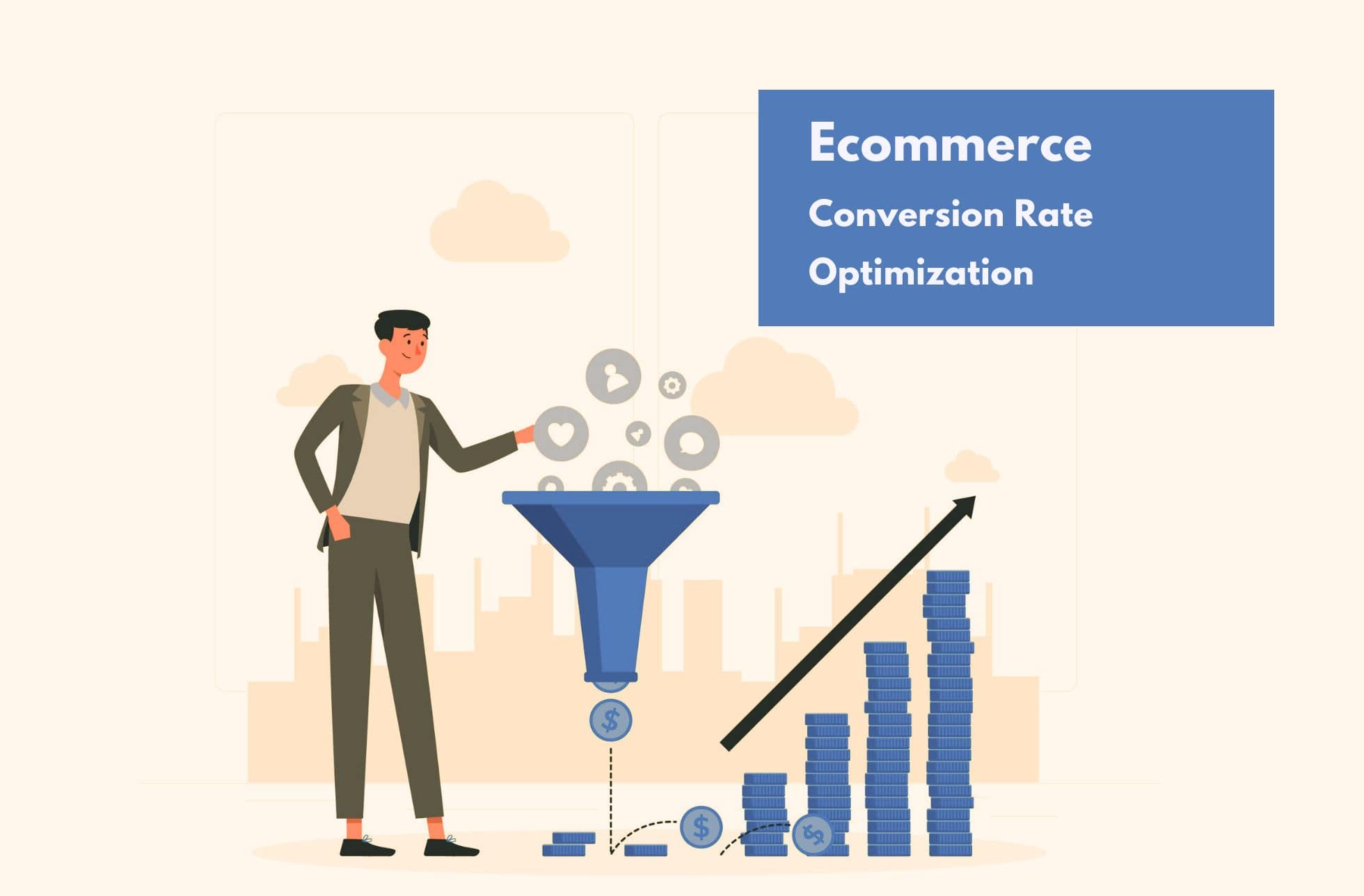
In the digital sphere, the E-commerce Conversion Rate is the percentage of total visitors who perform a specific, desired action. This could be a purchase, a newsletter subscription, or the download of a white paper. CRO is the systematic process of refining your website and marketing campaigns to ensure a higher percentage of those visitors take that final step. By utilizing frameworks like the AIDA model (Attention, Interest, Desire, Action) or mapping the customer journey, businesses can pinpoint exactly where they are losing their audience.
The Mathematical Foundation
To optimize, one must first measure. The conversion rate formula is a straightforward calculation that acts as the bedrock for all data-driven growth:
Conversion Rate (%) = (Number of Conversions / Total Number of Visitors) x 100

For instance, if your online store attracts 500 unique visitors in a single day and 15 of them complete a purchase, your conversion rate is 3%. While this number provides a snapshot, the true value of CRO lies in breaking down this formula across different touchpoints. By calculating the conversion rate between specific stages—such as from "Product View" to "Add to Cart"—you gain the clarity needed to identify where your sales funnel is fracturing.
Chronology of Optimization: A Step-by-Step Strategy
Effective CRO is not an overnight fix; it is a cycle of observation, hypothesis, testing, and implementation. To successfully optimize your store, follow this professional framework:
1. Data Integrity: The Foundation of Insight
Optimization without accurate data is akin to navigating a ship through a storm with broken radar. Before implementing changes, you must ensure your analytics tools are providing a "single source of truth." Tools such as Google Analytics 4 provide quantitative data on traffic flow, while heat-mapping tools like Hotjar offer qualitative insights into user behavior. Relying on gut feelings is a recipe for disaster; relying on verified data is the hallmark of a high-growth business.

2. Identifying the Bottlenecks
Think of your e-commerce site as a highway. Bottlenecks are the points where the lanes narrow, causing traffic to stall and eventually exit the highway entirely. These could be slow-loading images, complex checkout forms, or a lack of mobile responsiveness. By reviewing your conversion data at each funnel stage, you can identify the precise step with the lowest conversion rate. This is your primary target for optimization.
3. Implementing Trust Signals
Digital skepticism is at an all-time high. When a user enters their payment information, they are performing an act of faith. To minimize friction, you must provide explicit trust signals:
- Trust Badges: Displaying verified icons (e.g., McAfee Secure, Norton) reassures users that their data is protected.
- Secure Payment Gateways: Offering recognized payment methods like PayPal or Apple Pay signals legitimacy.
- SSL Encryption: The presence of the "https" prefix and the padlock icon is a non-negotiable standard for security.
- Social Proof: Reviews, testimonials, and user-generated content act as a psychological catalyst, reducing the perceived risk for new buyers.
4. Professional Presentation
The "curb appeal" of your website dictates the perceived quality of your products. Recent trends indicate that user experience (UX) and aesthetic design are often weighted more heavily by consumers than the product itself. If your site features broken links, pixelated images, or inconsistent branding, you are signaling to the customer that your business is unprofessional. Invest in high-quality imagery, clear typography, and a streamlined navigation architecture to build immediate credibility.

Benchmarking Success: What Is a "Good" Rate?
A common inquiry among e-commerce stakeholders is, "What is a good conversion rate?" While the global average typically fluctuates between 2% and 5%, these numbers are highly dependent on industry, price point, and traffic source.
- Sales Conversion Rate: The primary indicator of revenue health.
- Email Conversion Rate: Measures the efficacy of your CRM and automated marketing efforts.
- Landing Page Conversion Rate: A critical metric for paid advertising campaigns. A "good" landing page conversion rate is often considered to be above 5%, while an "excellent" rate exceeds 10%.
It is vital to note that even if you hit these benchmarks, your work is never done. Optimization is a perpetual pursuit of efficiency.
Implications for Future Growth
The shift toward CRO is not merely about improving short-term metrics; it is about building a sustainable business model. By focusing on conversion, you are effectively lowering your Customer Acquisition Cost (CAC) and increasing the Lifetime Value (LTV) of your user base.

Strategic Implications:
- Reduced Marketing Waste: By converting more of the traffic you already have, you decrease the pressure on your paid advertising budget.
- Improved ROI: Every percentage point of improvement in conversion rate translates directly to bottom-line profitability without the need for additional inventory or staffing.
- Data-Driven Culture: Implementing CRO forces an organization to adopt a culture of testing, which spills over into product development and customer service.
Conclusion
The "bleeding" of an e-commerce business is a silent killer, often hidden behind the excitement of rising traffic numbers. However, traffic without conversion is merely a vanity metric. By mastering the conversion rate formula, identifying critical bottlenecks, implementing robust trust signals, and maintaining a professional digital storefront, you transform your website from a passive brochure into a high-performance sales machine.
In the current digital landscape, the winners are not necessarily those with the largest advertising budgets, but those who are the most efficient at turning visitors into loyal, repeat customers. Start by analyzing your data today, stop the leaks in your funnel, and watch as your business growth accelerates through the power of precision optimization.